We completed our ~month-long loop around Sardinia by returning to where we flew in, and staying for seven days in Cagliari. Cagliari (pronounced Cah-LYAH-ree) is the capital and biggest city in Sardinia (~145K in the official area and ~500K in the contiguous built-up area). There are 31 distinct neighborhoods, including four historic quarters (Castello, Marina, Stampace, and Villanova). We spent most of our time in the historic area, with occasional forays into San Benedetto, La Vega, and Tuvixeddu-Tuvumannu (really rolls off the tongue!).

Sources: Multiple Comune di Cagliari municipal datasets conflated
- Castello: The elevated medieval citadel at the top of the old city, featuring defensive walls, the Cathedral of Santa Maria, Palazzo Regio, and panoramic terraces.
- Marina: The portside district below Castello along Via Roma and the harbor, known for narrow lanes, shops, and dining.
- Stampace: The western historic quarter home to the Roman Amphitheater and the Botanical Garden.
- Villanova: The eastern historic district below Castello’s walls, recognizable by its quieter residential streets, Art Nouveau touches, and boutiques.
We stayed in the historic Marina neighborhood, which served as a great base for exploring the city. In addition to having the port/marina as you might guess, it is mostly pedestrian-only (ZTL-enforced) most-of-the-time, with narrow streets/passages and tons of shops and restaurants.
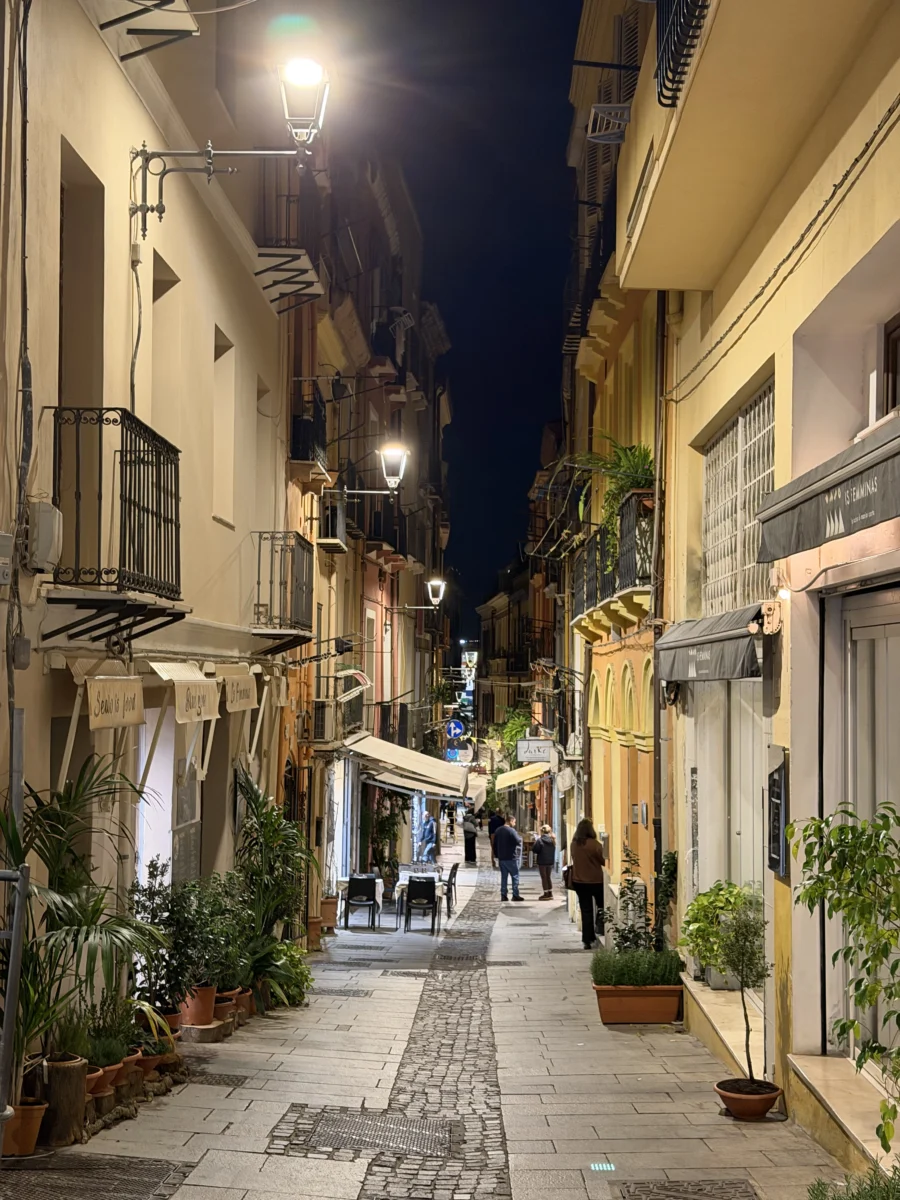
Along the street we stayed on (Via Sardegna) there also happened to be the ruins of Chiesa di Santa Lucia in Marina, an almost 1,000 year-old church. Unlike several other prominent buildings in Cagliari, it survived almost unscathed from the Allied WWII bombings in 1943, but then was targeted for urban redevelopment a few years later. If one thing doesn’t get ya, another surely will..
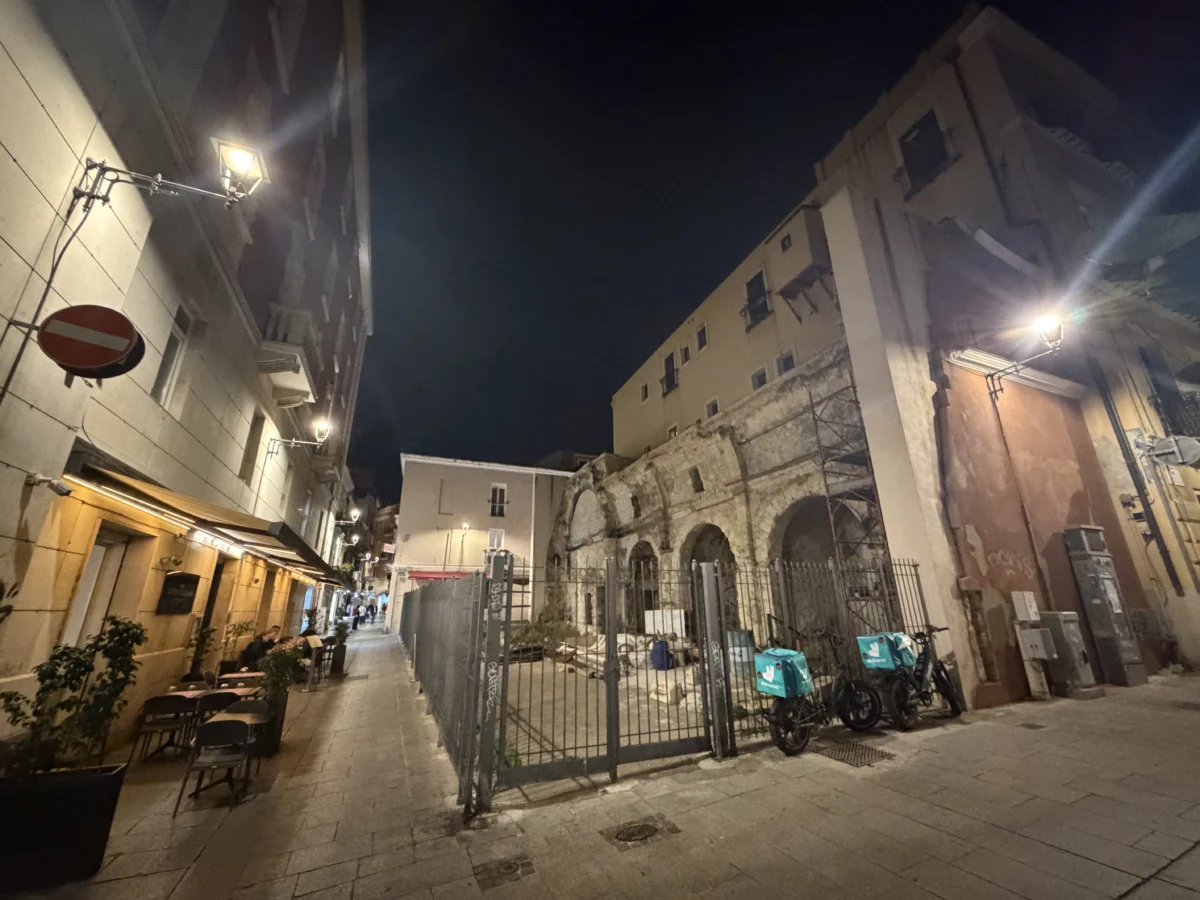
One of the first things we realized about Cagliari is that it is very much on a hill. Well.. at least one hill. Some say it has seven hills (likening it to Rome), although geographically it is spread across ten limestone hills. Most of the historic quarters are all on one hill, and Castello forms the top. Regardless of count, walking around is a real workout! Our calves were as sore after a day on steep cobblestones as they were after serious hikes in the mountains. I took this picture of lanterns and window planters and later realized how the street just drops out below.
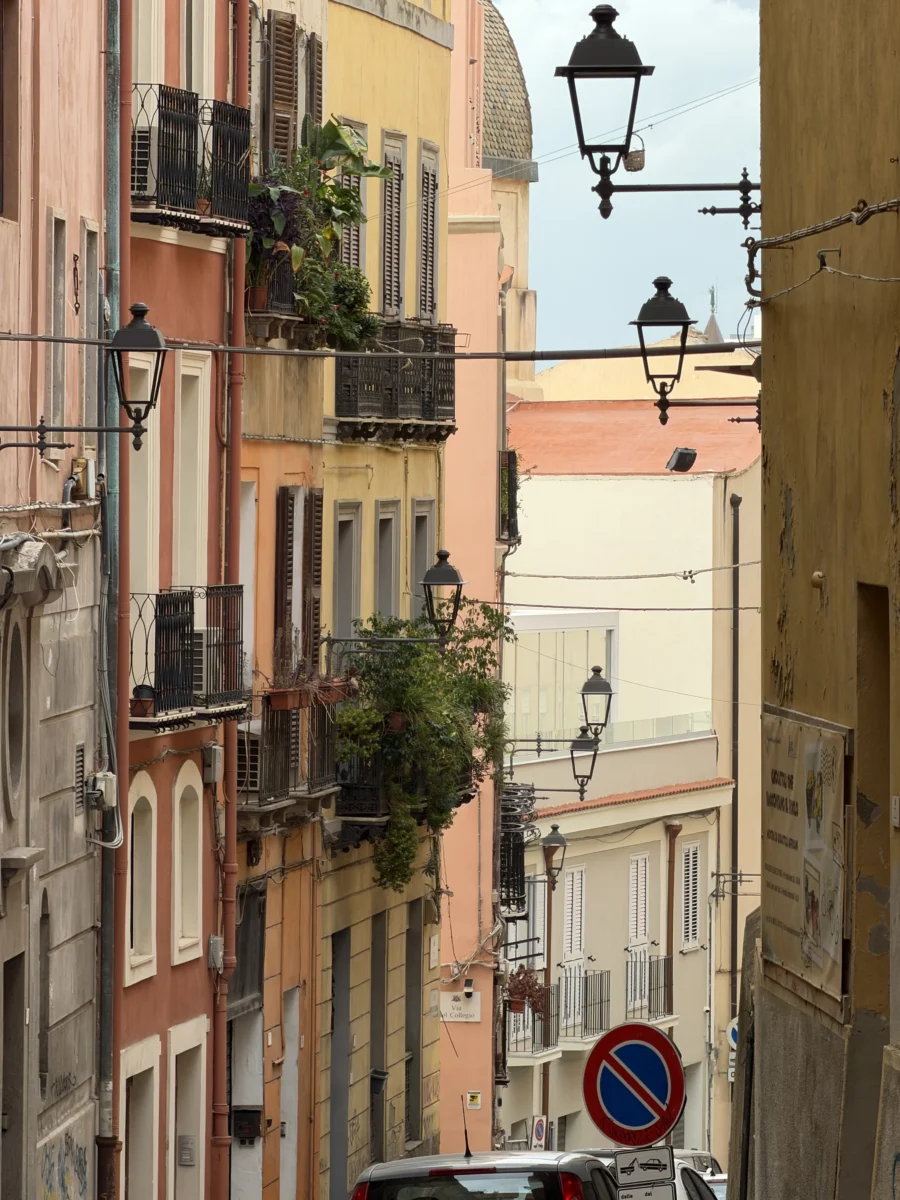
Somehow when you get to the top of a staircase you expect to return to a flat surface. These stairs end and the street is still extremely steep (see the stepped building fronts along it).
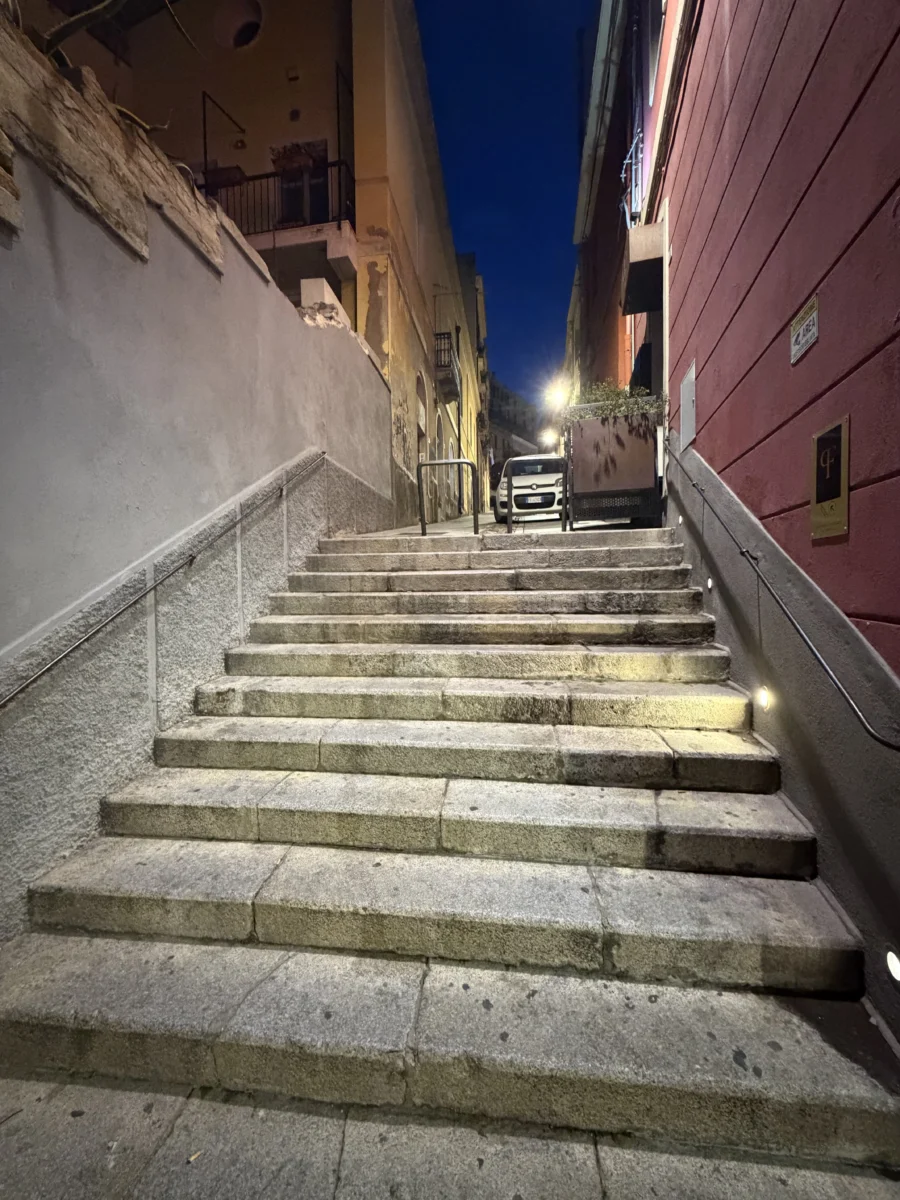
Several “streets” are some sort of hybrid between streets, alleys, and staircases. Vico di Via Giuseppe Manno (literally “Alley off of Via Giuseppe Manno”) is all stairs. And.. all adorned.

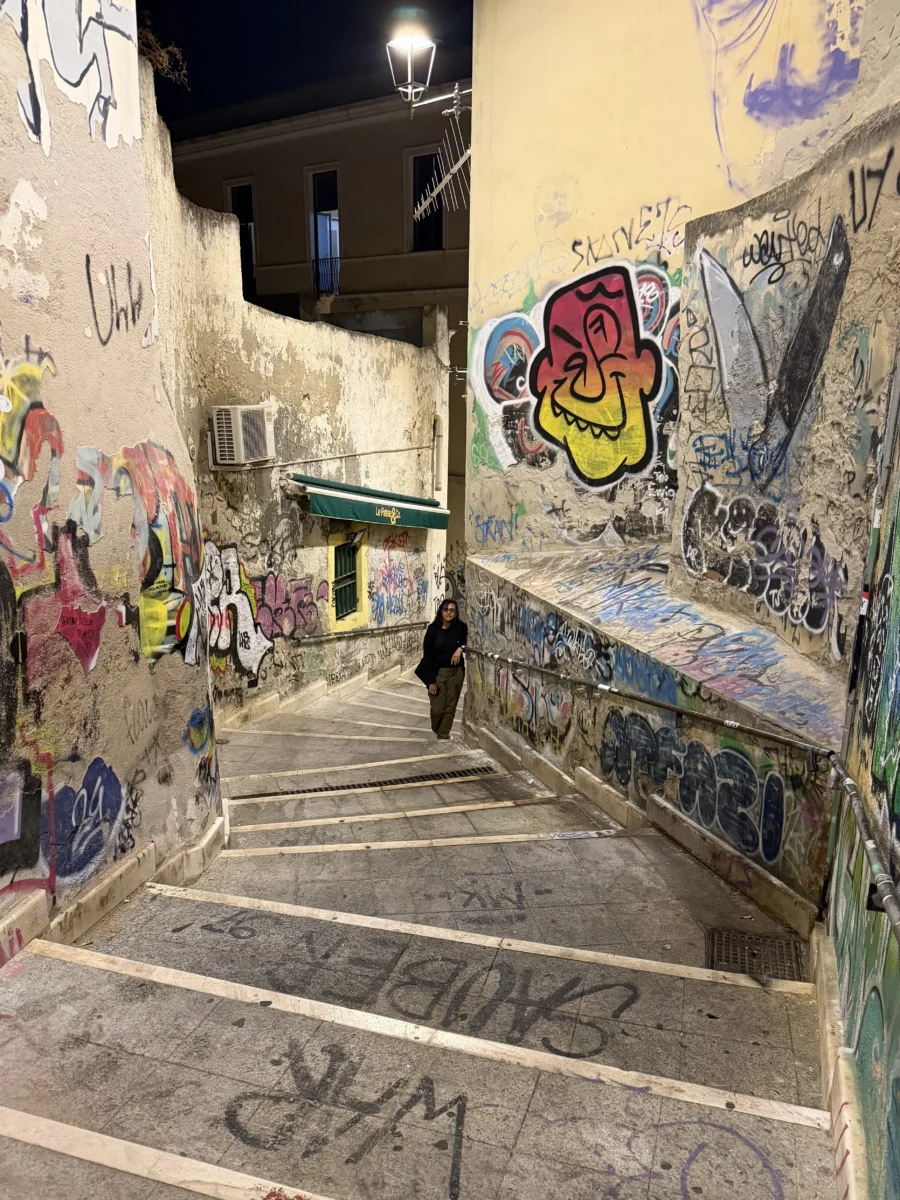
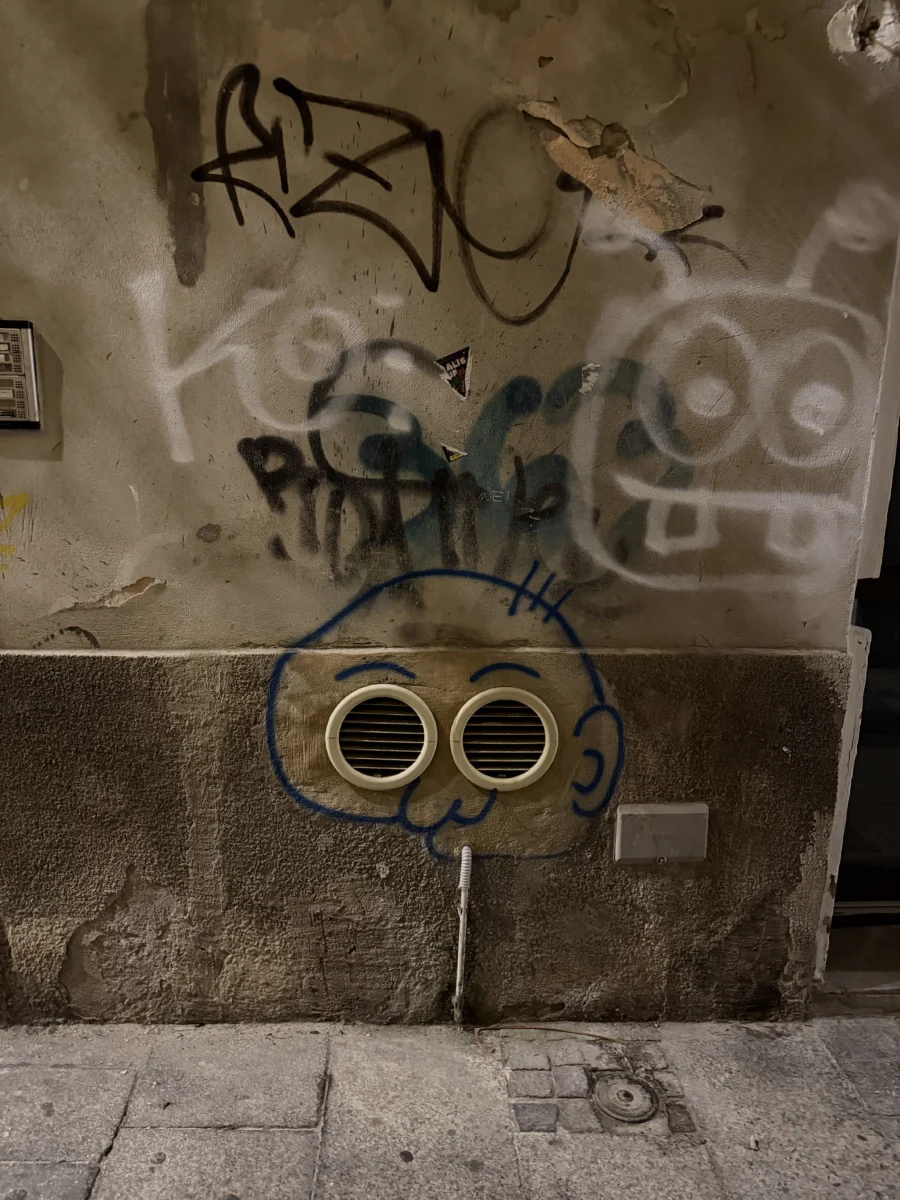
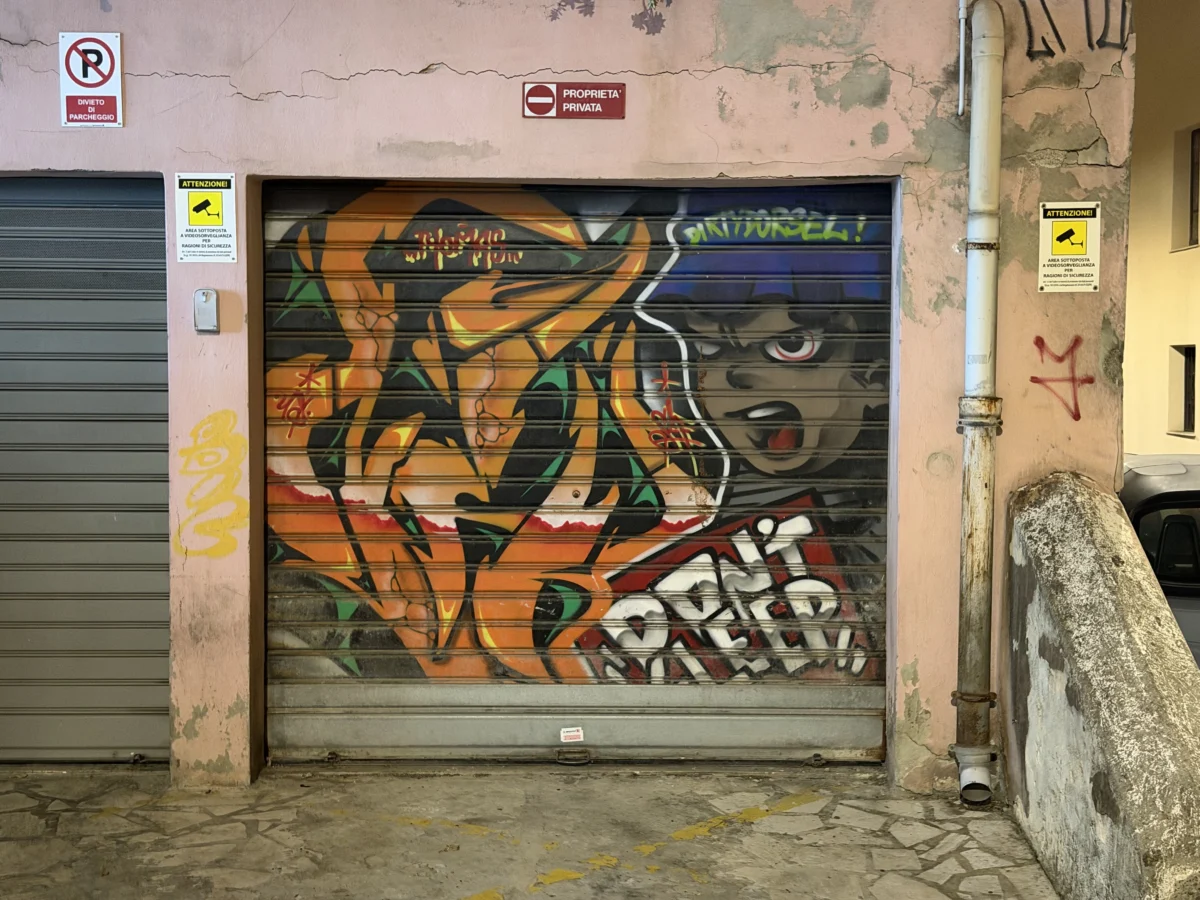
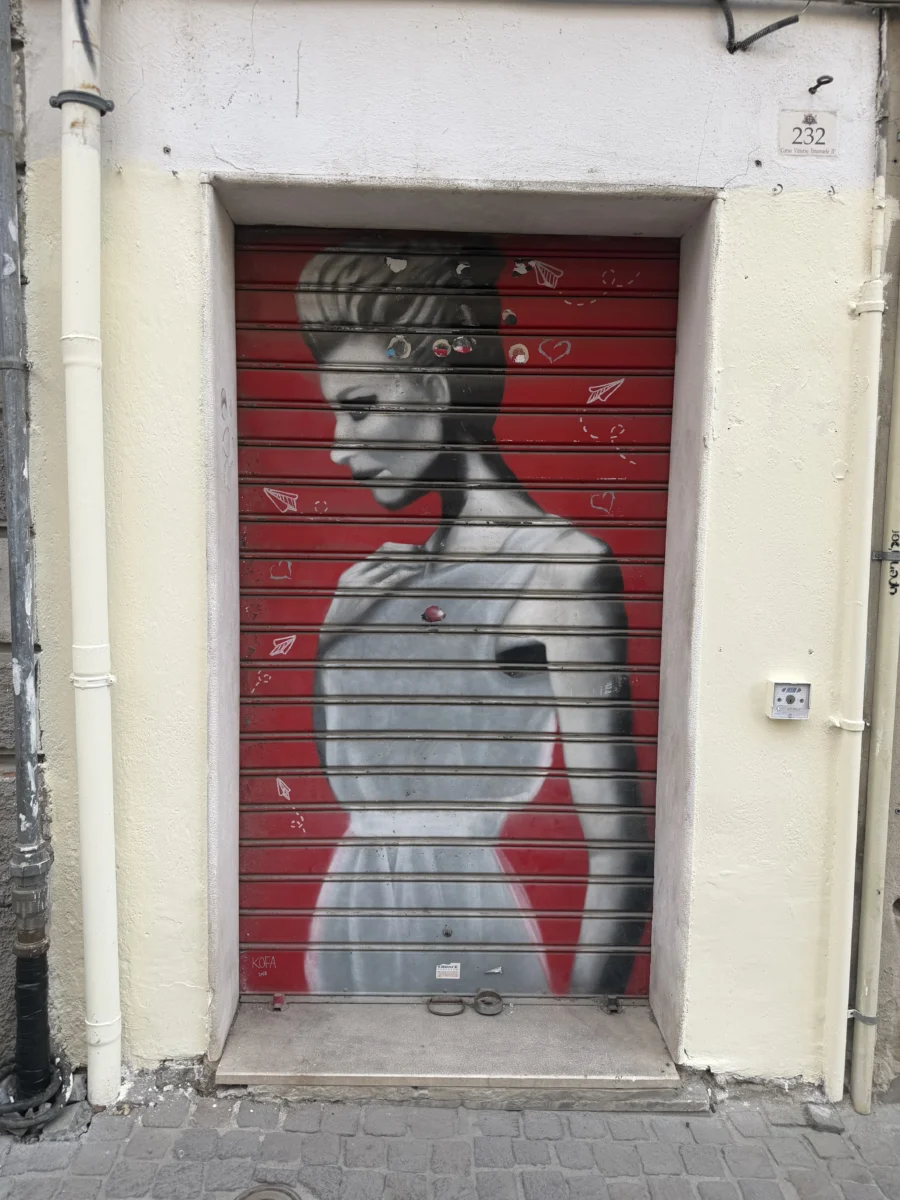
There is a lot of graffiti across Cagliari. The word graffiti itself originates from the Italian word graffiato (“scratched”) since in ancient times graffiti was etched into surfaces. As is often the case in urban areas, graffiti loosely falls into two types, artistic and.. not-so-artistic. In some areas it all just seemed dirty and ruined the aesthetic of streets and plazas. The more appealing works, especially the high-detail ones of garage door shutters appear to be commissioned. Of course even the illegal vandalism can look really cool.


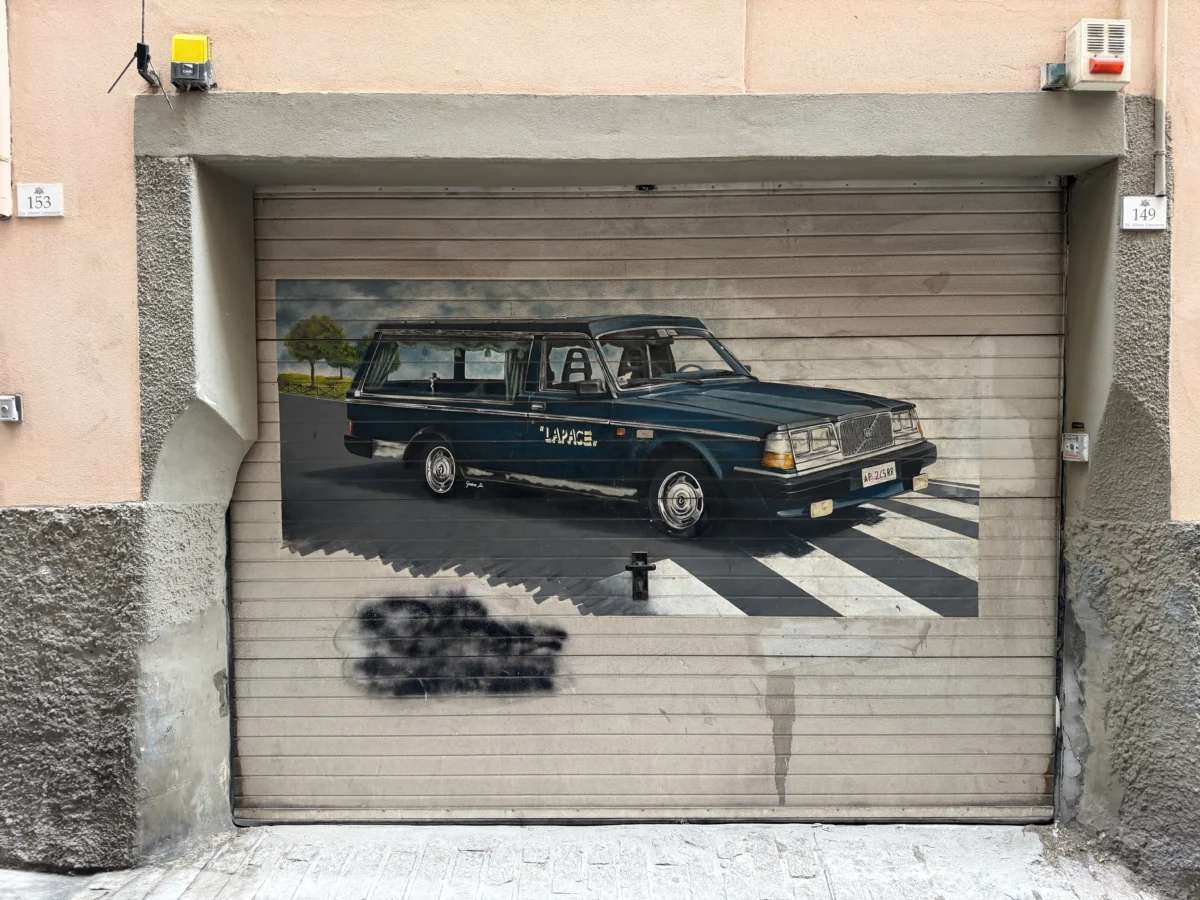
This Volvo 240 hearse tucked away in Castello stood out. It immediately reminded me of my artist, teacher, and old-Volvo-afficionado friend Cauley who has gone the distance with old 240s. On this super narrow street I highly doubt that such a long car could enter/exit though, maybe it’s just wishful thinking with a dark twist.
The restaurant scene in Cagliari is diverse and lively. From day one we were trying to ensure that each meal would be used wisely trying some new place. Of course it never works out that way.. sometimes that place is closed, sometimes something new pops up, and at least once a week we collapse in our lodging and eat snacks and left-overs. All good! That said, there were some culinary highlights.
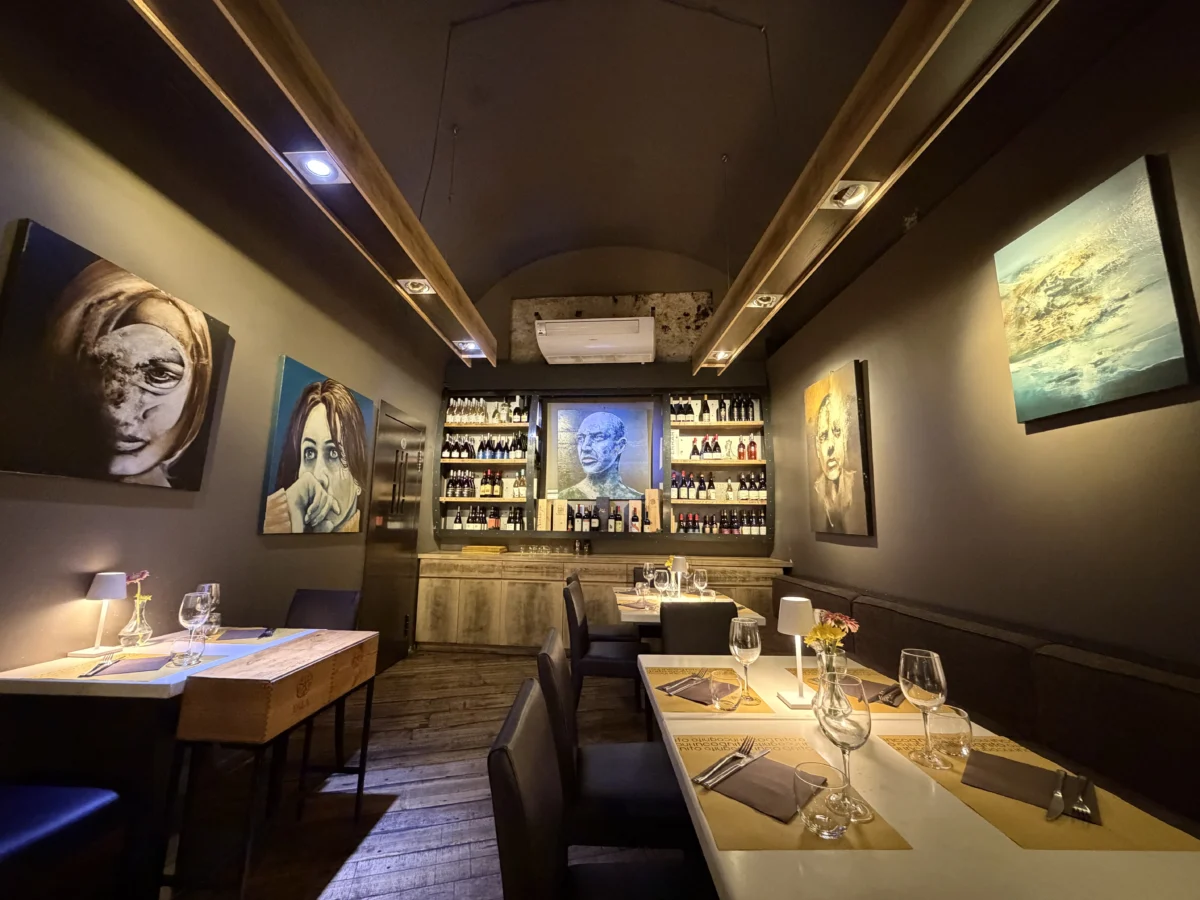
Incognito is a popular spot right on Largo Carlo Felice, a major thoroughfare flanked by large pedestrian areas and outdoor dining. Especially considering the throngs outside, it was very quiet inside. Of course that’s mostly due to us being silly foreigners that eat before 7!
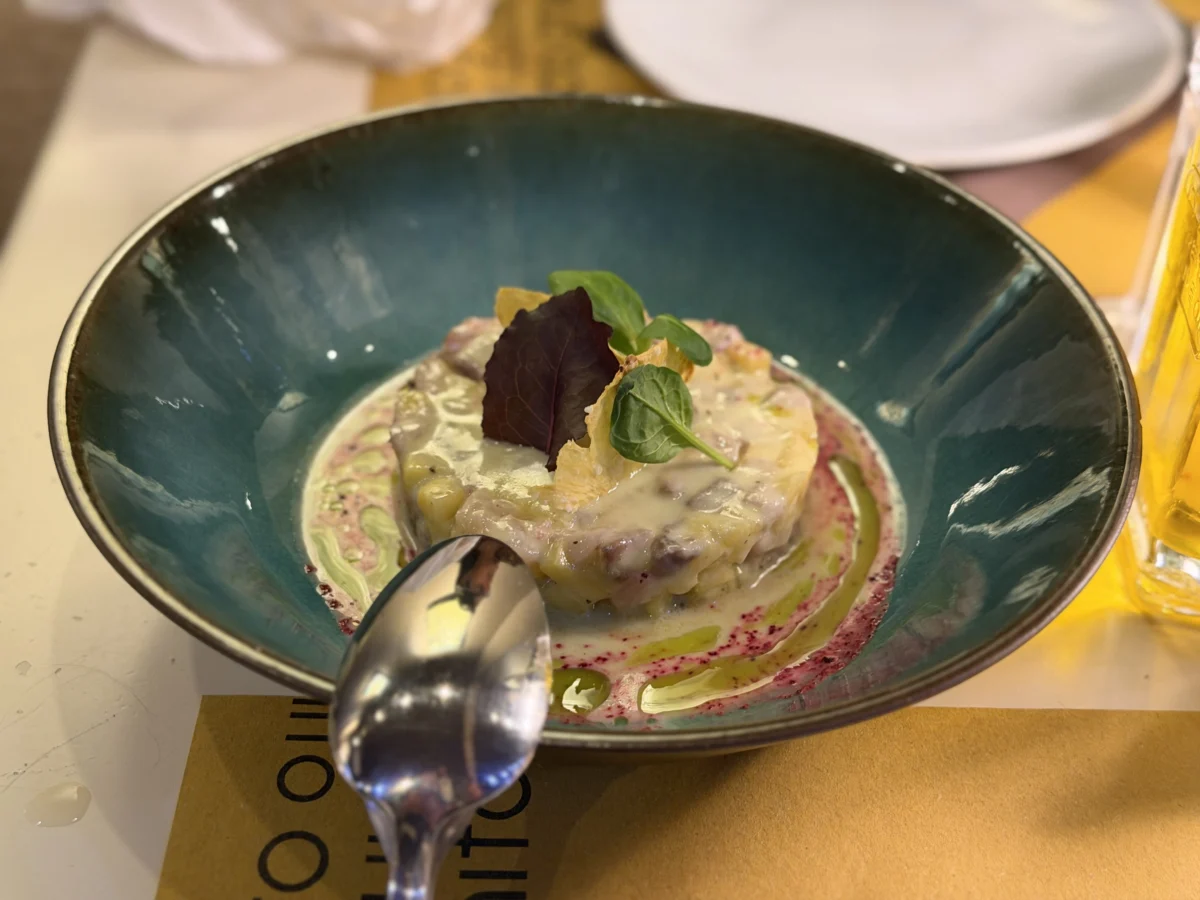
The ceviche was outstanding. Fruity, super tasty.. local fish with maybe pineapple & apple?
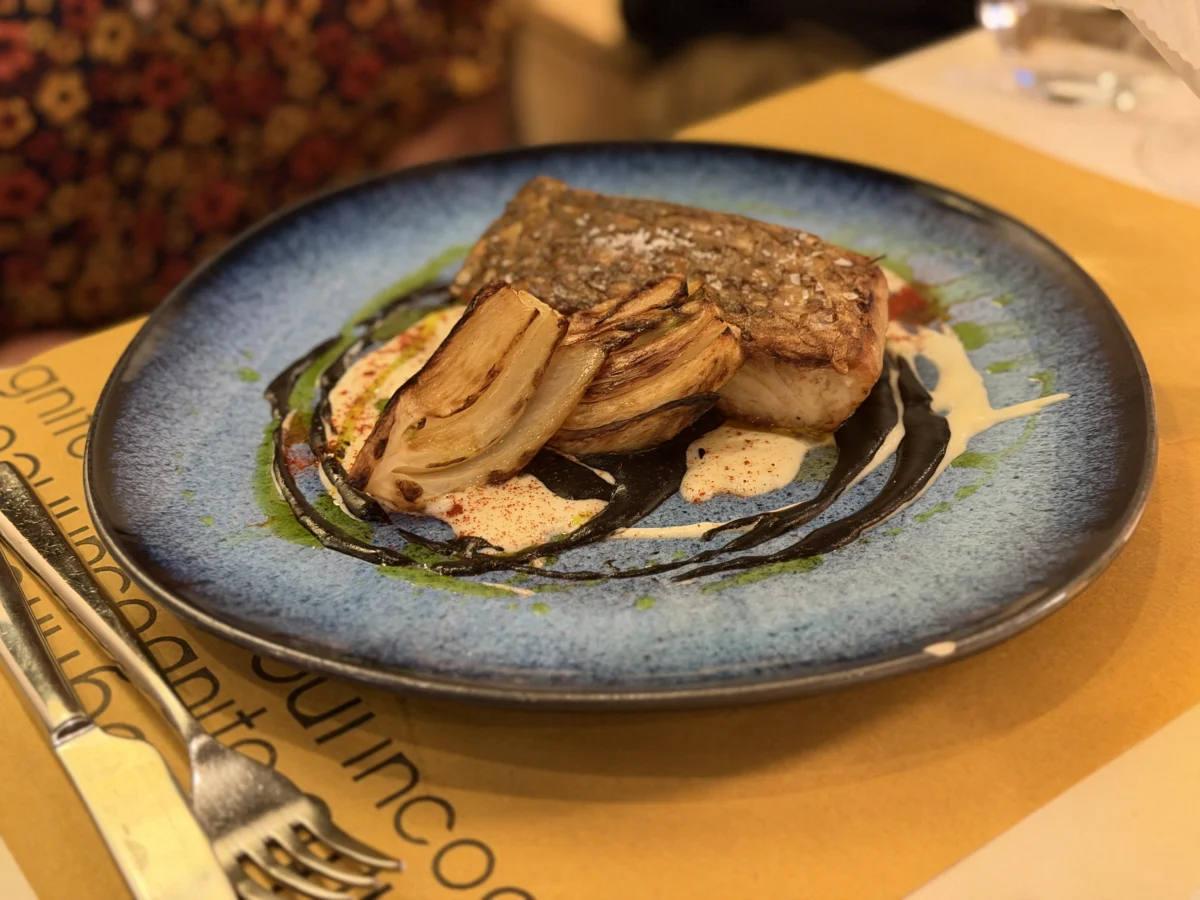
The tuna pesto linguini was excellent, with strong flavors and perfectly cooked al dente. The ombrina and potatoes were tasty and went well together. We polished both plates.
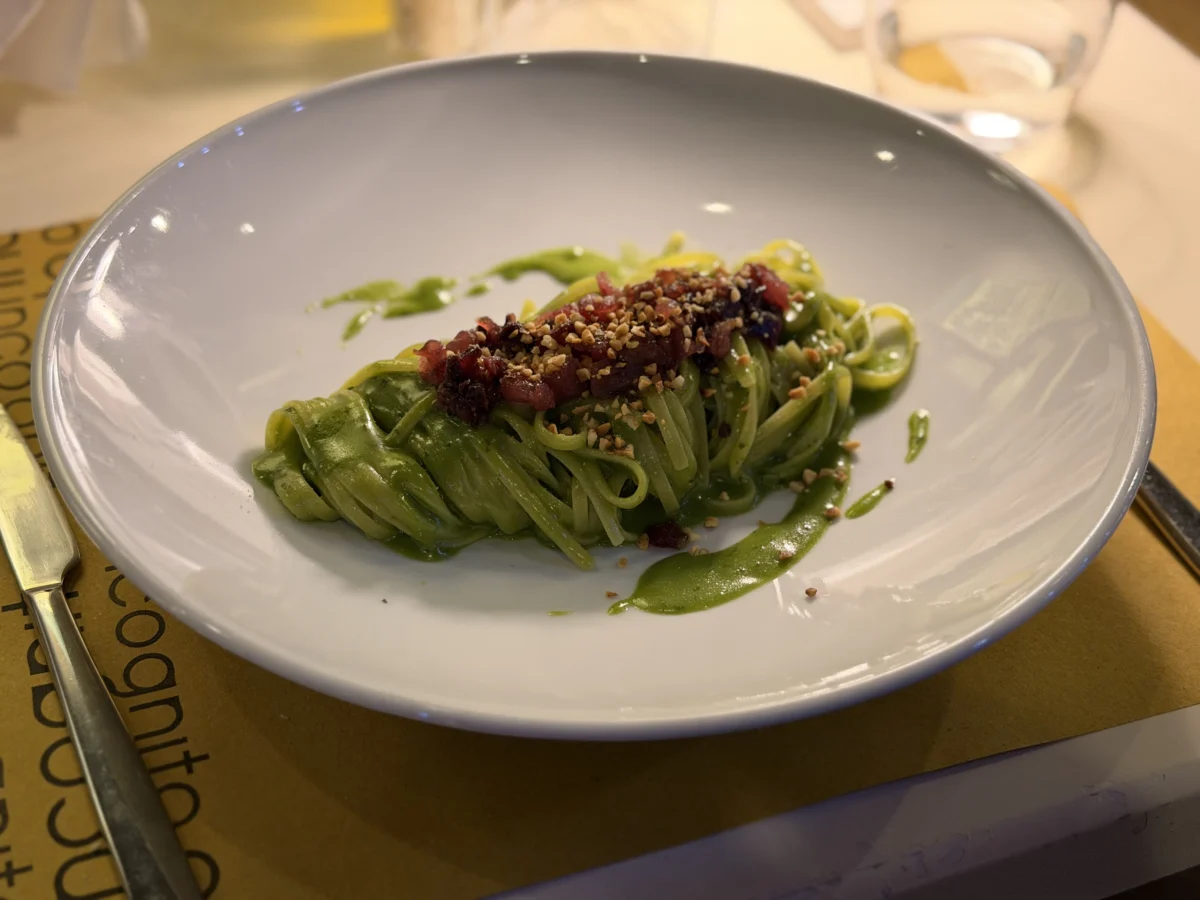
Nothing like a good dessert, but our waiter had to make TWO options sound necessary. He wasn’t wrong. It was a flavorful tiramisu with plenty of espresso and the cheesecake was what we mean by cheesecake! ..with crazy good Nutella and chocolate sauce!
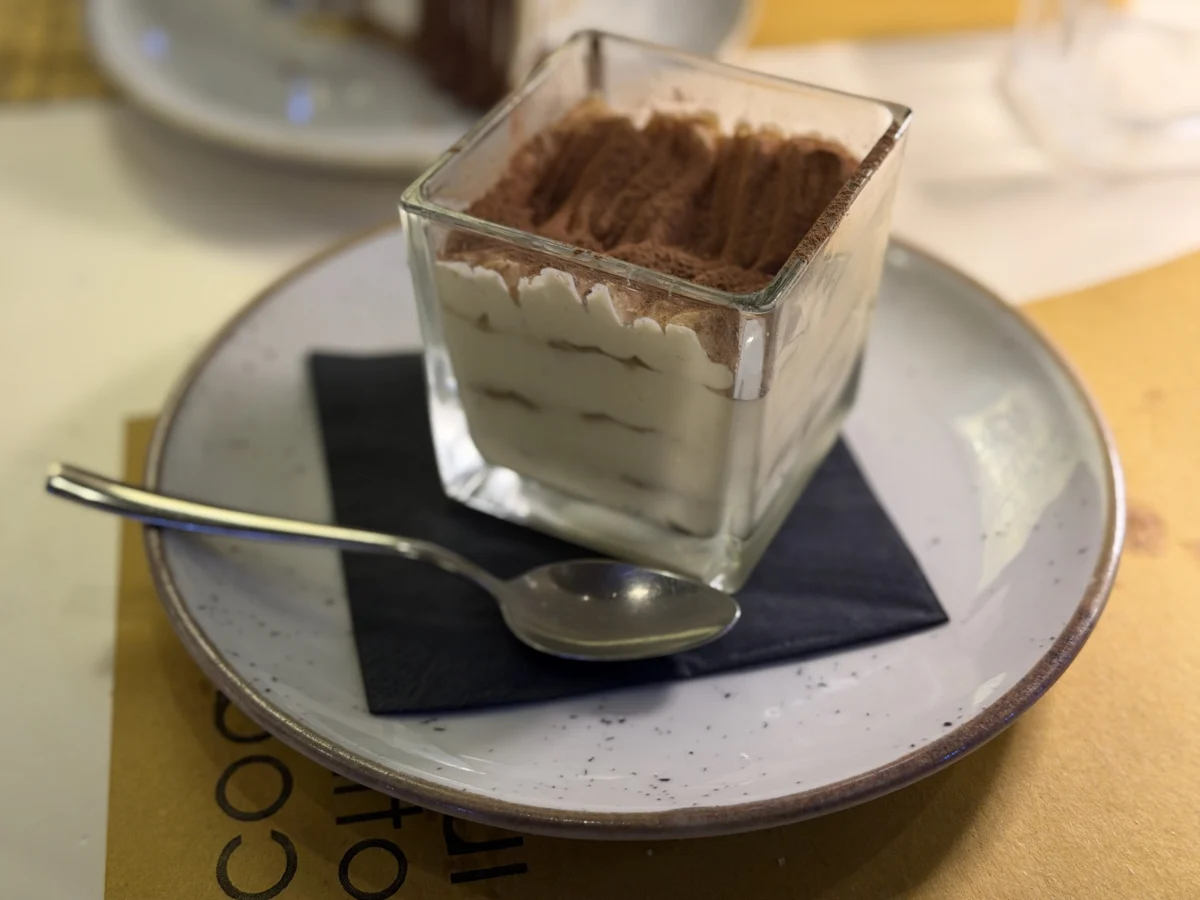

Cerchio Rosso is a classic Italian dining establishment with creative Sardinian flair. In addition to their delicious food they are known for their wine knowledge, selection, and pairing. I’m not a wine person but was still impressed at how quickly and excitedly our server recommend wines to pair then offered tastings of each. Confidence grounded in competence.
We ate with Giuseppe and Luisa, outside on the edge of the charming little Piazza Gaetano Orrú in the Villanova quarter. What an idyllic setting and meal. Sadly I did not capture the menu..
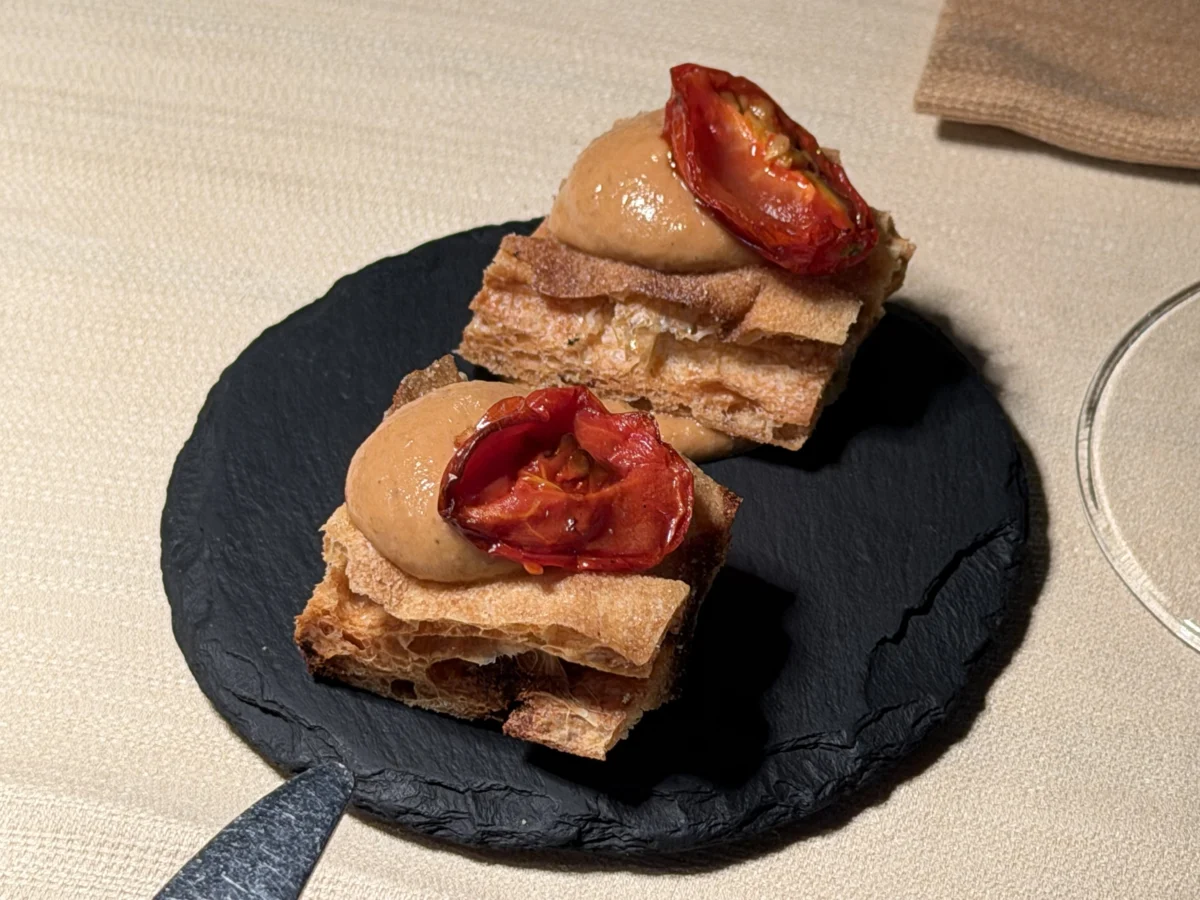
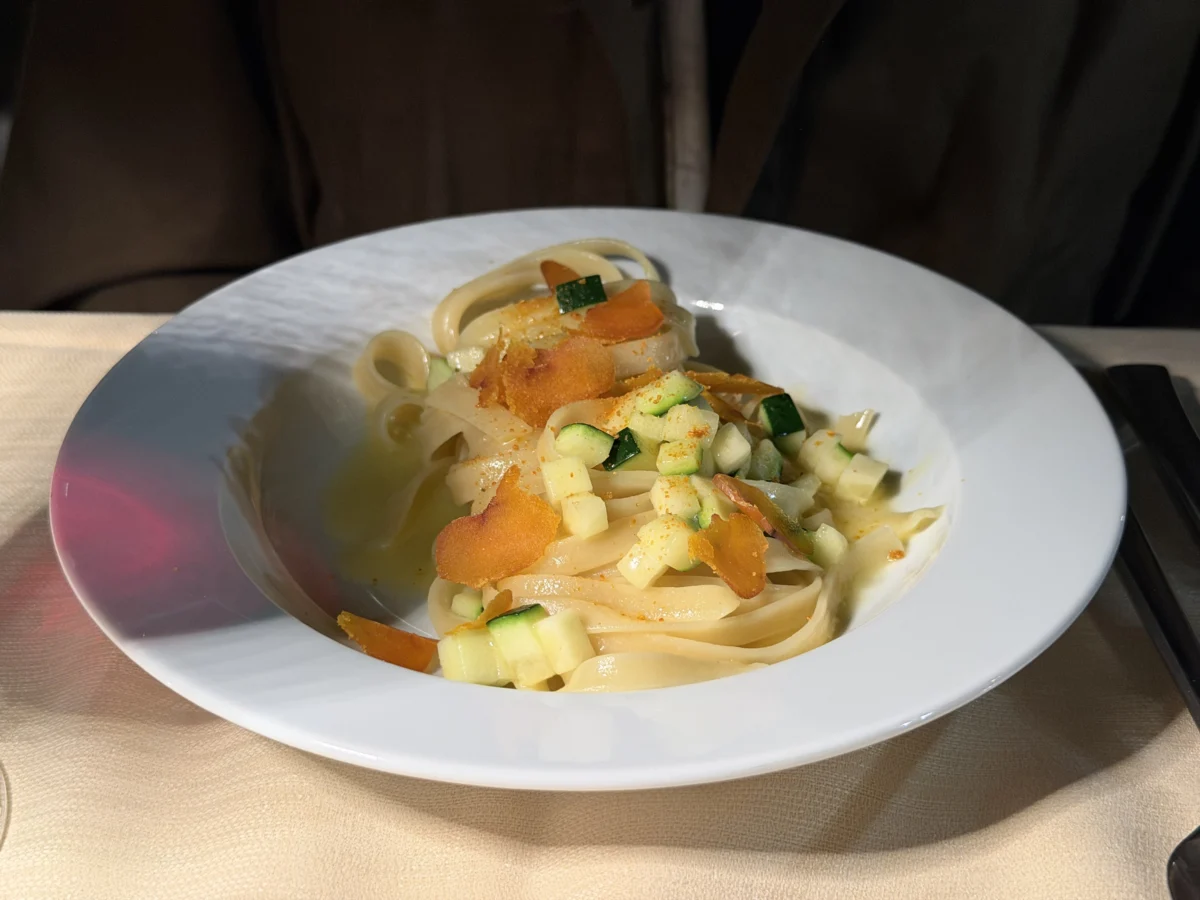

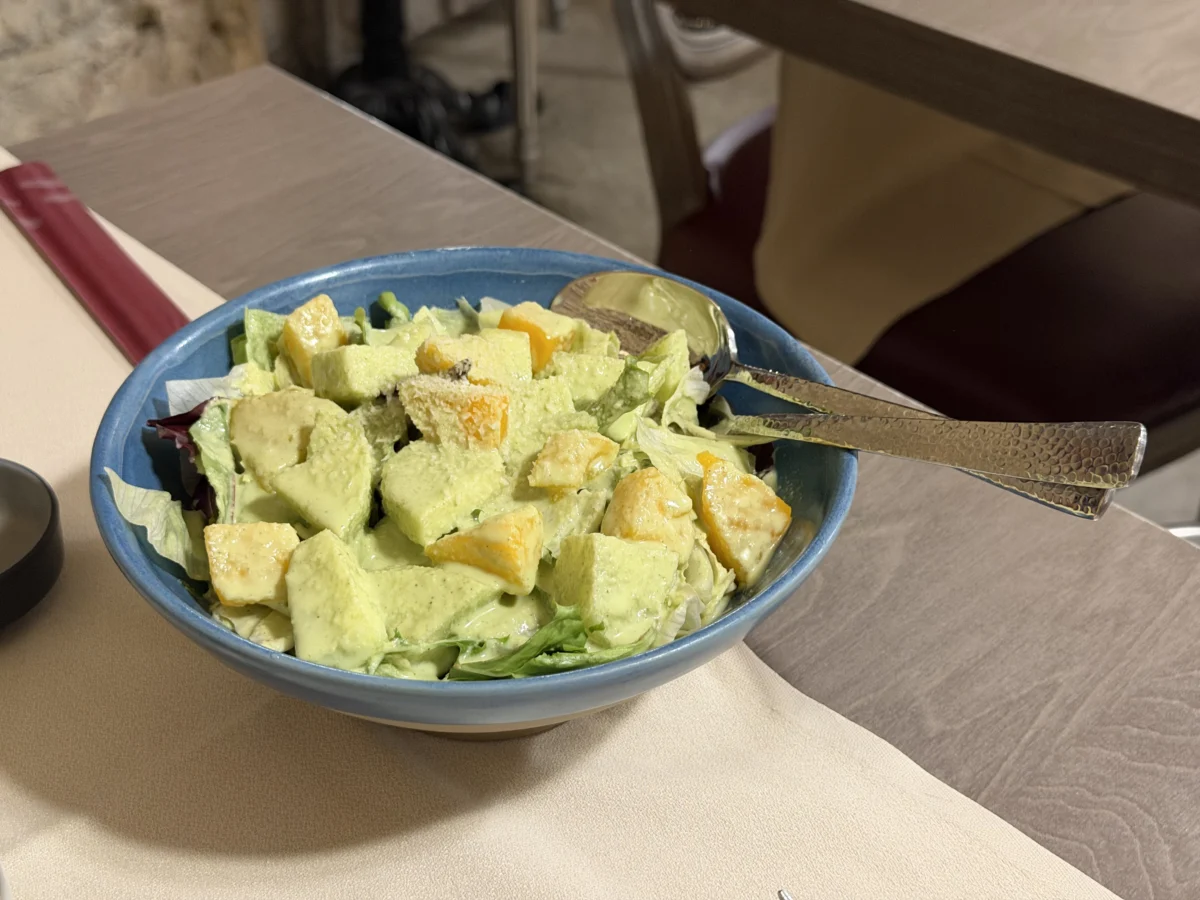
Toyo was the only sushi we tried in Cagliari, but only after eyeing a few options. It has a large menu and unique takes on traditional Japanese and some southeast Asian dishes.
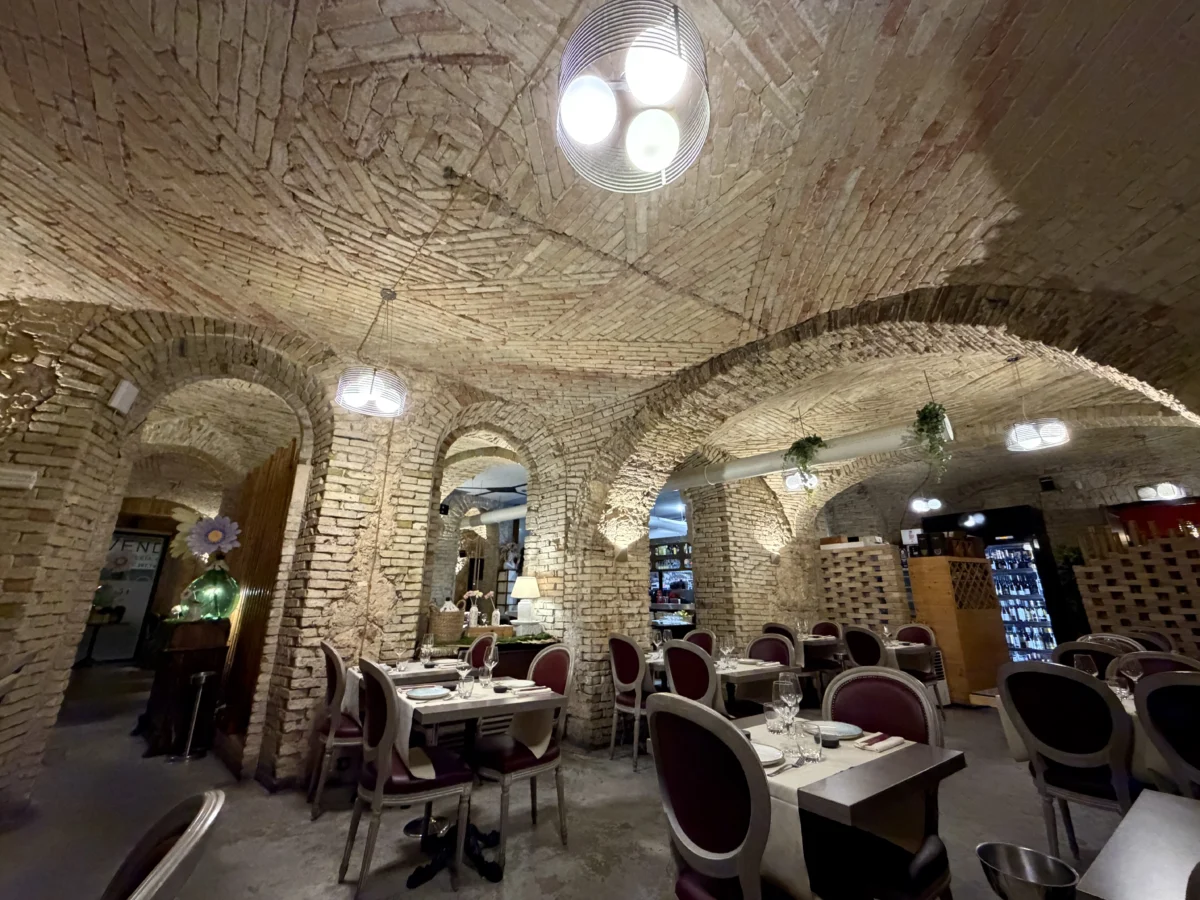
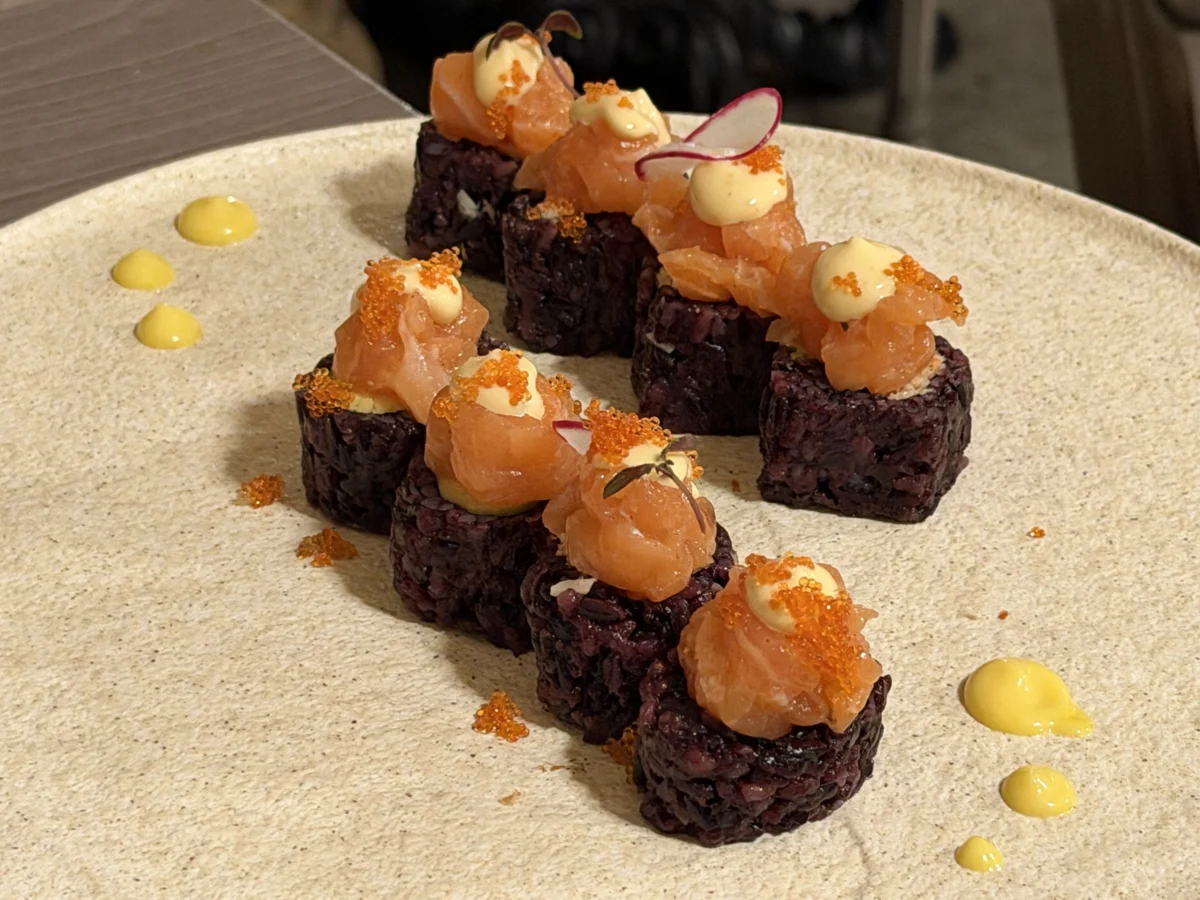
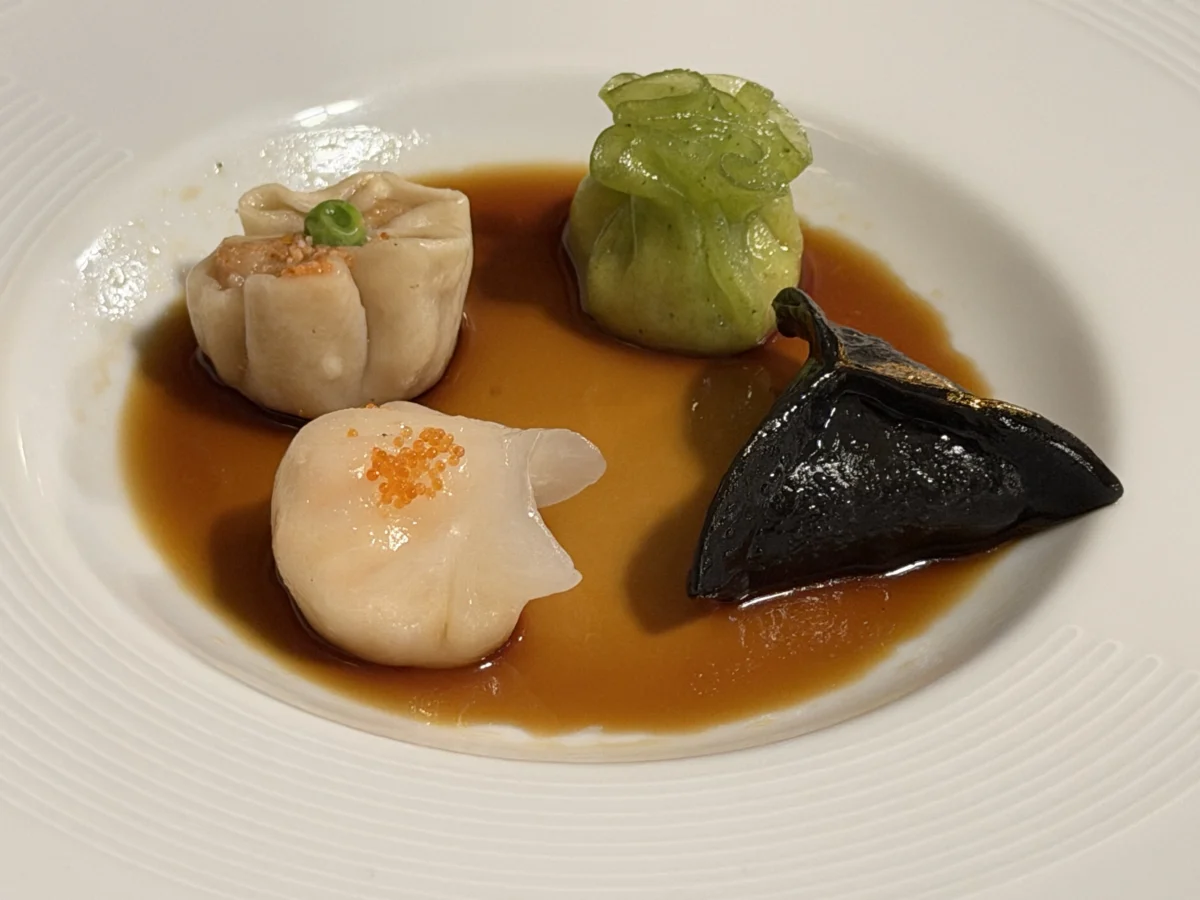
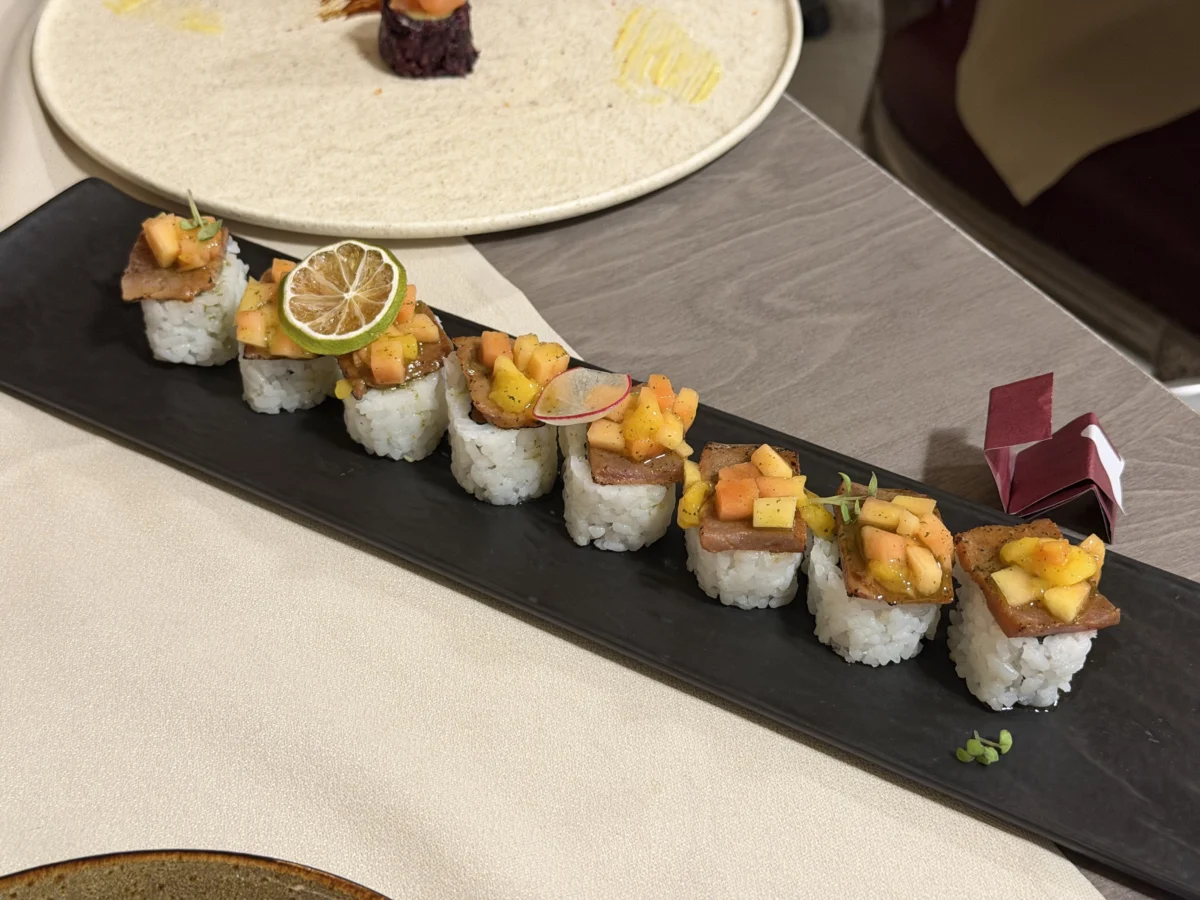
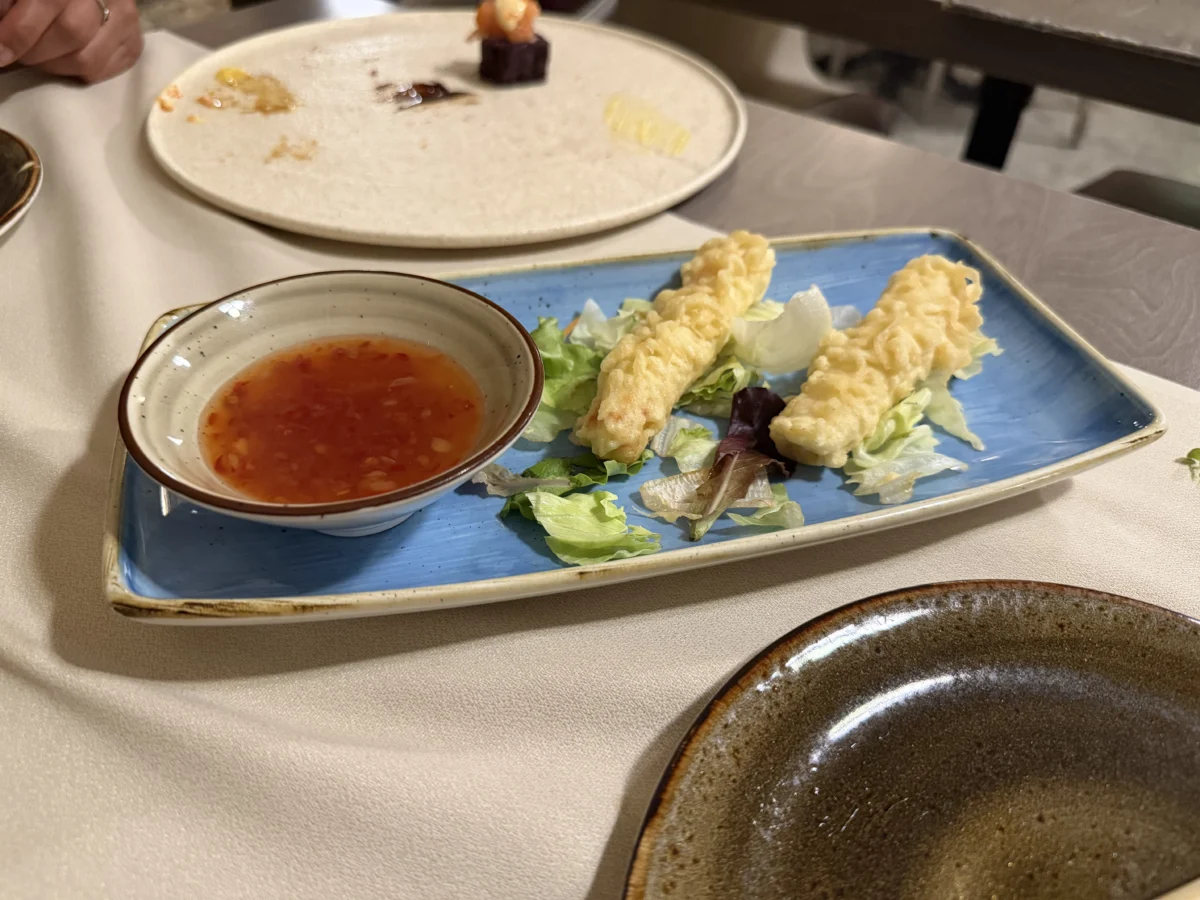
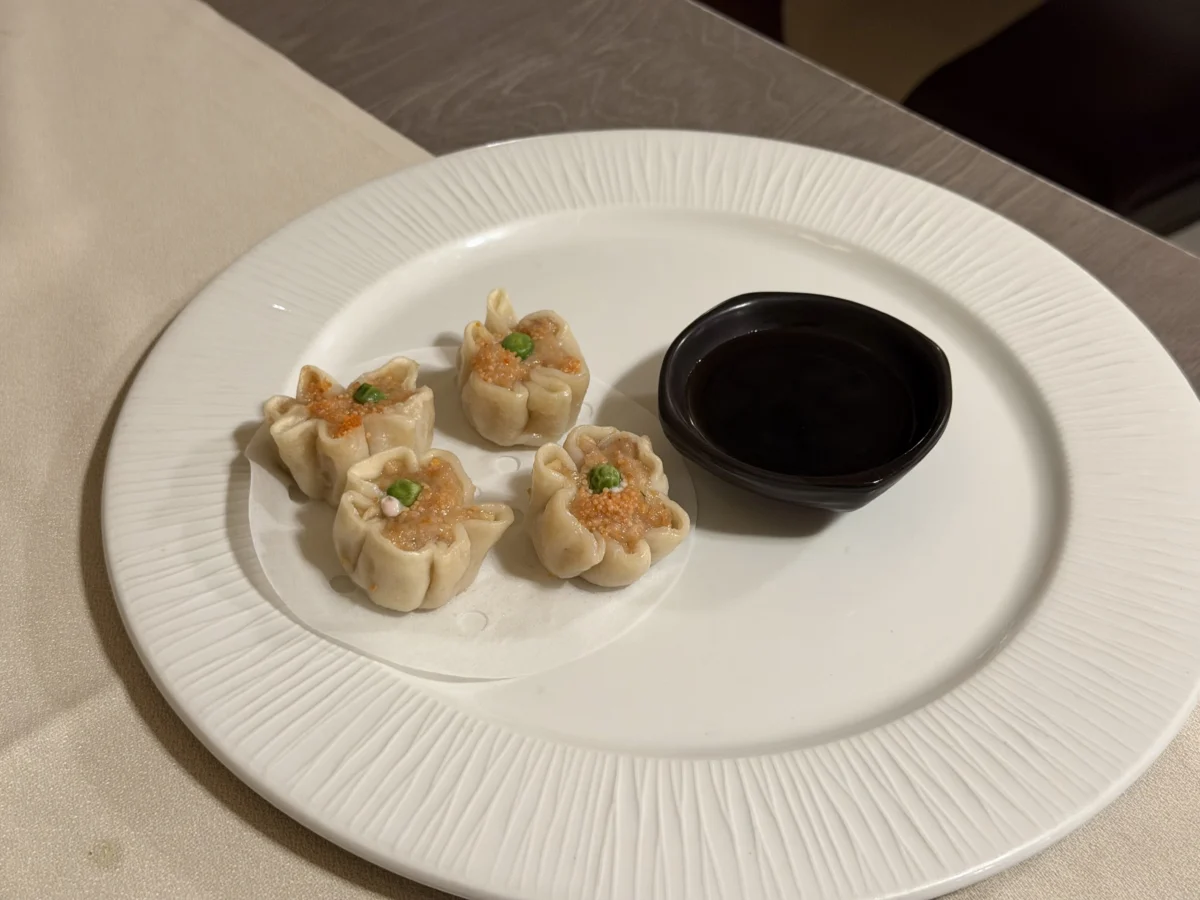
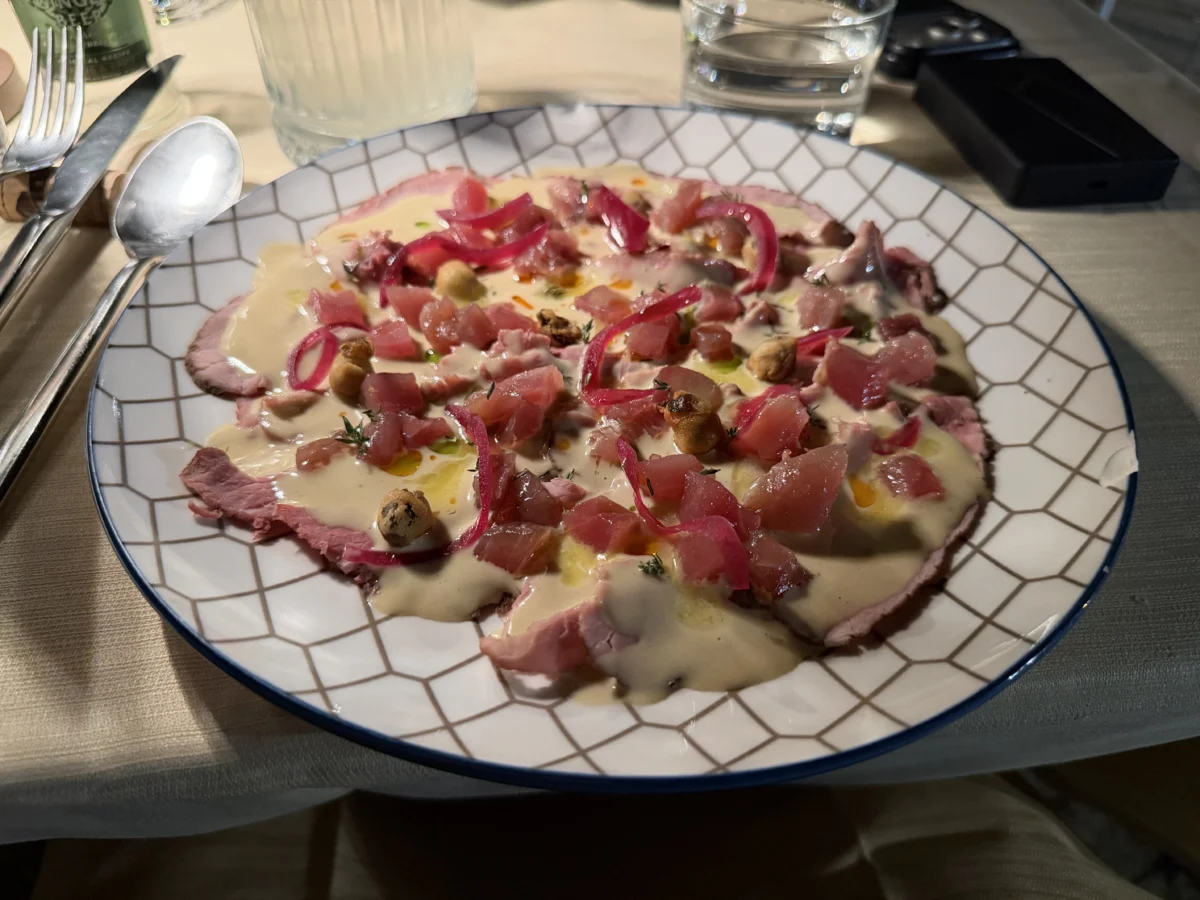
Josto is an eclectic spot for fine dining just inside the Stampace quarter. It has a modern industrial setting with high tables and pipes everywhere, and completely fresh takes on local ingredients.
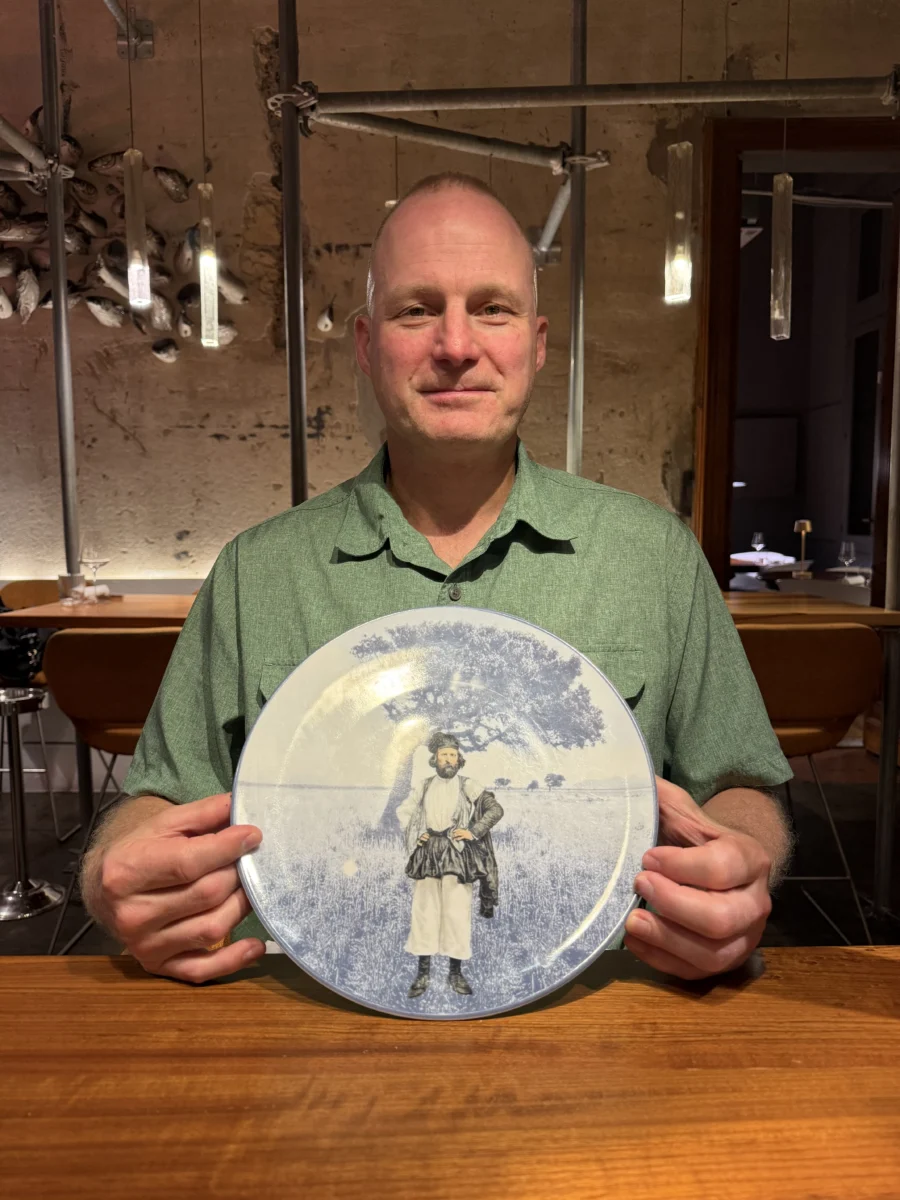
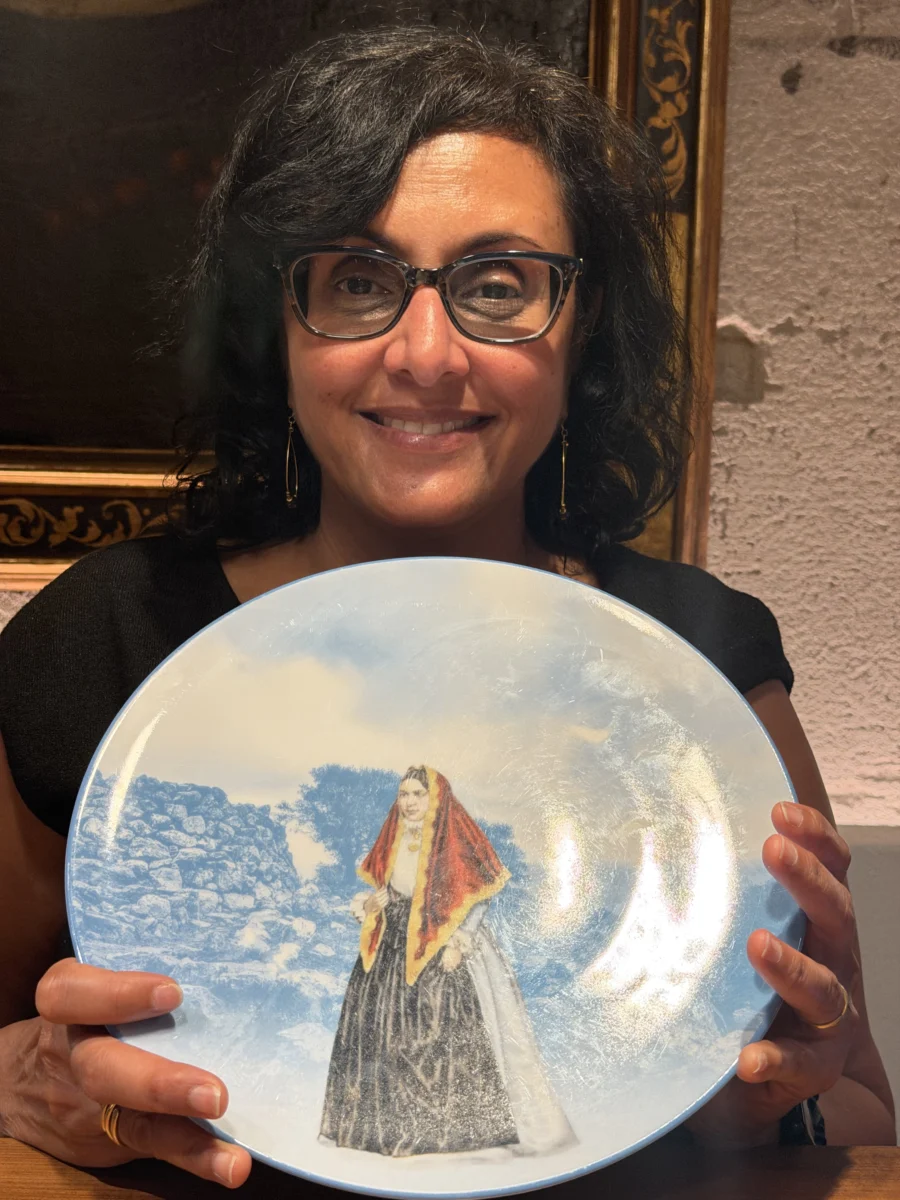
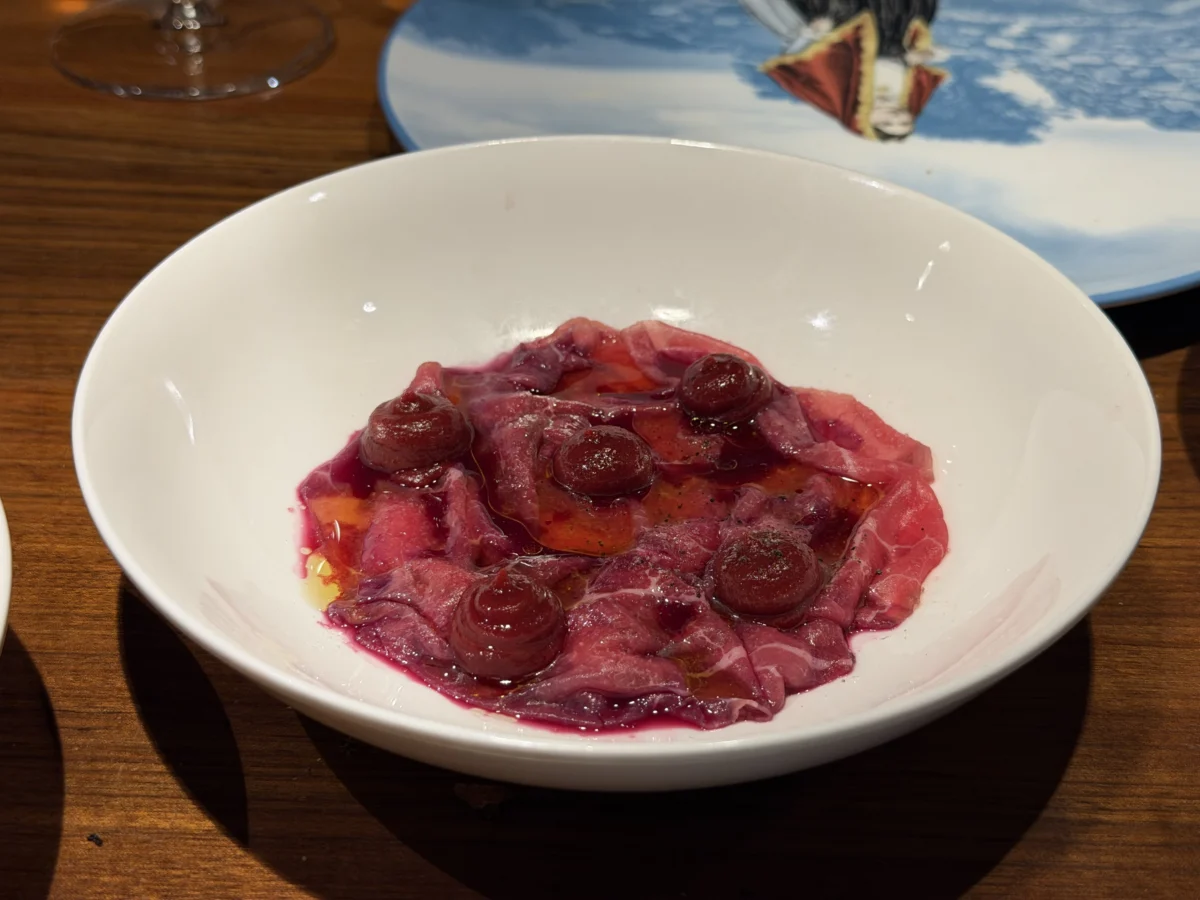
For me the highlight was actually the beef carpaccio appetizer. Carpaccio in general is something I like but isn’t usually one of my favorite dishes. This was so flavorful, moist, and perfectly prepared that it redefined what carpaccio can be.

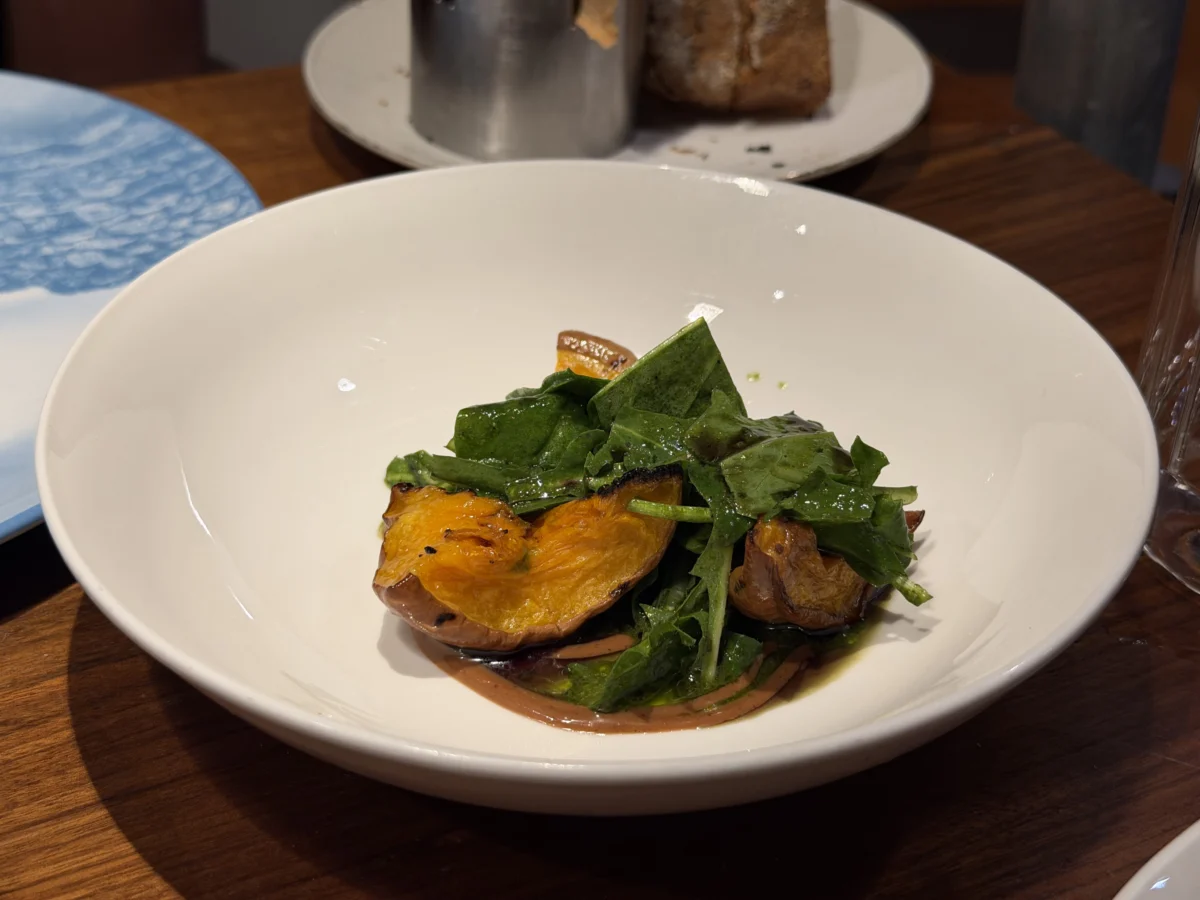
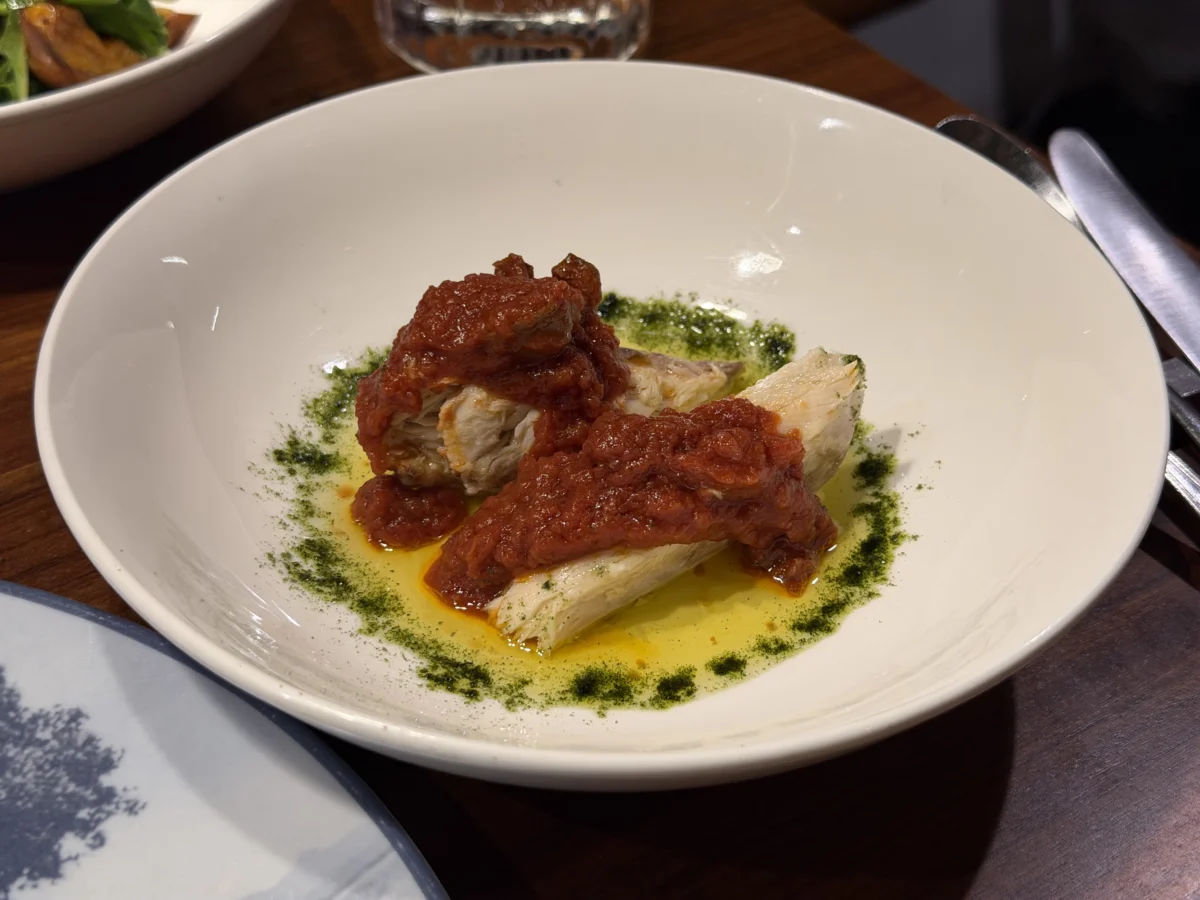
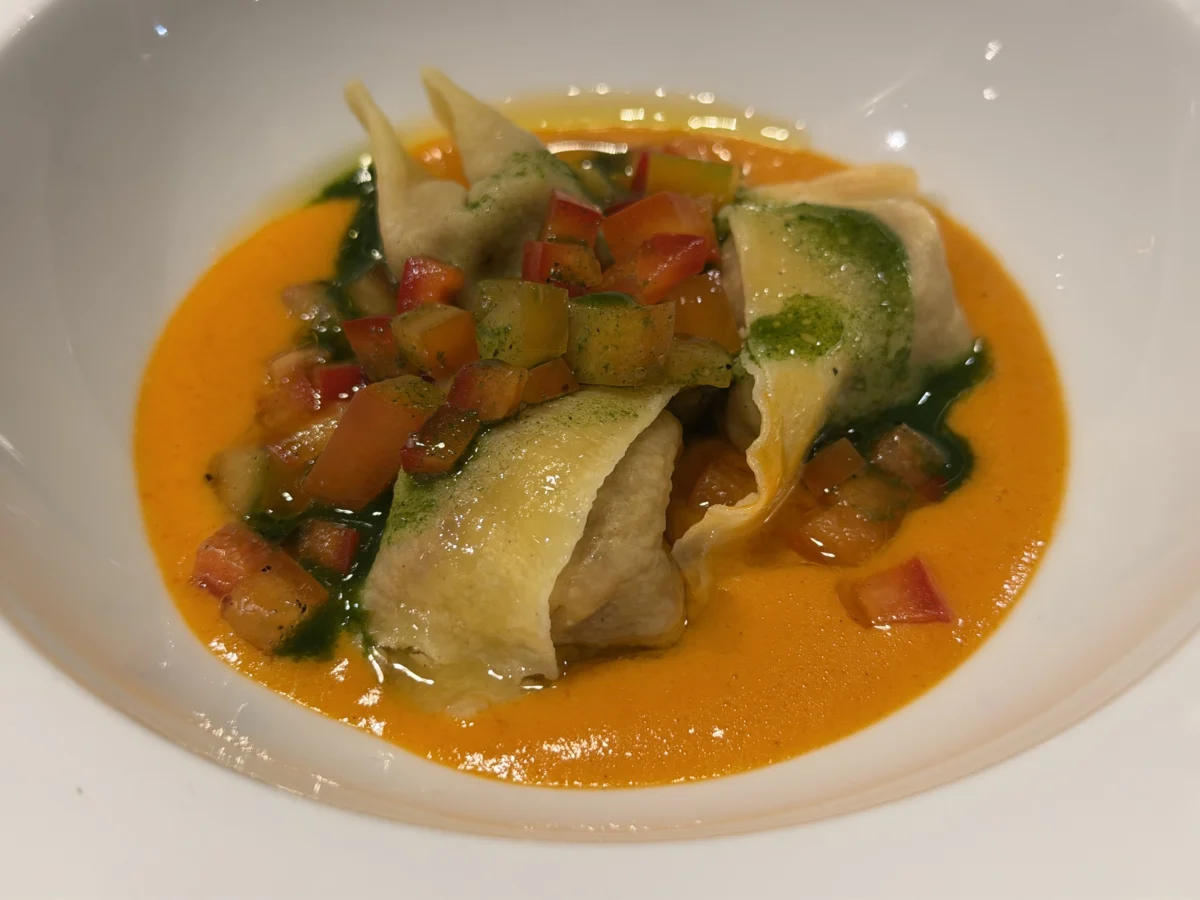

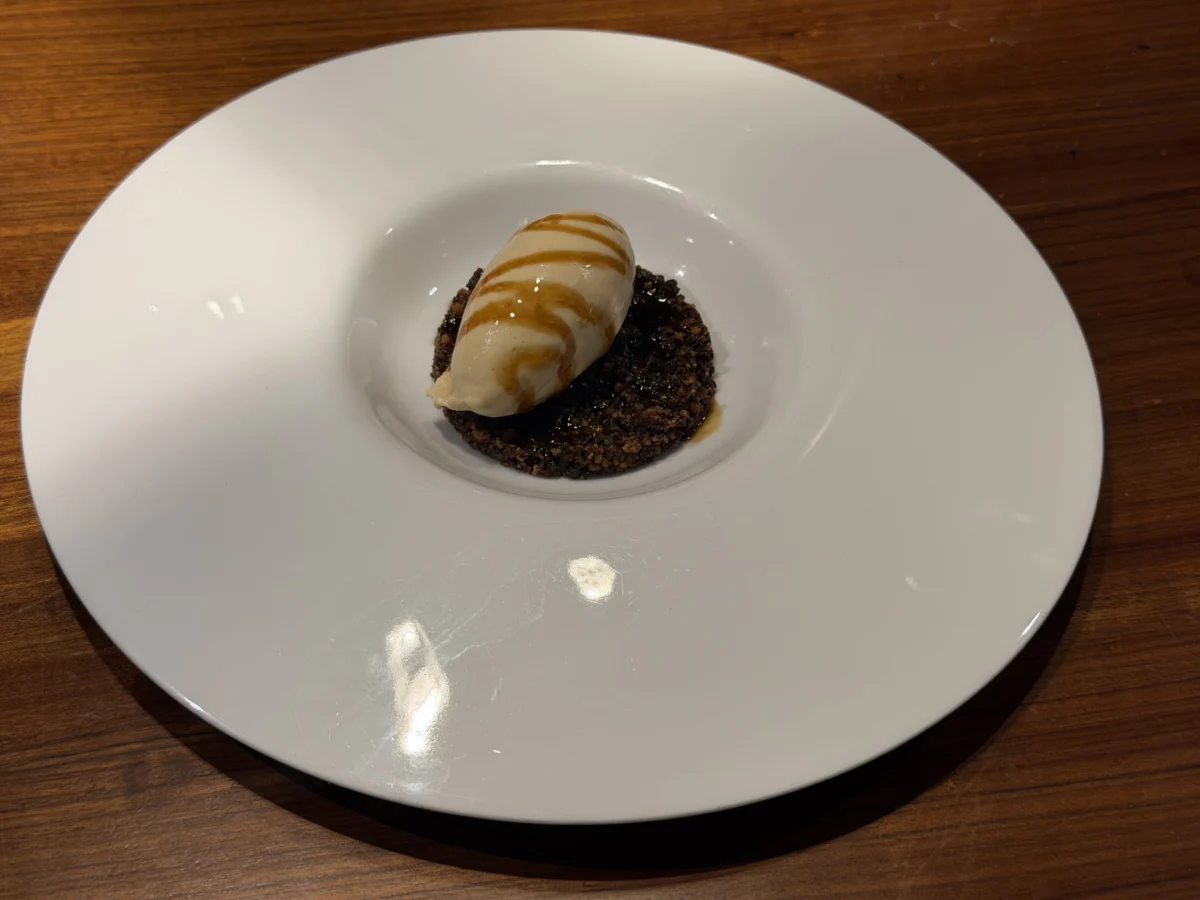
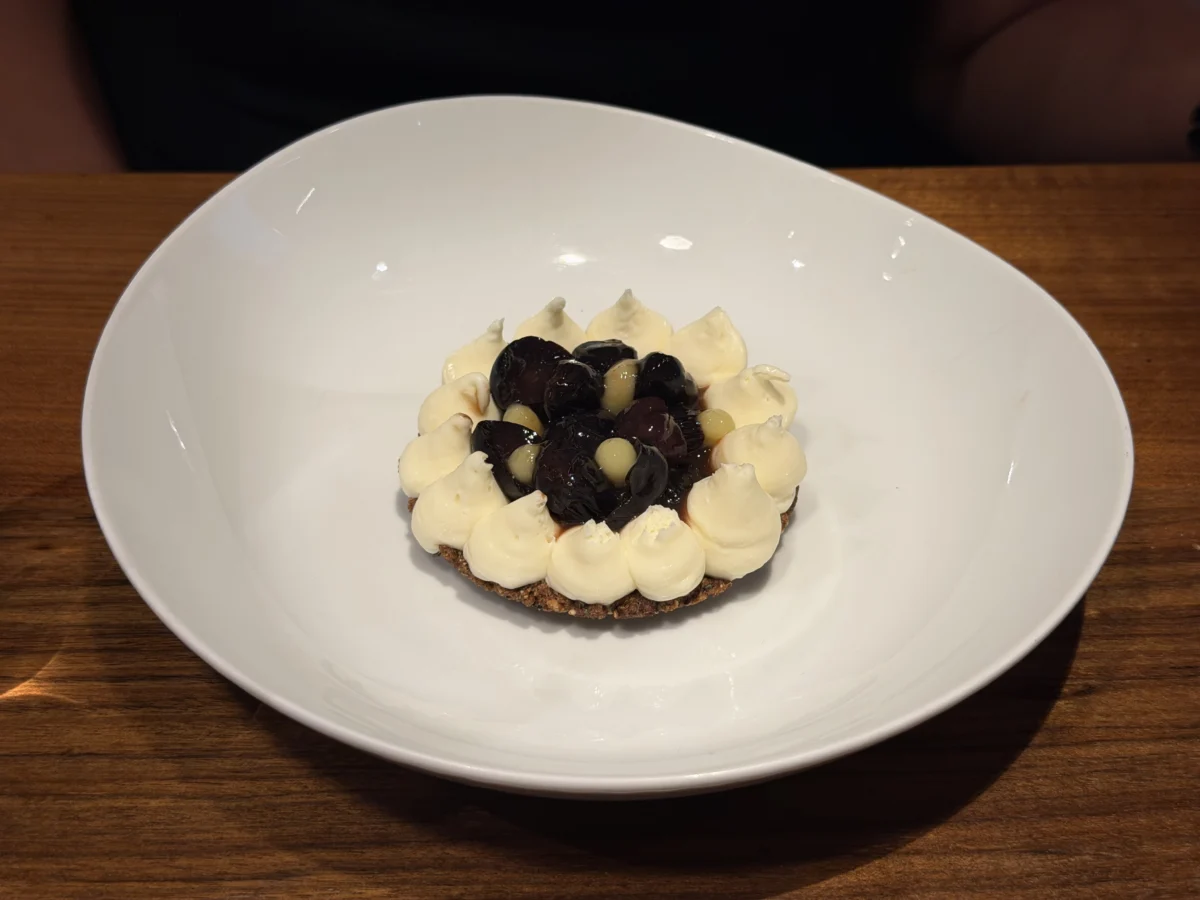
The owner and head chef is also active at each table. He is clearly passionate about every detail. By chance we ran into him (and the Frenchman who was seated next to us, independently, what are the chances!), at the airport the next day. Super nice fellow.
Taddinanta is a little farther into the Stampace quarter, just across from the Portico dei Patrioti Sardi Martiri di Palabanda.
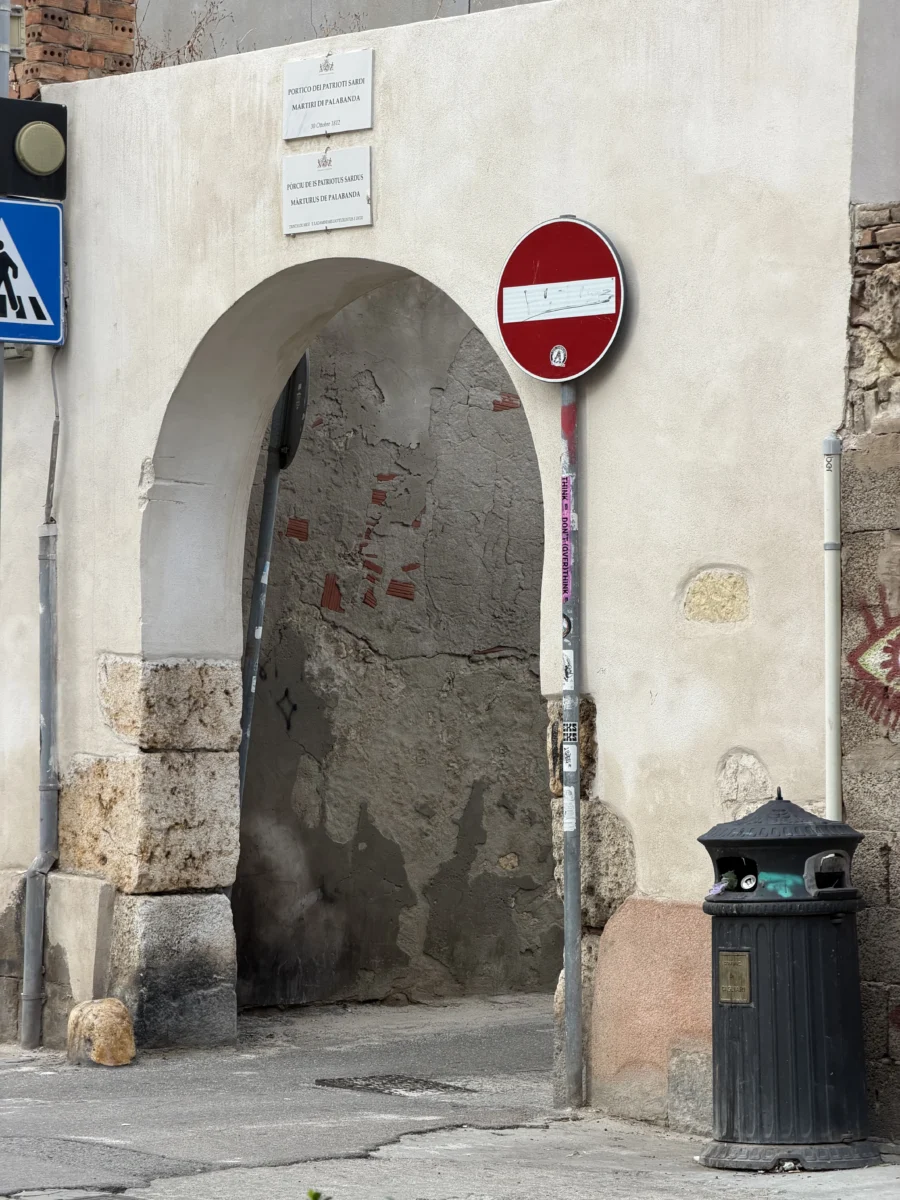
We went there for a quick lunch and had an unexpectedly good time. We had an hour free to grab lunch and Taddinanta was convenient and highly rated. The second we stepped up, our server-to-be Sophia stepped out and greeted us with a big smile and welcome. She was witty and guided us to what to order with an air of confidence. The lunch menu is very simple but fresh & delicious.
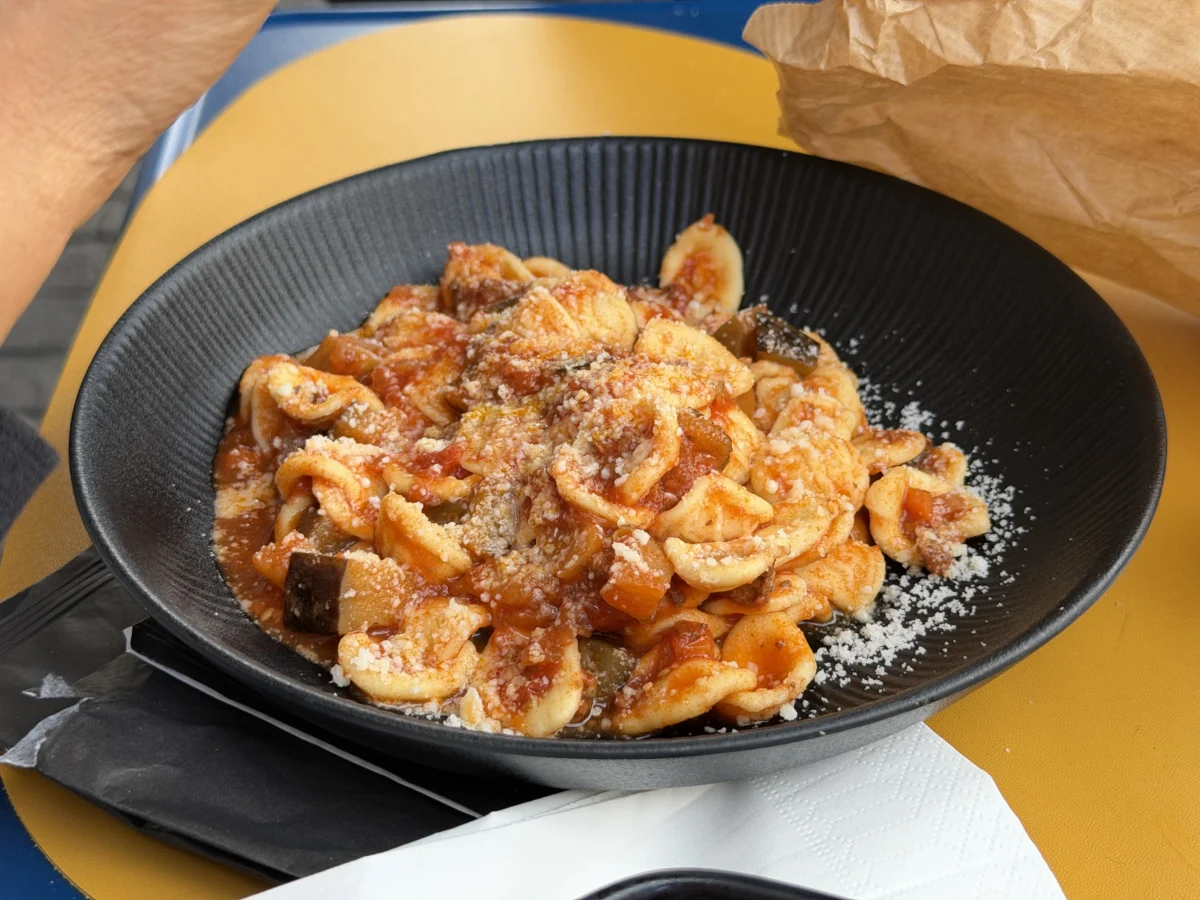
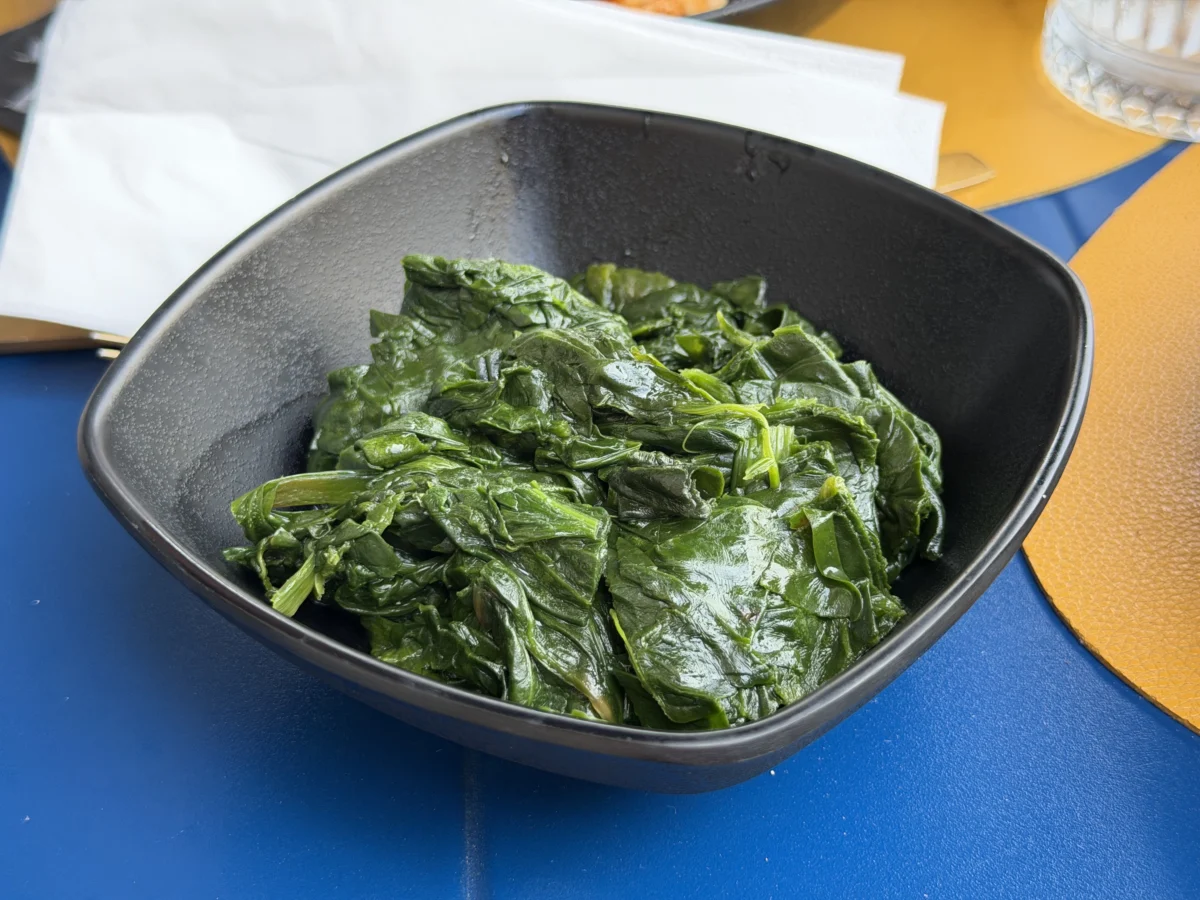
My only complaint with the lasagna is that I wanted MORE!
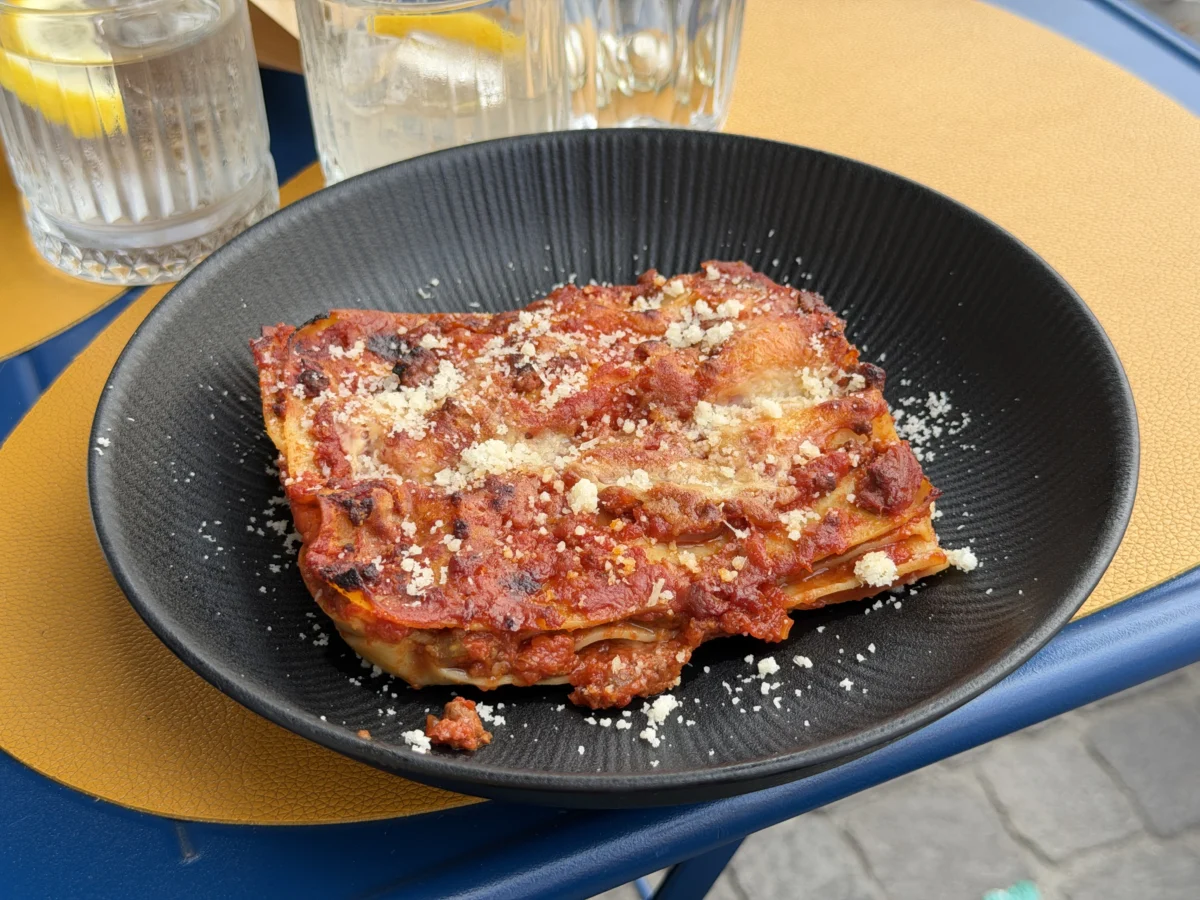
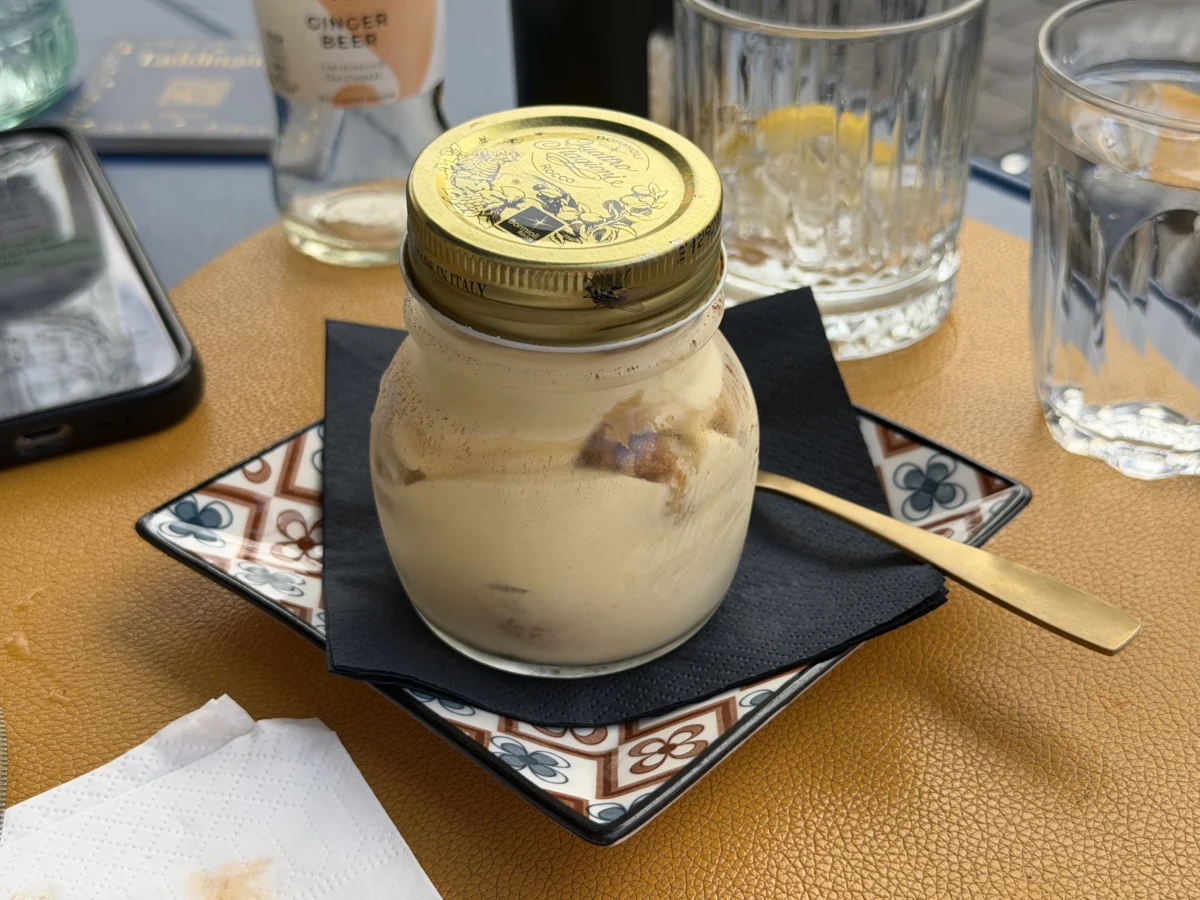
For dessert we planned to pass but Sophia “told” us to get the tiramisu. We agreed to share one and she encouraged us to each get one.. all with a knowing smile. She even promised that it would be the best tiramisu we’d had. Big words! Well.. “best” is hard to say but it was fantastic and certainly at least tied for the best we’ve had in the last month in Sardinia… and we are foodies that have been having tiramisu frequently! Great meal. Great experience!
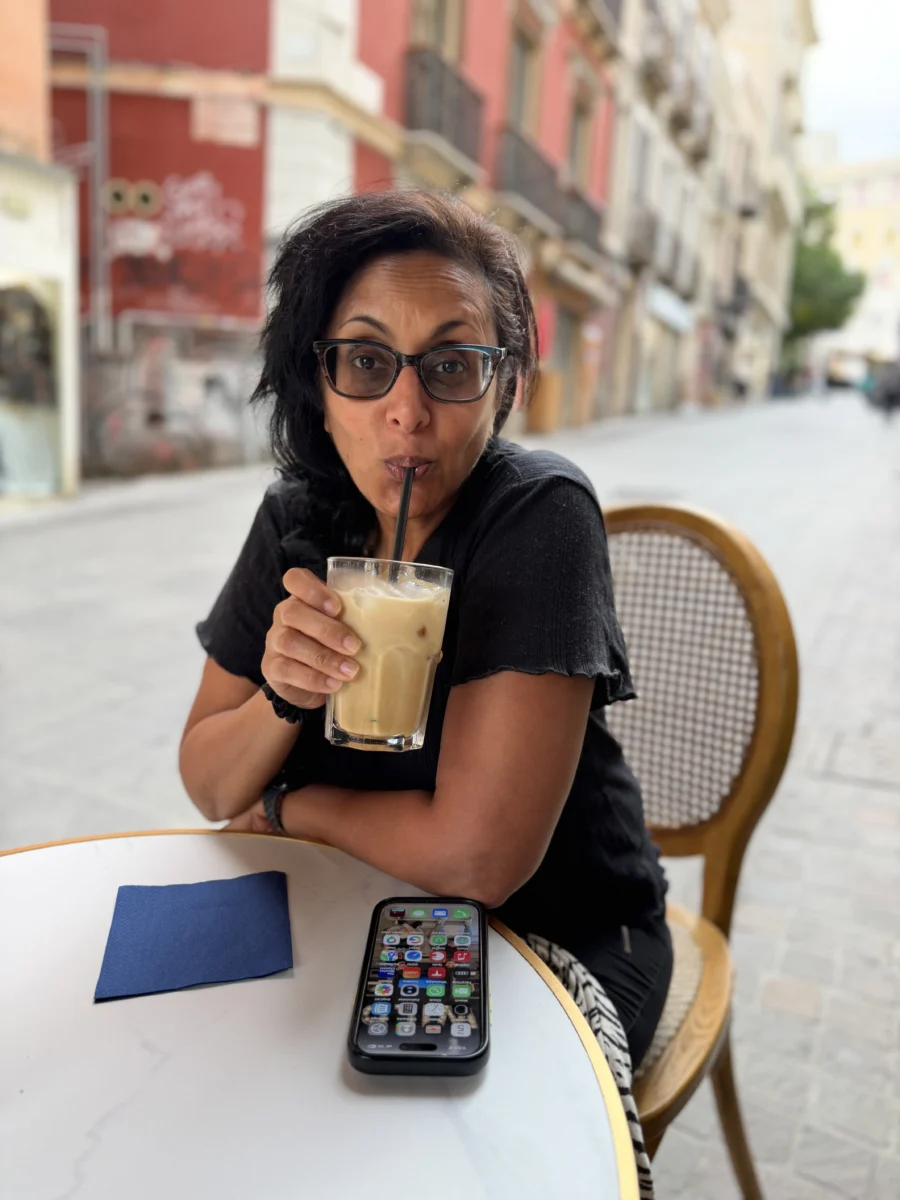
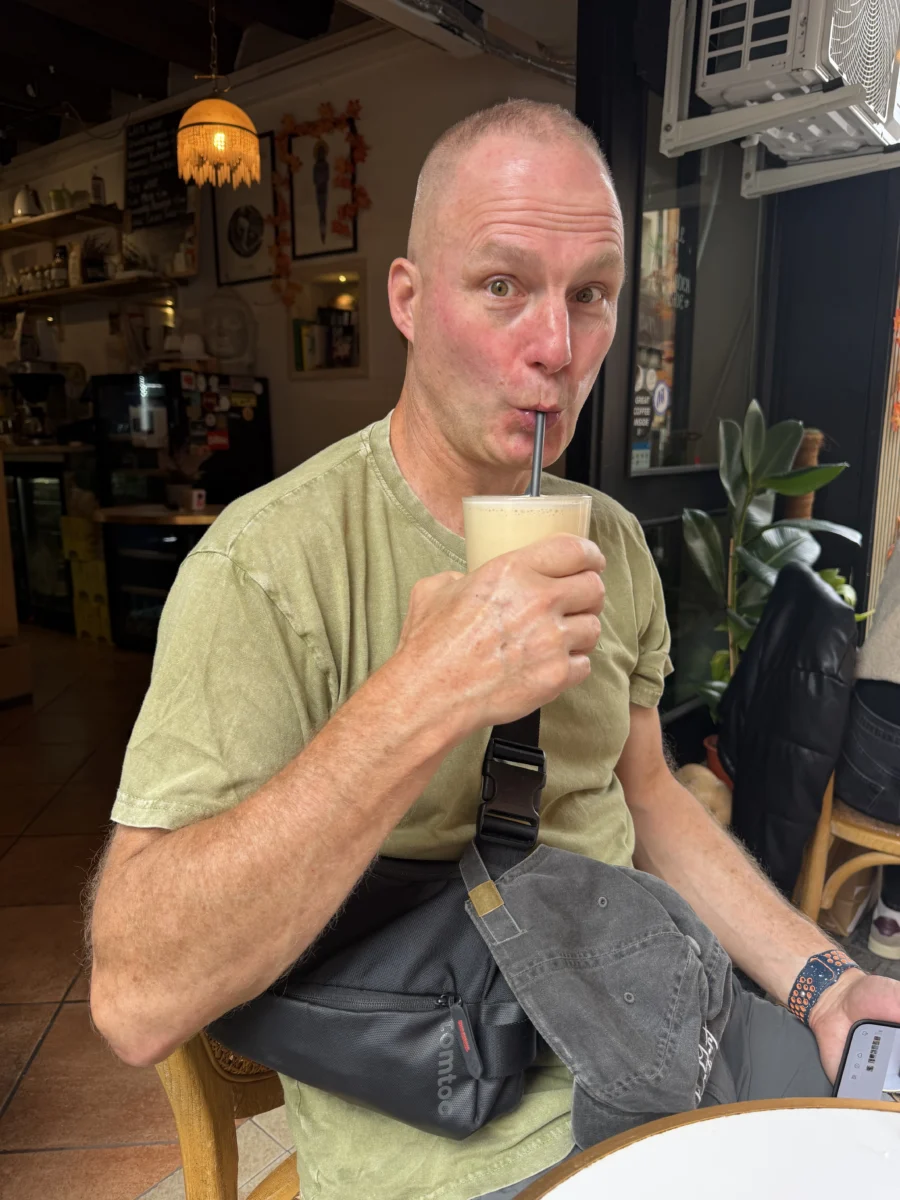
Savitri found her favorite coffee shop at EvaCoffee&Wine in Villanova. Warm, narrow little place with just the coffee (and iced and frappe coffee) that we needed.
Gelato abounds in Italian cities, and Cagliari has some real artisanal options. We were amused that while most restaurants across Sardinia close from ~3-7pm, gelaterias generally stay open. So after a hike or long walk we couldn’t always find a meal but we could find a reward!
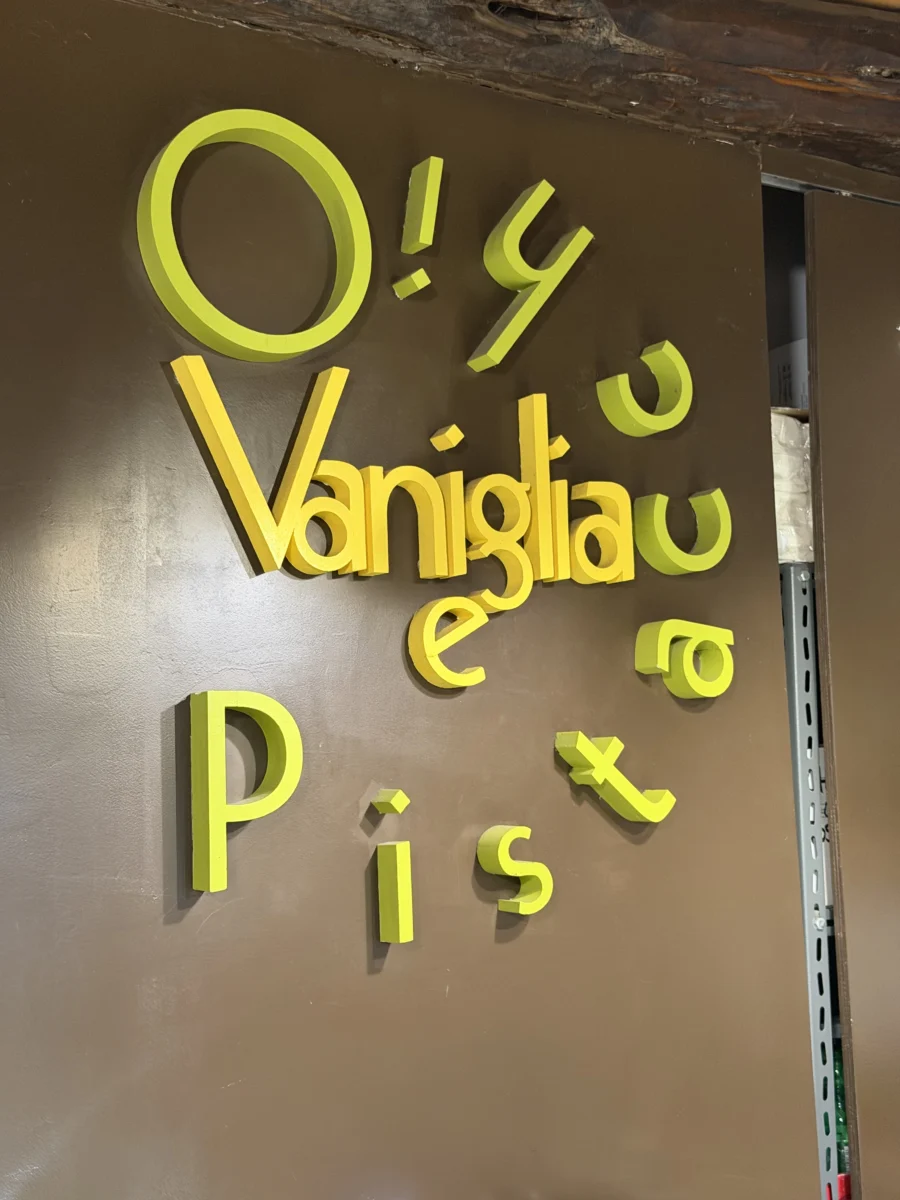
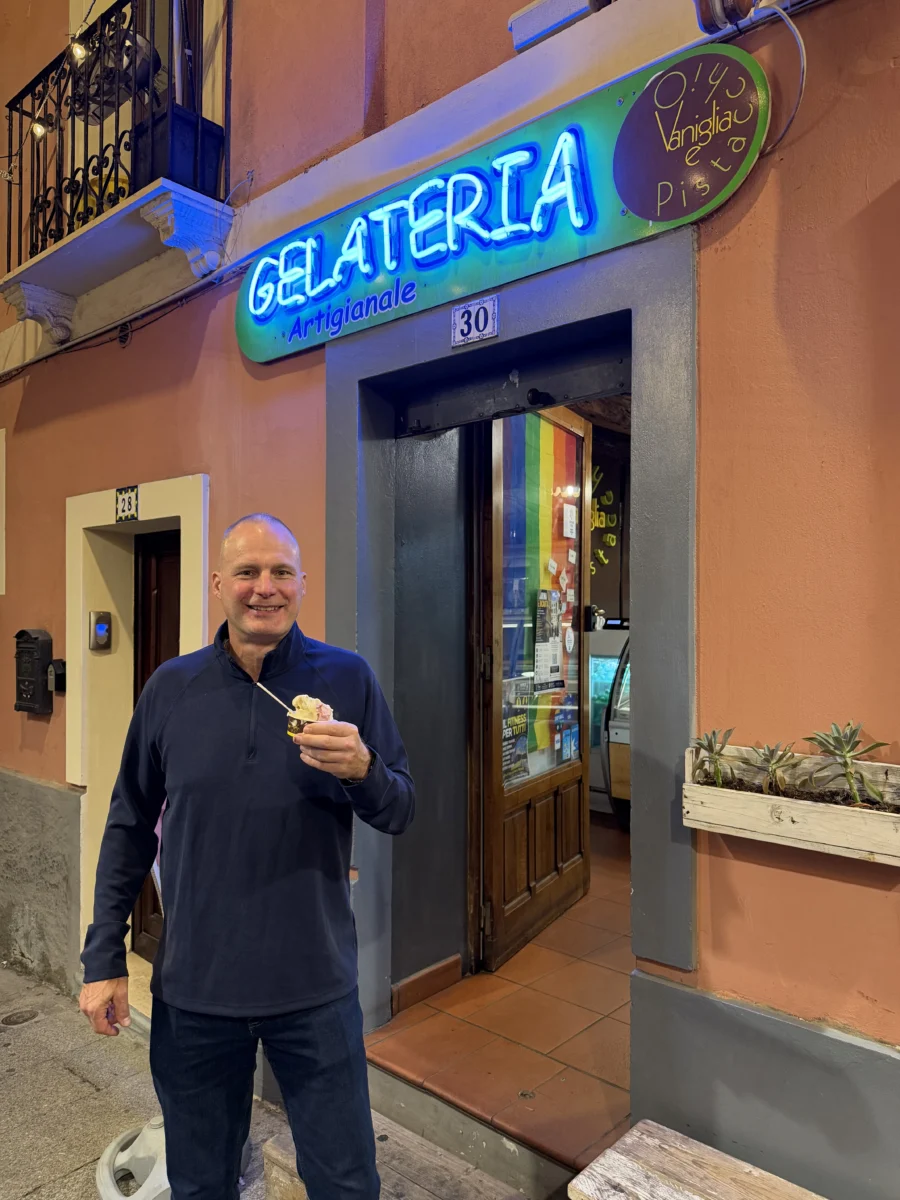
Vaniglia e Pistacchio is a tiny spot tucked away on Via Napoli but has big flavors. They clearly take pride in their craft and post videos about how they make it all and leverage local ingredients as much as possible.
I Fenu has two locations, I Fenu – Gelateria in Marina and I Fenu Gelateria e Pasticceria in San Benedetto.
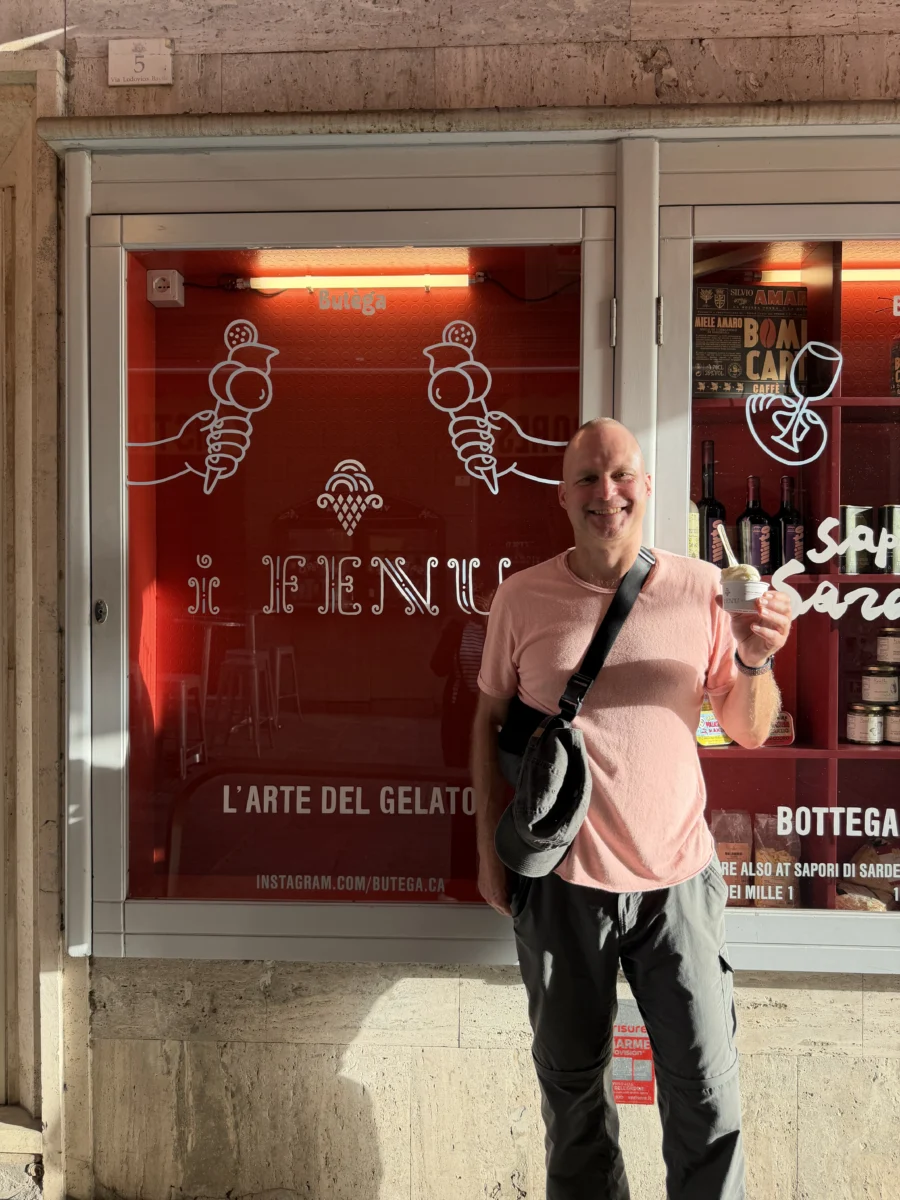
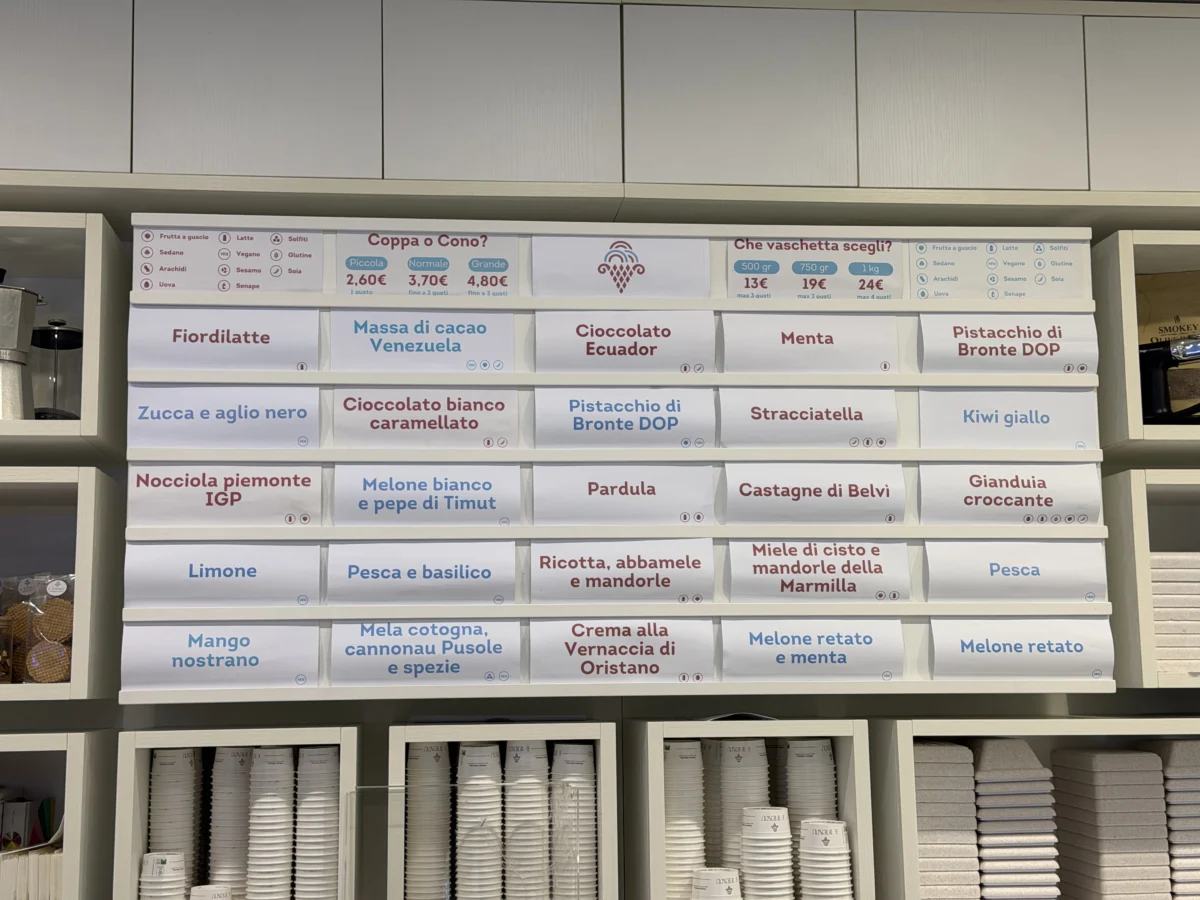
We tried both locations (for science?) and were impressed by the extensive selection they share. They celebrate Sardinian ingredients and locations as well as globally renowned ingredients. There are numerous unique flavors and a classy vibe. The Venezuela chocolate really impressed us with its deep flavor without being overly sugary.
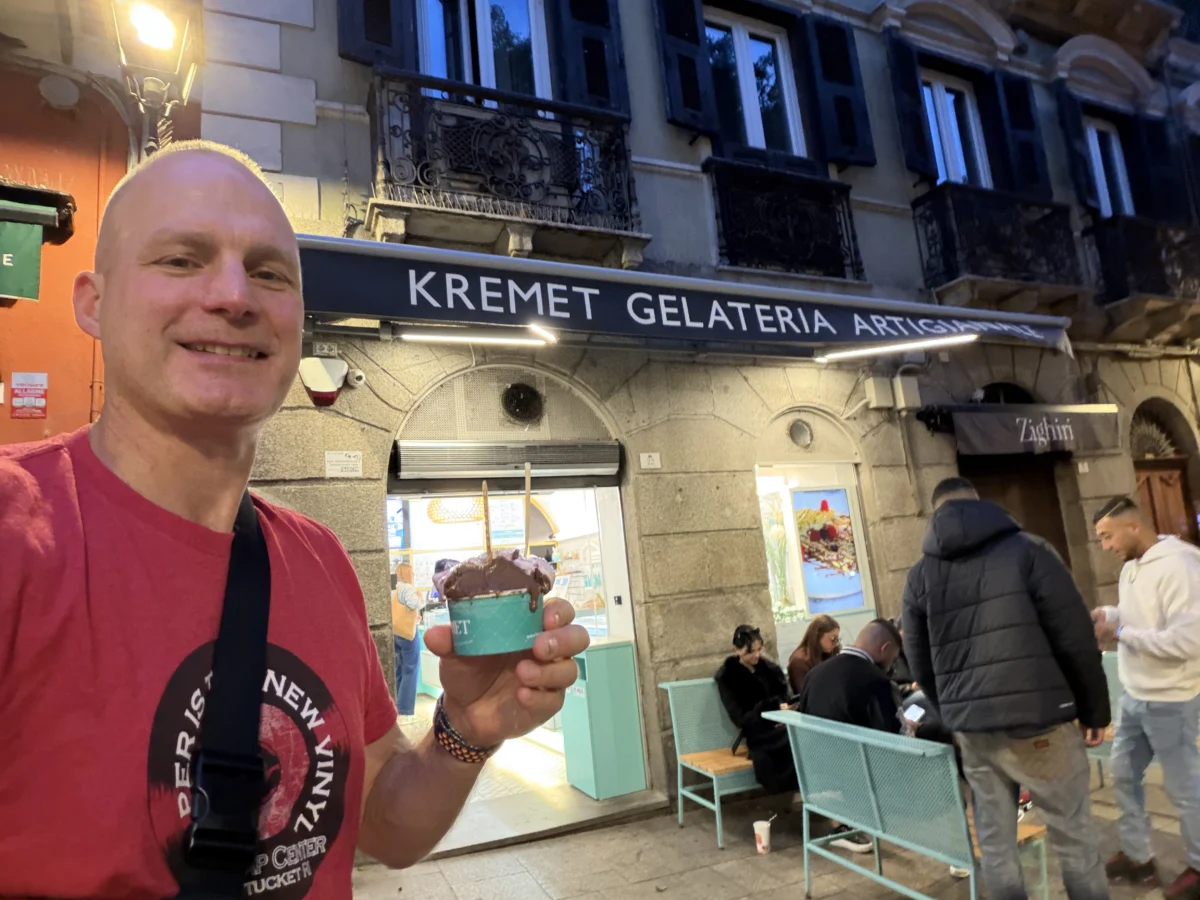
Kremet Gelateria Artigianale stood out for having a large selections of both traditional and vegan gelato. Anyone who has been taste-testing vegan alternatives over the years will tell you that in recent years things have shifted and you often can’t tell which is which. Kremet has it figured out! They also have very welcoming staff.
Ice Stop Gelateria, the gelateria that almost got away. somehow the name and red, white & blue signage for “Ice Stop” don’t scream authentic Italian gelato. Furthermore I had just gotten a cup of I Fenu gelato across the street and was happily enjoying it. We stood near the front checking out their menu and articles and saw a single server inside so Savitri went in to explore and chat. He was super friendly and beckoned me in as well (one gelateria’s gelato inside another gelateria seems wrong!). Turns out he runs the place and he’s the son of the founder, who opened Ice Stop (Marina) Gelateria Artigianale (this place) and Gelateria Artigianale Ice Stop (in San Benedetto) in 1973.
Savitri got Amarena (dark cherry & vanilla gelato) and we agreed that it was one of the best gelatos we had on the entire trip. We returned that evening and I got Dark Chocolate Fondant with Orange Peel and Malaga (Rum Raisin). Both were exceptionally good, the best of those flavors we had.
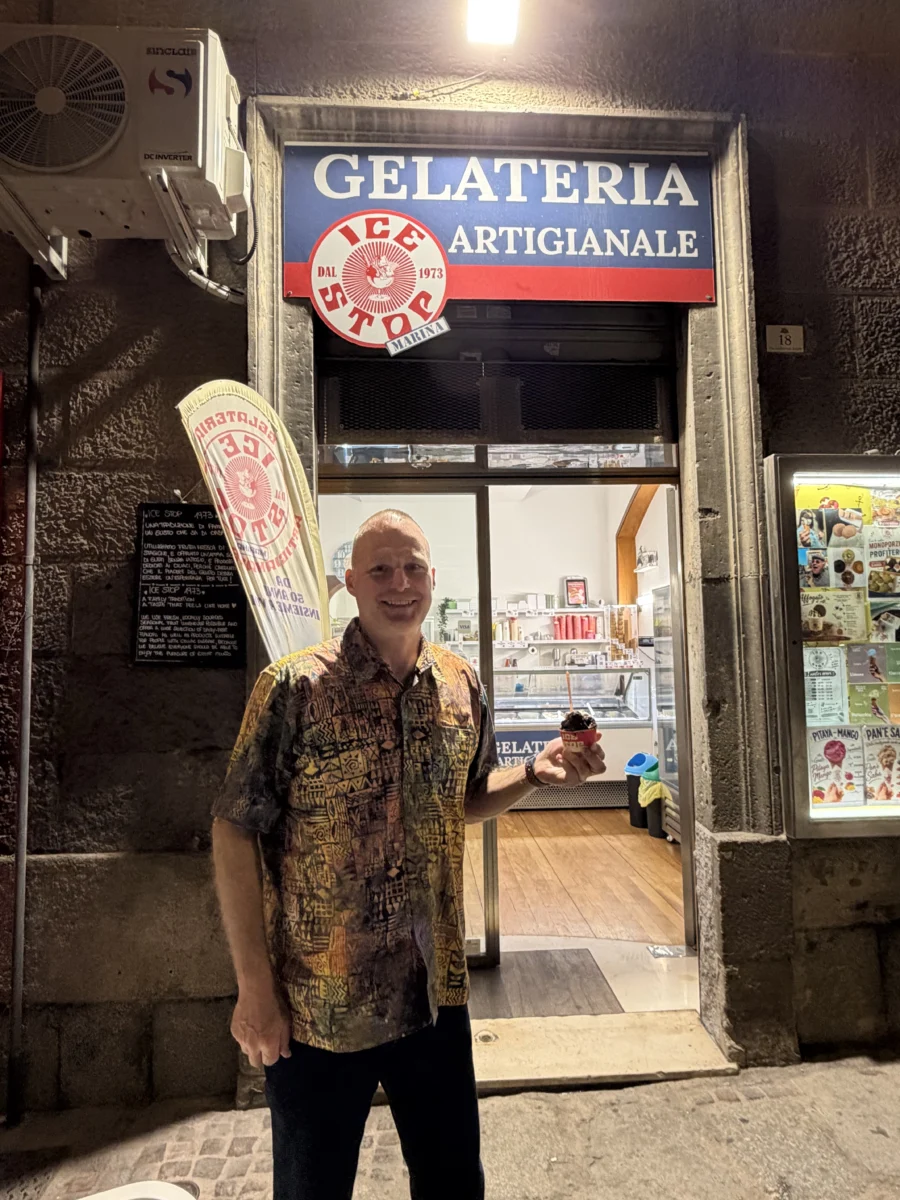
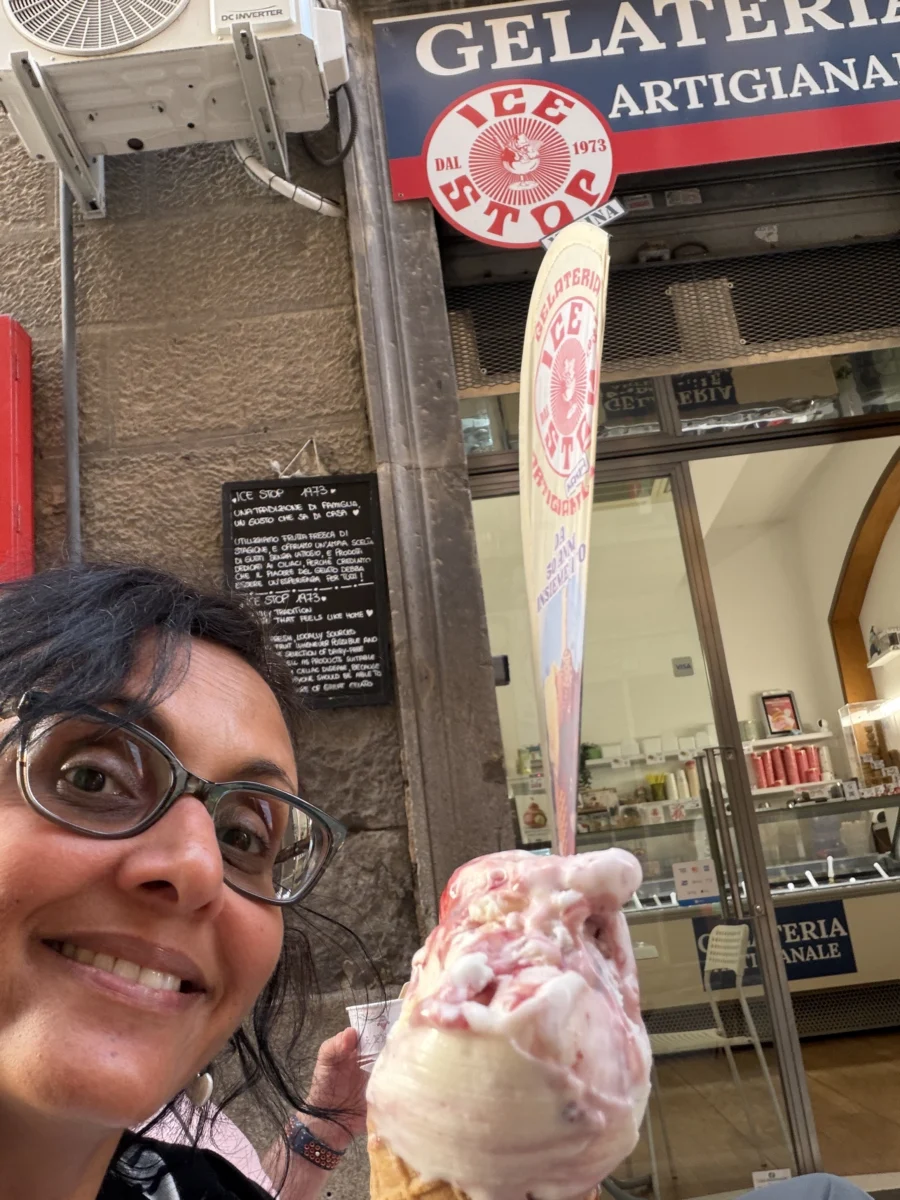
Again sampling certain flavors at certain times and not visiting every gelato shop makes declaring a “Best of <insert city name here>” impossible… and we enjoyed every place that we went. BUT.. next time we go to Cagliari the first gelato stop we would revisit would be Ice Stop, then try all the places we haven’t tried yet!
One night, while exploring the upper parts of the Marina approaching one of the Castello gates I saw some masks out of the corner of my eye. Unlike the little tourist shops with their standard fare, there was a man intently carving a mask on the bench. We entered chatted about all sorts of masks made of different woods (mostly ash stained different colors). We combined French, English, and lots of hand-waving to communicate.
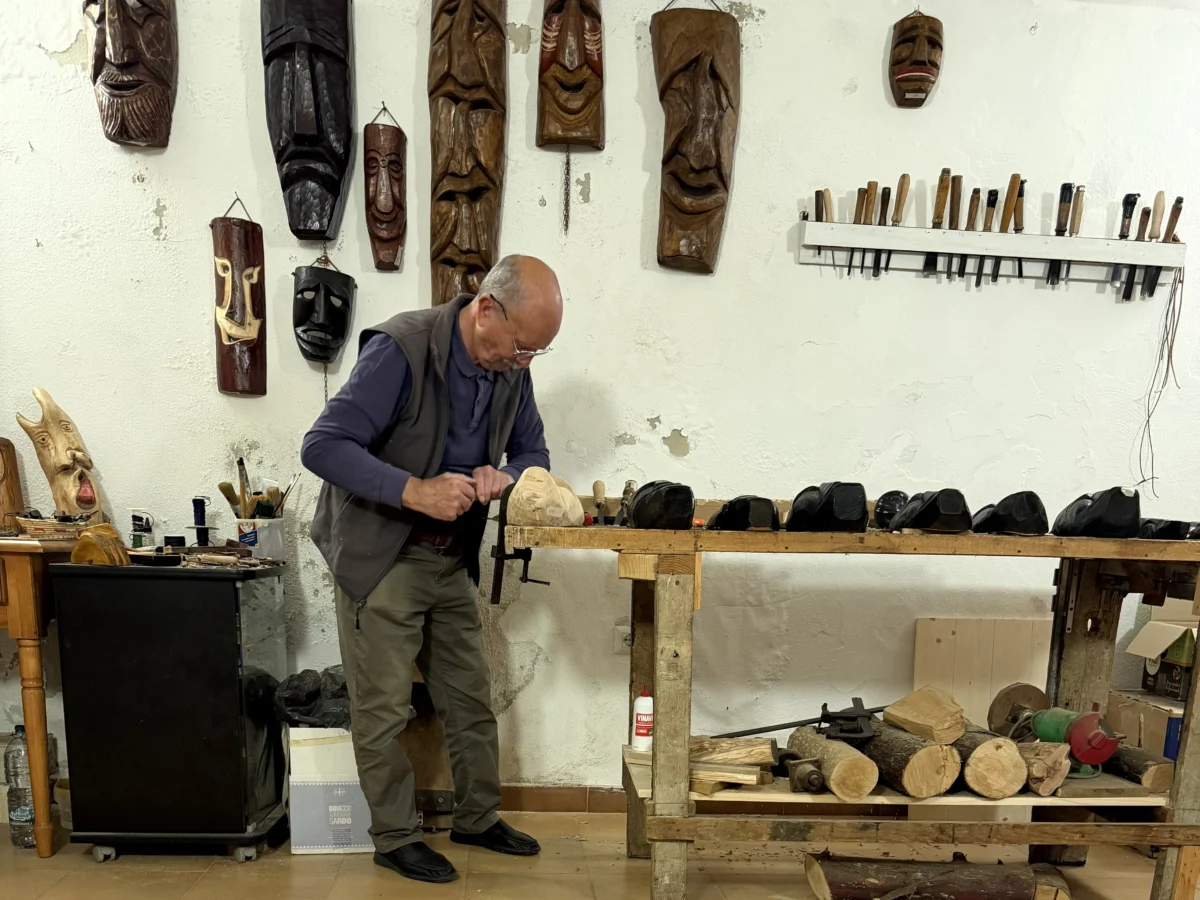
Some pieces were signed and others weren’t, and Lino kindly offered to sign whatever we bought. He then whipped out his chisel and did it in maybe 10 minutes.
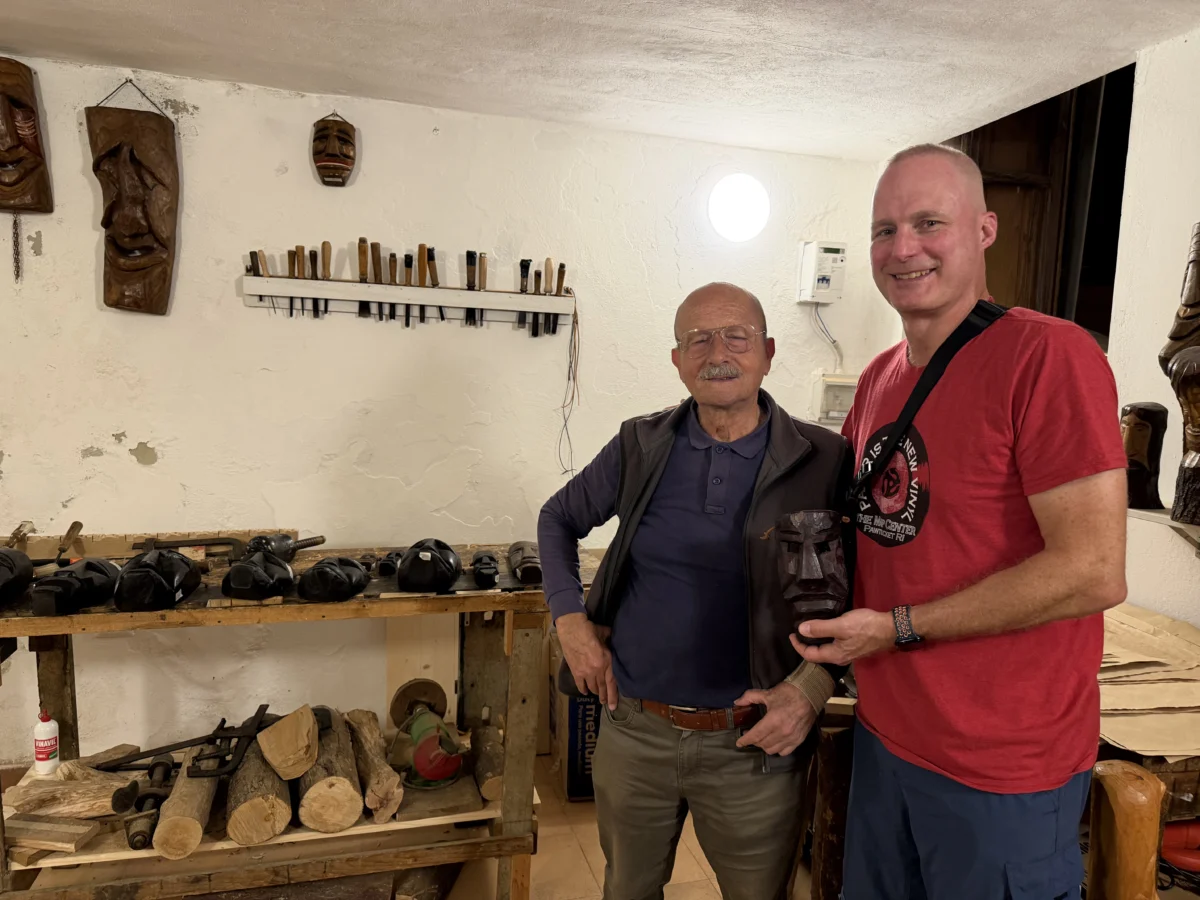
When we paid he didn’t have a credit card machine and brought me to another vendor down the street who took care of the transaction. I really like when shops look after each other.
Castello rises above the rest of the city, with towering landmarks and providing excellent viewpoints of the city.
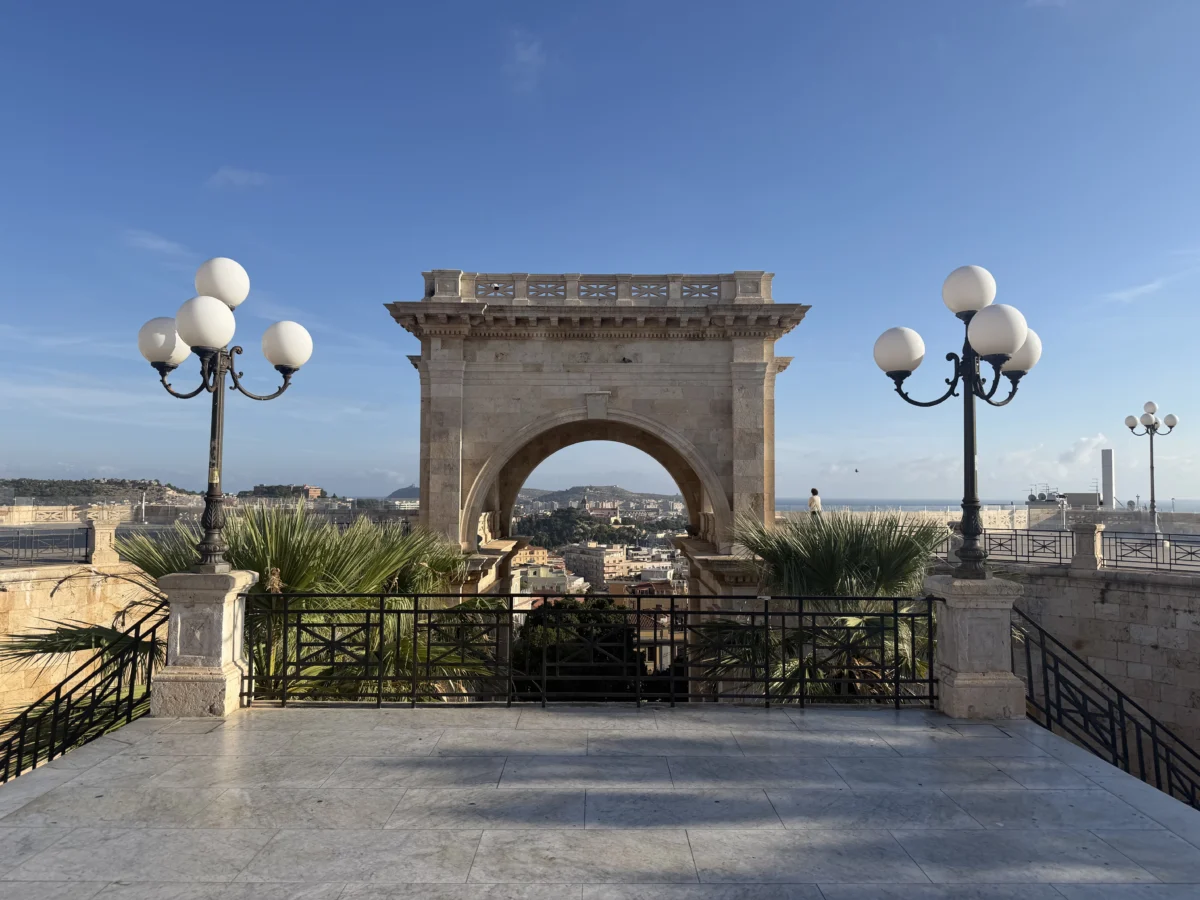
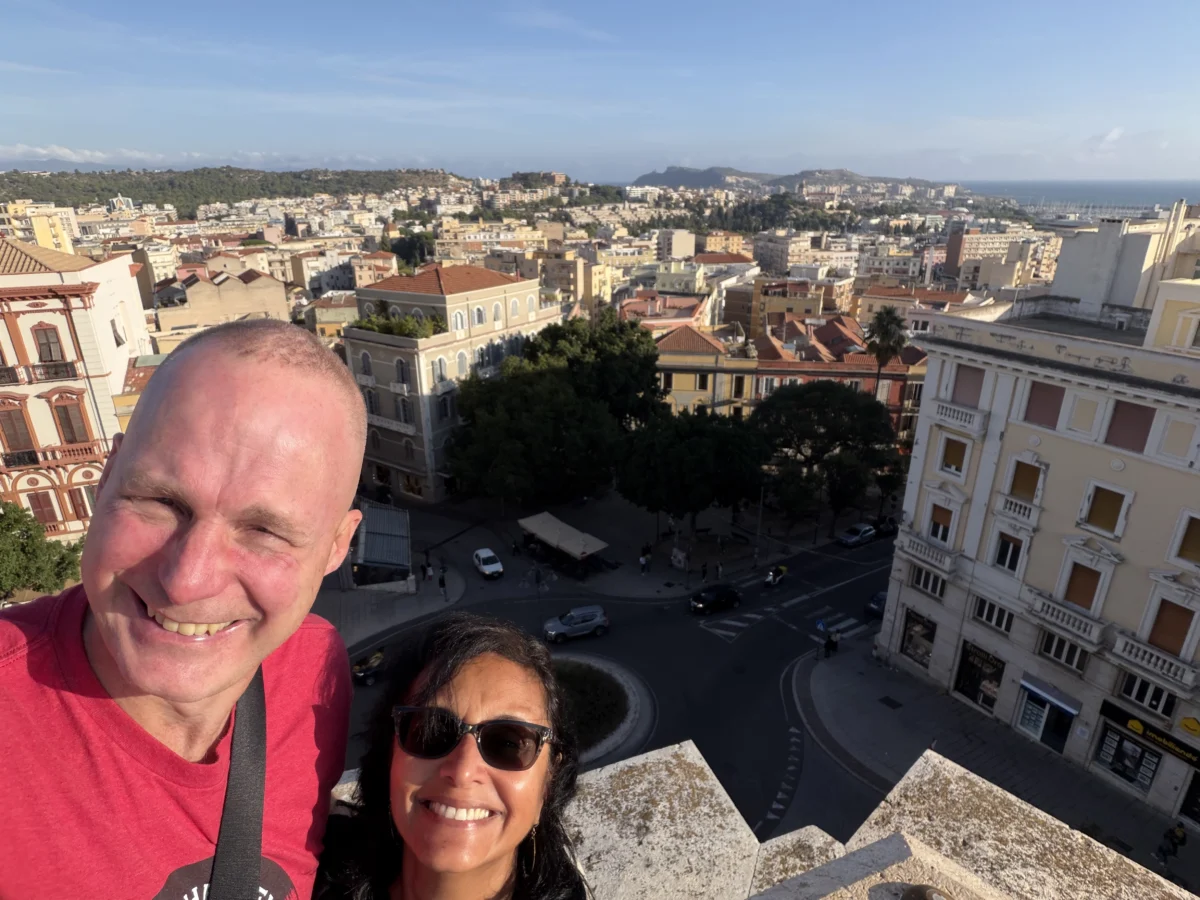
One of the famous sites in Castello is Palazzo Regio, the residence of the representative of the King of Sardinia during periods of Aragonese, Spanish, and Savoy rule. From 1799 to 1815 the palace was the official residence of the royal family and court, in exile from Turin, which was occupied by Napoleon. It is still active as an institutional and representative building for the Metropolitan City of Cagliari.
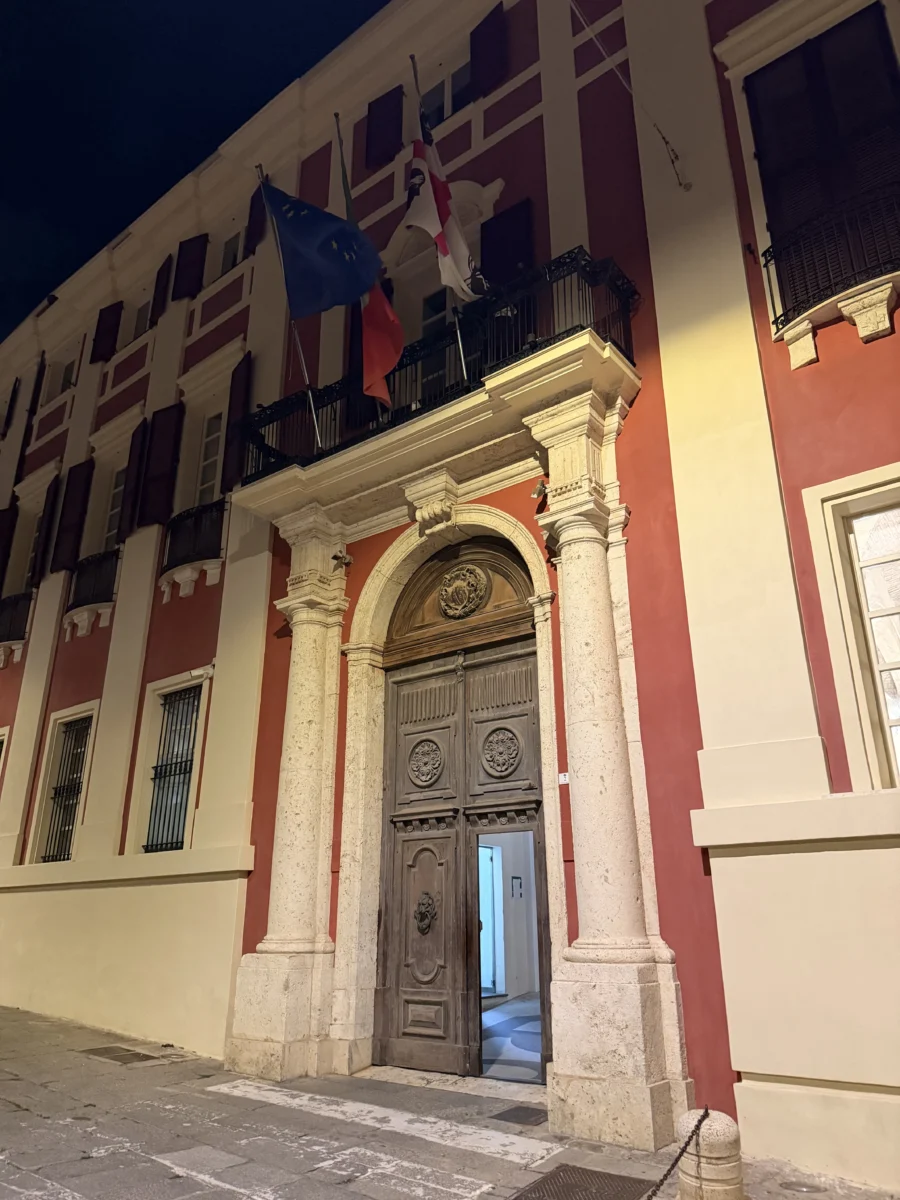
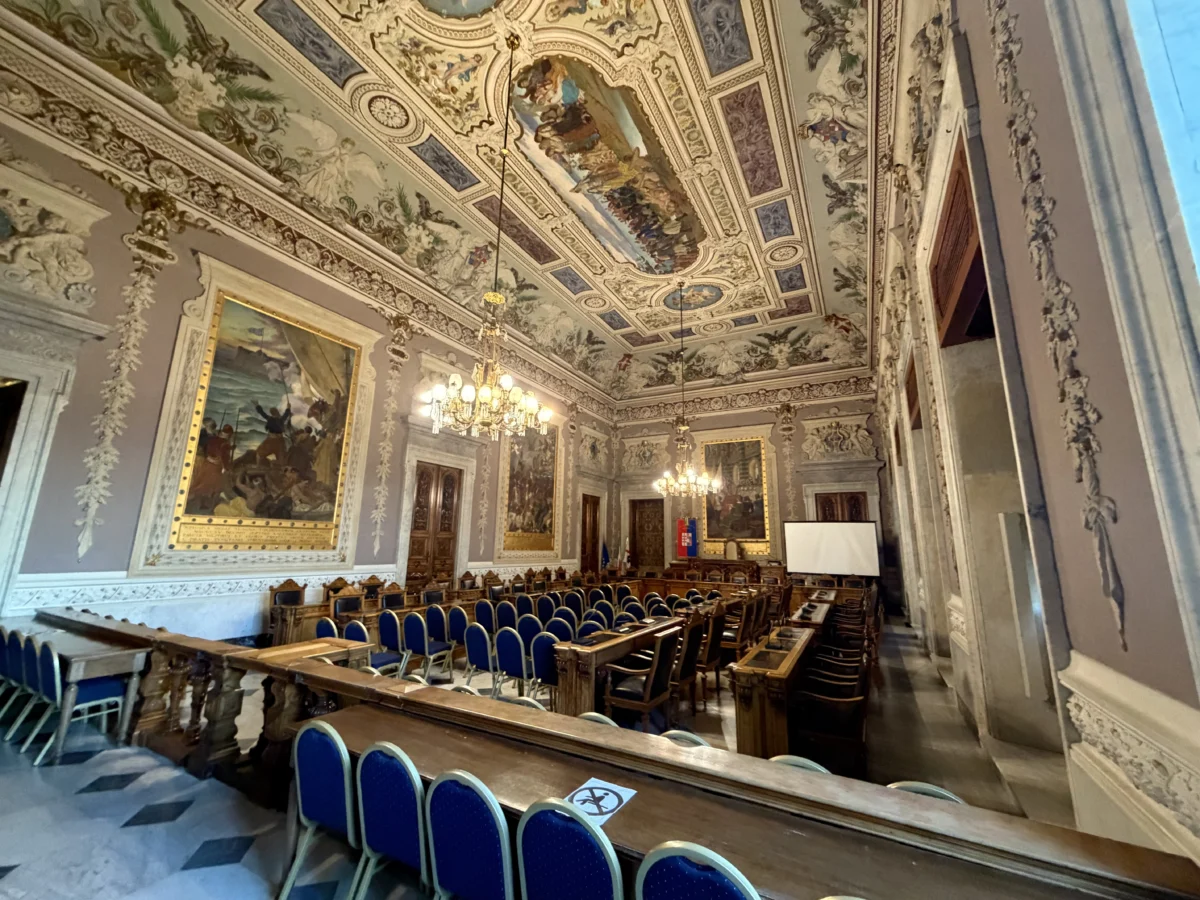
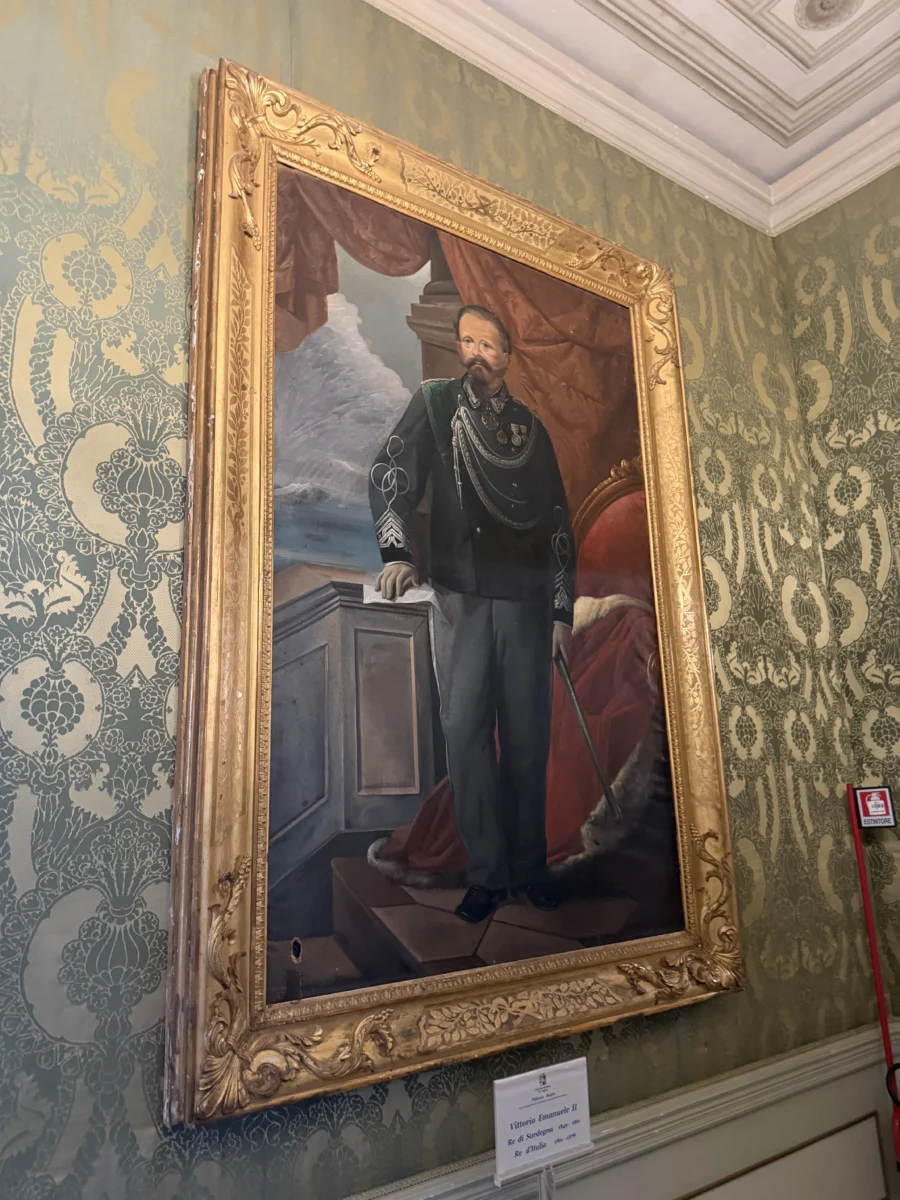

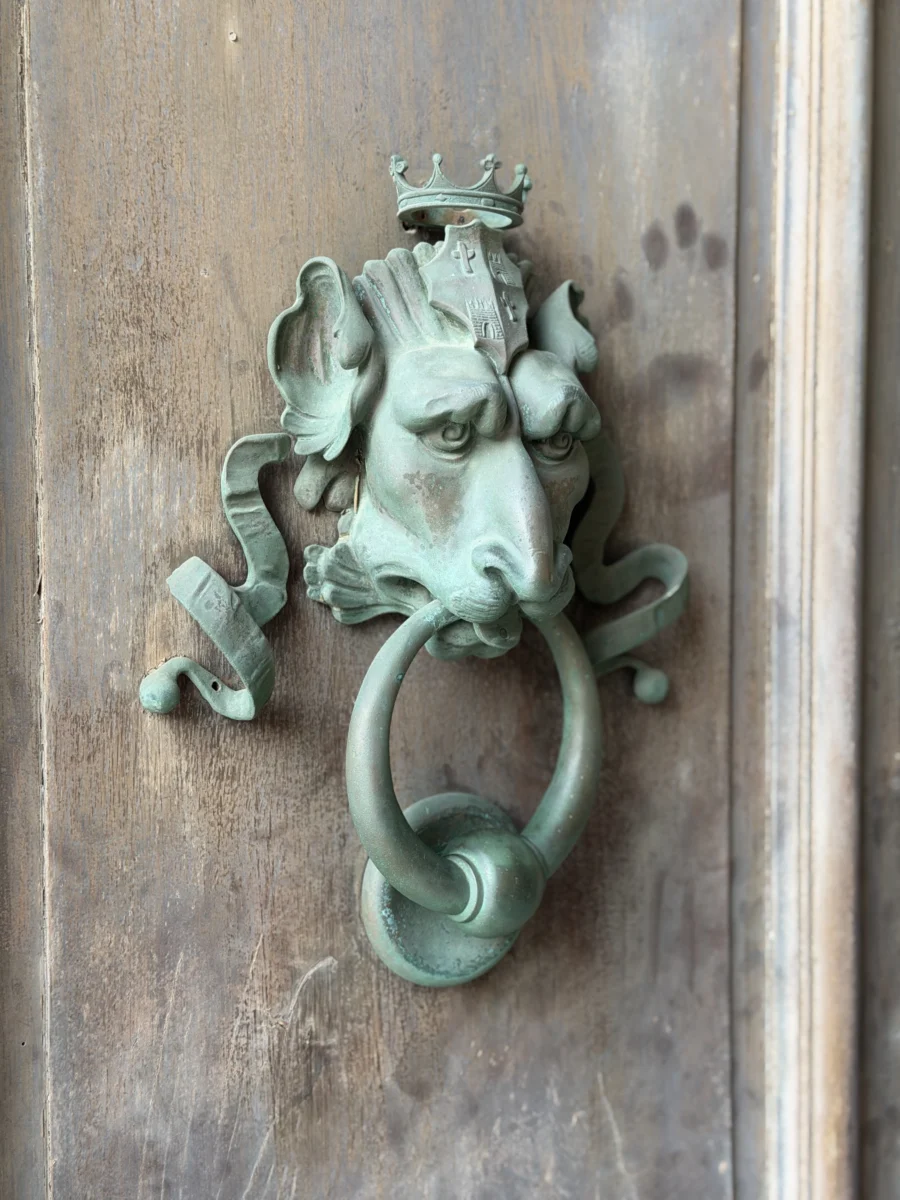
Right next to the palace are two visually-appealing but very architecturally-different churches. Both are worth dropping in although no photos are allowed inside.

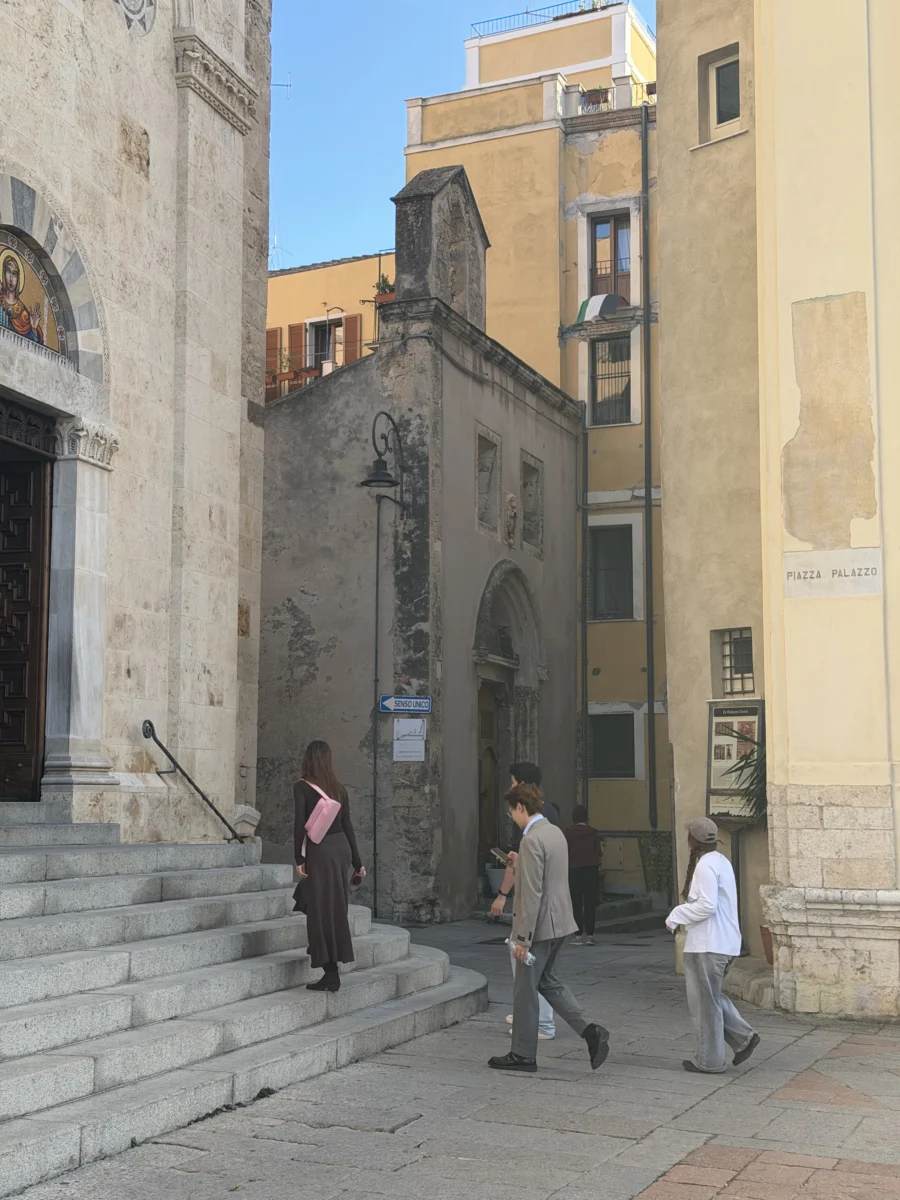
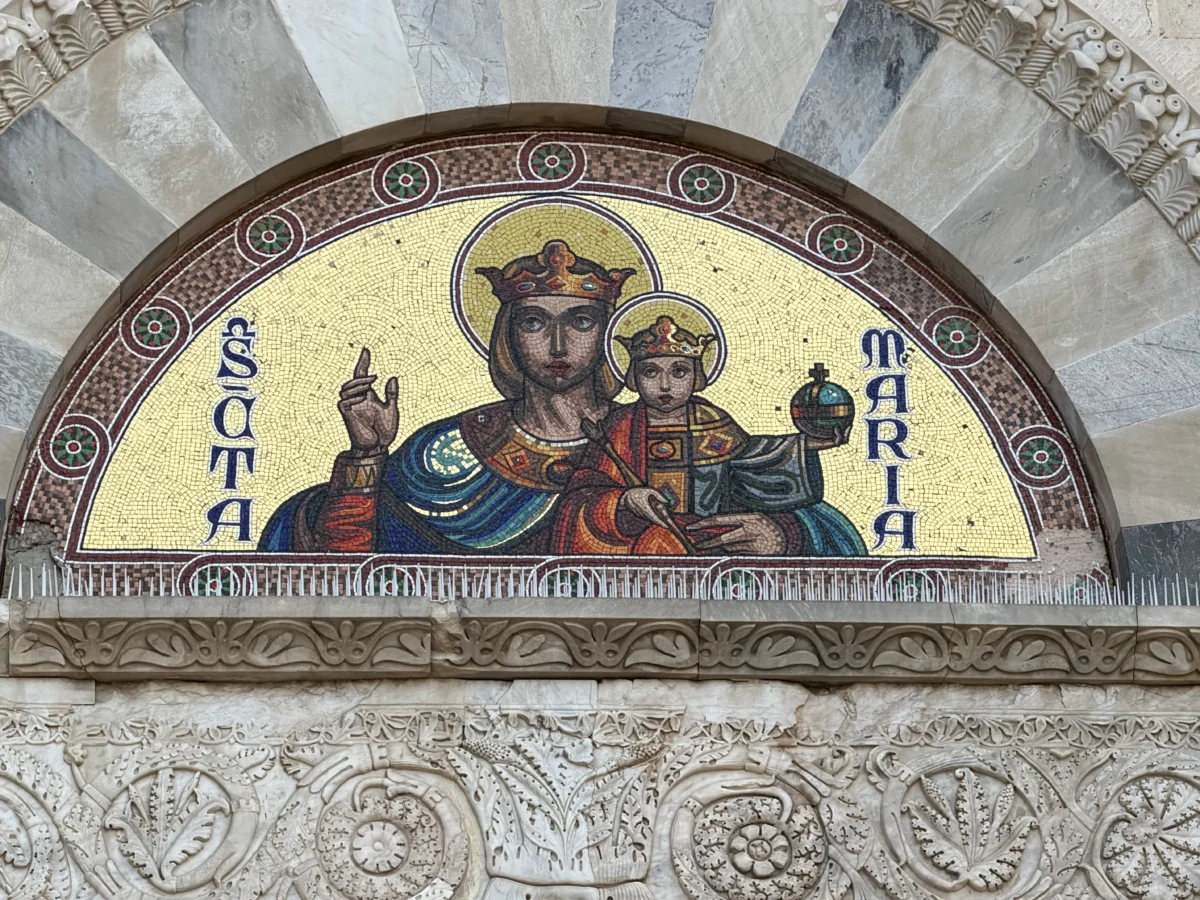
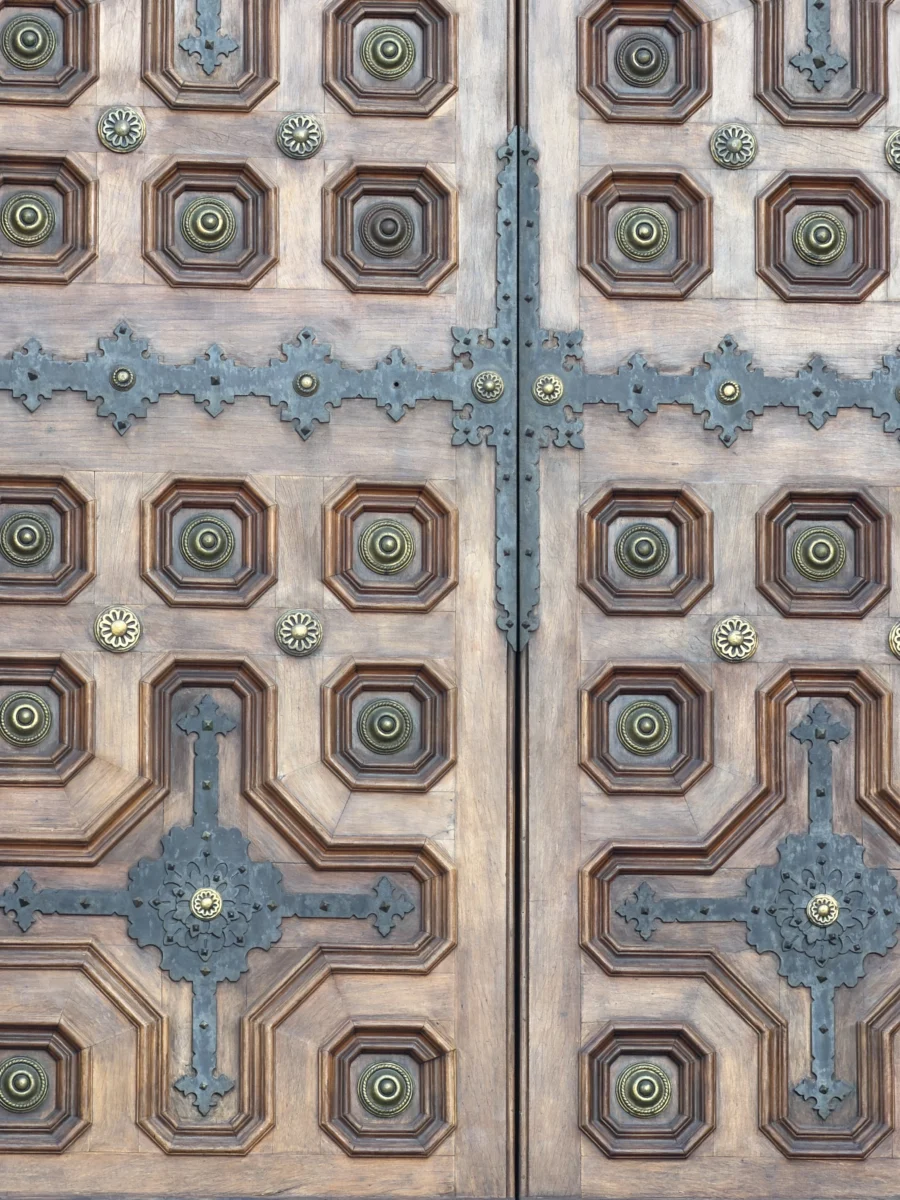
Across the street from the churches is a little plaza that caught my eye several times with its serenity and balance.

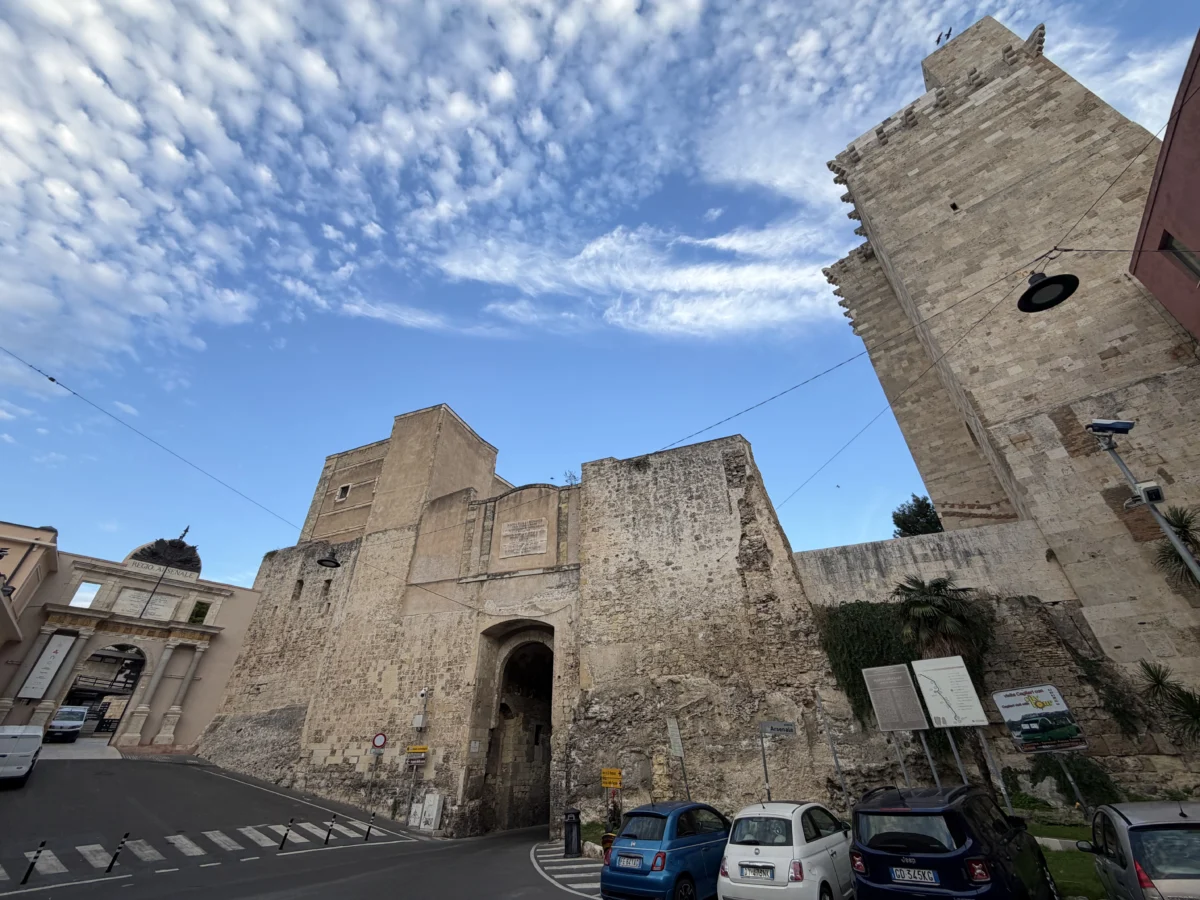
The top of the hill, where Castello meets Stampace, feels like a medieval wonderland. Tiny passages that dive through tunnels then open onto scenic overlooks.
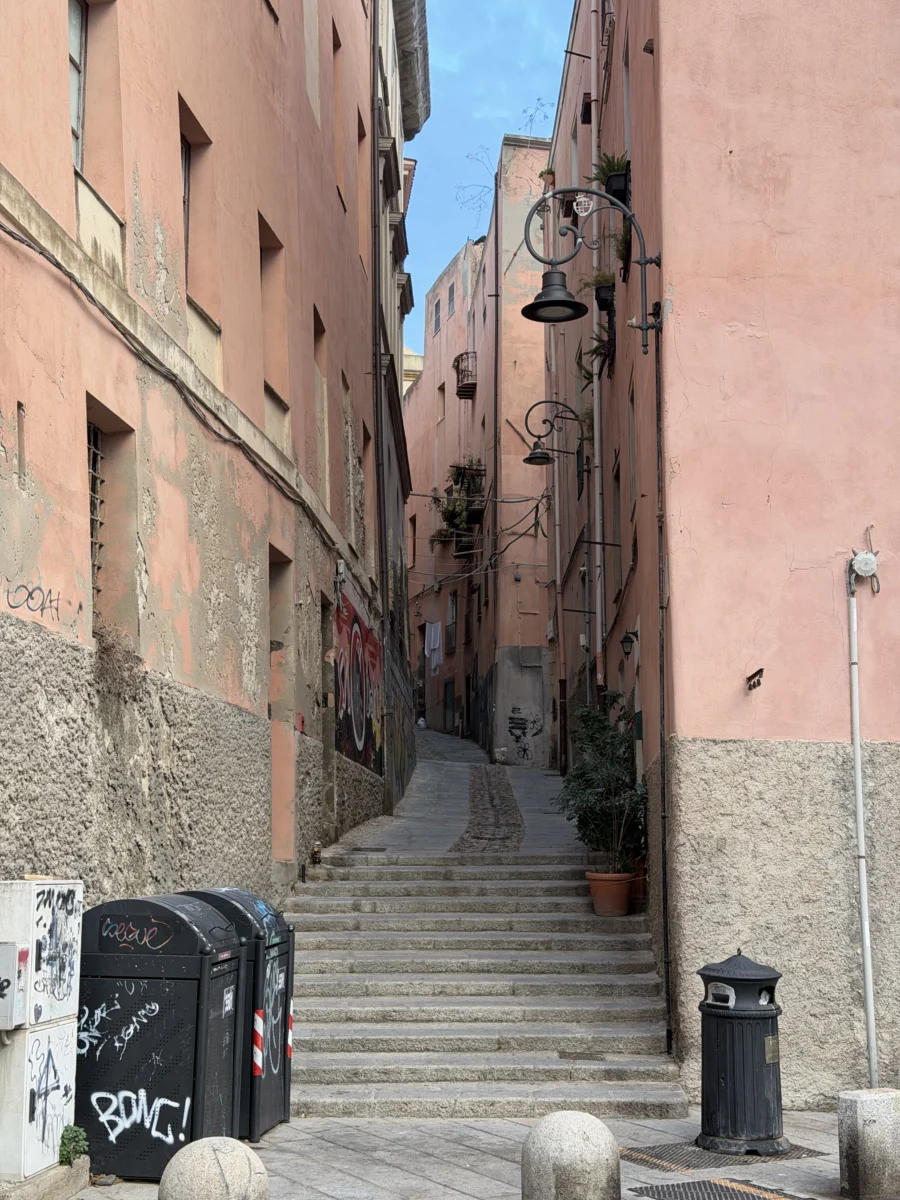
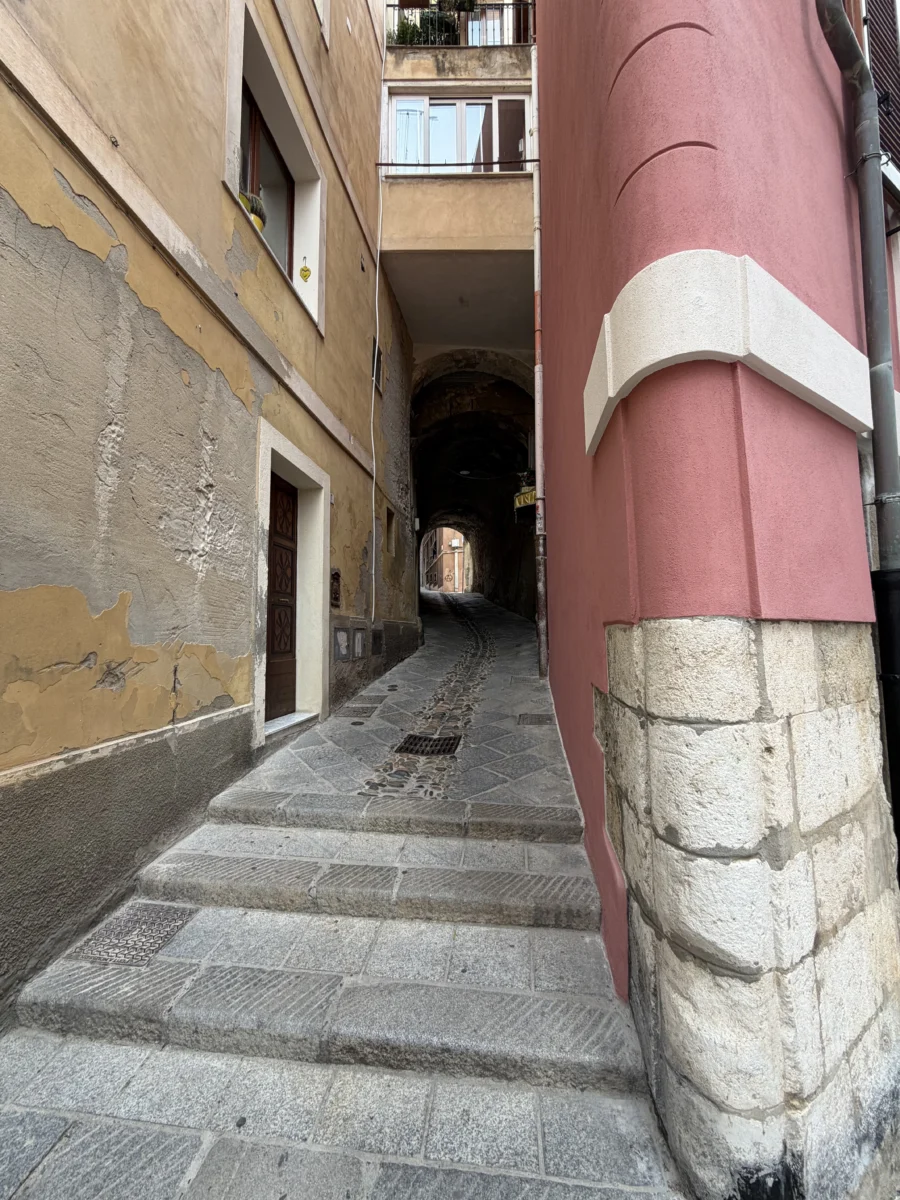
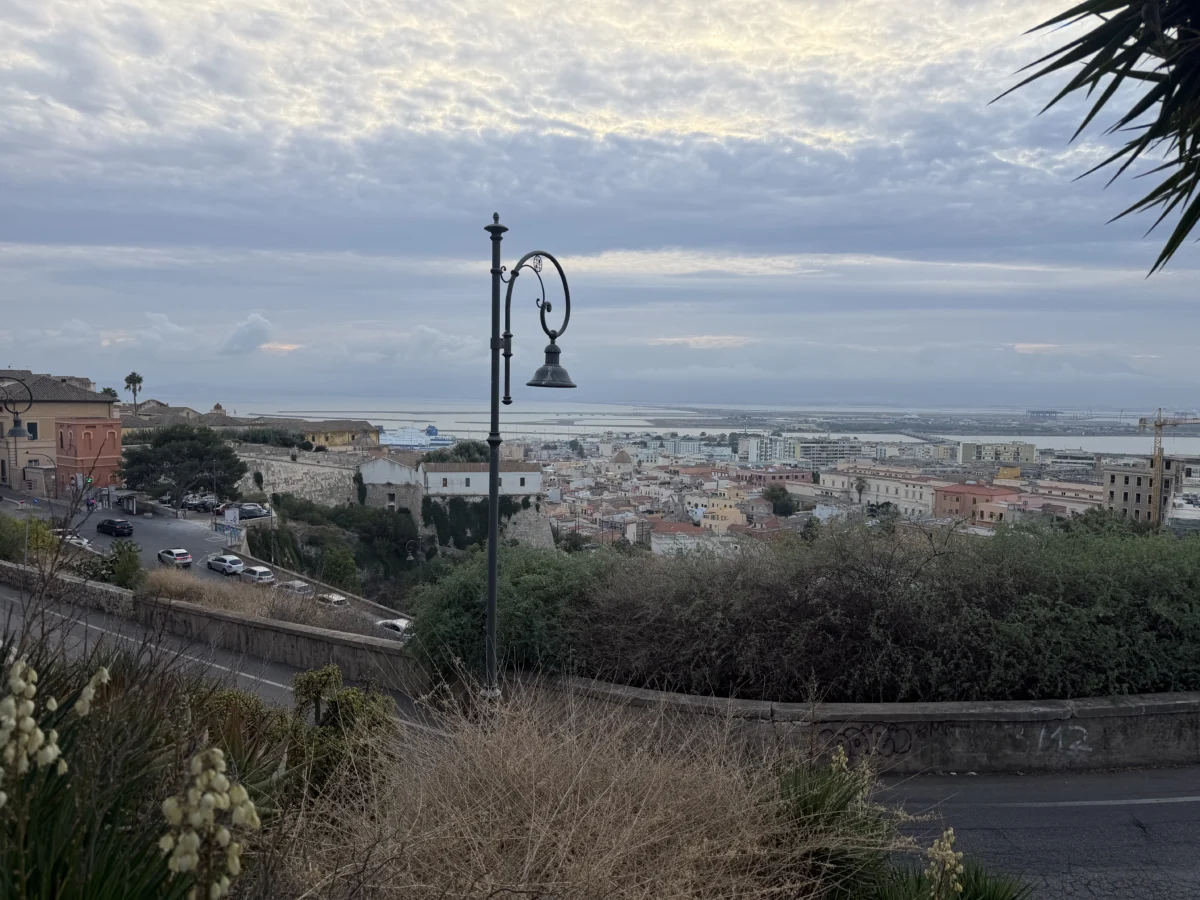
Castello is narrow at its northern tip, and the walls, gates, and towers loom high above. It feels distinctly older than just a couple blocks away… except cars whiz through day and night!
At the top of the hill is the Citadel of Museums, where many national museums are clustered together. It’s a well-thought out configuration in a top-of-the-world location.
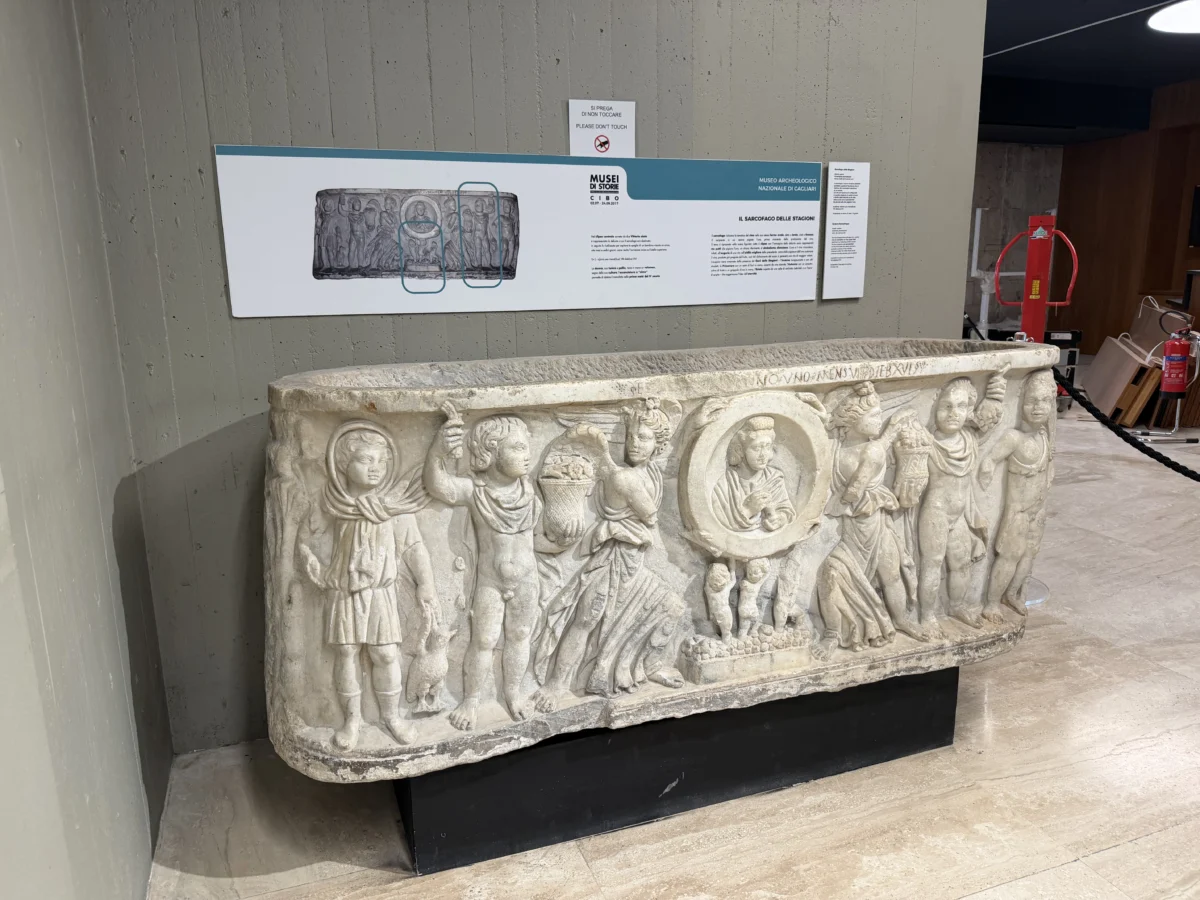
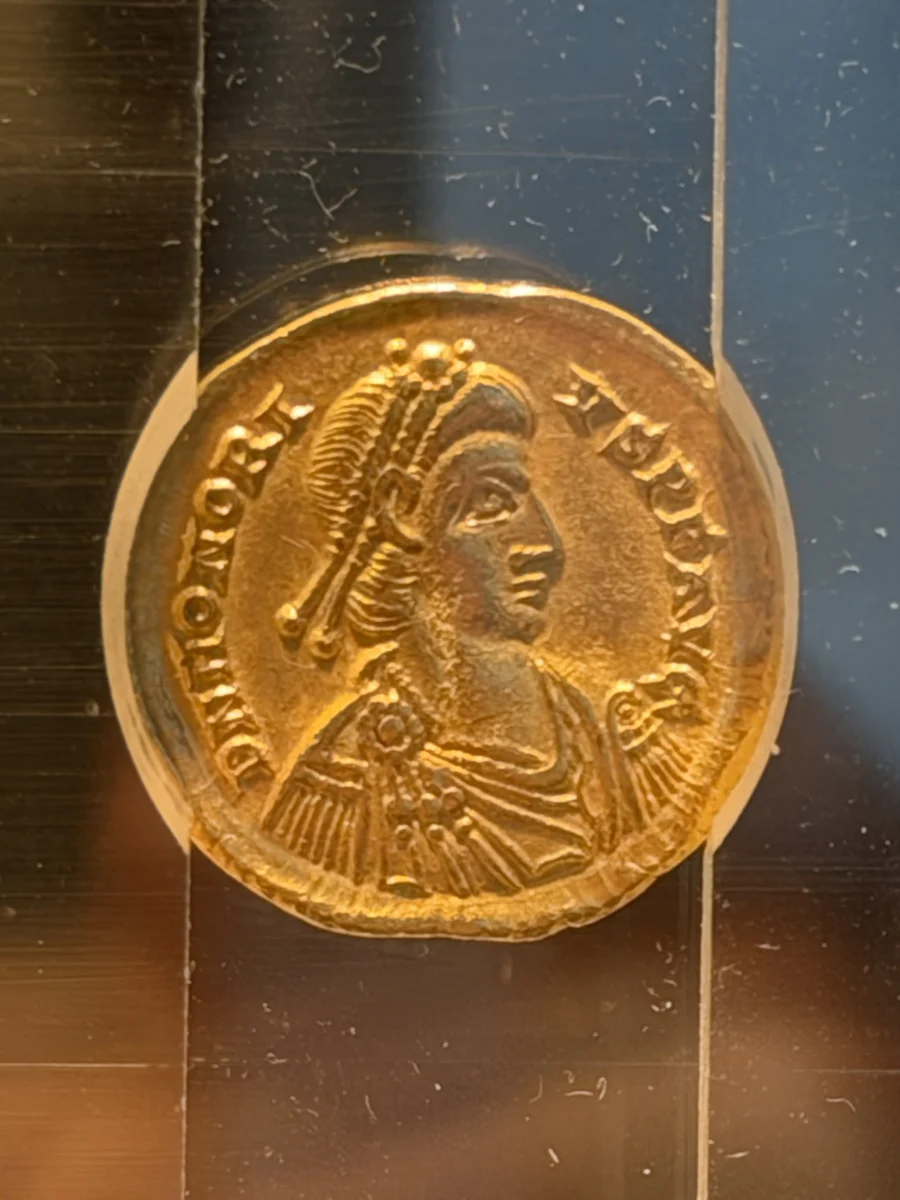
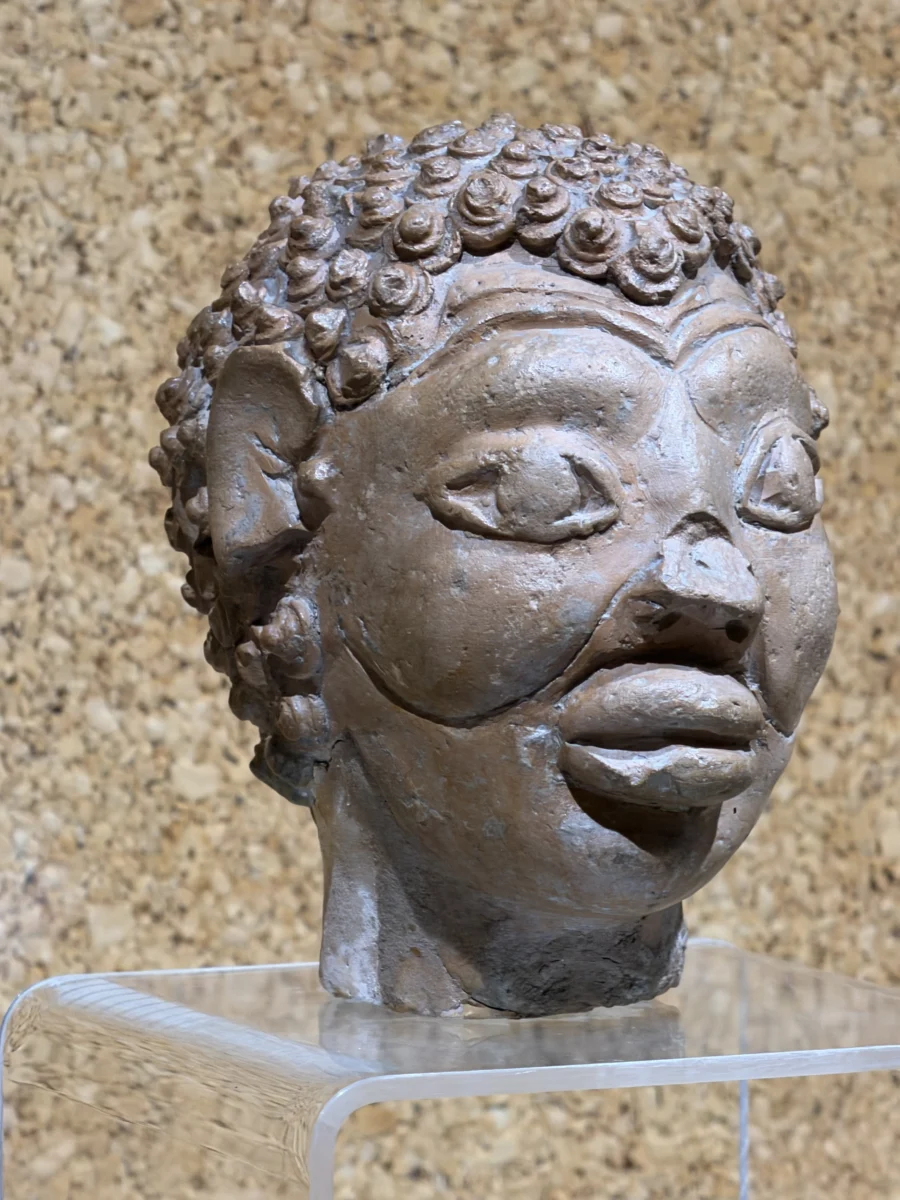
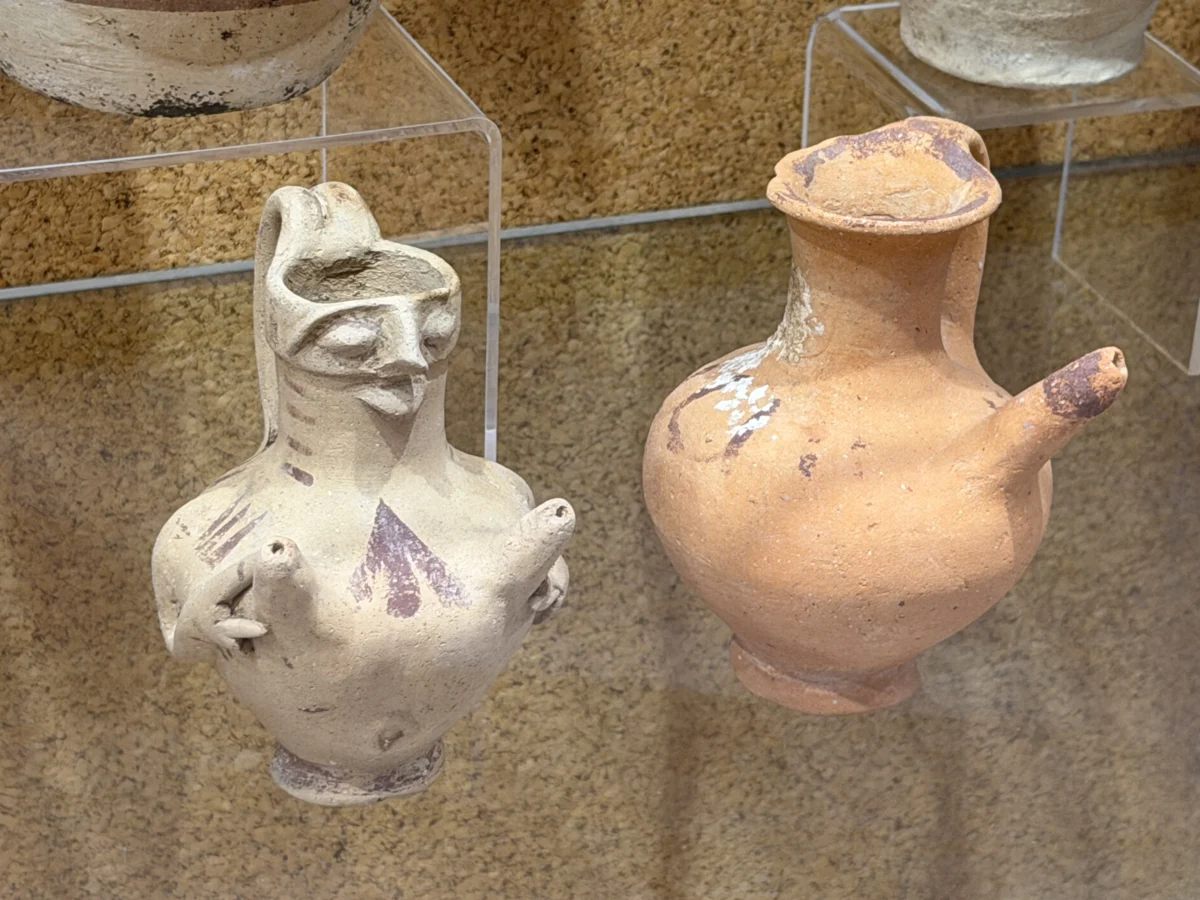
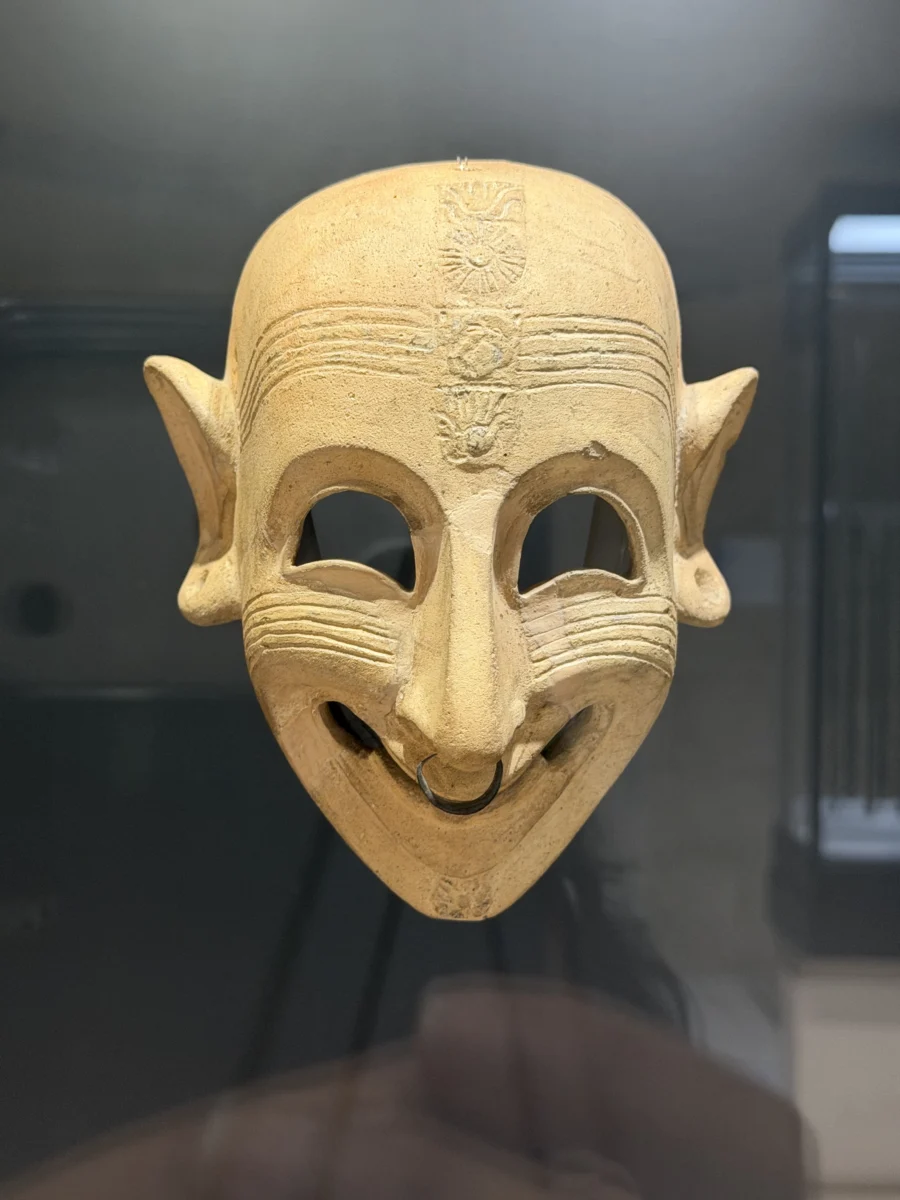
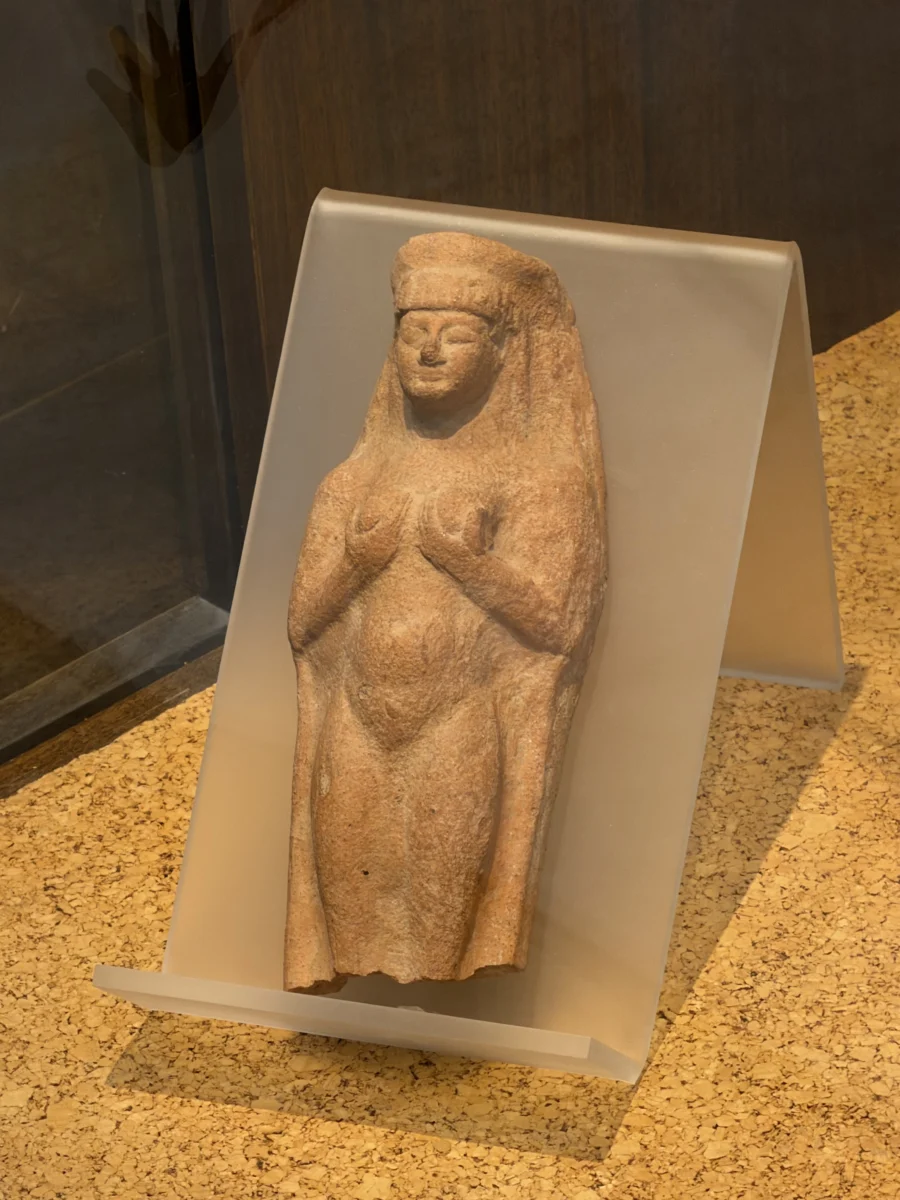
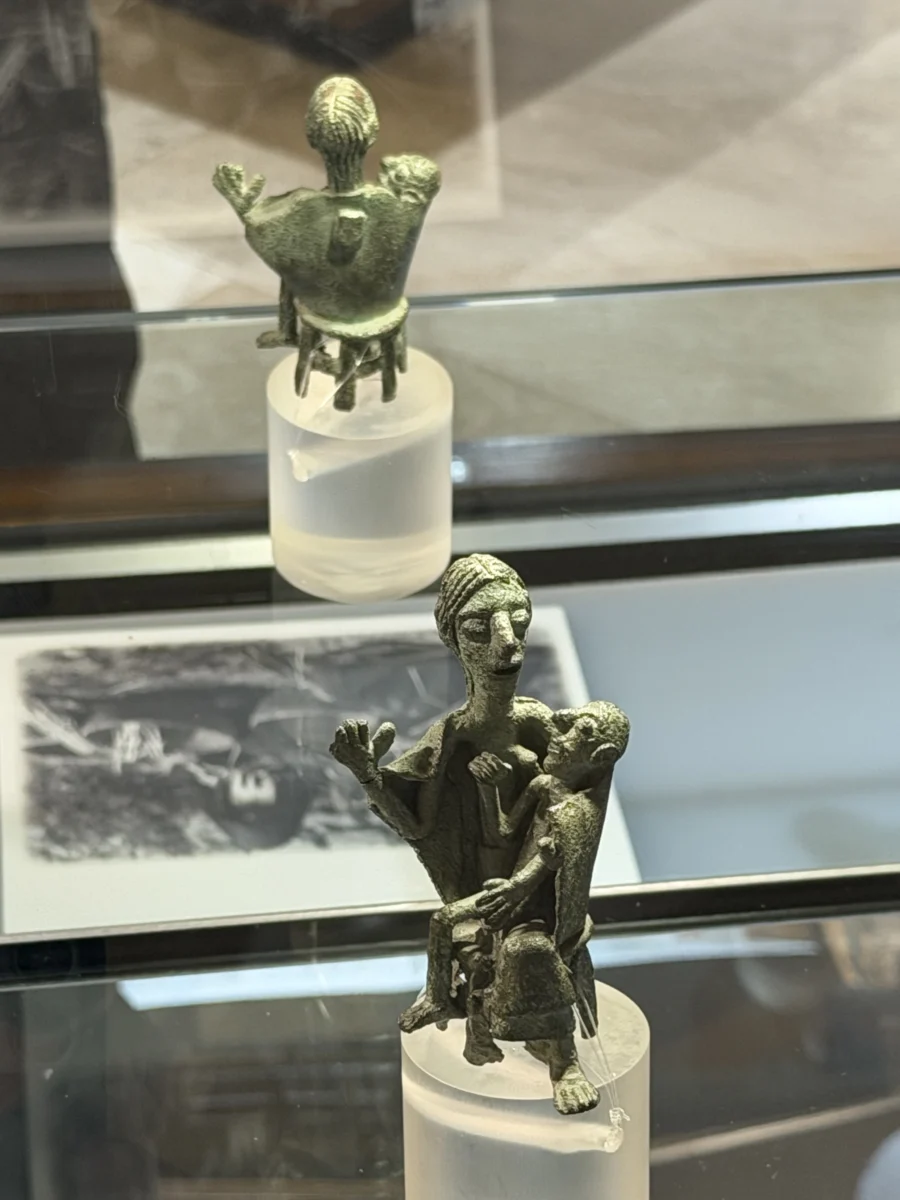
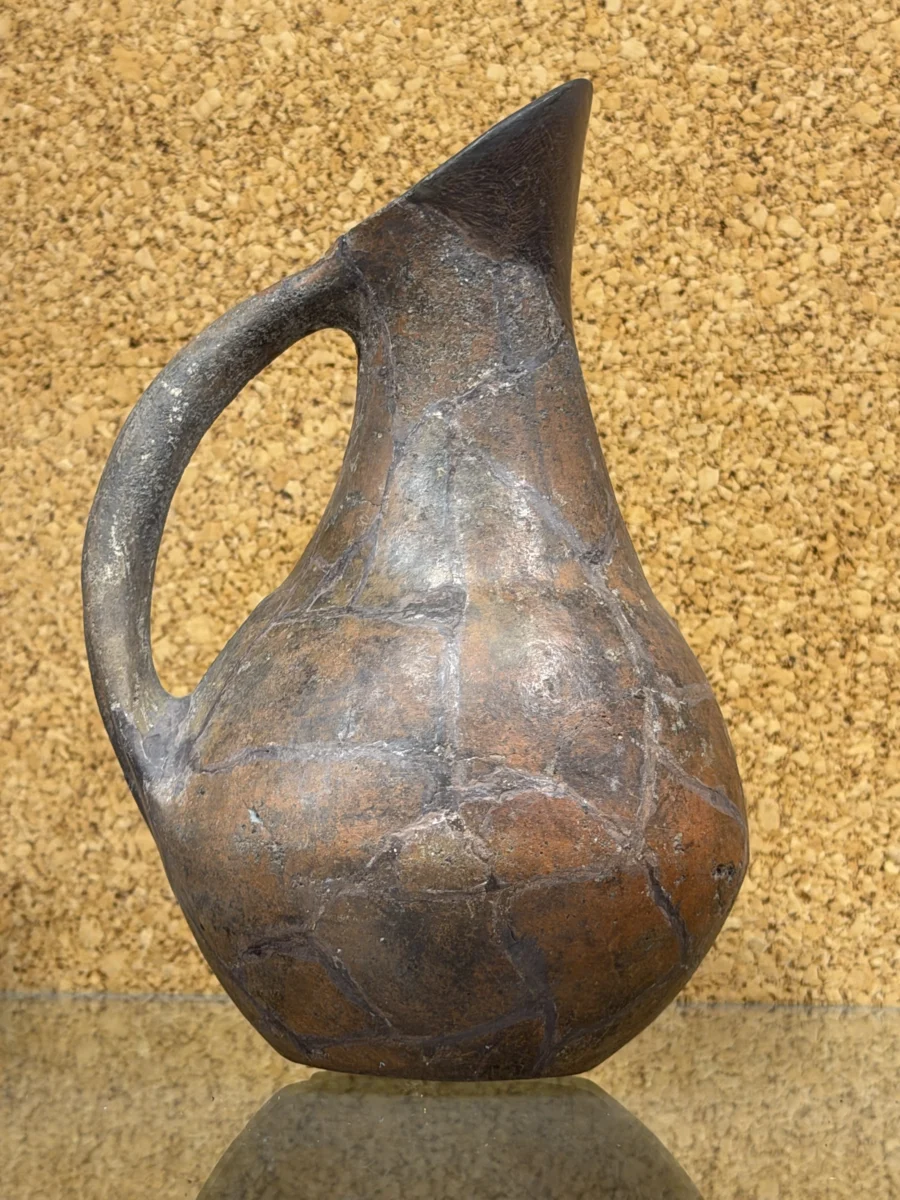
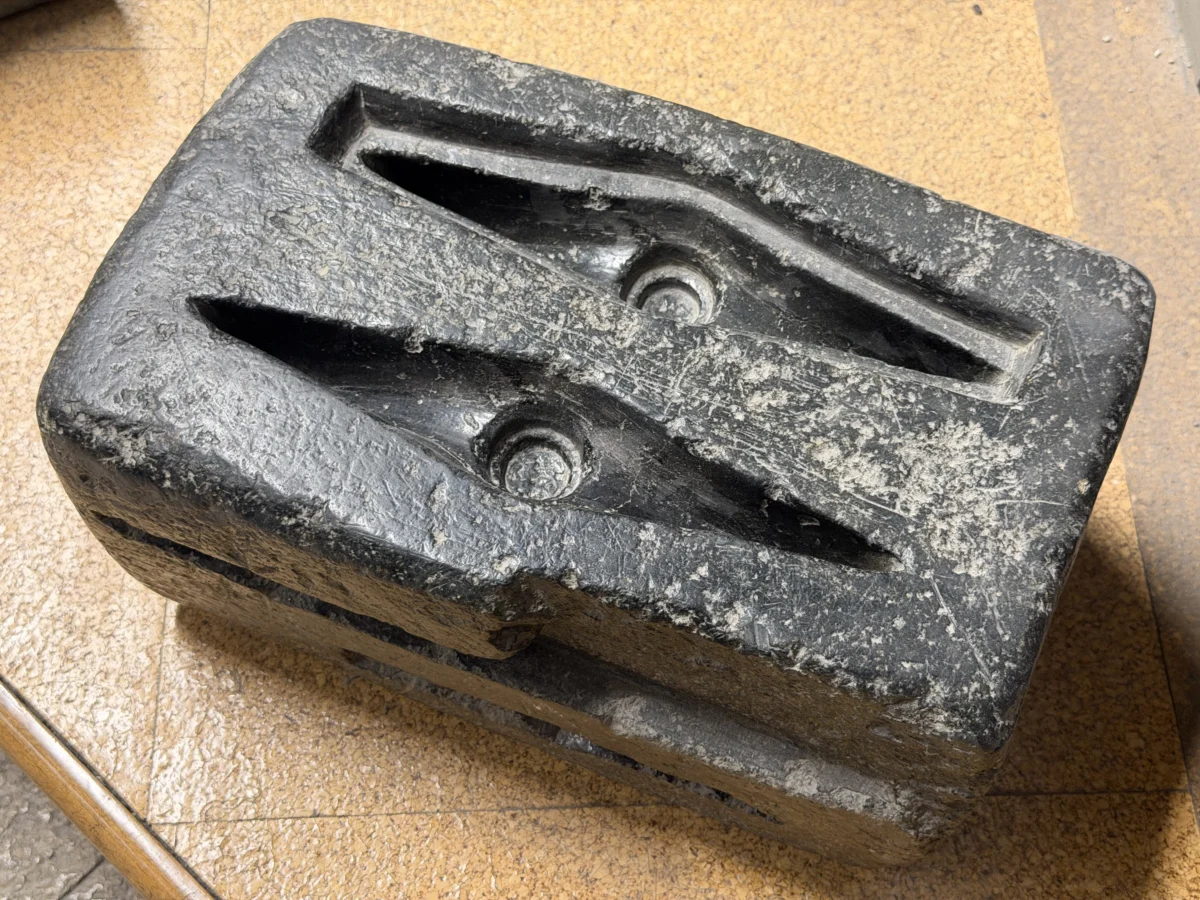
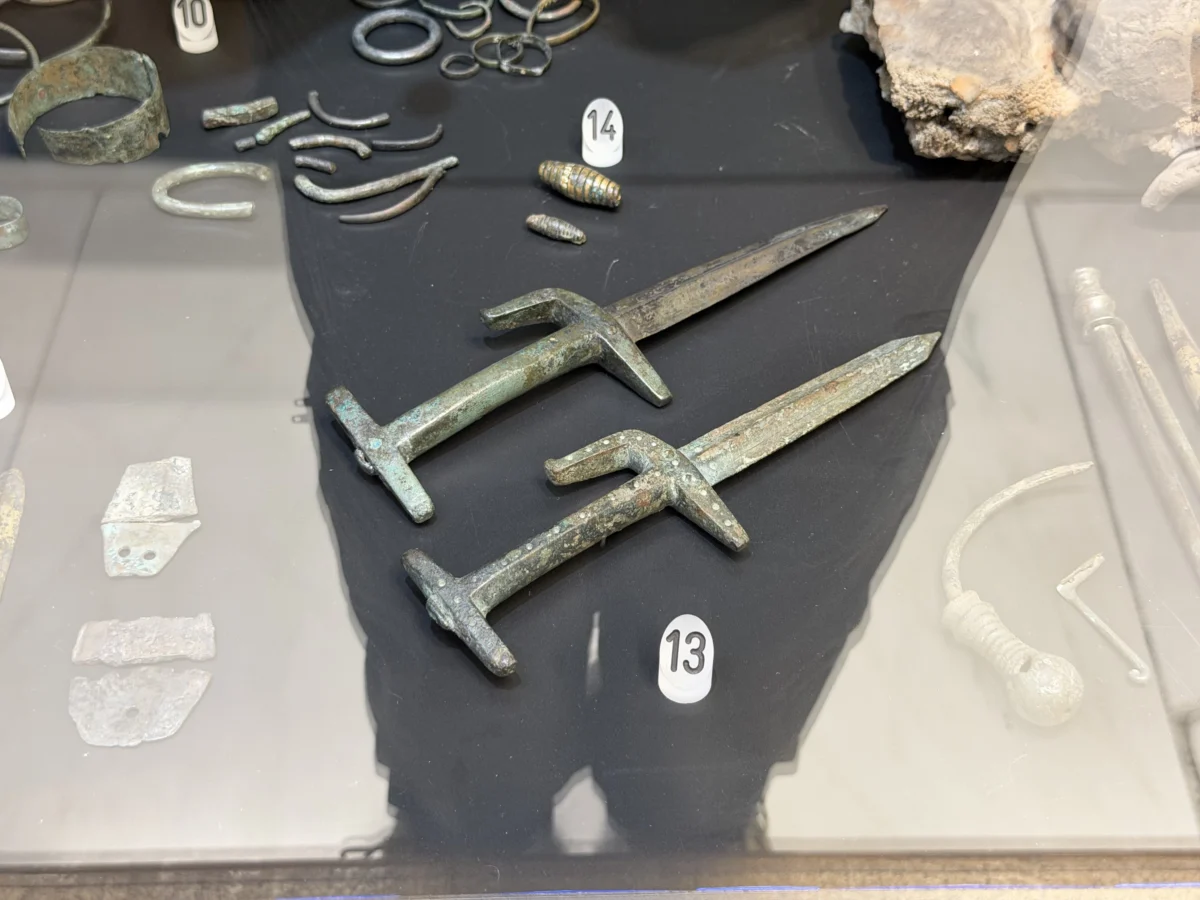
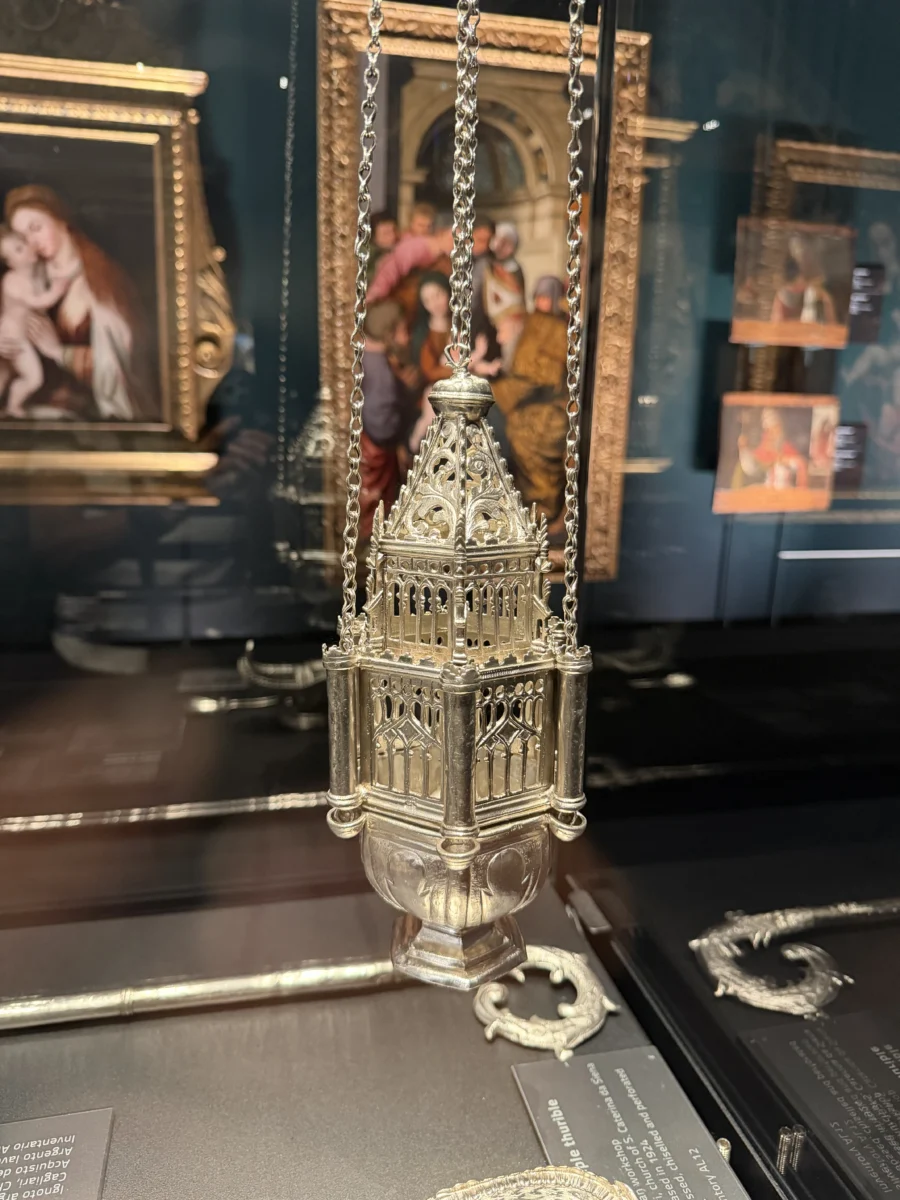
We visited the National Archaeological Museum of Cagliari. Across Sardinia, artifacts have been extracted, restored as needed, researched, and often end up in one of two places- the Giovanni Marongiu City Museum in Cabras that we visited earlier, or here. We might be forming an addiction because instead of growing weary of hours in museums we find ourselves increasingly engaged. Here are some highlights (we took hundreds of pictures!) from this museum. This really is a must-see in Cagliari! Keep in mind that all of these ancient treasures were uncovered in Sardinia regardless of origin.
These pictures are organized from “new” to old as much as possible. In Sardinia “Roman” no longer feels nearly as old as it used to!
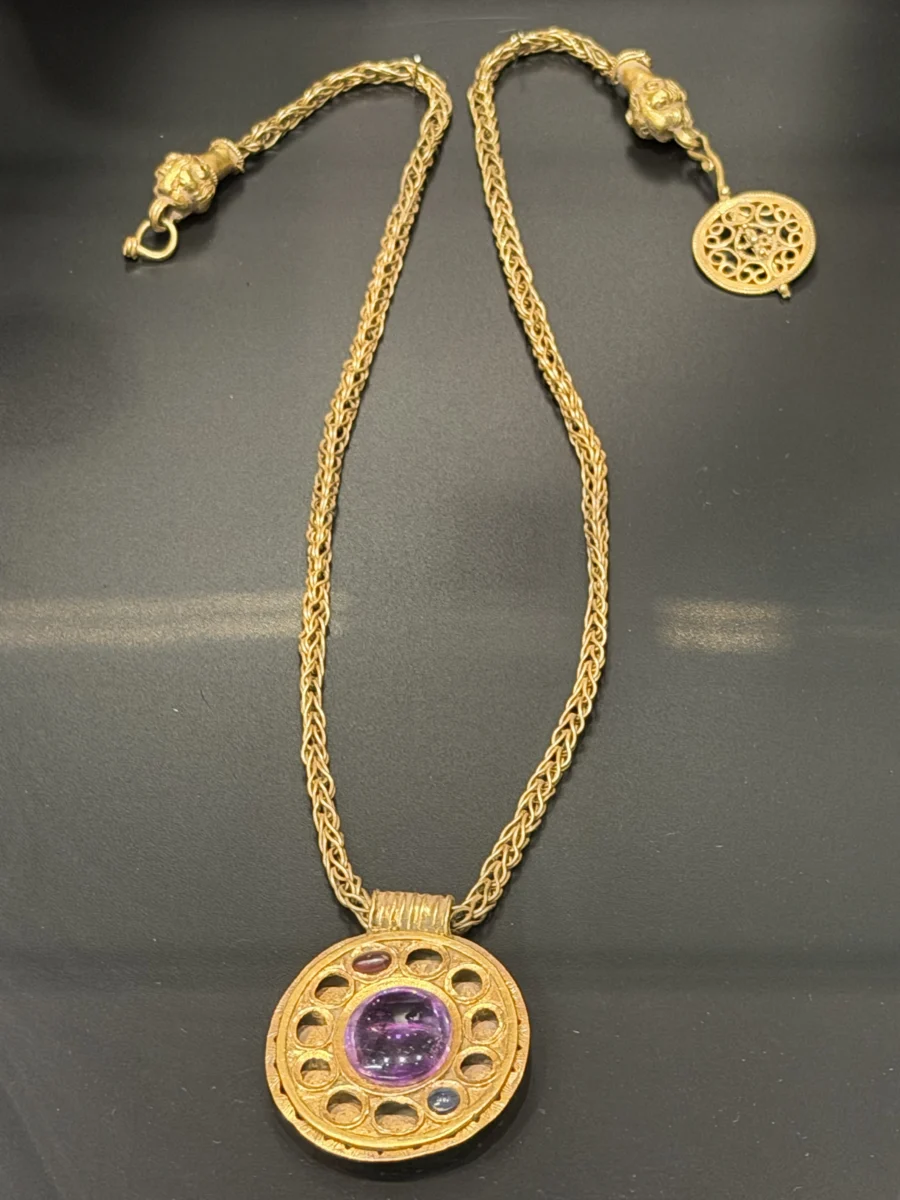
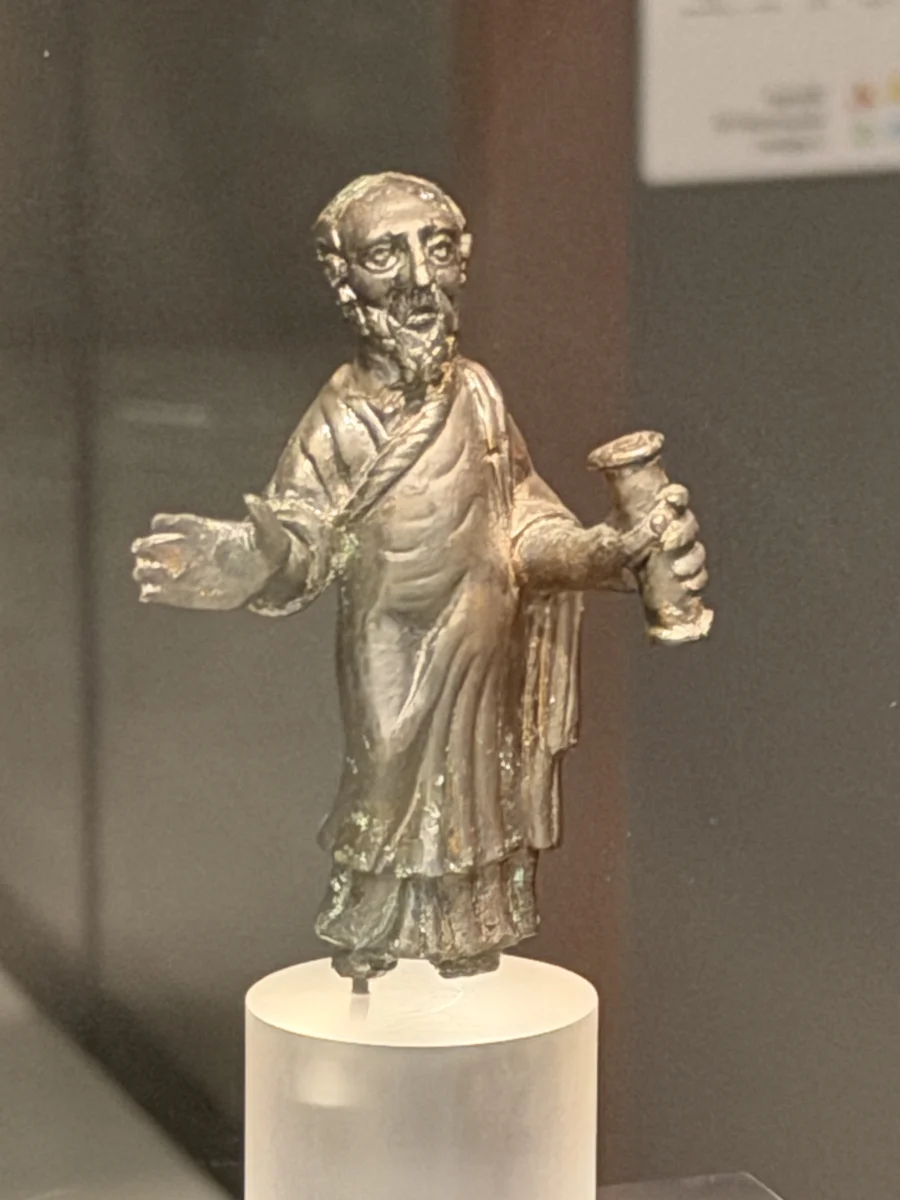
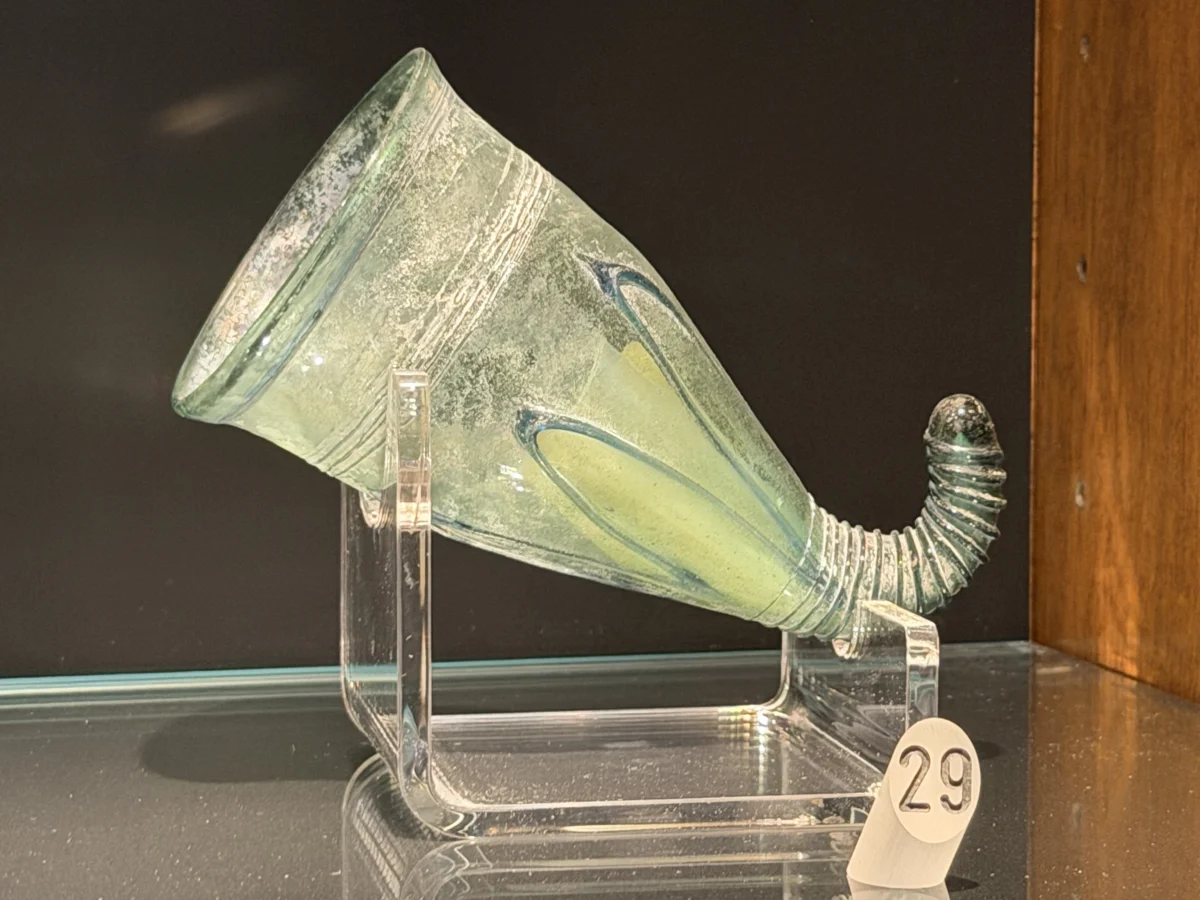
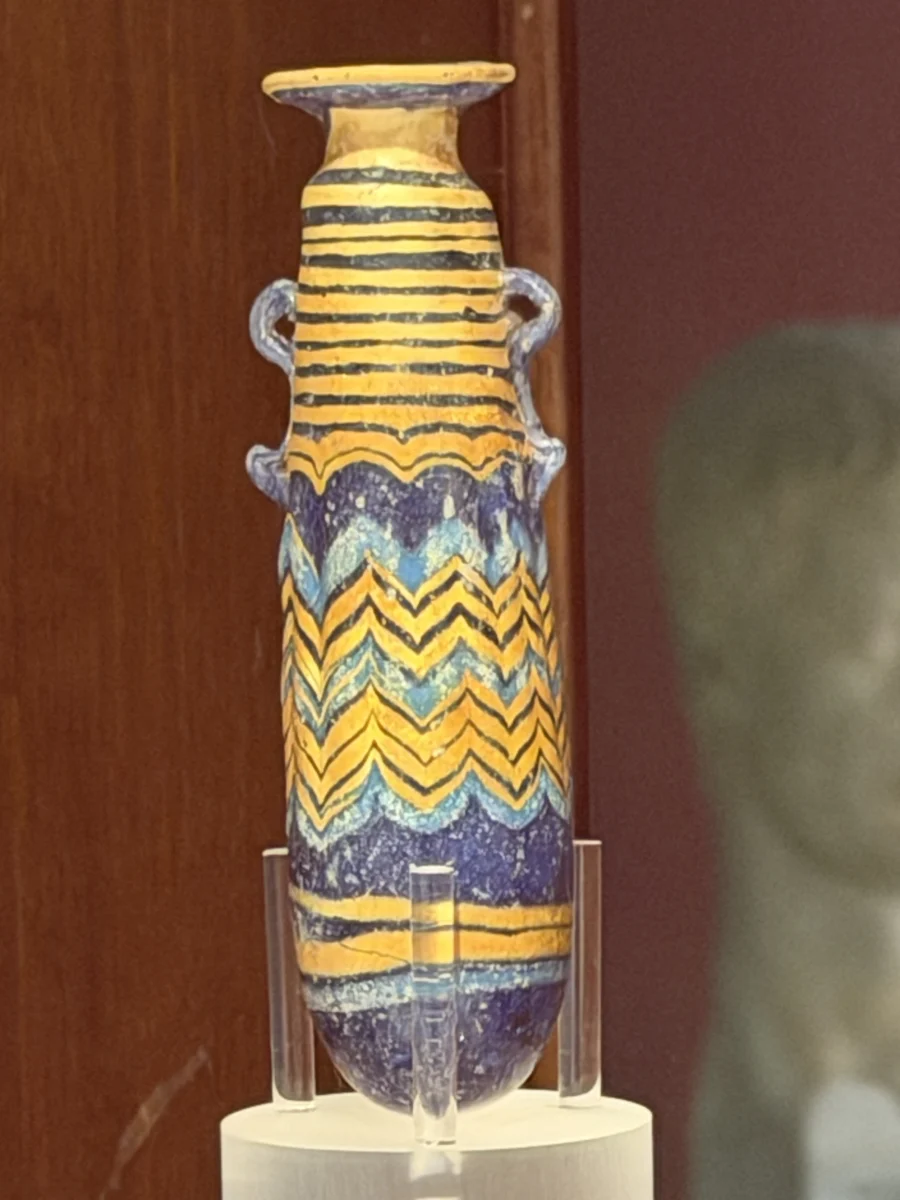
The intricate detail of glassware blows our minds, and somehow these survived thousands of years!!
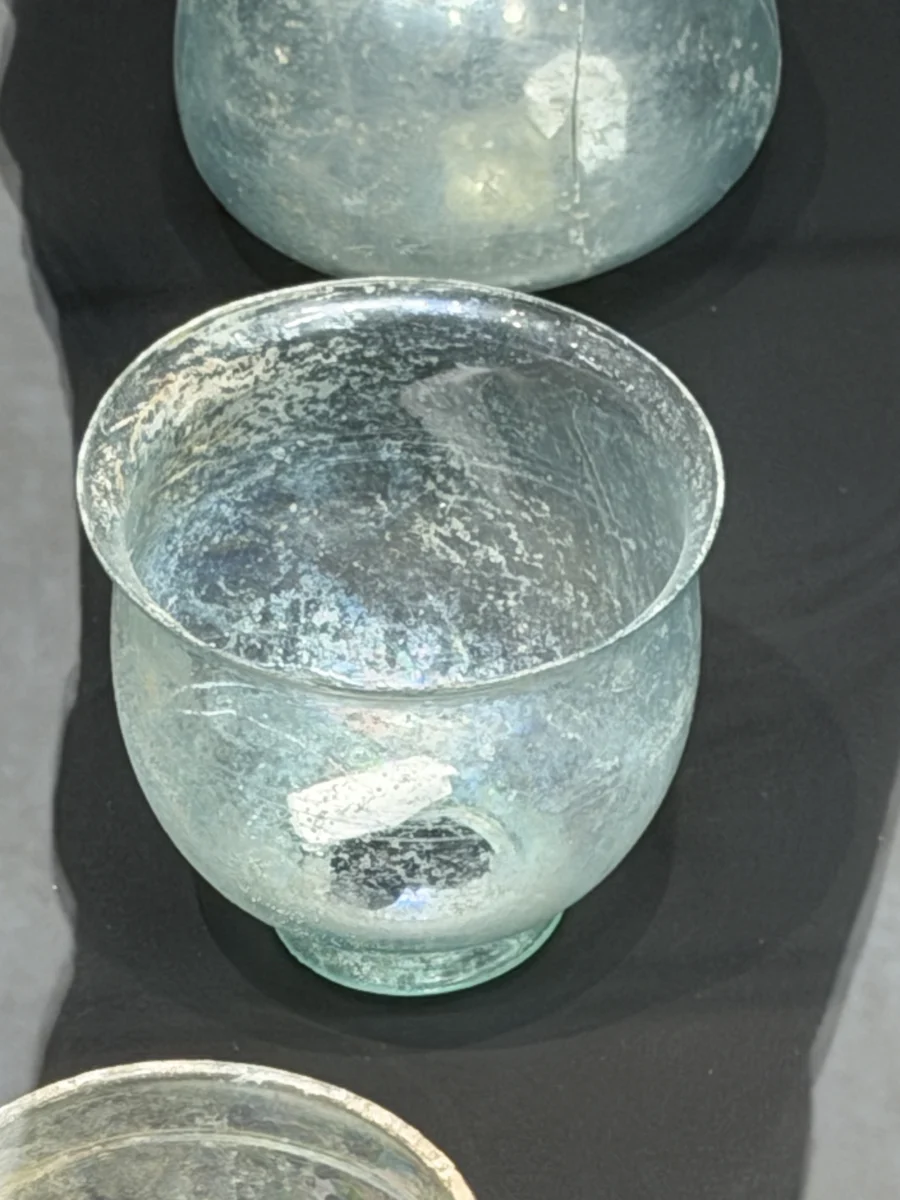
Remember, Sardinia is equidistant from Rome and Tunis (ancient Carthage)!
I love the little physics tricks they employed, here using small holes to carefully control flow.
This is a beautiful piece of colored glassware by any measure. What struck me is that it was made pre-glassblowing, created using the core-forming technique. Molten dark-blue glass was wound around a removable clay-and-dung core, and threads of opaque yellow and turquoise glass were trailed onto the surface and combed into the signature horizontal bands and zig-zag (chevron) patterns.
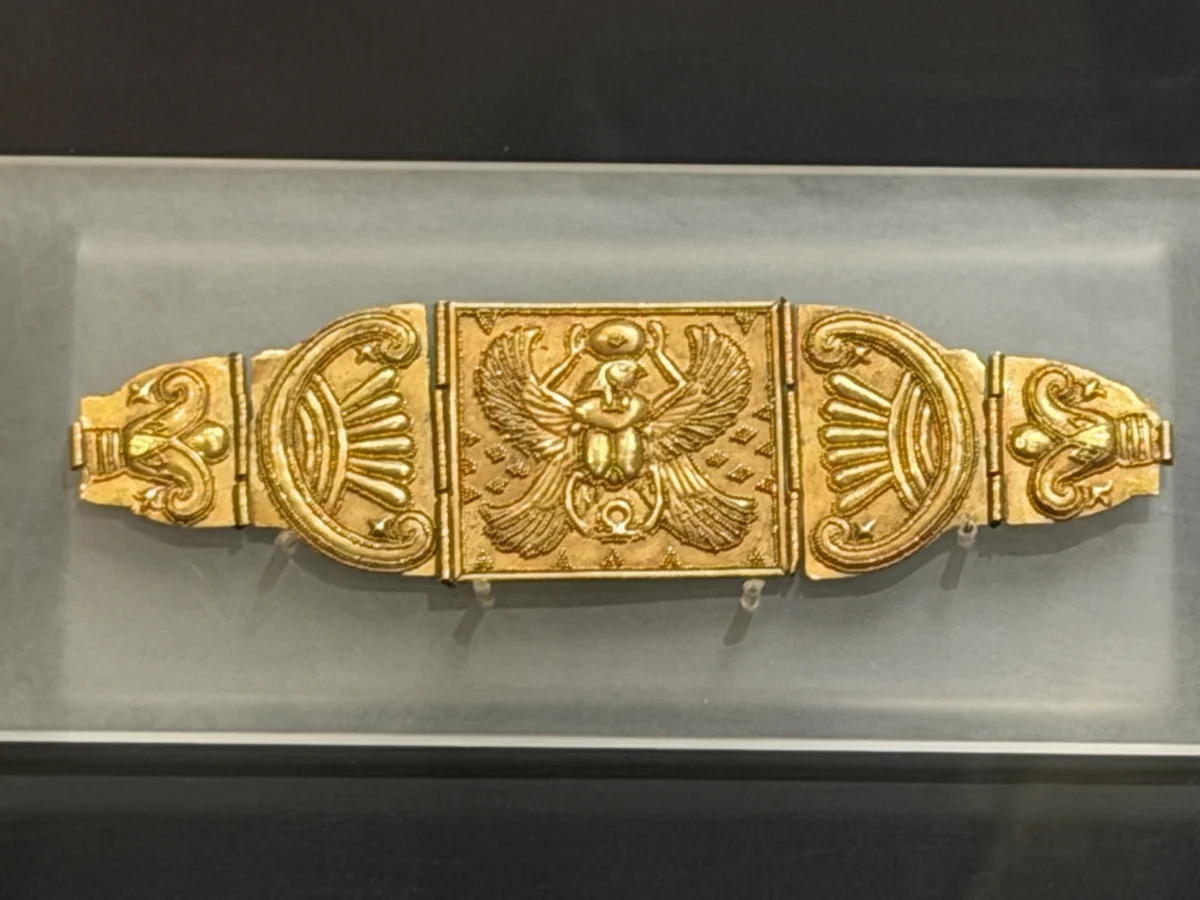
So much Egyptian influence! Classic fertility motif associated with different goddesses over time.
Corinth in the house! One of my favorite helmet designs too.. from an aesthetic perspective at least.


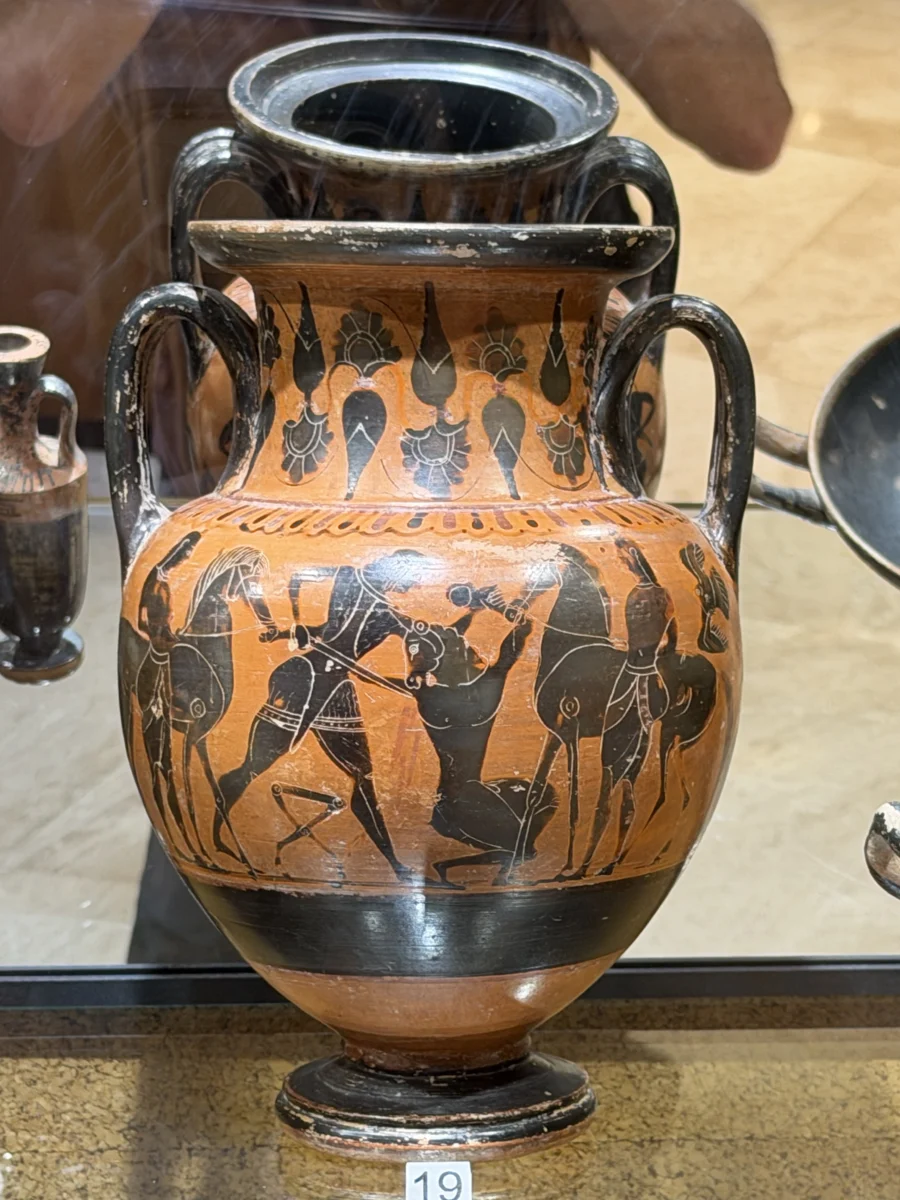
Most of the eating, drinking, and serving vessels are timeless designs that we would buy and use today. Savitri is inspired by many of these for her pottery work.

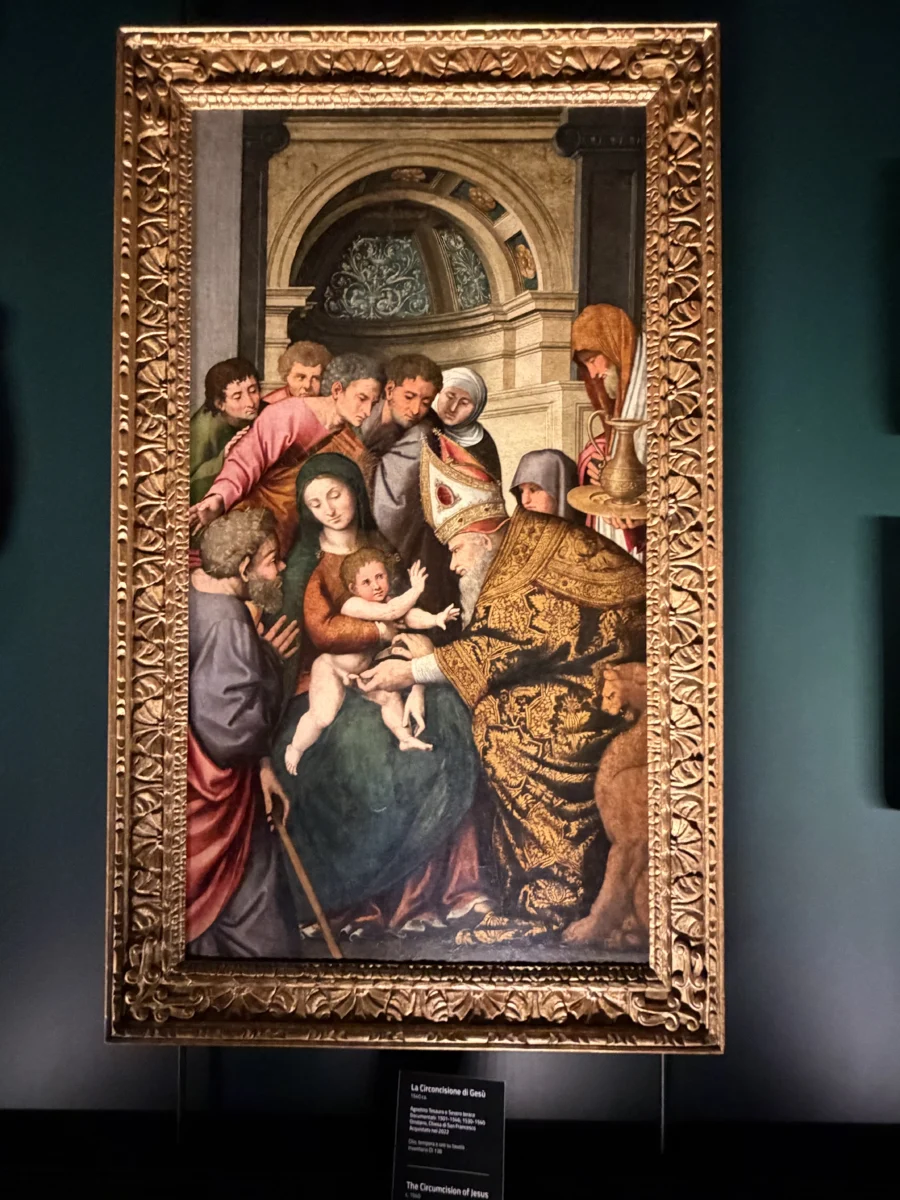
We snuck in a 10 minute visit at the next door National Art Gallery (Pinacoteca Nazionale di Cagliari). The entrance ticket comes with the archaeological museum ticket so we figured we’d run through even though we had to be somewhere else soon on the other side of town. We actually saw most of this smaller gallery during our run-through. It doesn’t have the historic punch the archaeological museum has (never thought I’d write that sentence!), but we’re glad we went. Some highlights..

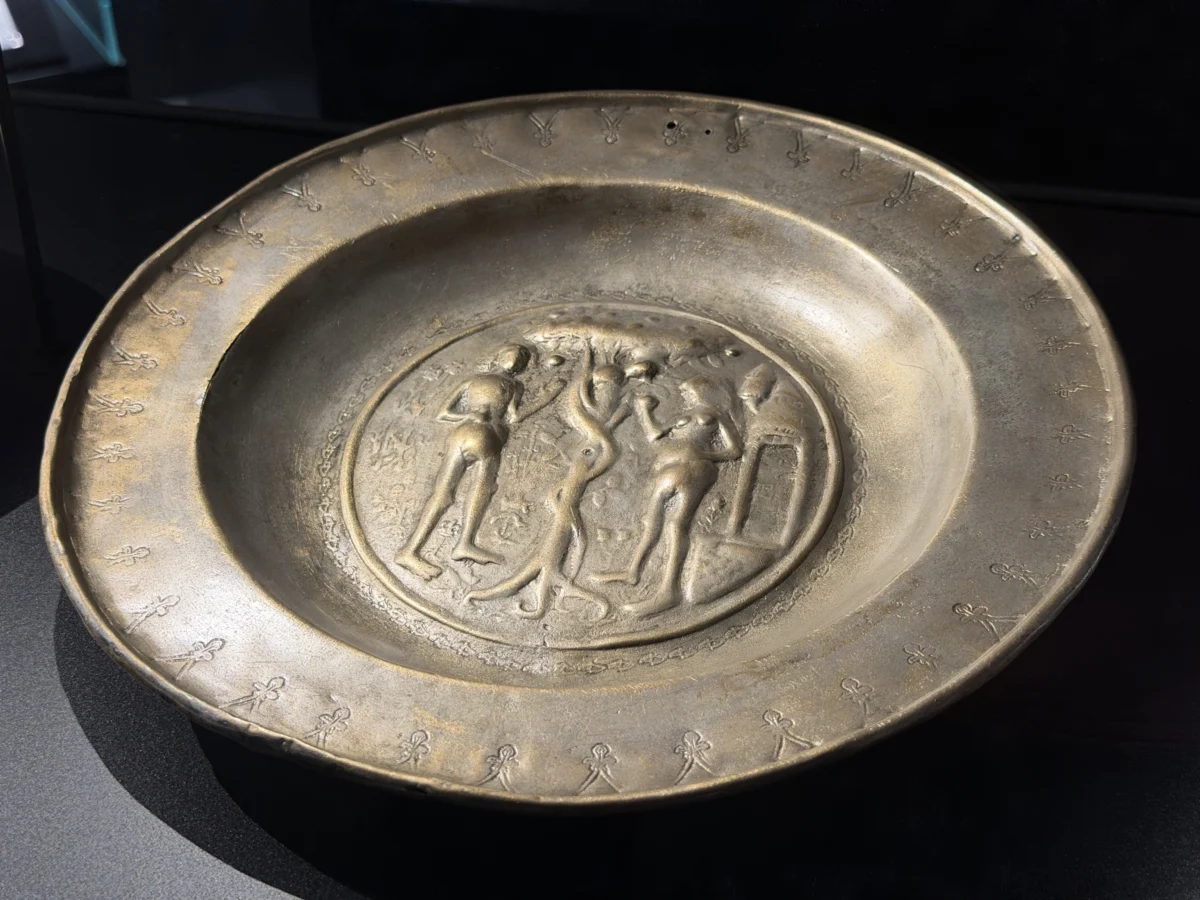
This painting brings so many crude quips to mind but I’ll just say.. we complain about people taking camera phone pictures of everything, imagine posing for this painting! AI slop?
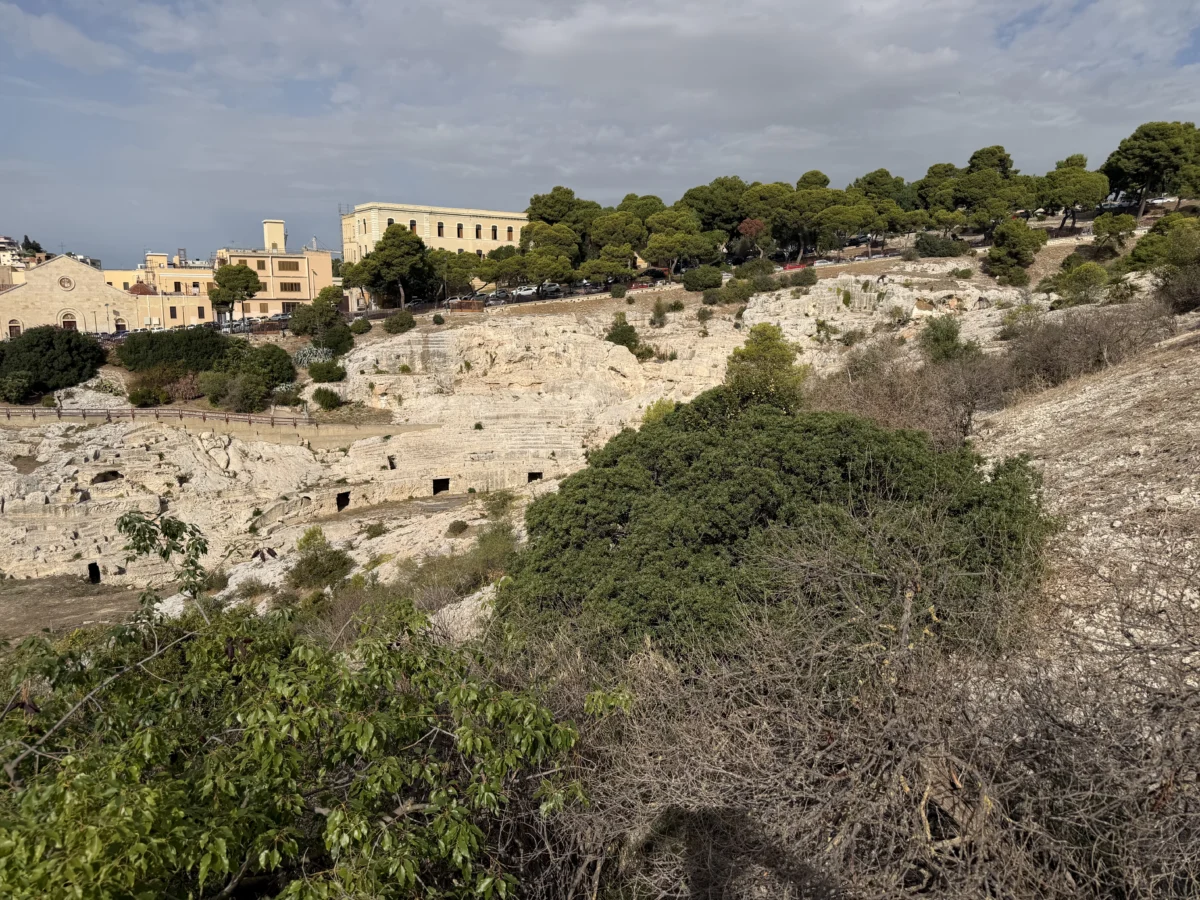
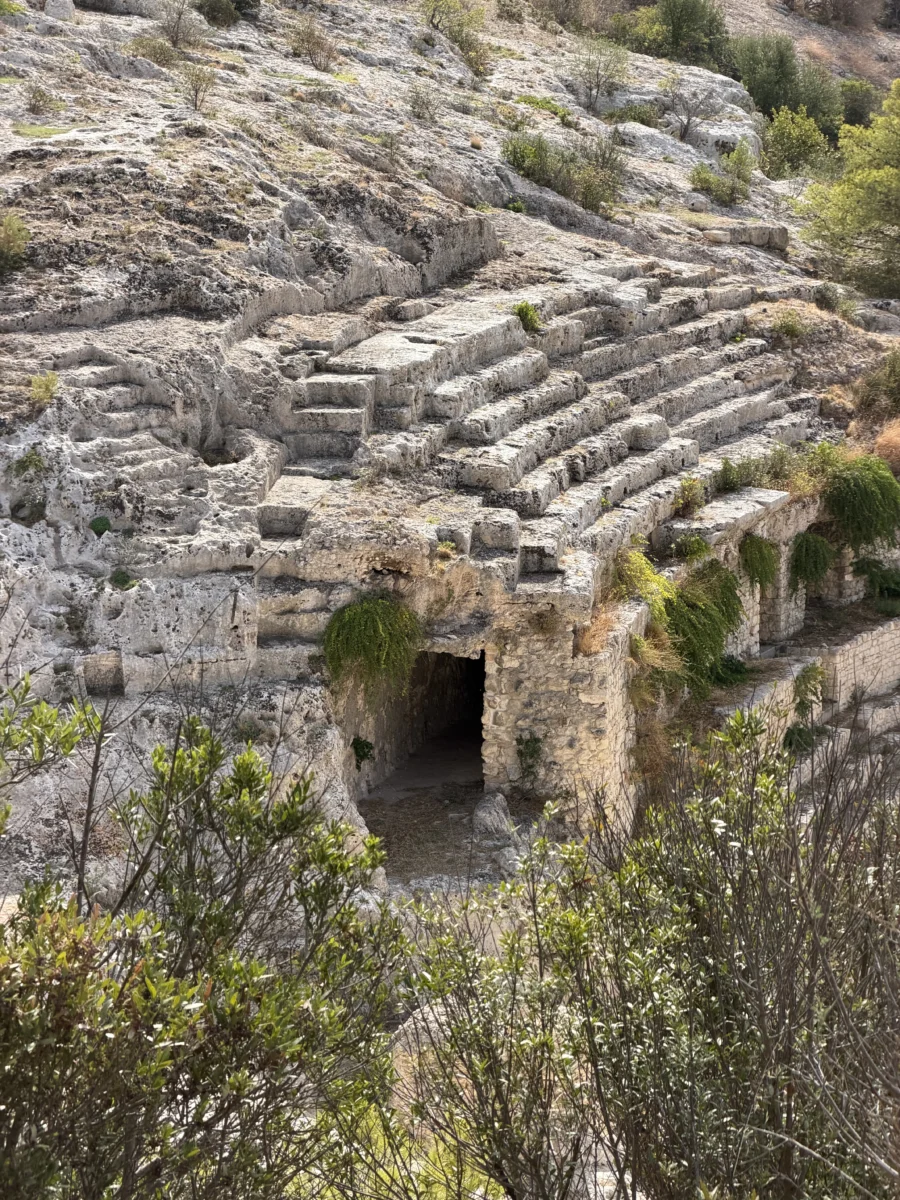
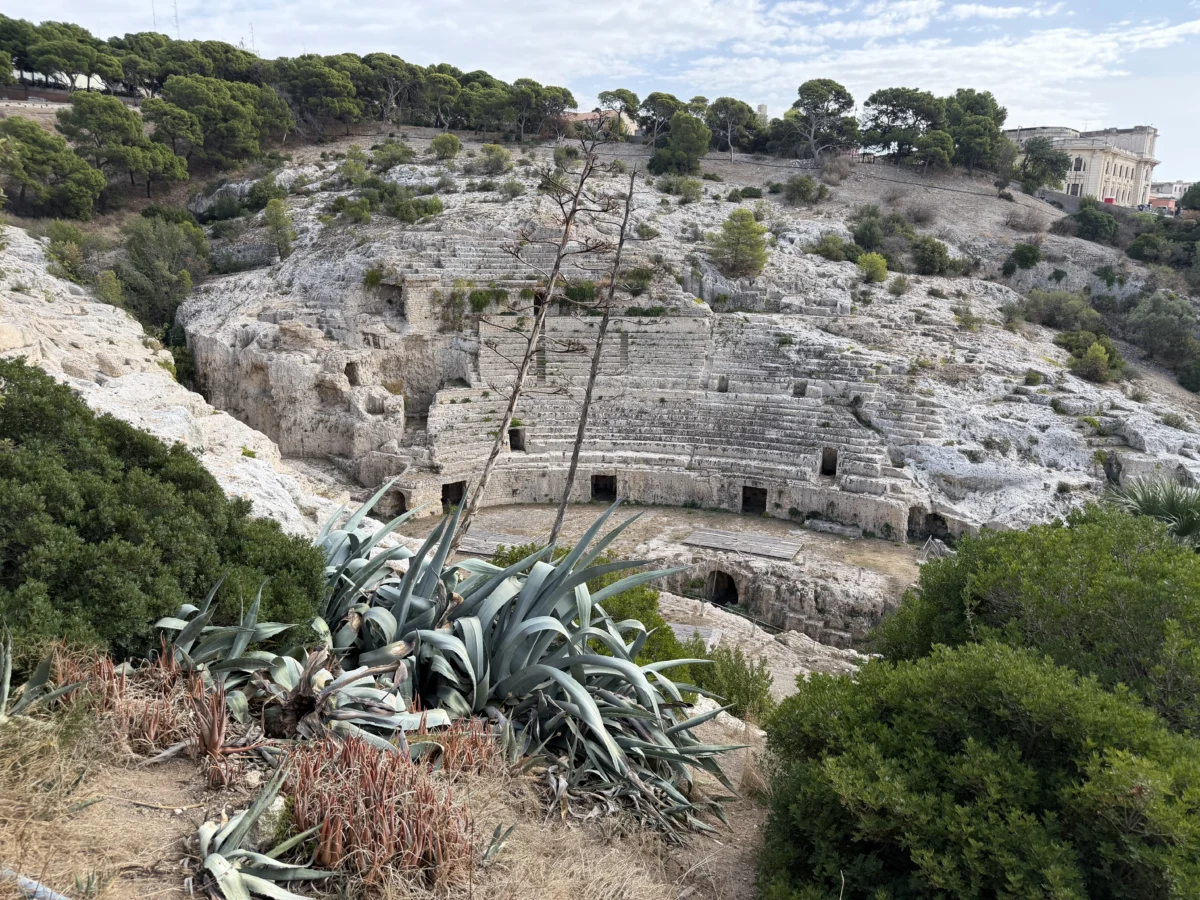
As you drop down from Castello westward into Stampace, you encounter a huge bowl-shaped open area. This is The Roman Amphitheatre of Cagliari. It was built in the 2nd century CE, but despite natural erosion and a period of acting as a free stone quarry it is remarkably well-preserved. We walked all around it, and it wasn’t a stretch to imagine fighters and animals below. The idea that present-day inhabitants of Cagliari can walk along this or sit on a city bench nearby any day and ruminate on it is surreal.
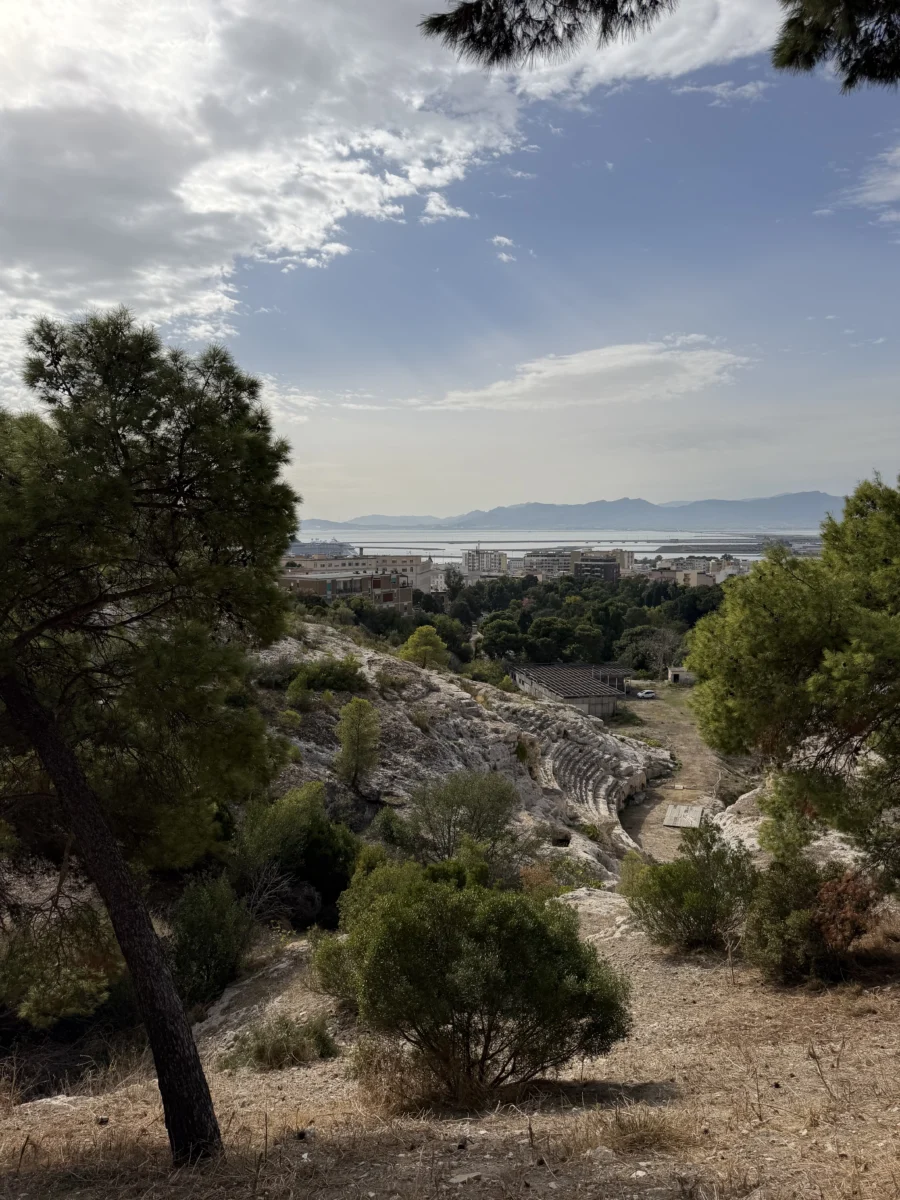
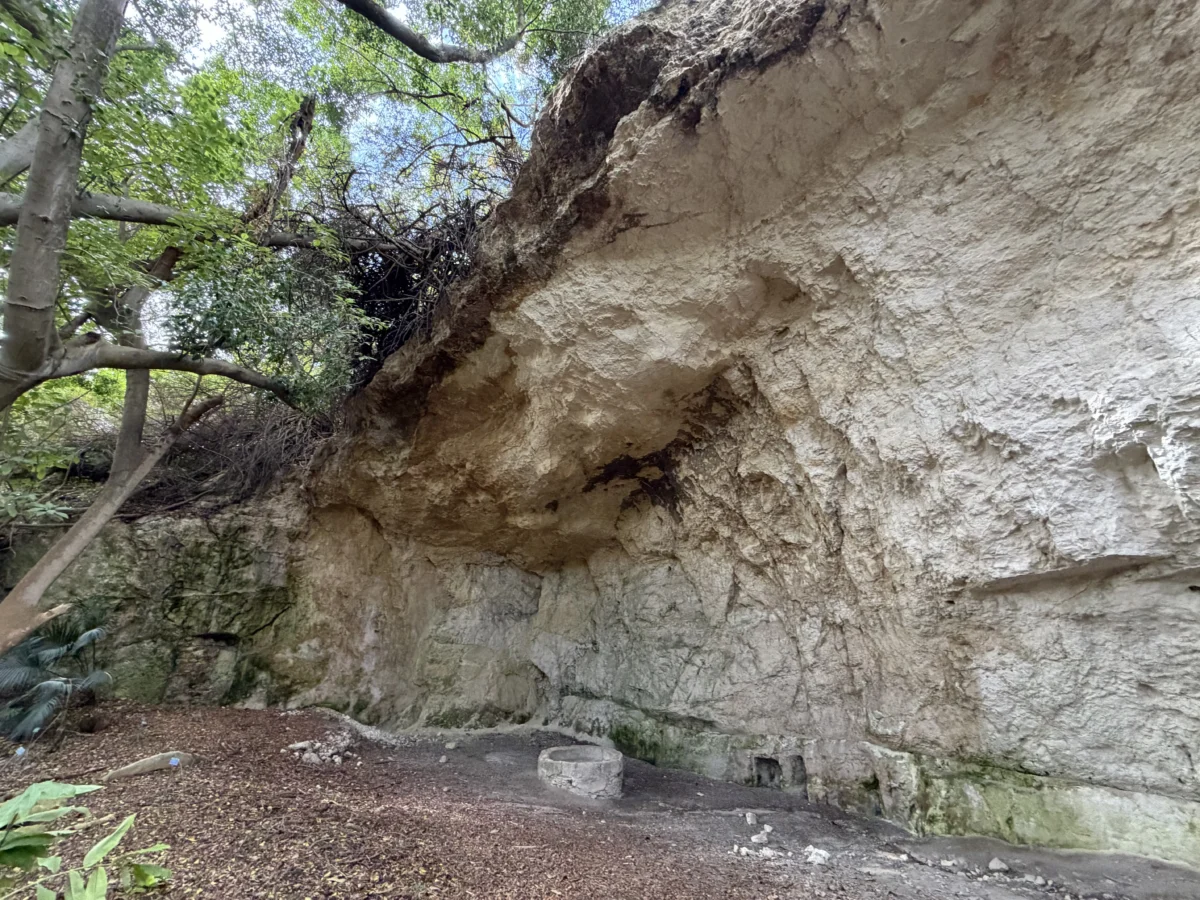
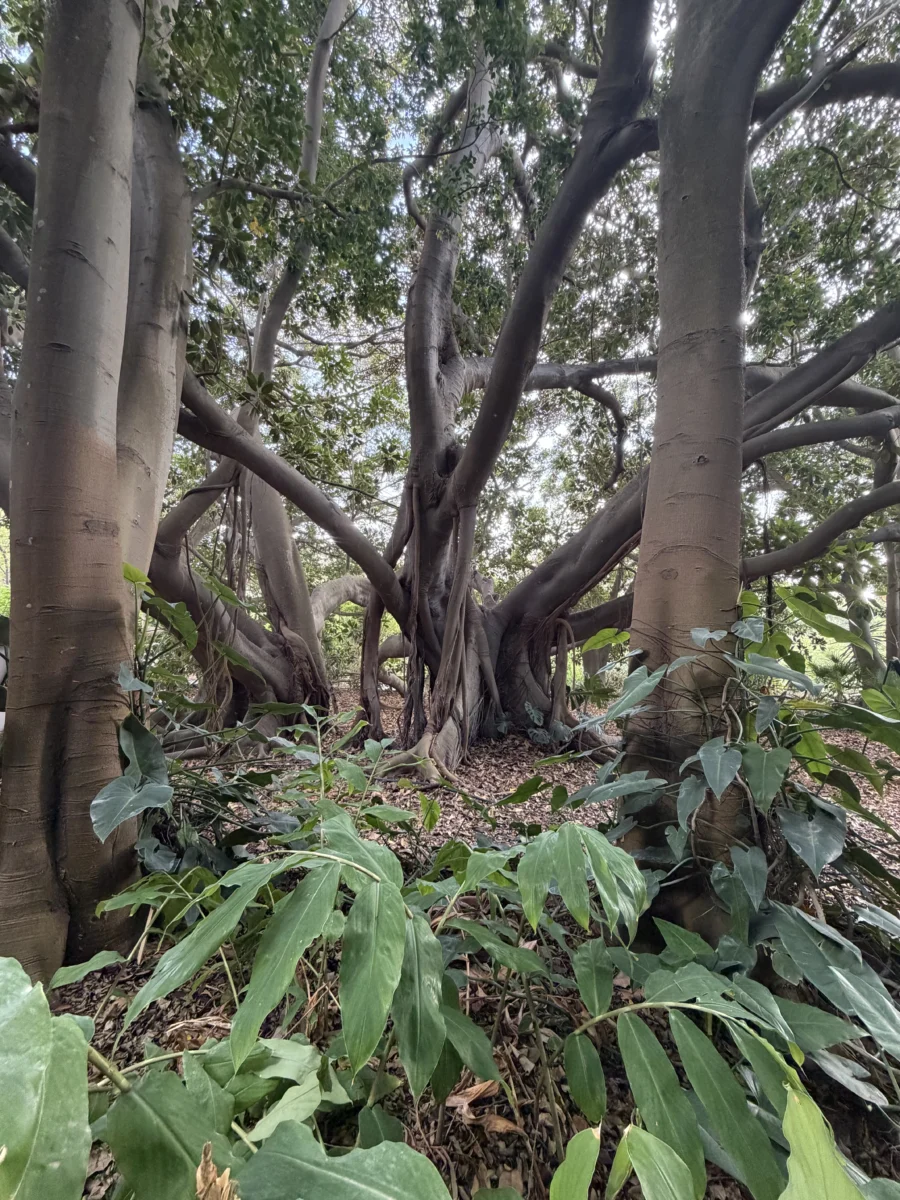
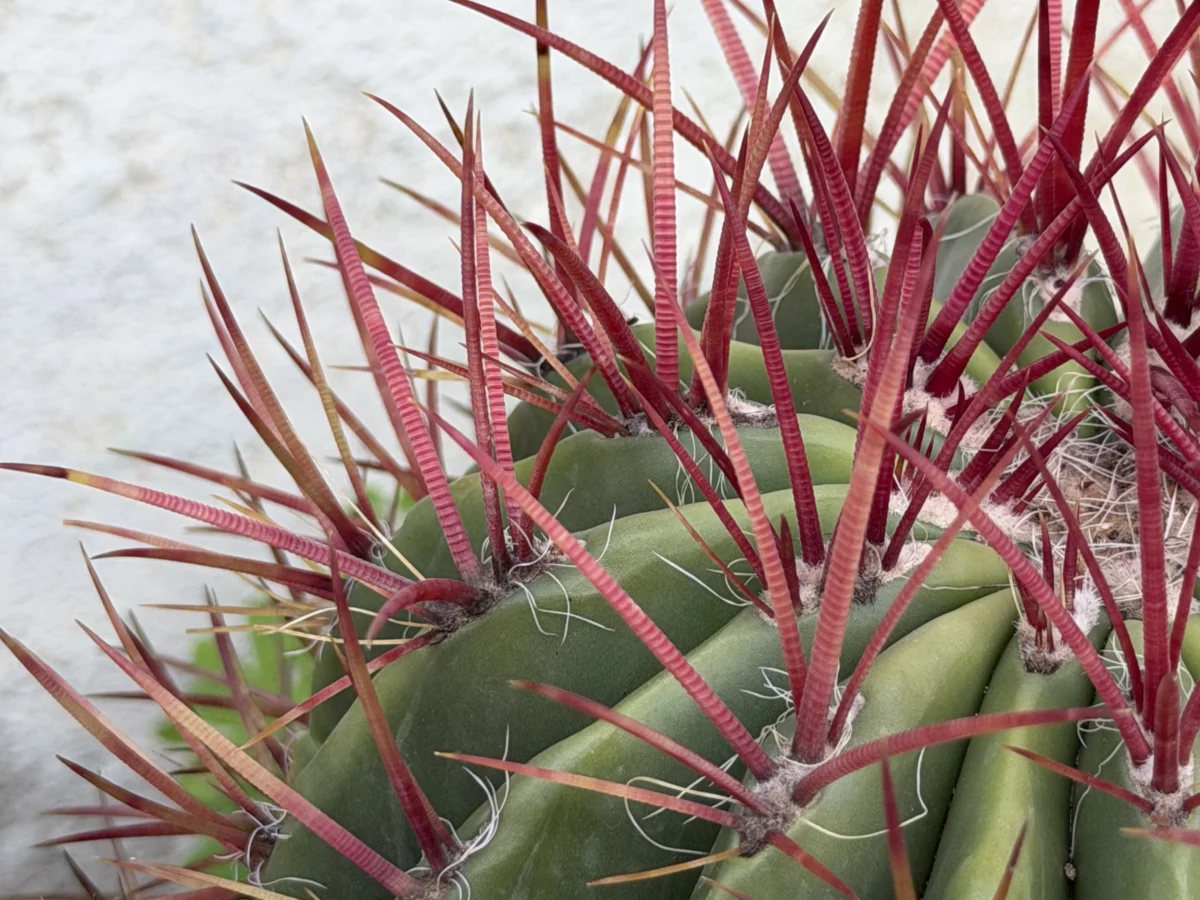
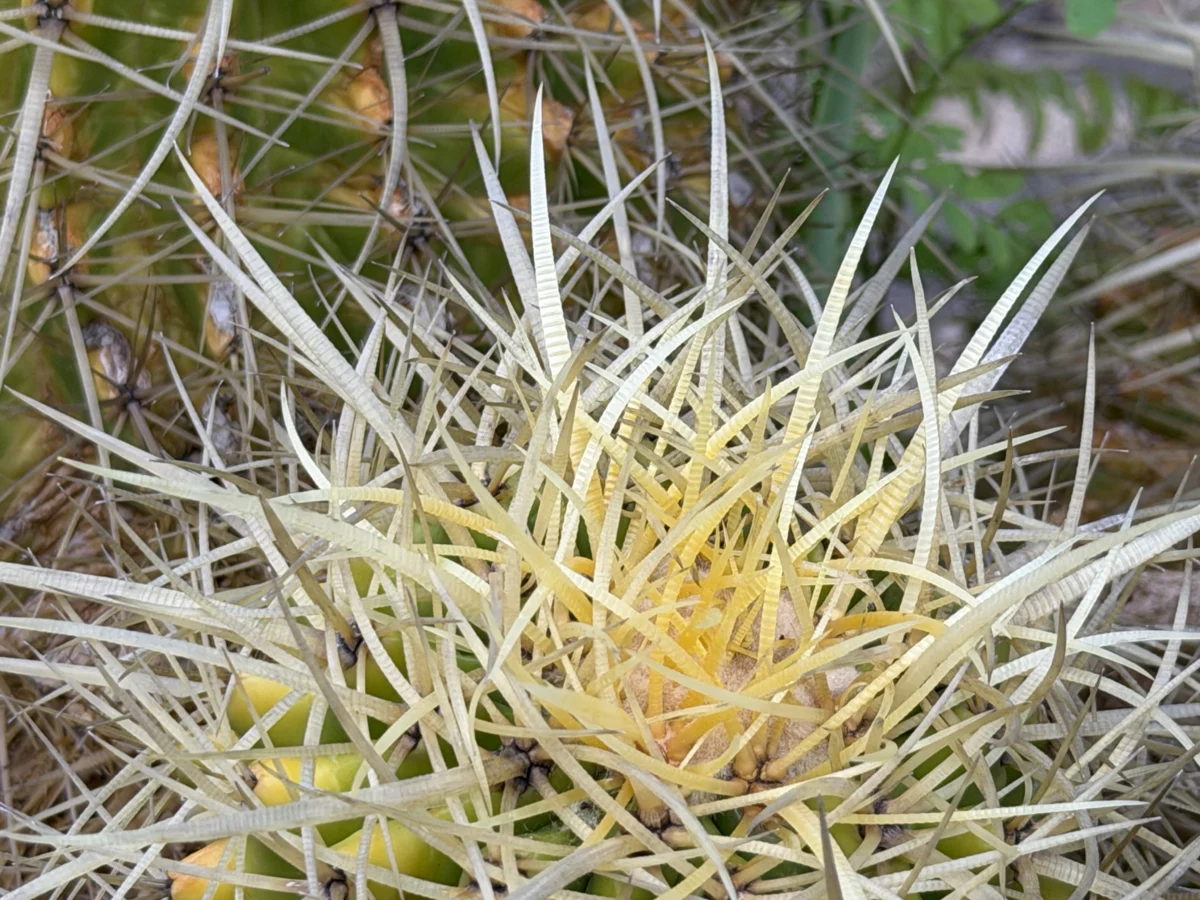
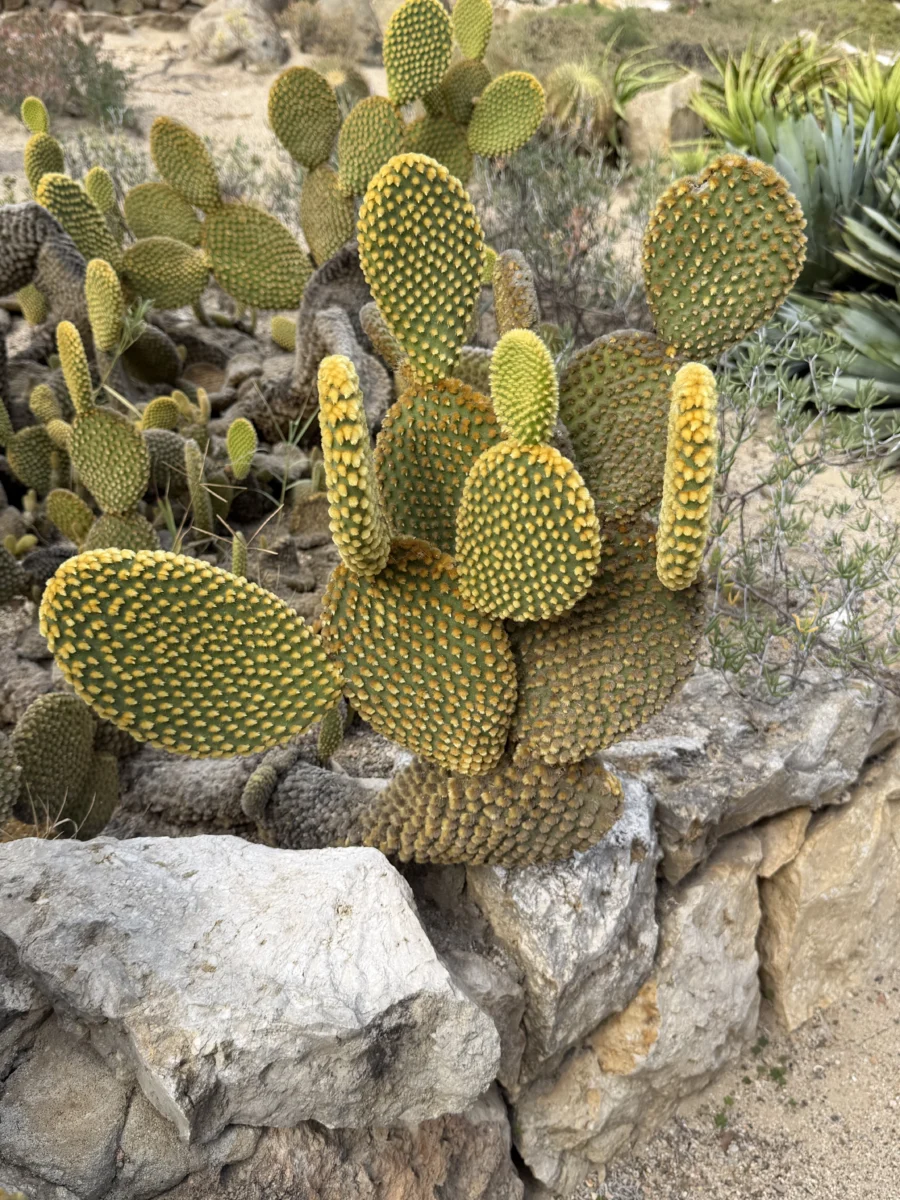
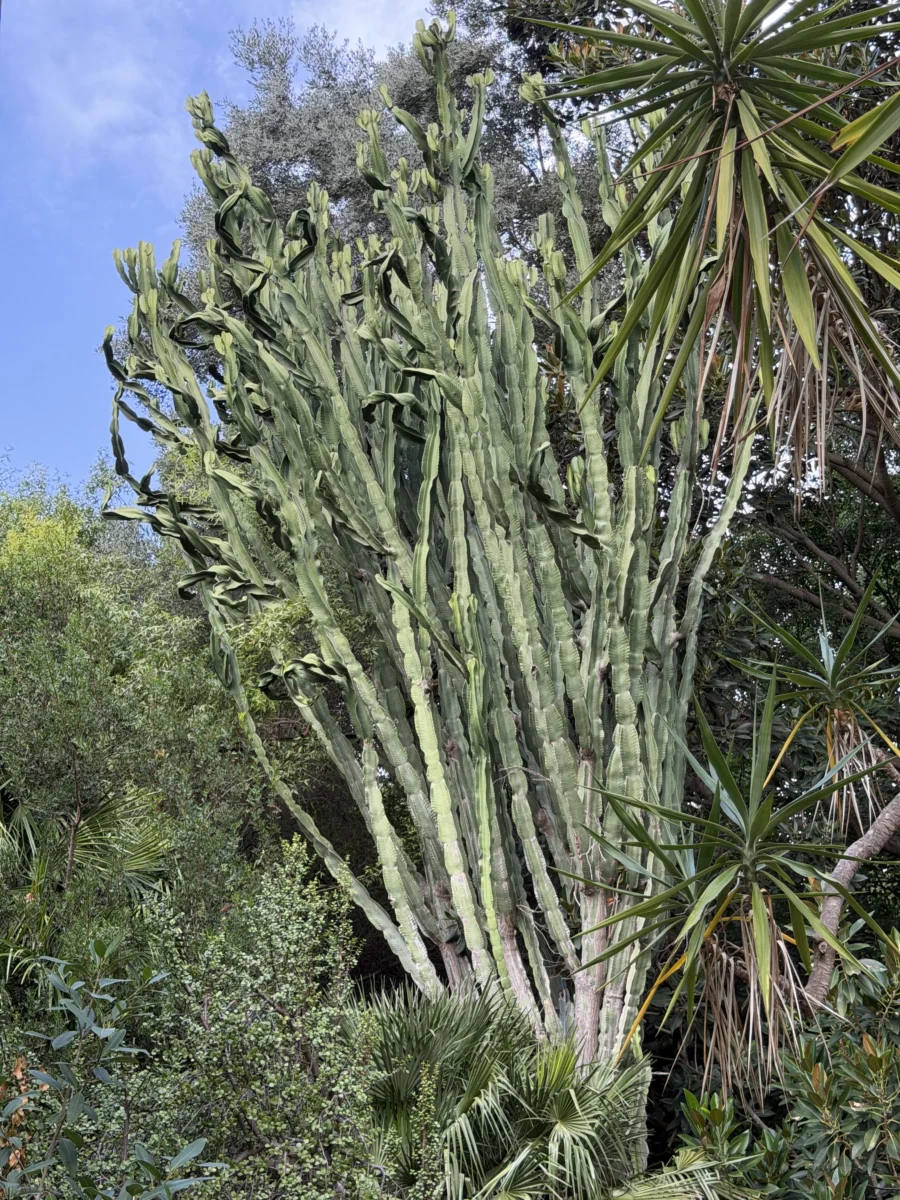
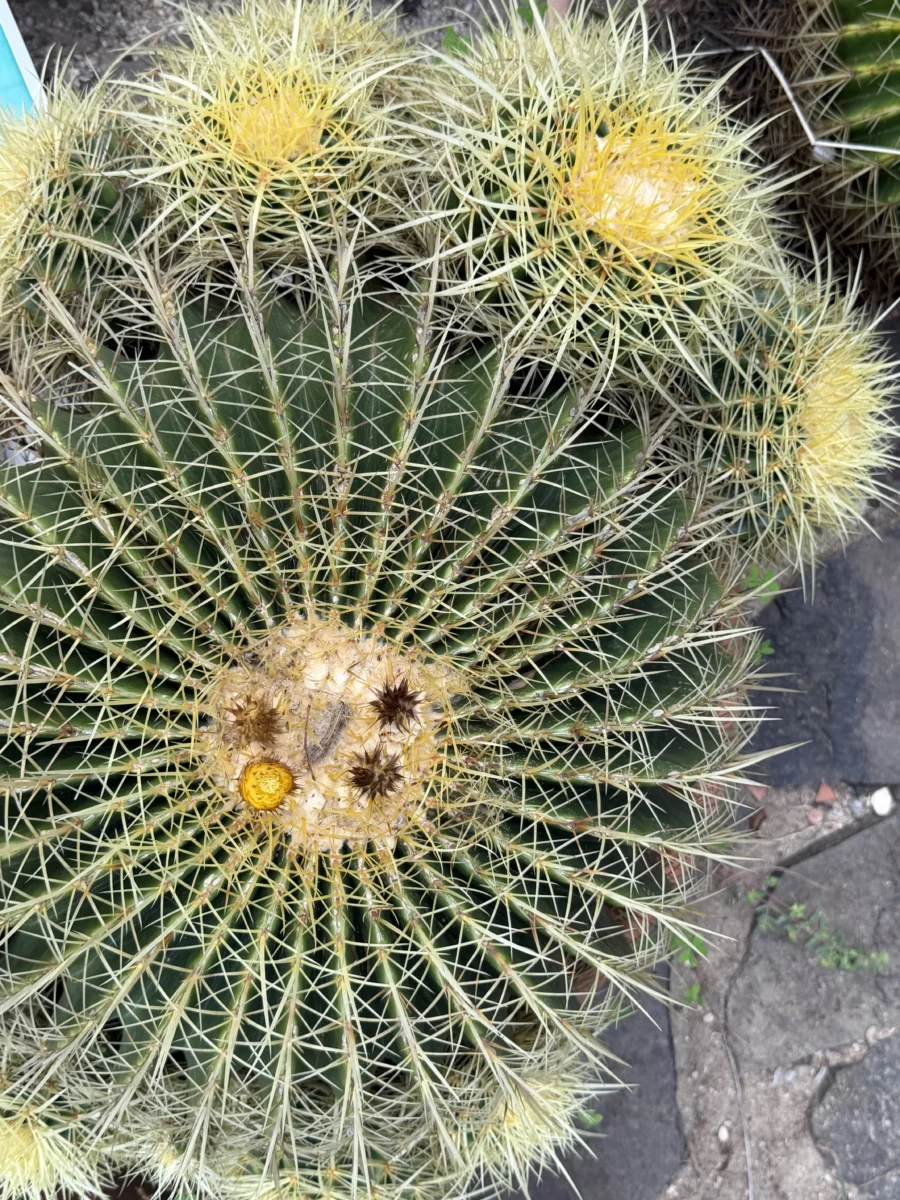
Just downhill of the amphitheater is the Cagliari Botanical Garden. It includes more than 2,000 plant species across a peaceful, lush park right in the middle of the city. We took our time and wandered through taking pictures of plants and of course, of lizards.
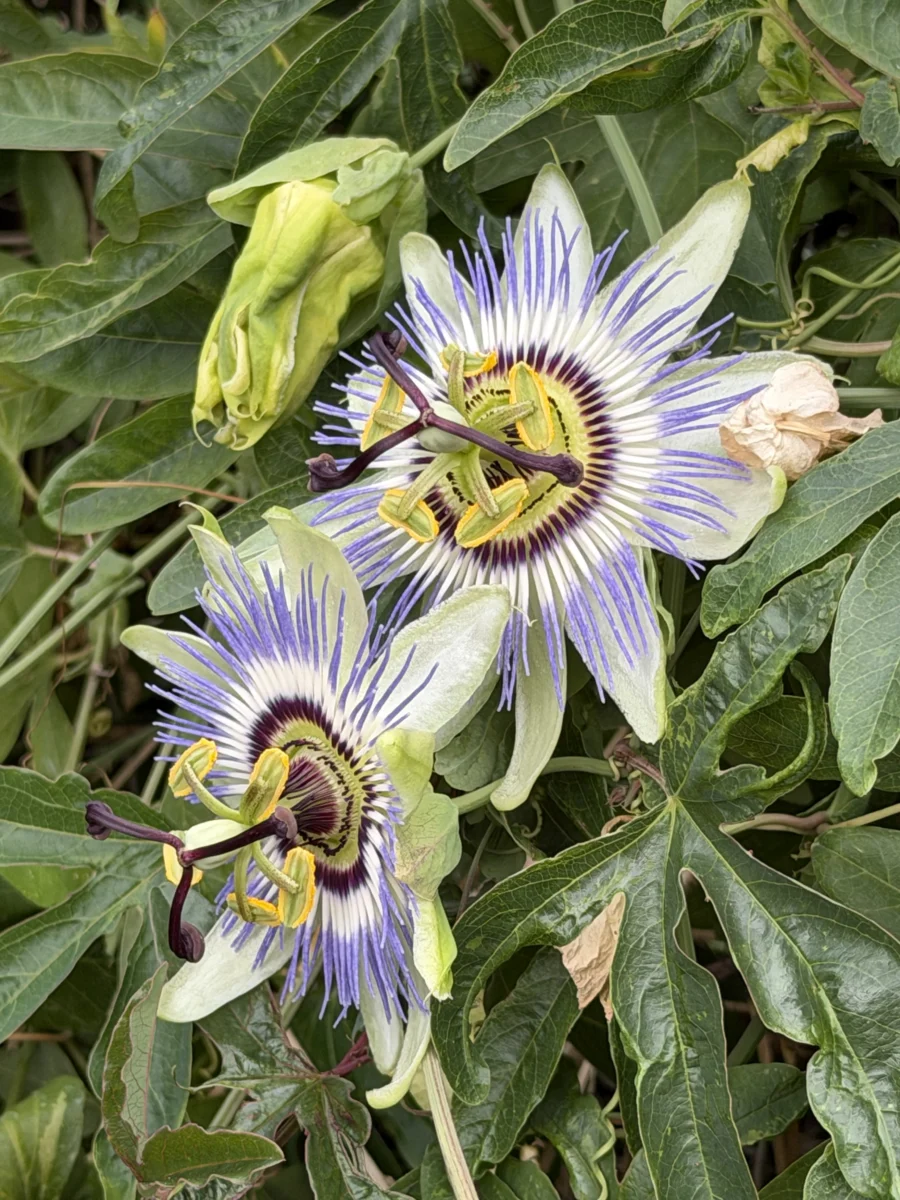
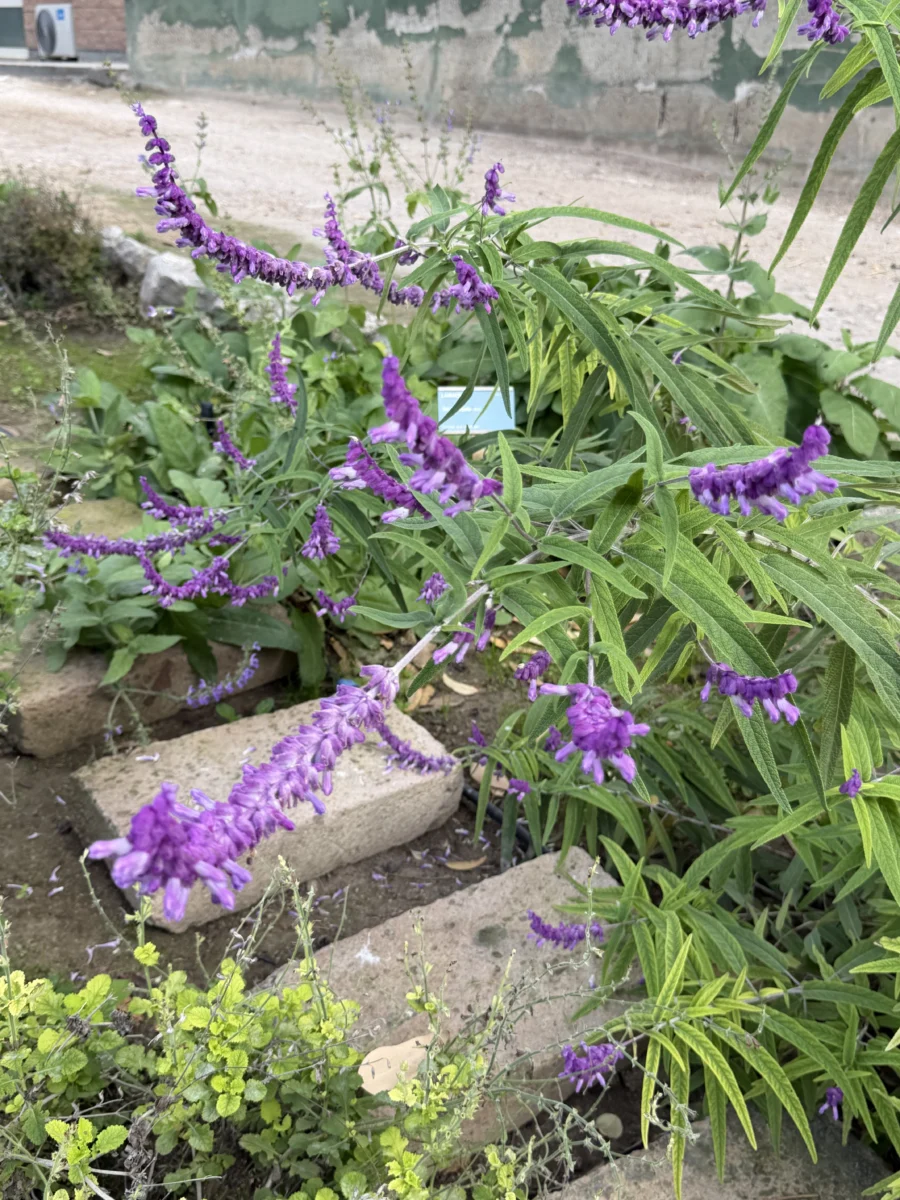
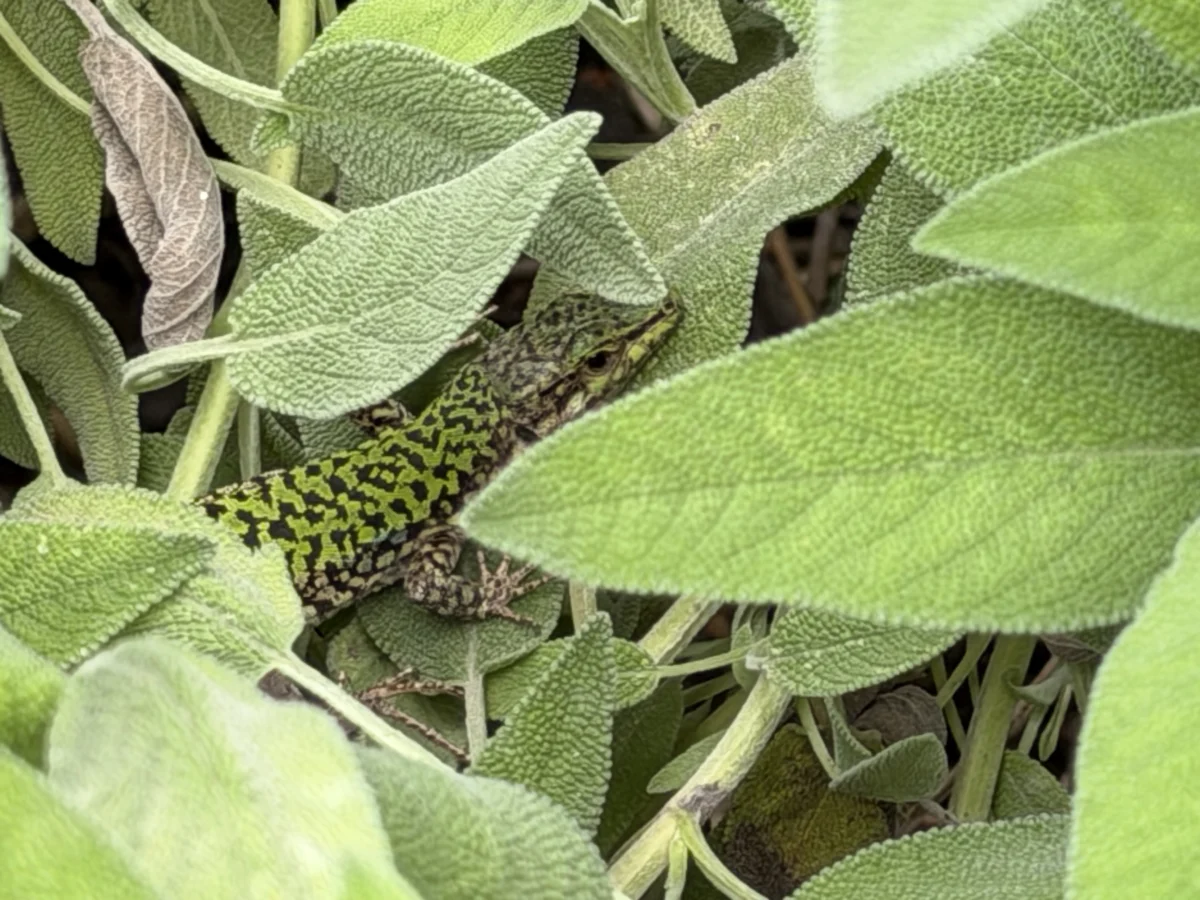
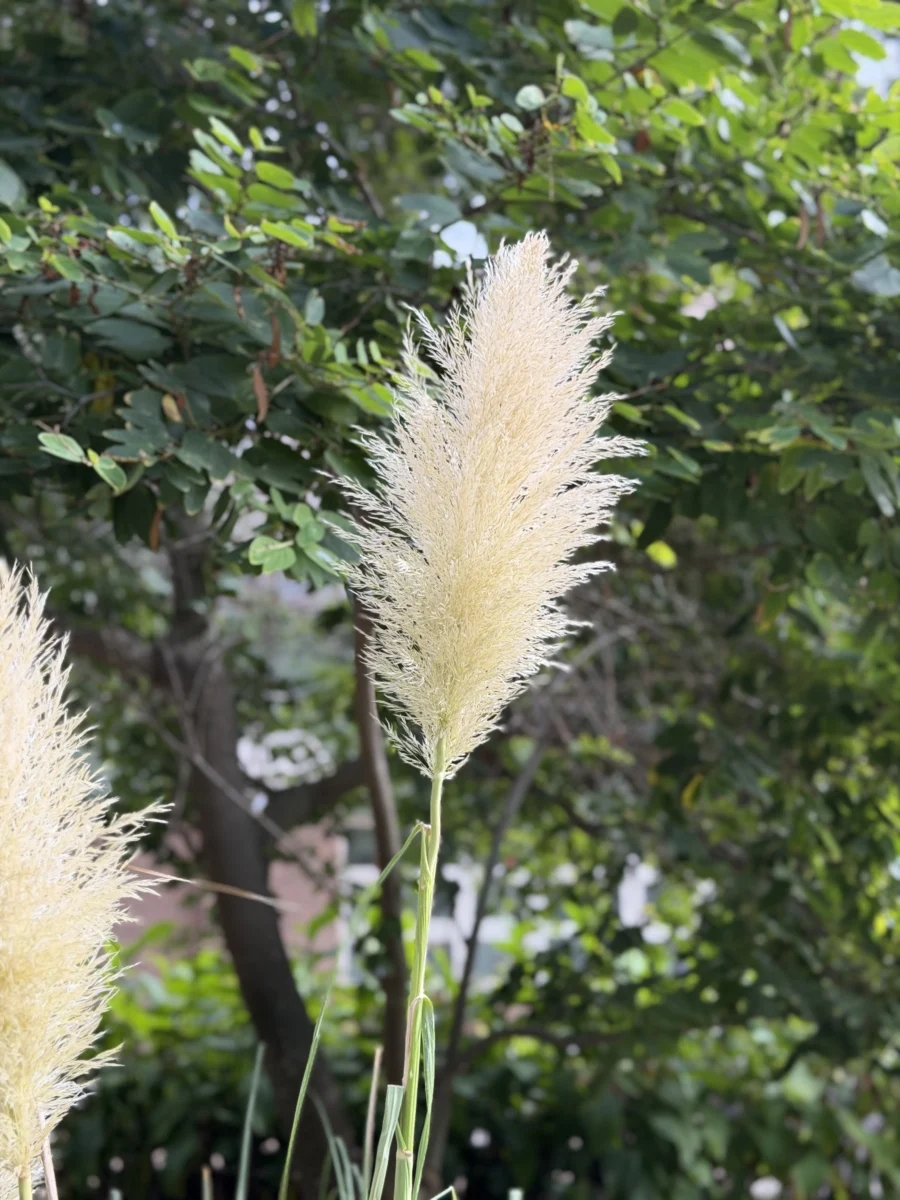
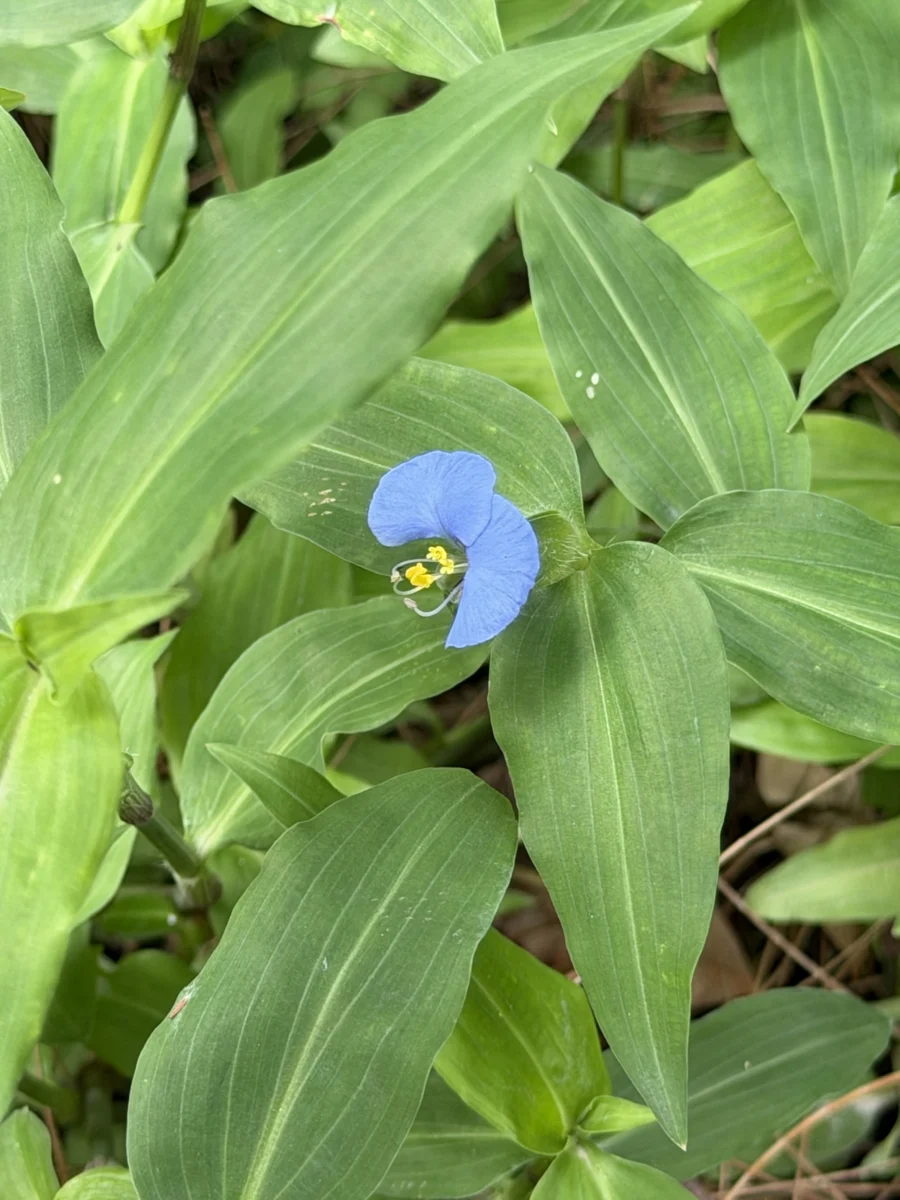
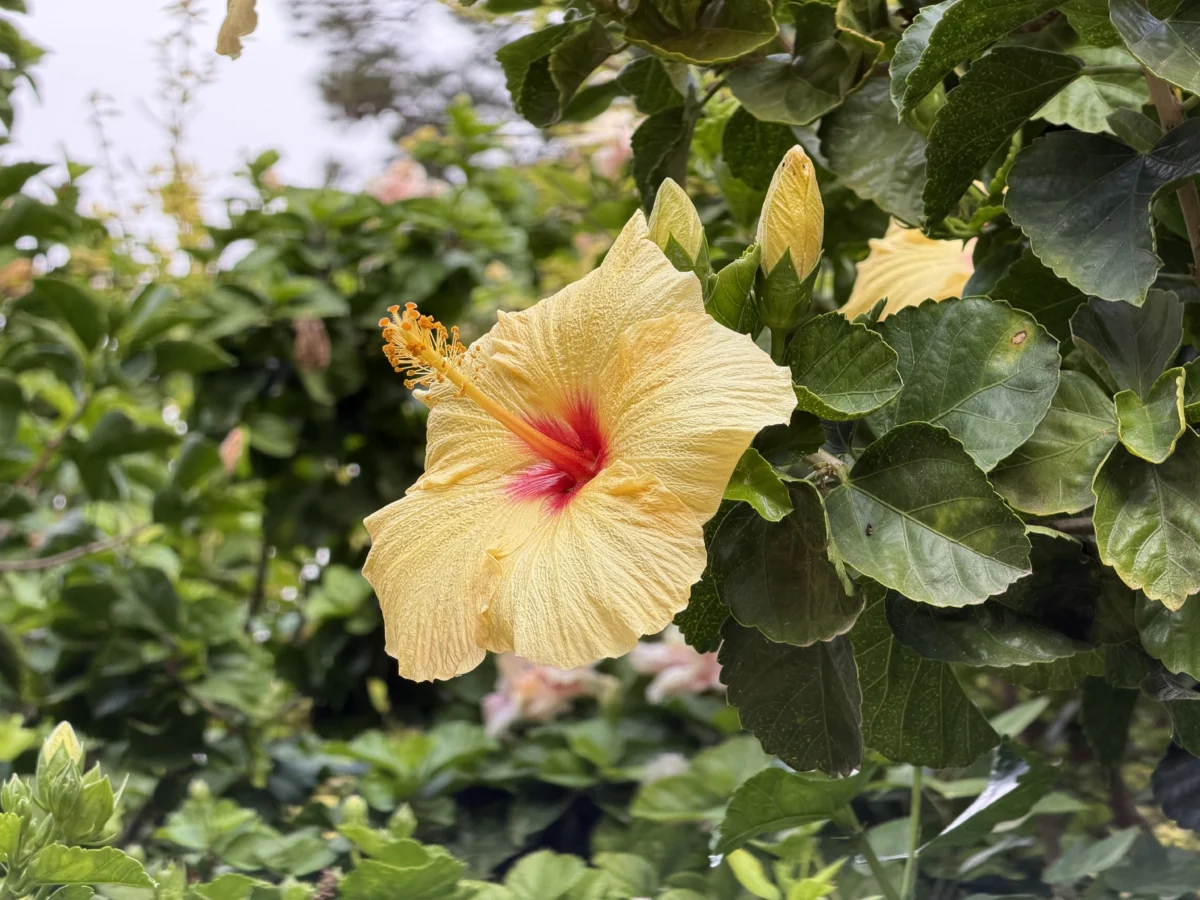
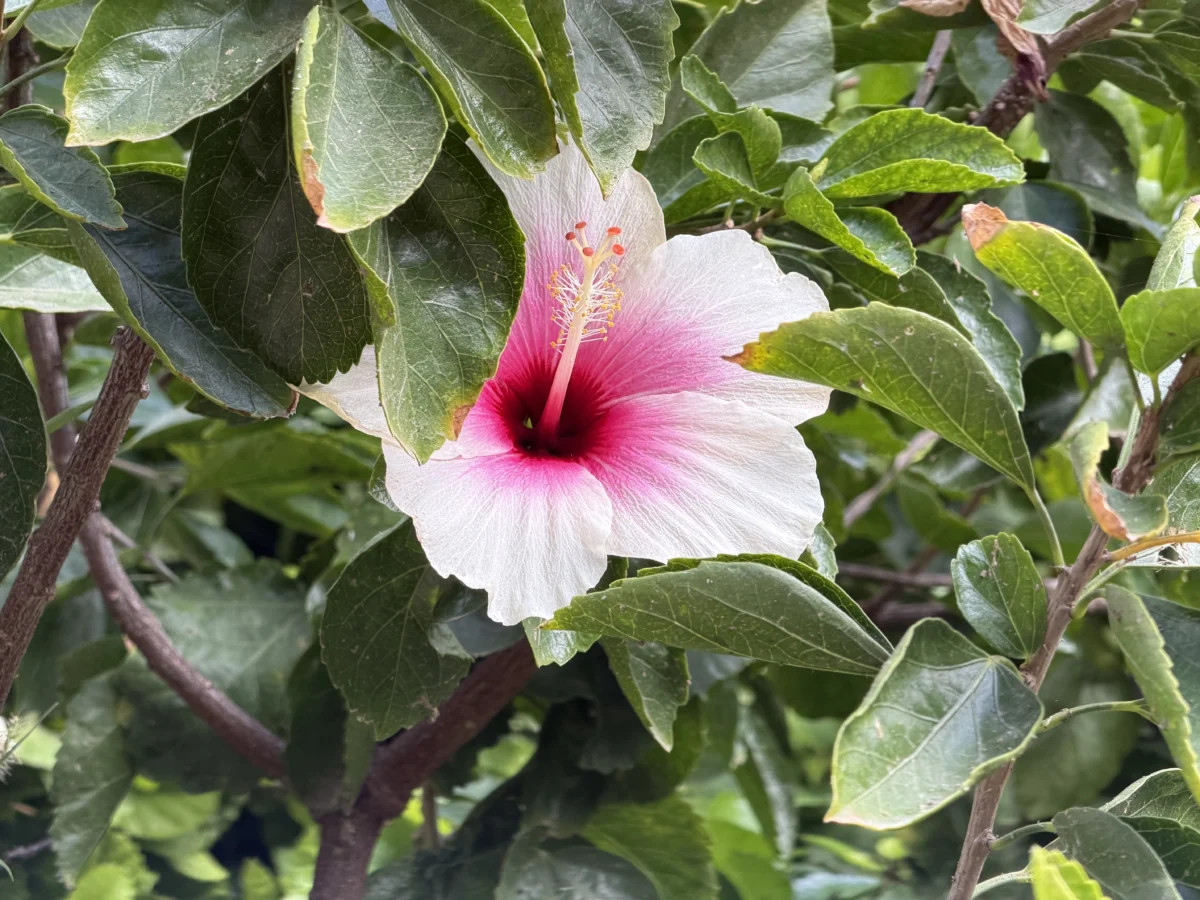
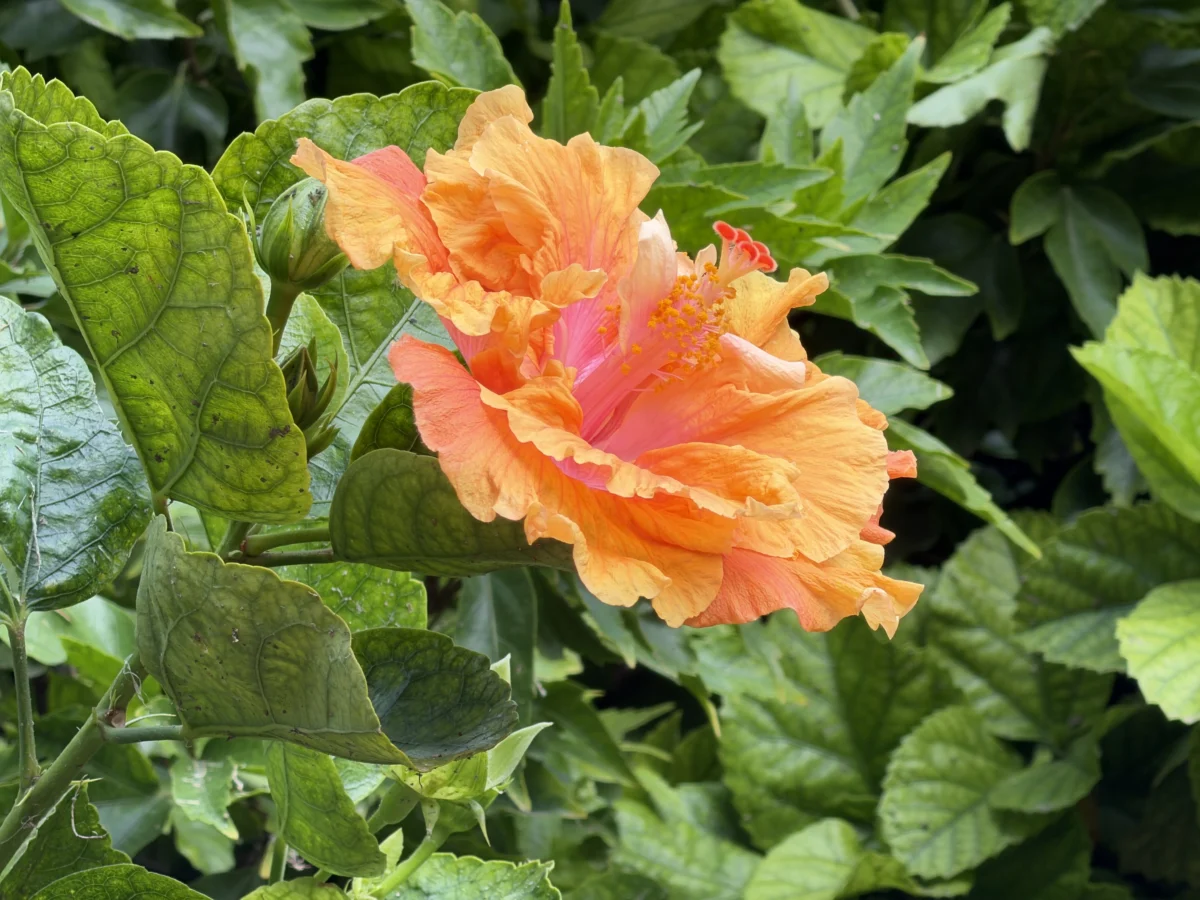
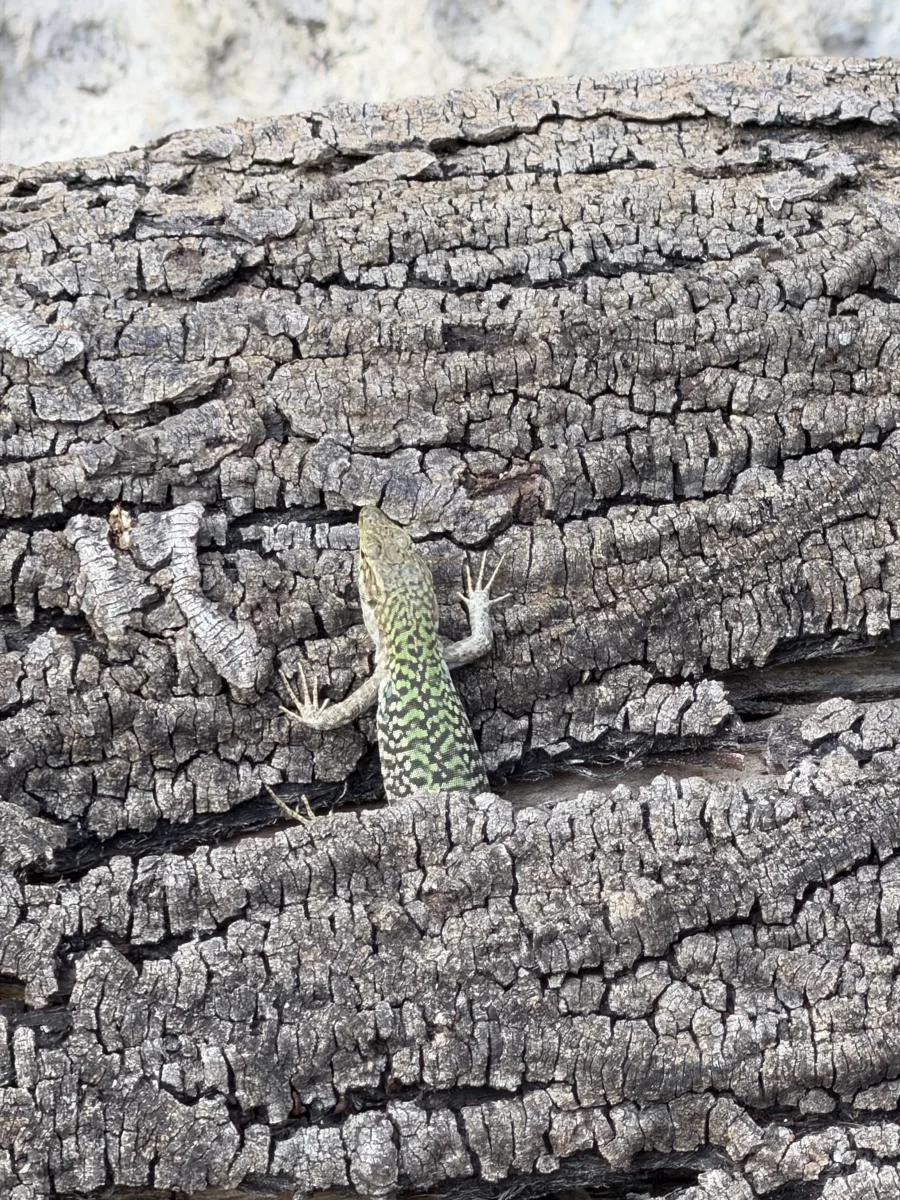
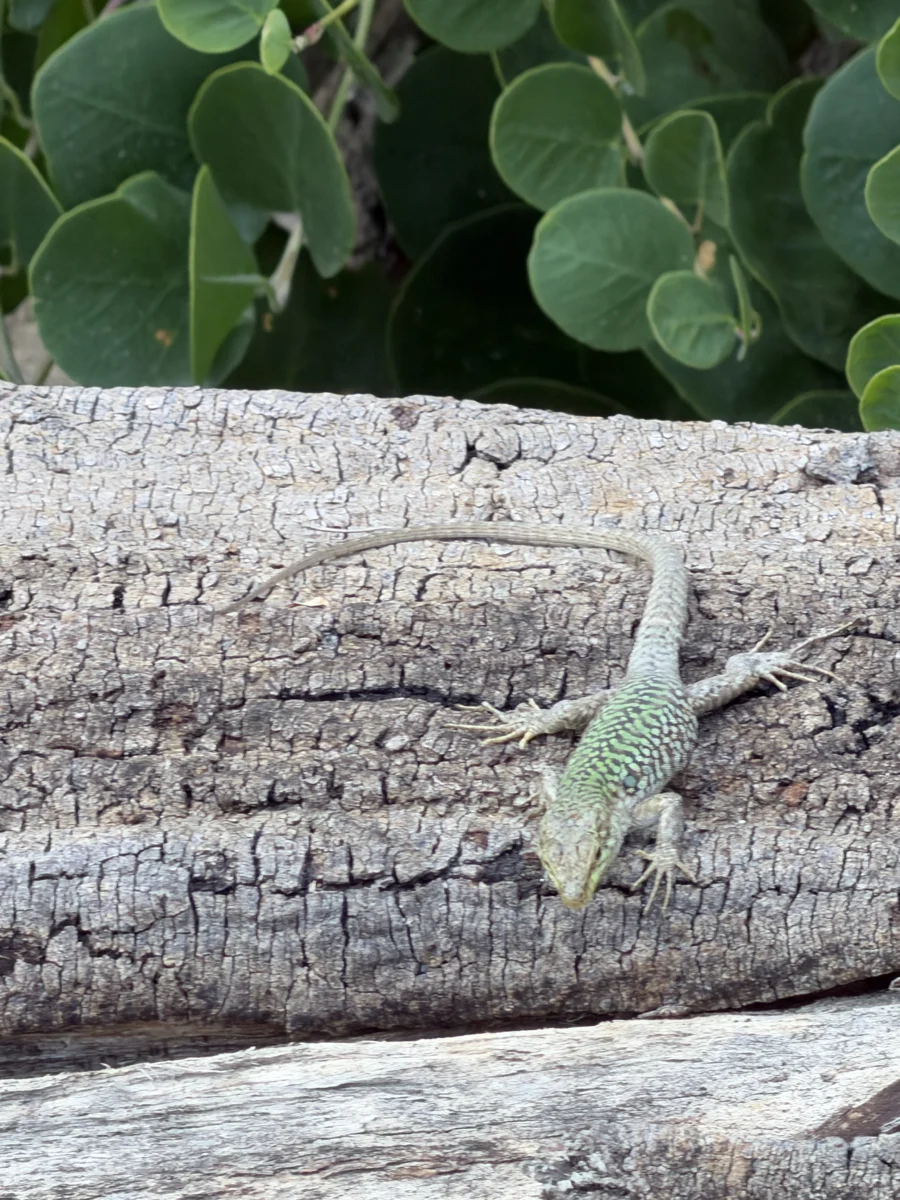
There are some large, shallow natural grottos and caves as well, supporting other unusual specimens.


There is a large succulent area, waiting for unsuspecting photographers to back up without looking.
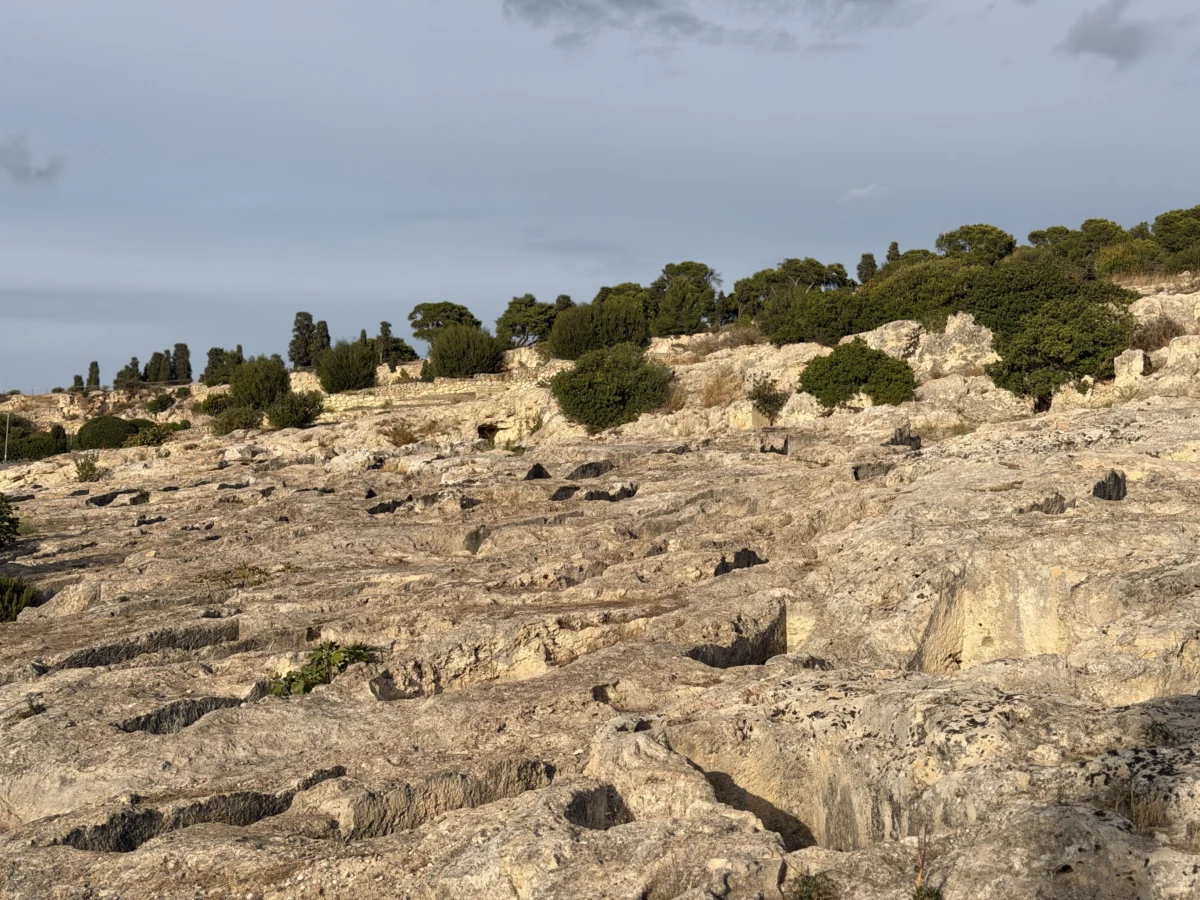
Even farther to the west is the large limestone Tuvixeddu Necropolis, the largest Punic necropolis on the Mediterranean. We went on a lovely evening walk with Giuseppe and Luisa through the necropolis and its splendid viewpoints. Amongst the carved limestone are lush plants growing like vines, which turned out to be capers!

It’s unusual (but awesome) to find a real hike a 10-minute drive from a city. Sella del Diavolo (Devil’s Saddle) is on Capo Sant’Elia, the limestone promontory that forms the southern tip of the peninsula Cagliari is located on.
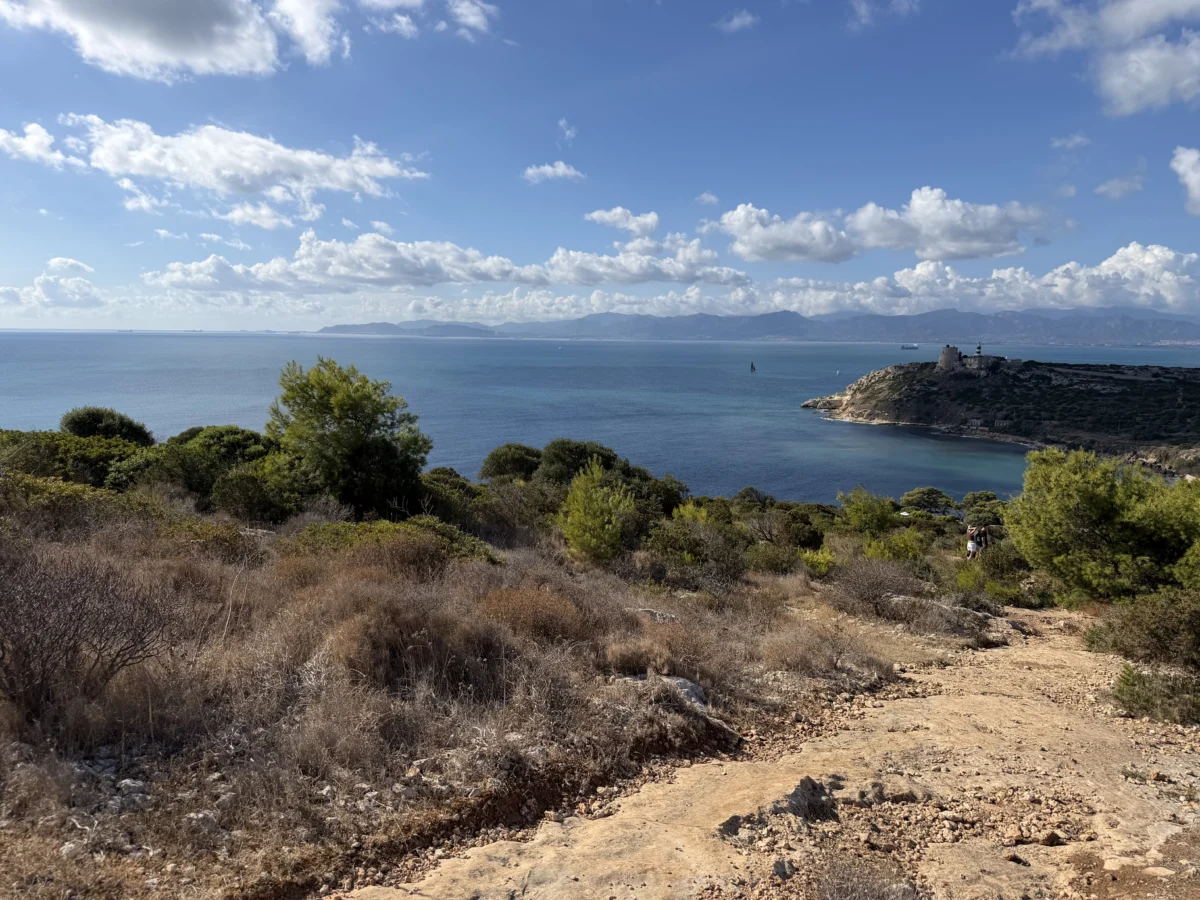

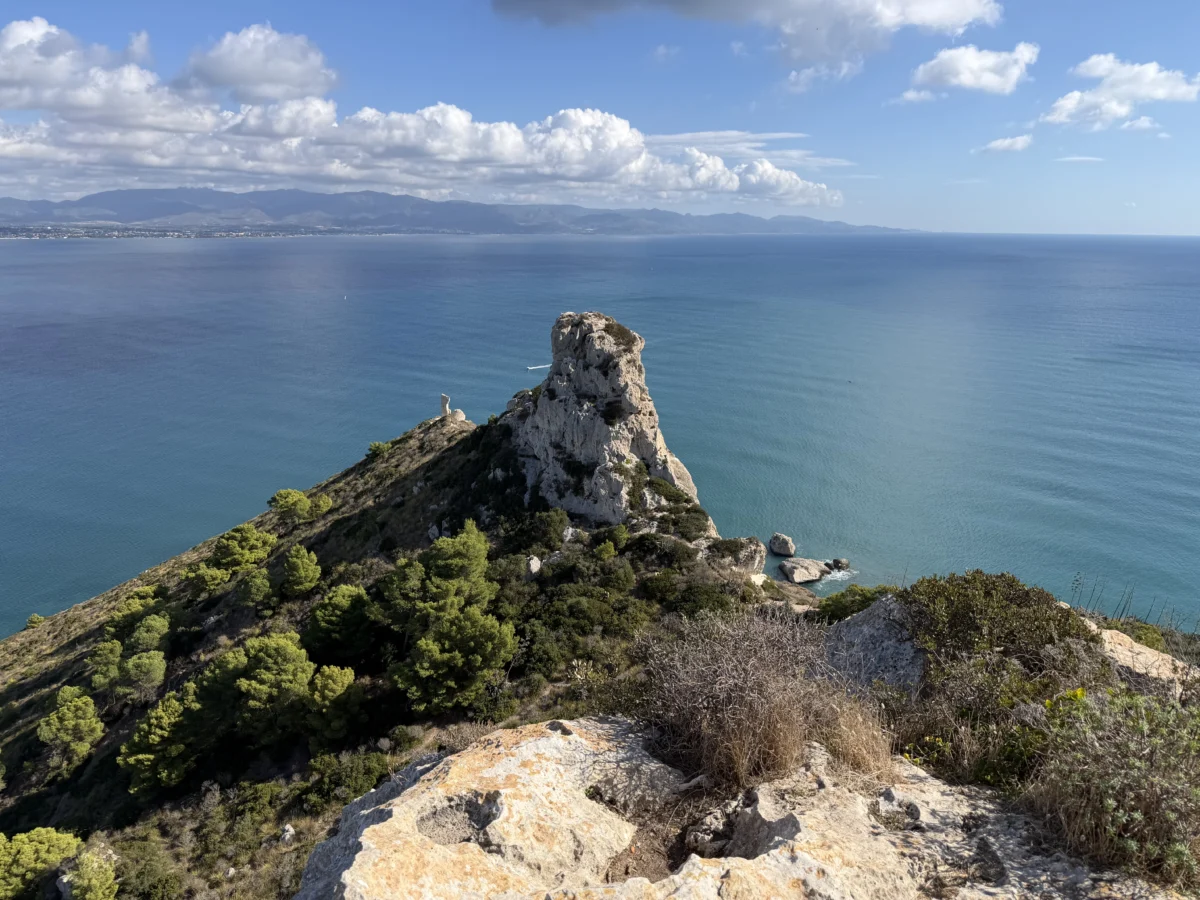
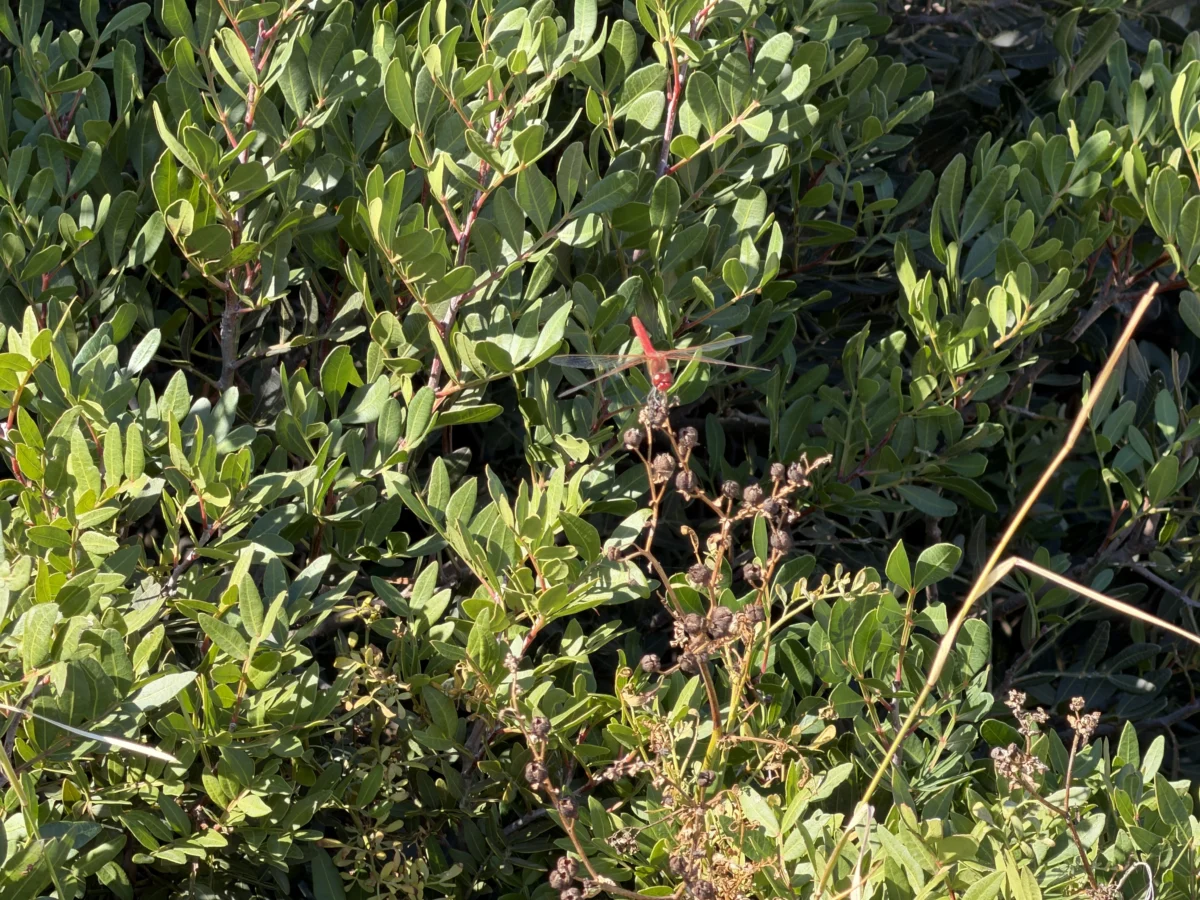
I love how limestone erodes into shapes and surfaces with such character.
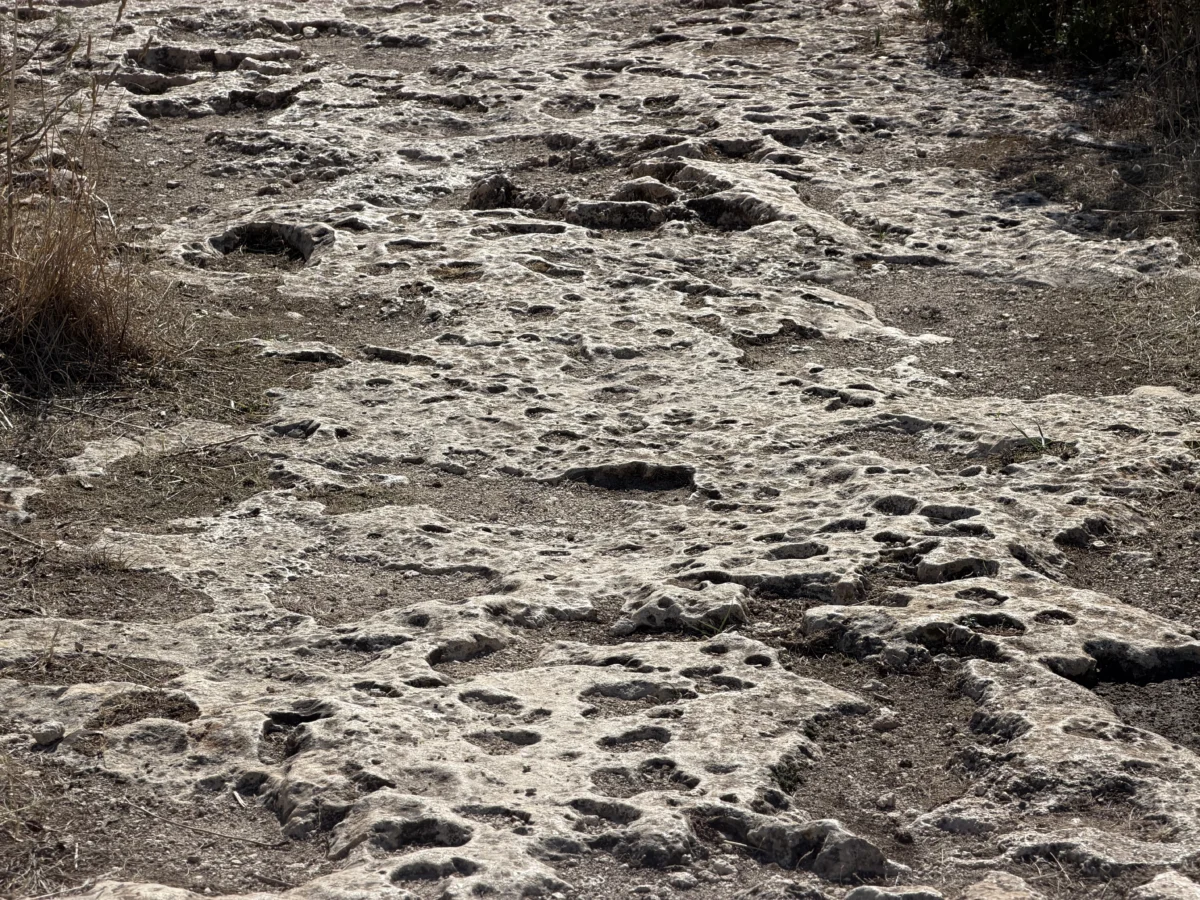
If you have access to high-resolution 3D satellite imagery (e.g. Apple Maps or Wooorld on Quest VR), check this area out!

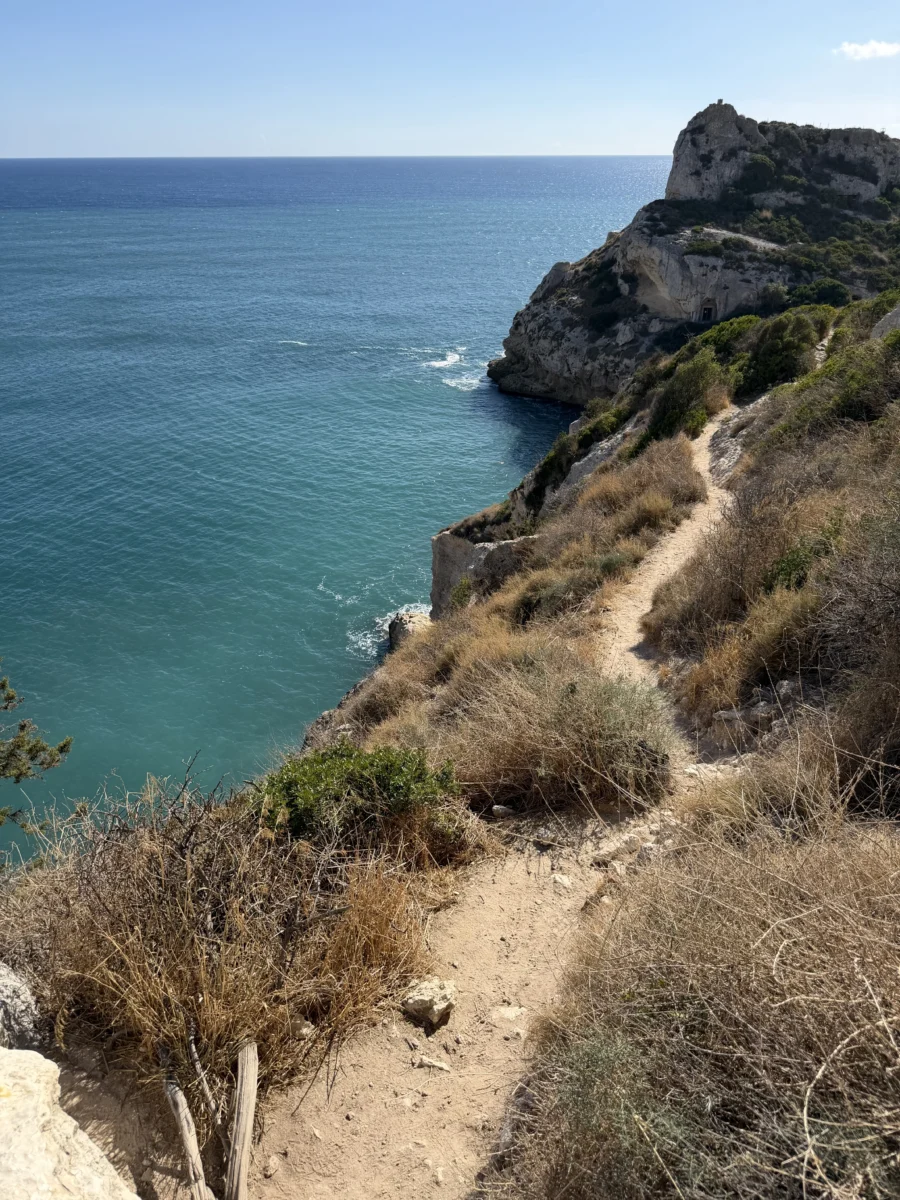
At the highest point this cliff is about 135 m (443 ft) above sea level. The precariousness of the cliff’s edge (and complete lack of any rails or ropes!) makes this both mind-bendingly beautiful and.. a little unsettling.
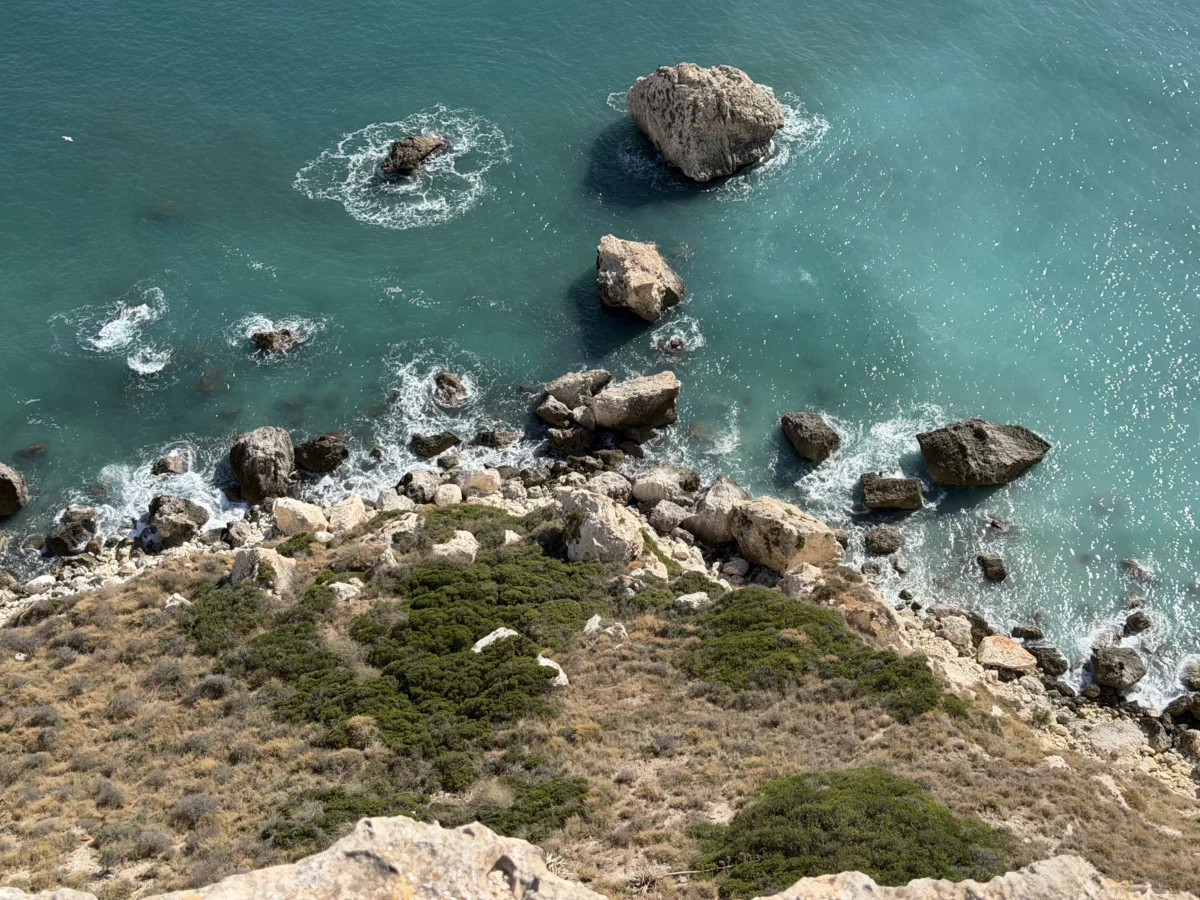

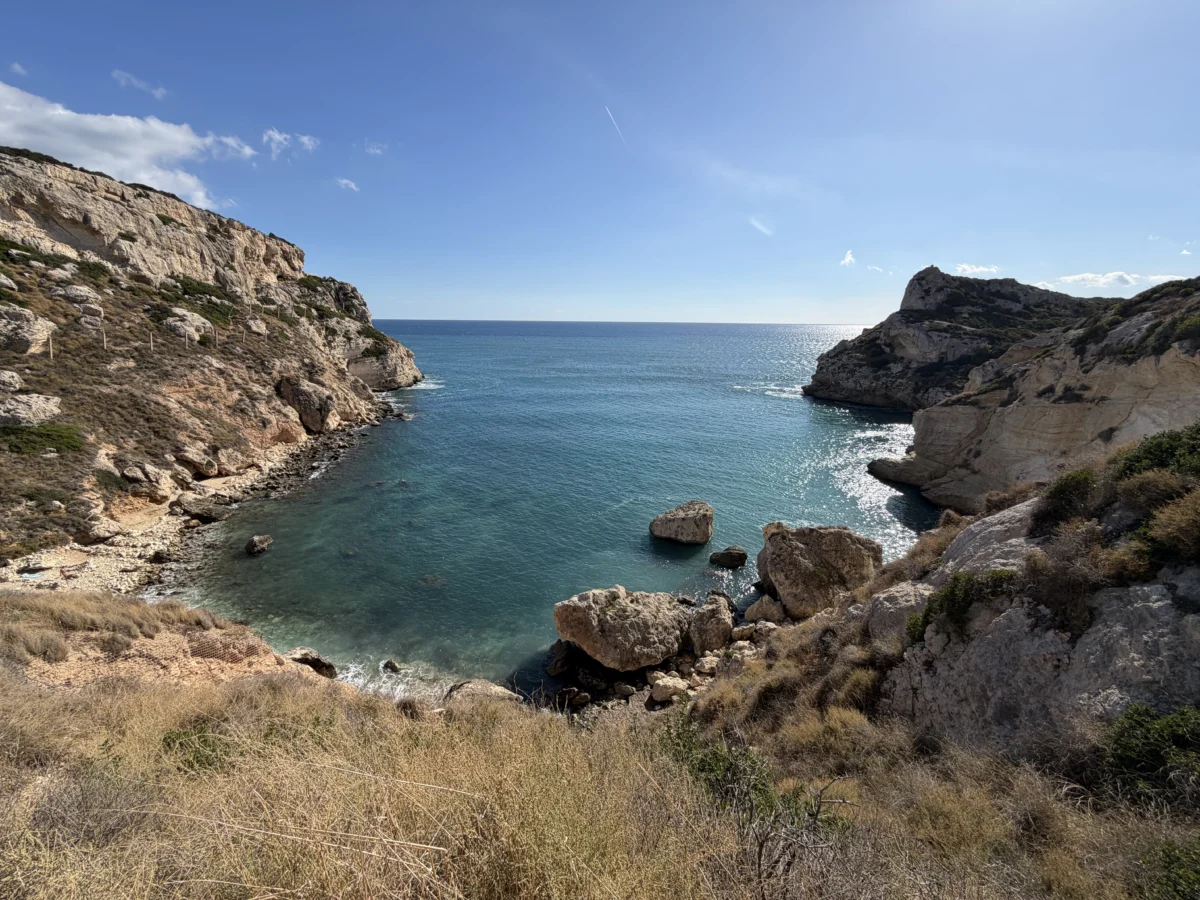
The portion of the trail skirting Cala Fighera is loose dirt on top of a cliff, following a steep hillside covered in huge thorned bushes, nice. I would not take young children on any of this.
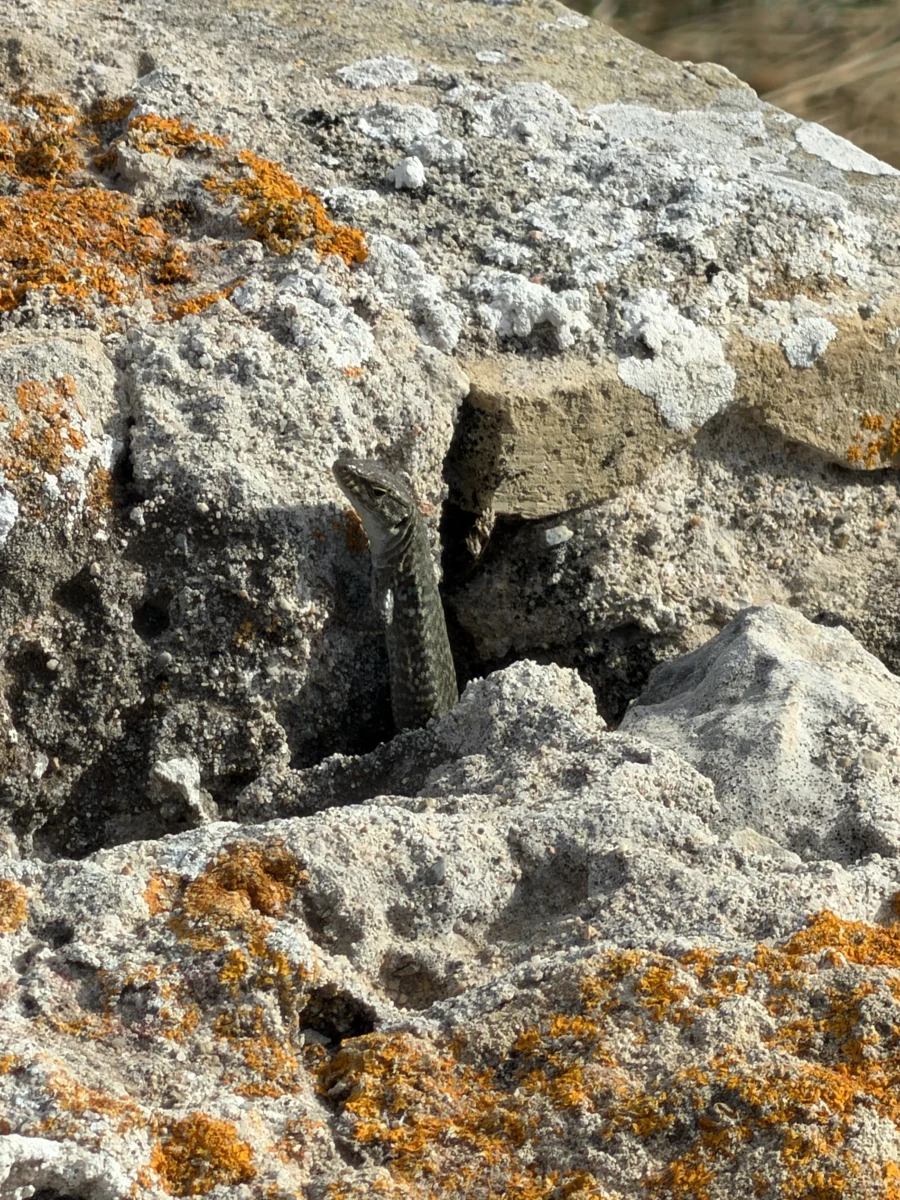
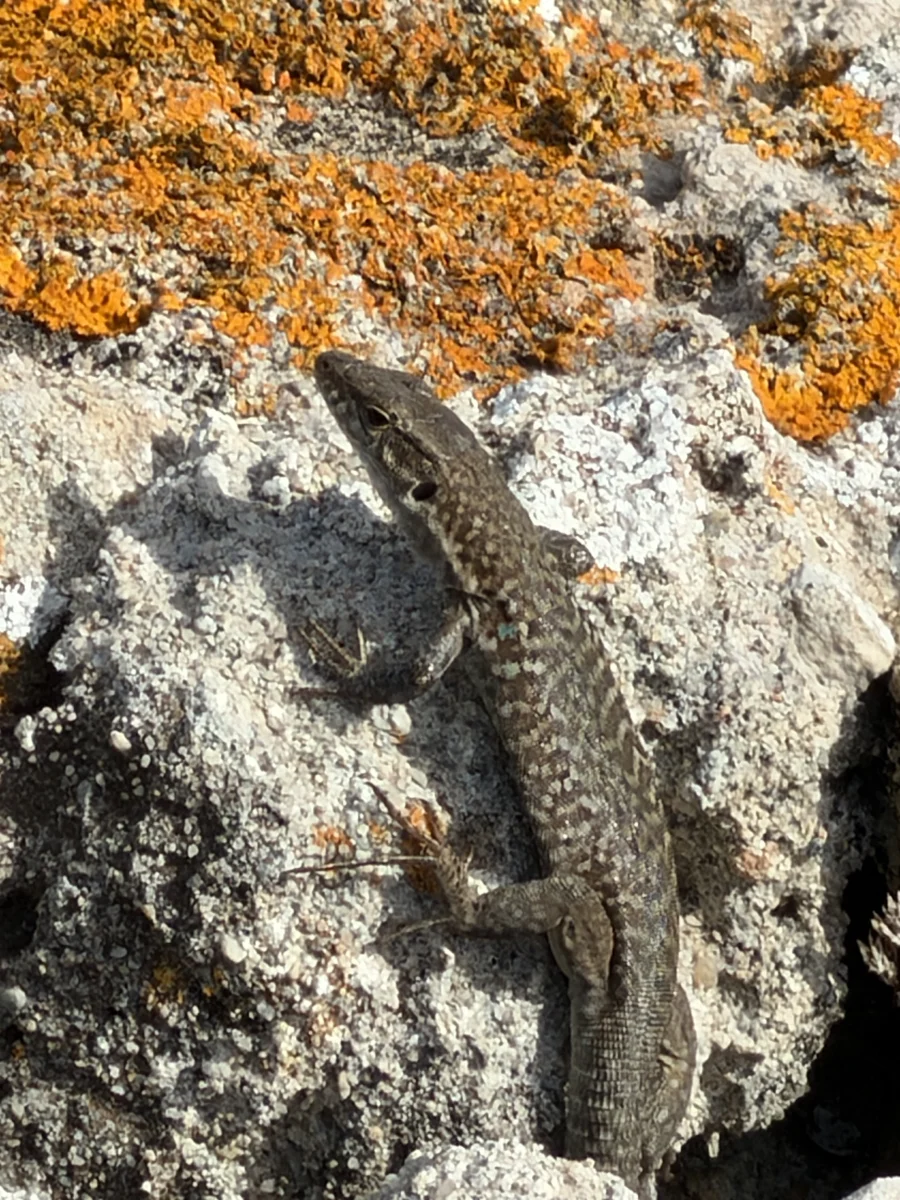
We never get tired of lizards, even the common ones. This one scrambled around, not to get away but to pose perfectly with a miniature cave mouth.

This hike is another must-do if you’re in the area. Just be careful!
We drove about half an hour to the town of Pula and spent a few hours at the Nora archaeological site. There are extensive Roman ruins across this peninsula, giving a real sense of what life was like living in this ancient city. The ruins are from the later portion of the Roman occupation, which spanned from the late 3rd century BCE to the 4th century CE.
Nora Timeline
A city has occupied the Cape of Pula far longer than that however, and mirrors much of the history of Cagliari and most of Sardinia as well.
- 1500-800 BCE: Nuragic
- 800-509 BCE: Phoenician
- 509-238 BCE: Carthaginian
- 238 BCE-455 CE: Roman
- 455-534 CE: Vandals
- 534-~700 CE: Byzantine
- ~700-1324 CE: Abandoned
- 1324-1479 CE: Aragon
- 1479-1720 CE: Spain
- 1720-1861 CE: House of Savoy
- 1861-present: Italy
The period of abandonment happened gradually (thus the indefinite start date), resulting from rising sea levels and widespread disease.
As they say, “the only thing constant is change”
Despite the many layers of history, the Nora ruins have been preserved and restored very well. I won’t try to go over all of the historic details provided by the signs and audio guide, but I will share some remarkable photos we took!
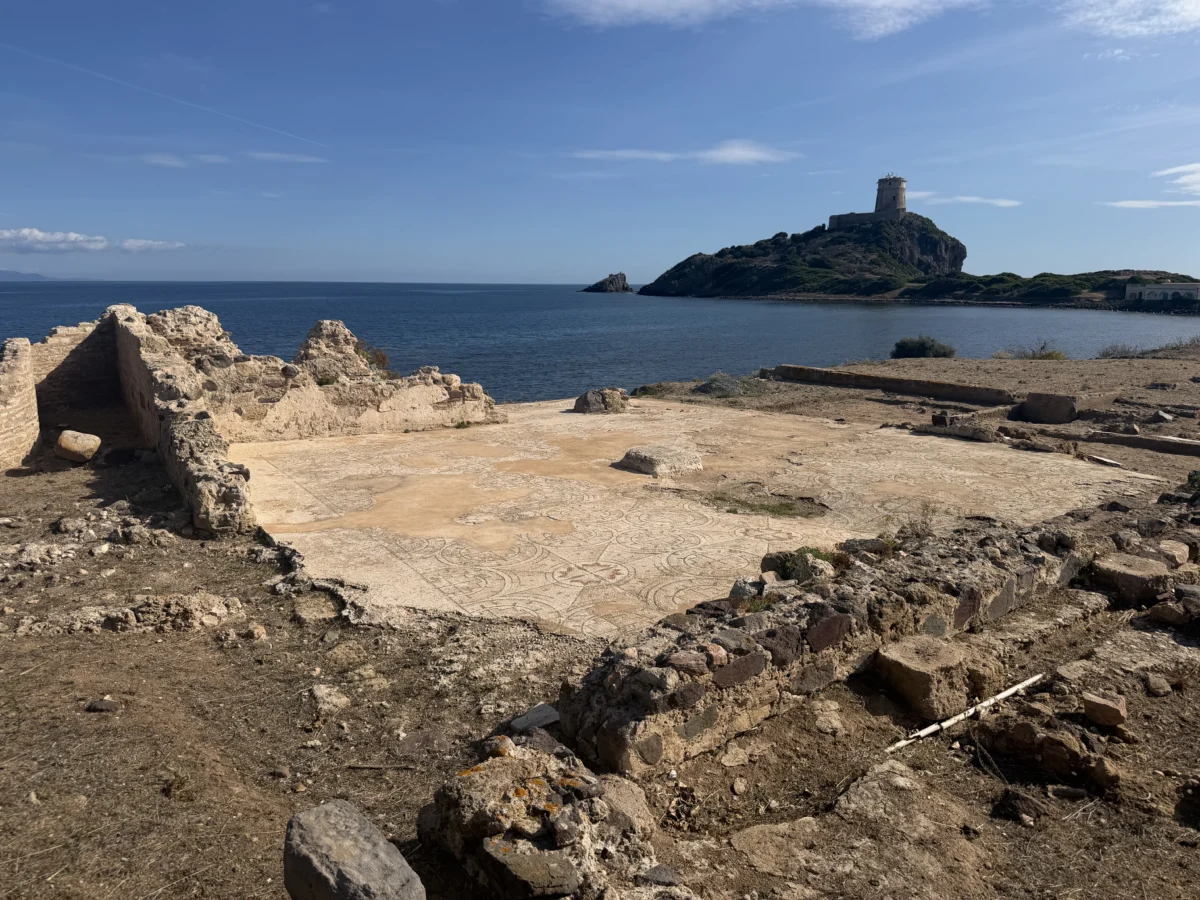

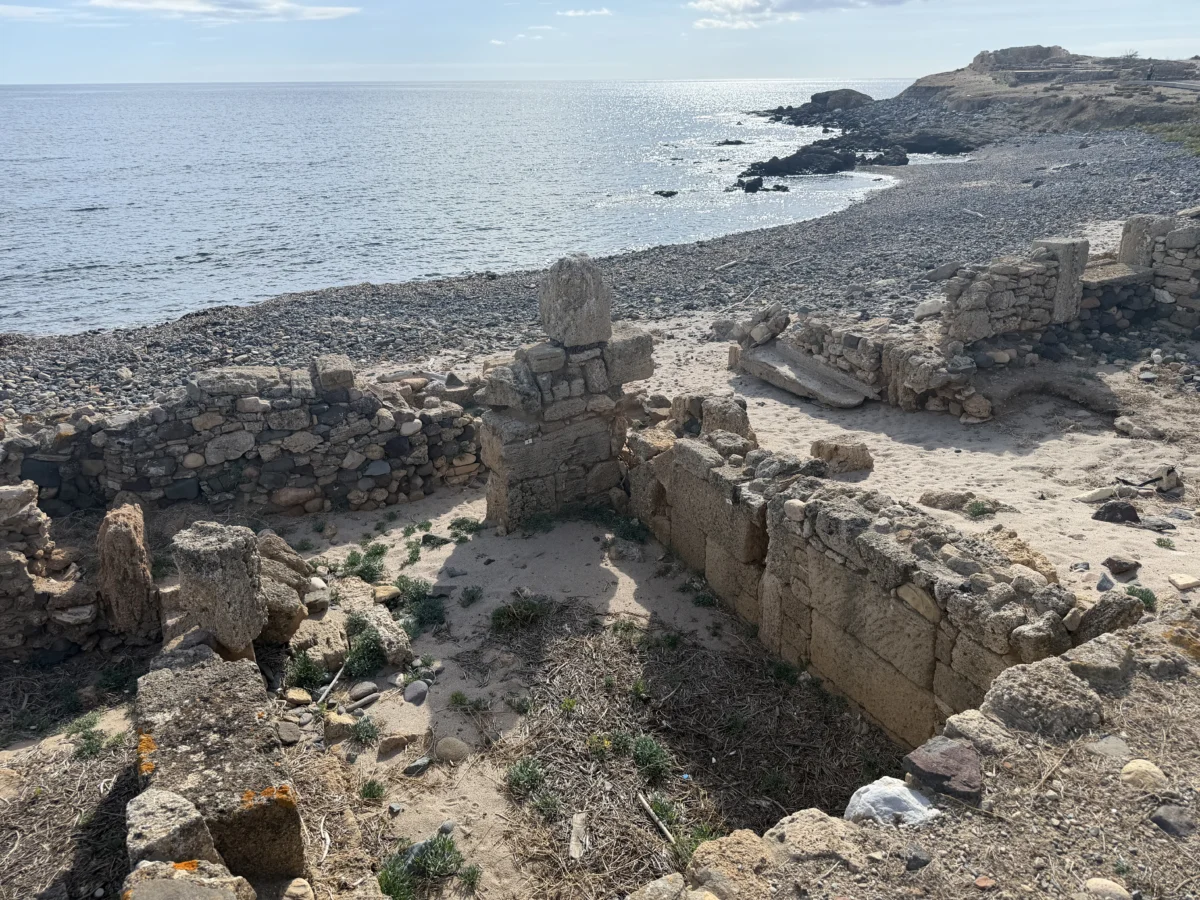

You can see ruins in the water and scientists have confirmed that the city extended even farther, now buried in the water and silt.
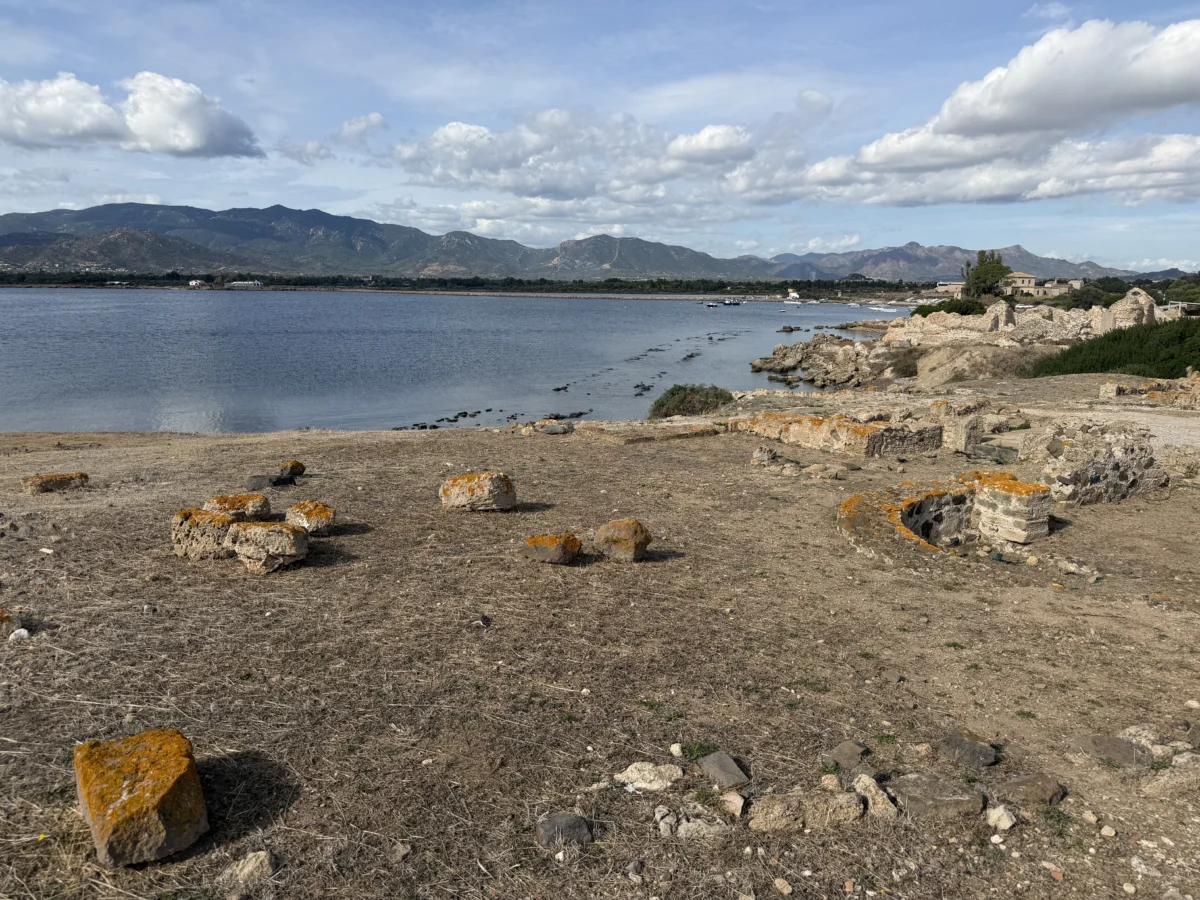
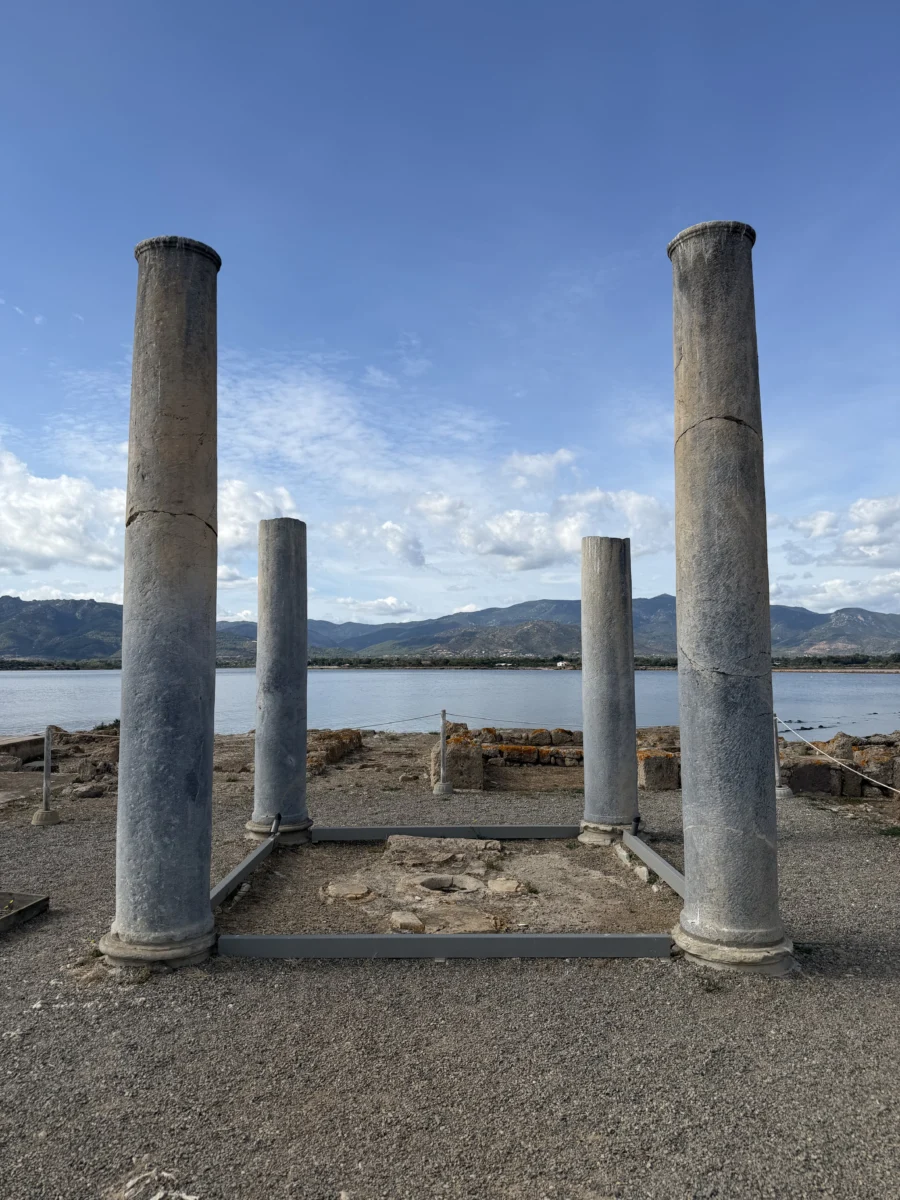
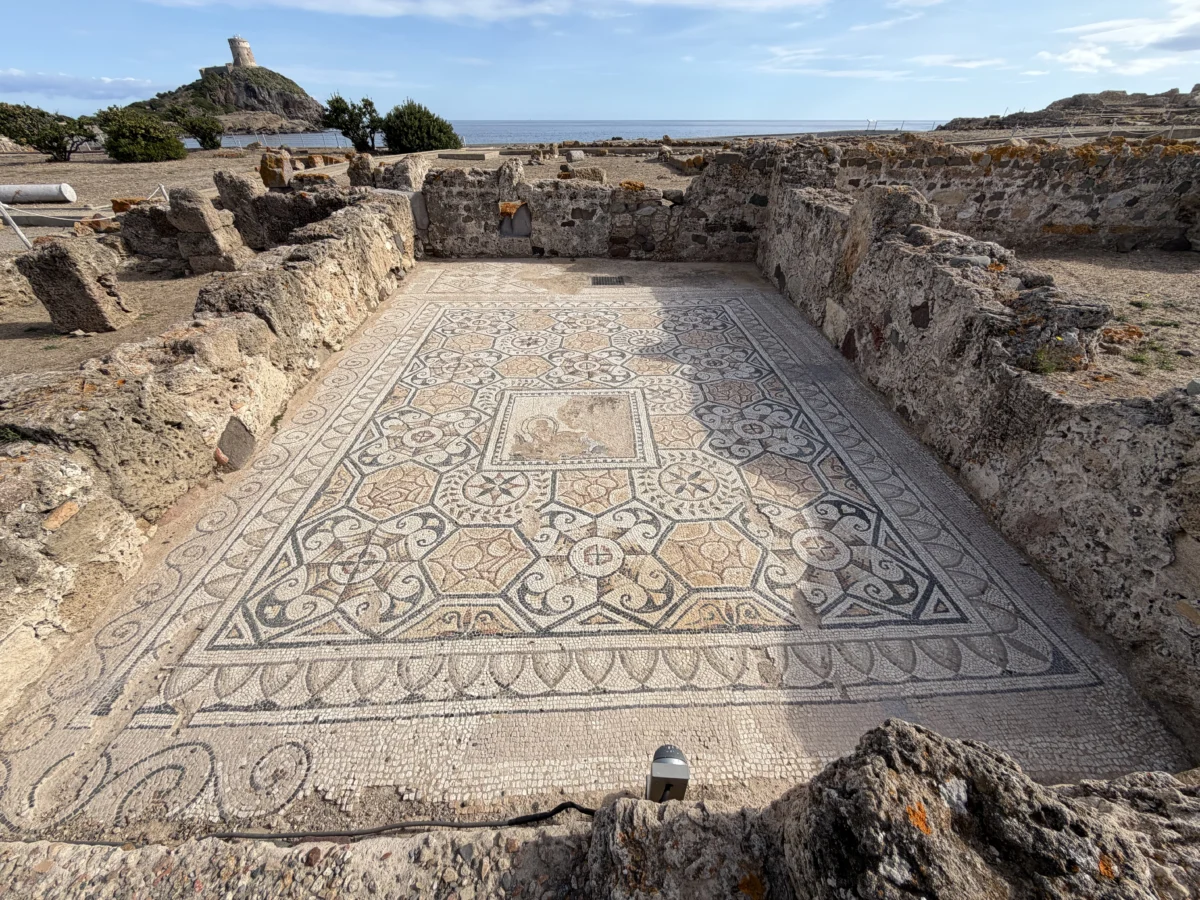
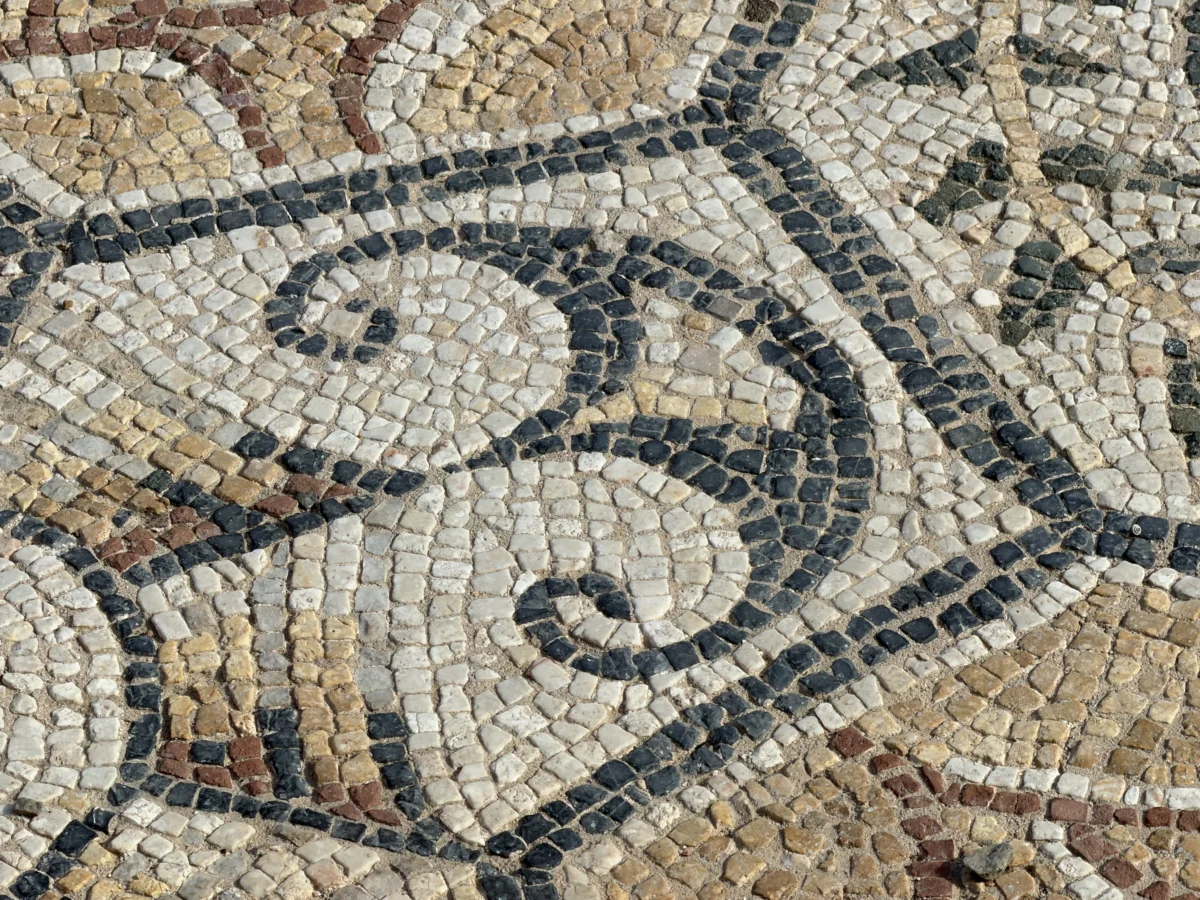
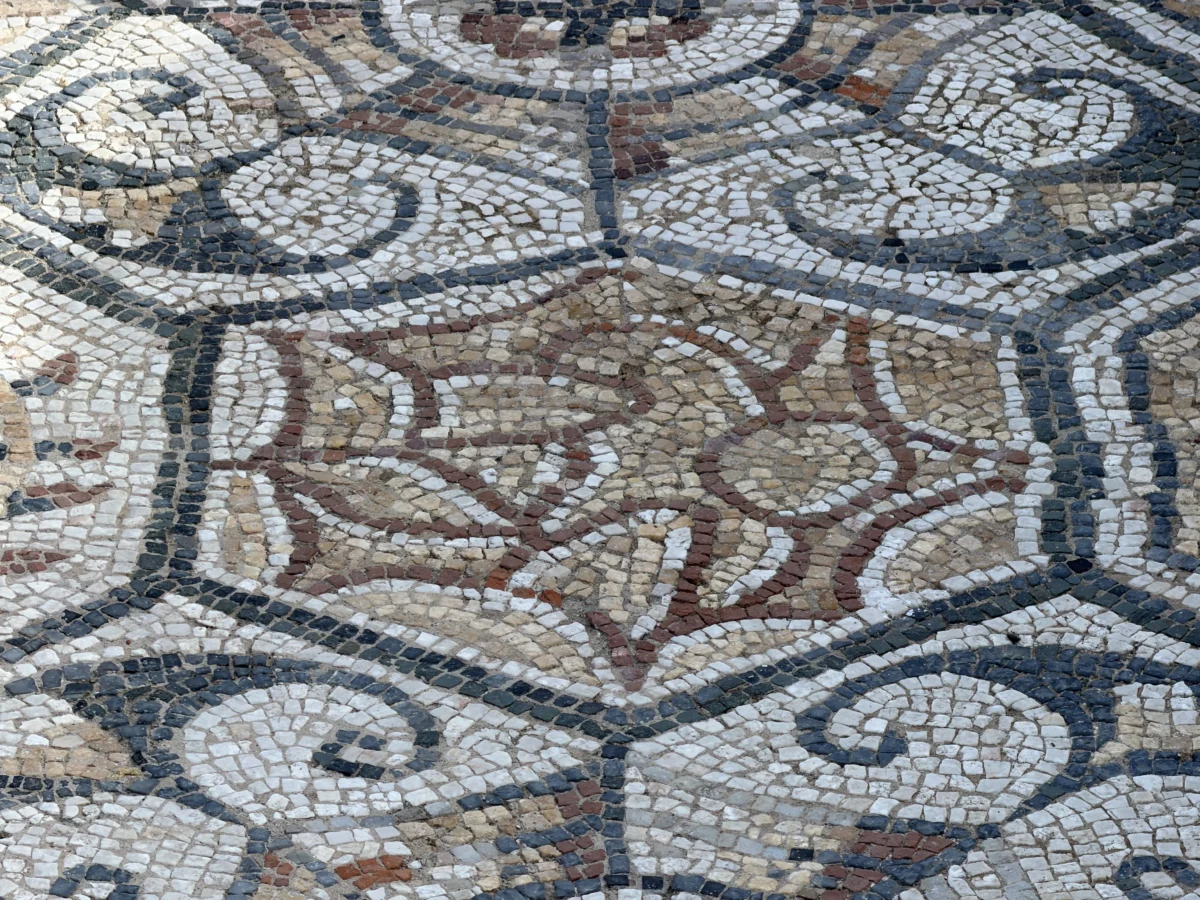
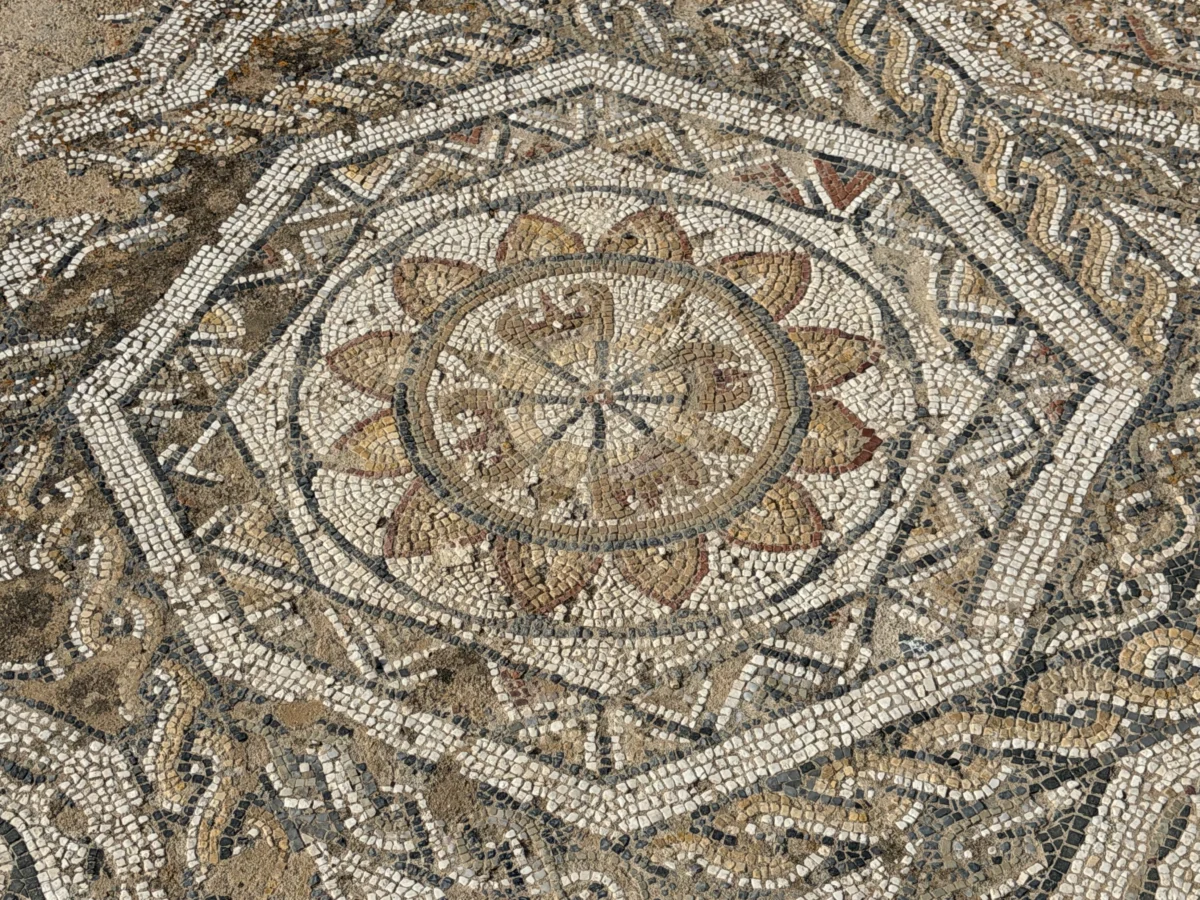
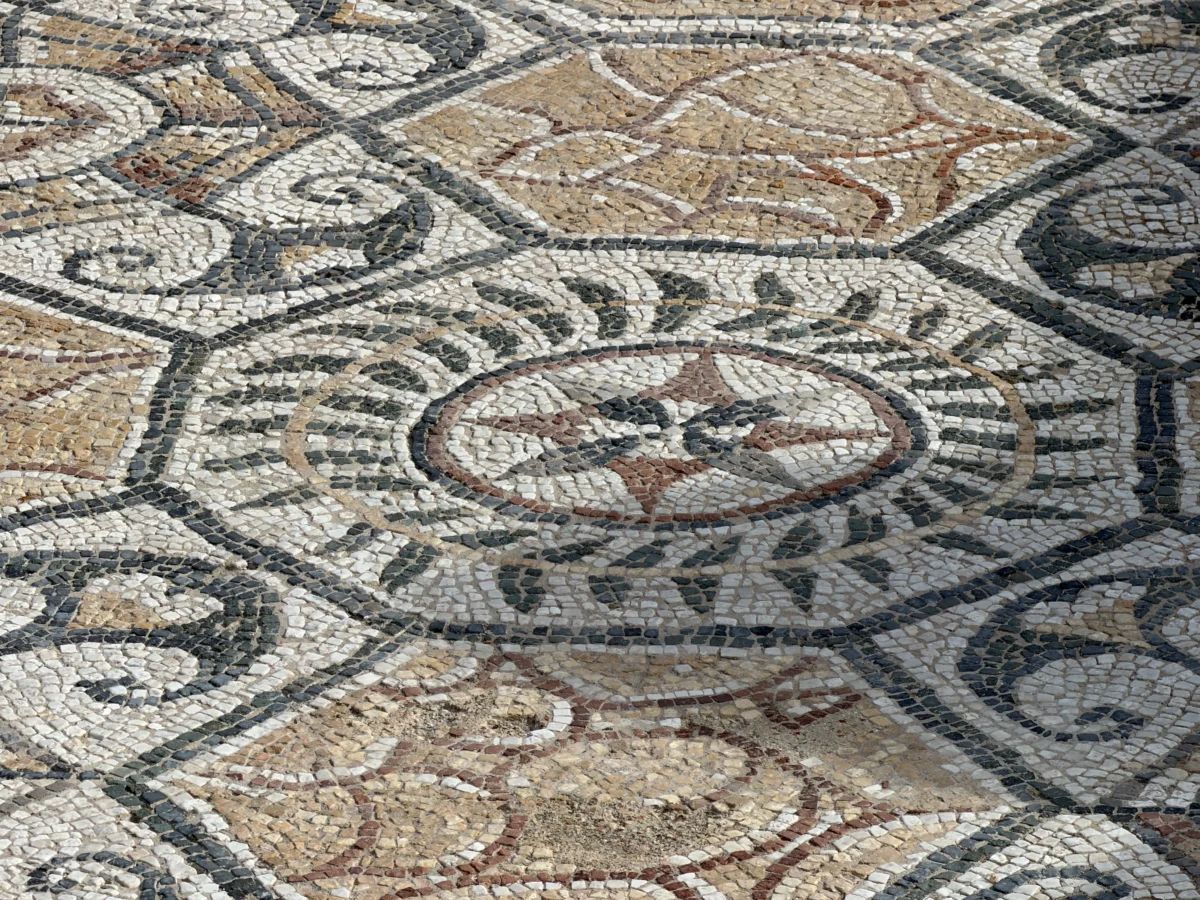
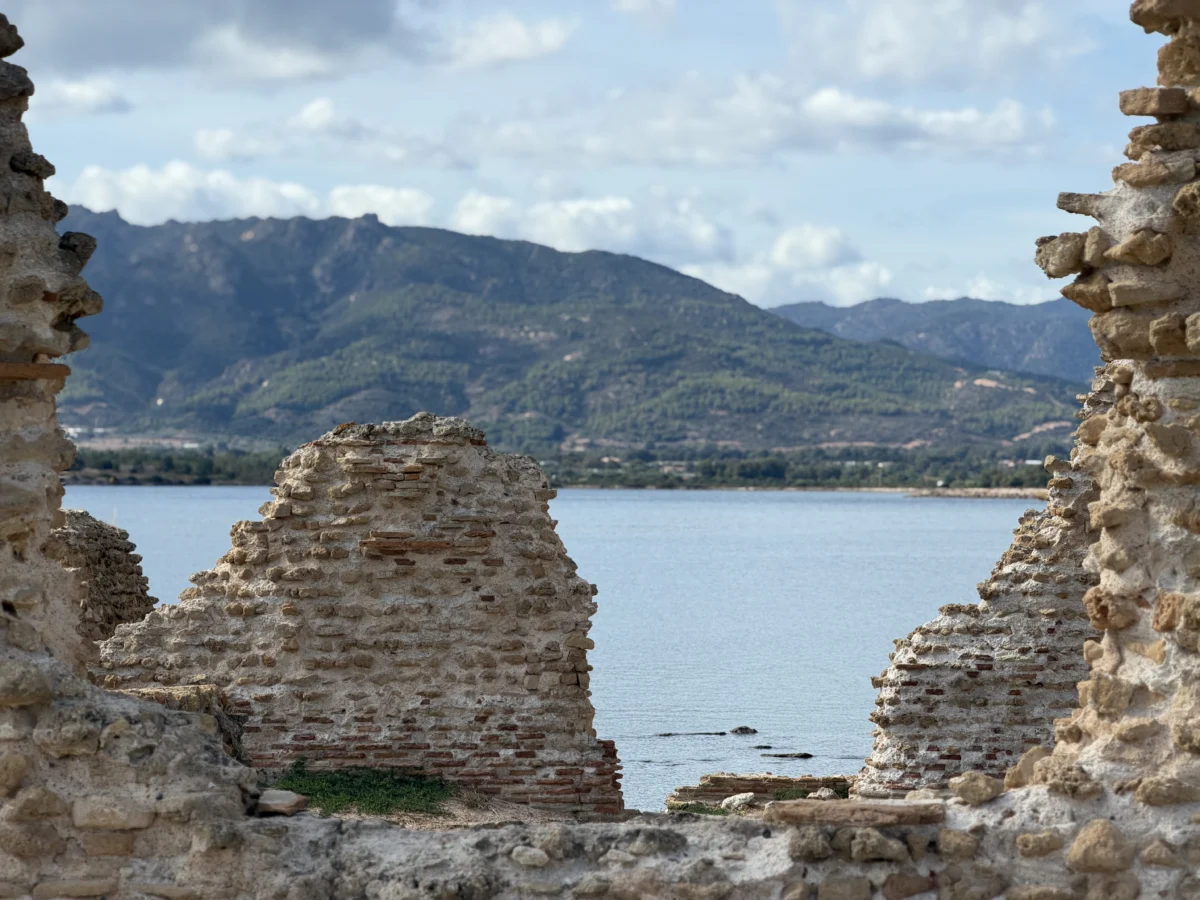
We visited a lot of ruins in Sardinia, and Nora gave us yet another truly unique and fascinating perspective. This site is highly recommended if you are in the area. The watchtower can only be visited with a guide and only on certain days, so check ahead.
San Vito & Castiades
On the way to Cagliari from Dorgali we spent a night in the southeast of Sardinia, at a remote farm/eco B&B in San Vito. It’s called Lananai and is owned/run by Carlo and Cristina.
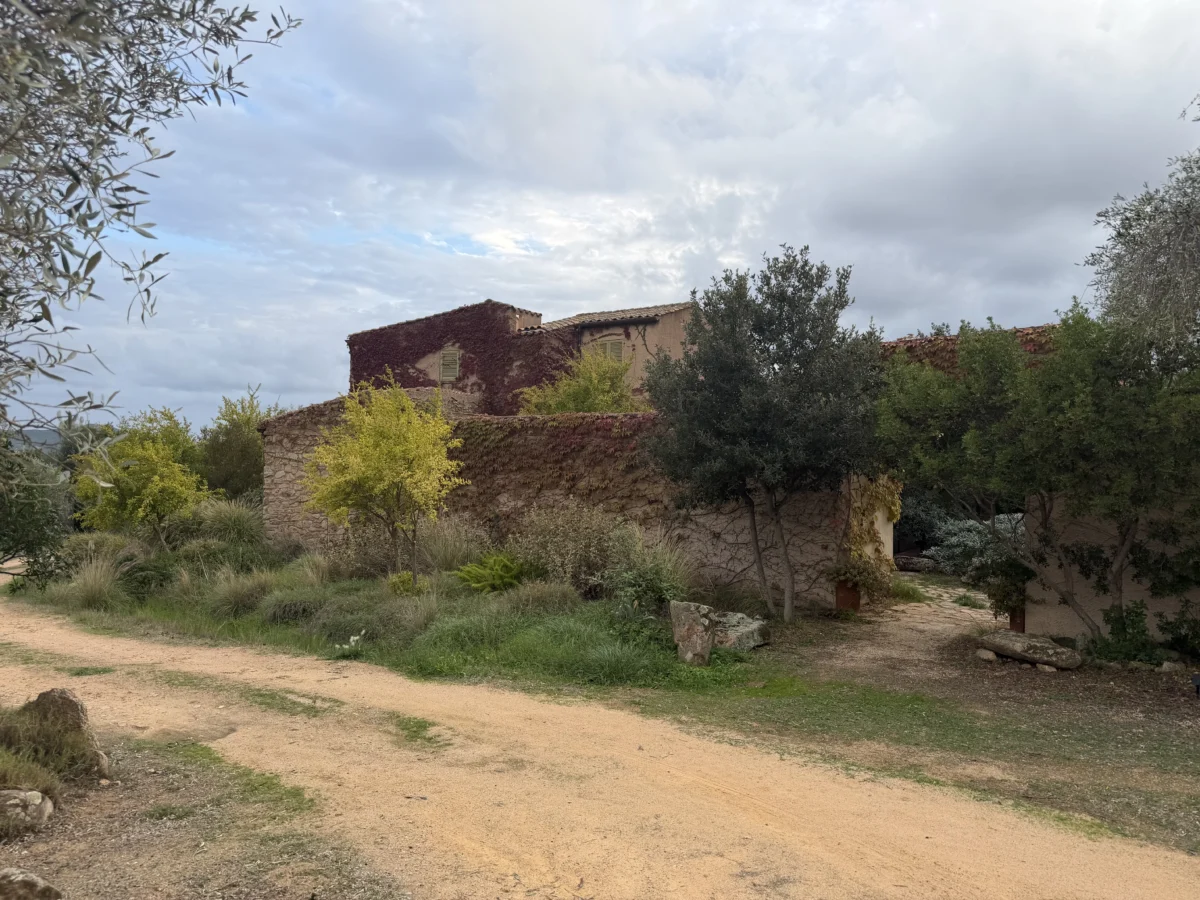
We talked to Carlo a lot, who is intensely welcoming and kind, and while he’ll tell you his English is weak, his charisma is more than strong enough to compensate! He made a breakfast spread of local goods, mostly from the farm itself.
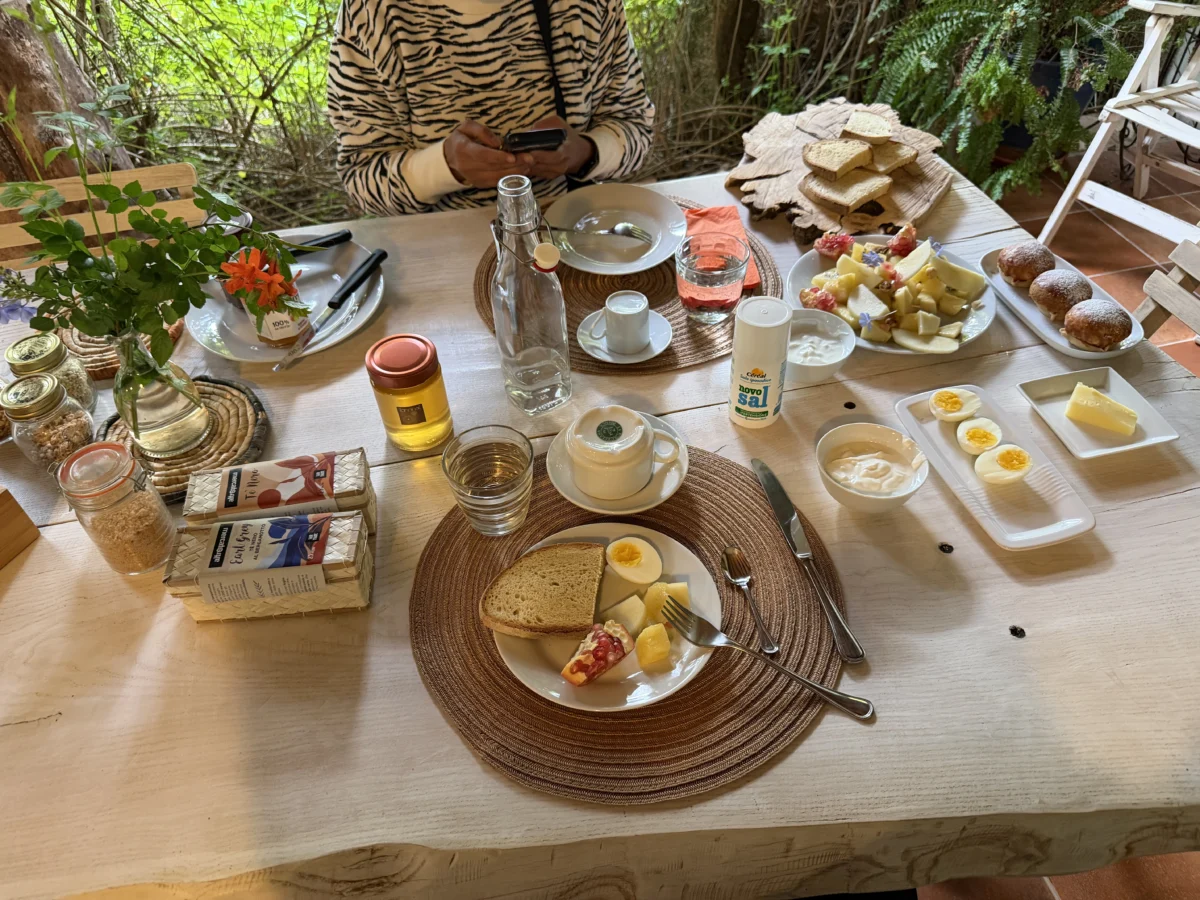
It’s “eco”, so no Internet, TV, or AC. That’s a legit choice but frustrating if you’re say.. blogging. There’s also little or no cell service and not a lot of heat so plan accordingly.
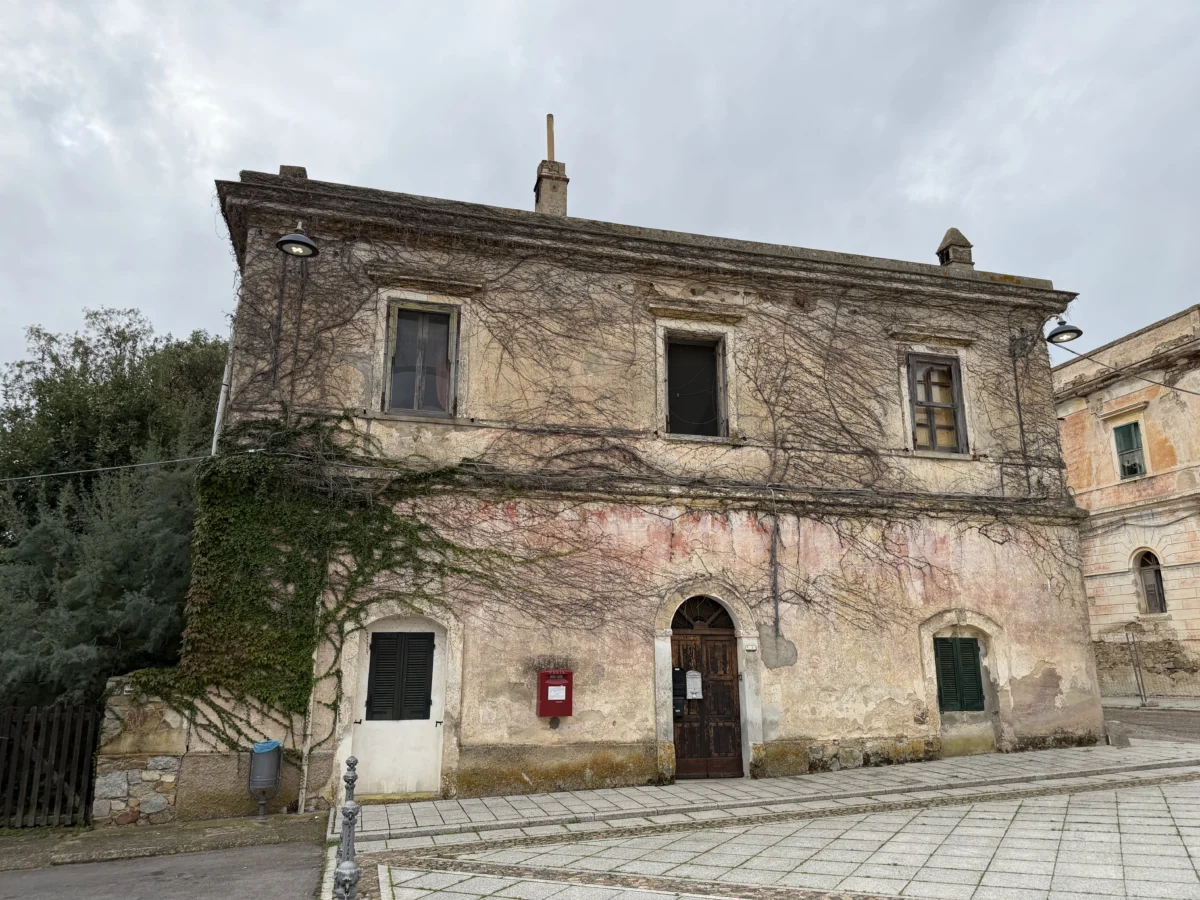
We drove through the nearby village of Castiades, site of the historic Castiades penal colony. We just read a bit about it, stopped for some pictures, and drove on but it does have that eerie, haunted vibe.
The Cagliari area has so many things to offer. We were there for a full week and feel like we only scratched the surface. The same is true on an even bigger scale for Sardinia overall. Next time we go we plan to go a couple weeks earlier to still dodge the summer peak but catch more beaches and beach communities and businesses. The shoulder months are excellent though so no regrets.
Leave a Reply