Northeast of Yogya is Prambanan, the largest Hindu temple site in Indonesia and the 5th largest in the world. It was built in the 9th century, and similar to Borobudur was abandoned and then slowly recovered and rebuilt over the last couple hundred years.
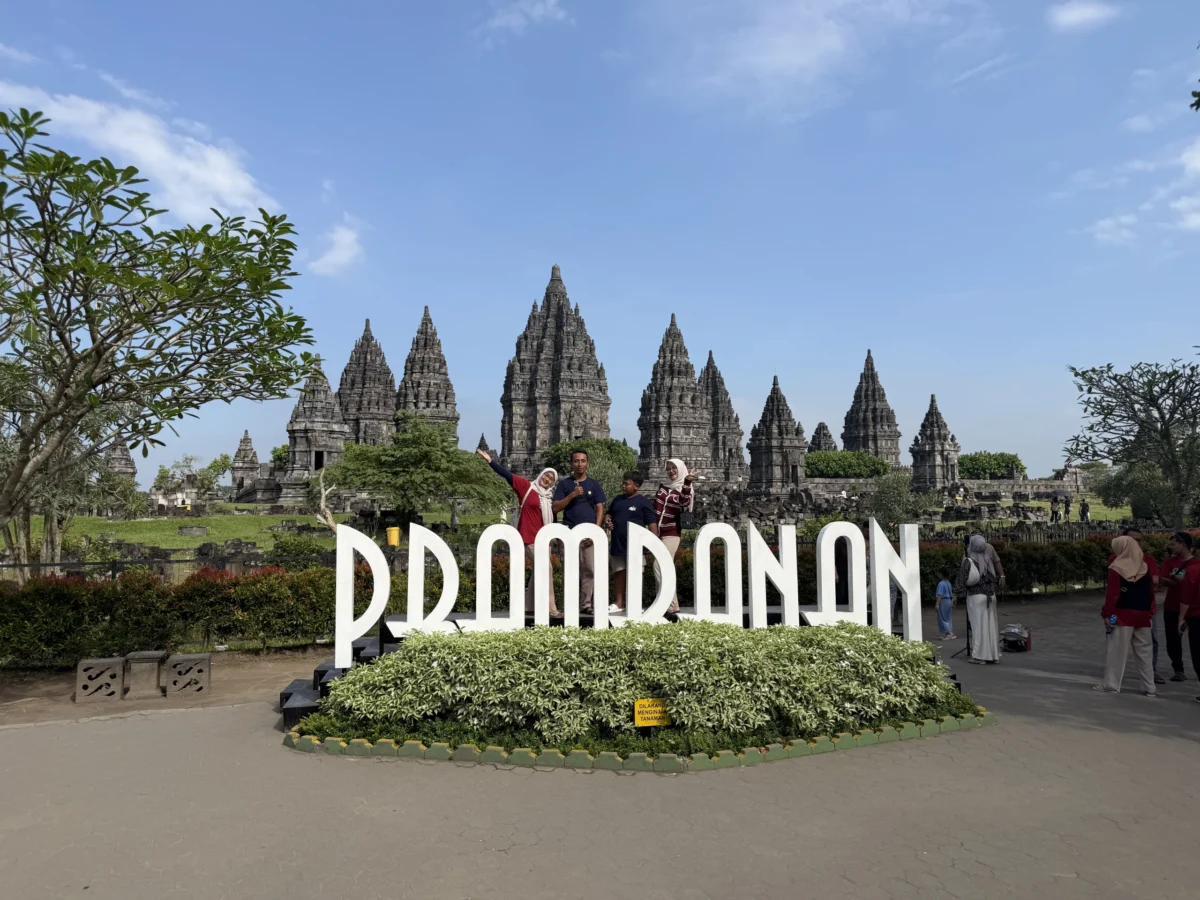
Unlike Borobudur, which is one massive structure, Prabanan is a compound with a series of temple sites, each of which is composed of numerous temple structures. The main temple site is known widely simply as Prambanan or sometimes Roro Jonggrang. To the north are two two smaller sites, Lambing and Bubrah, then a much larger site called Siwu. Reconstruction efforts for these large temple structures has occurred separately within each site, with the biggest (Shiva) being substantially finished in 1953 but its neighbors not being finished until 1993.
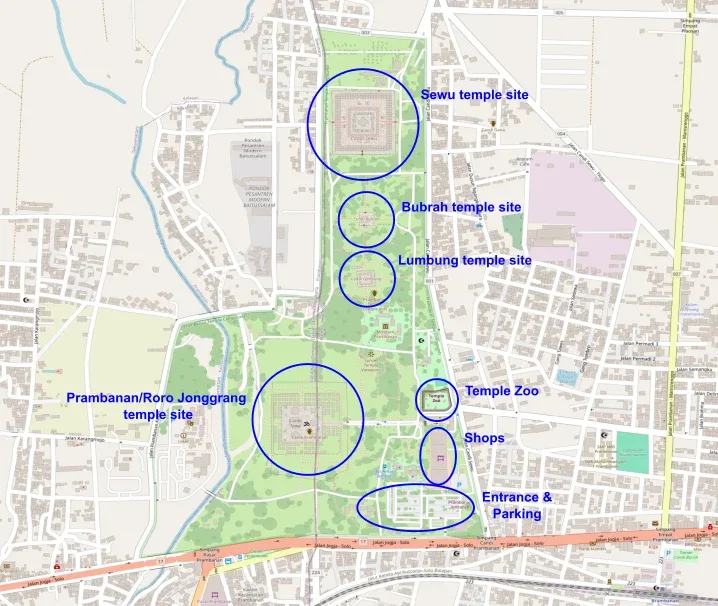
Source: OpenStreetMap
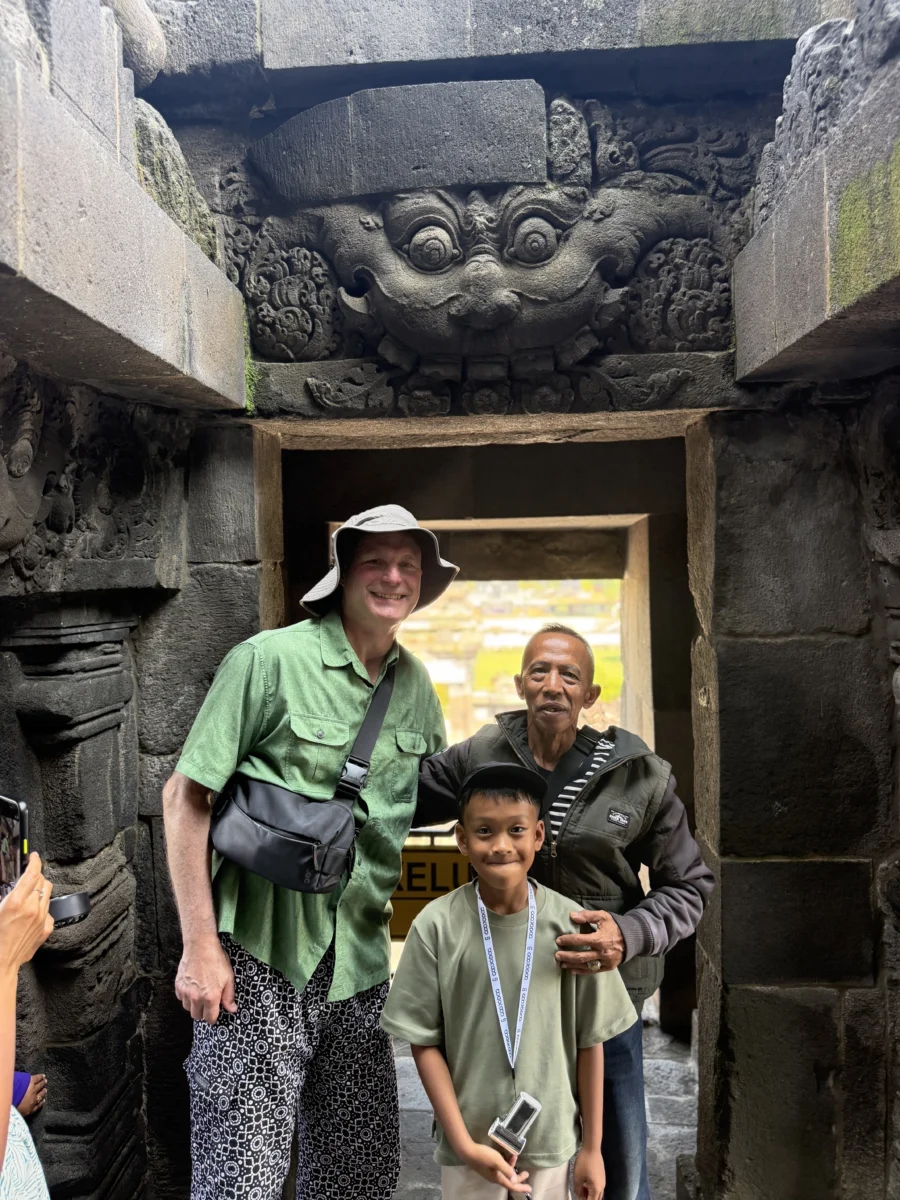
When we first entered it was swarming with tourists, mostly from elsewhere in Indonesia. Much to our surprise, some combination of my outfit, skin color (blotchy red-white?), height, and language made me a mini-celebrity so they queued up to get their picture taken with me. They let Savitri take the pictures and sometimes even stay in frame!
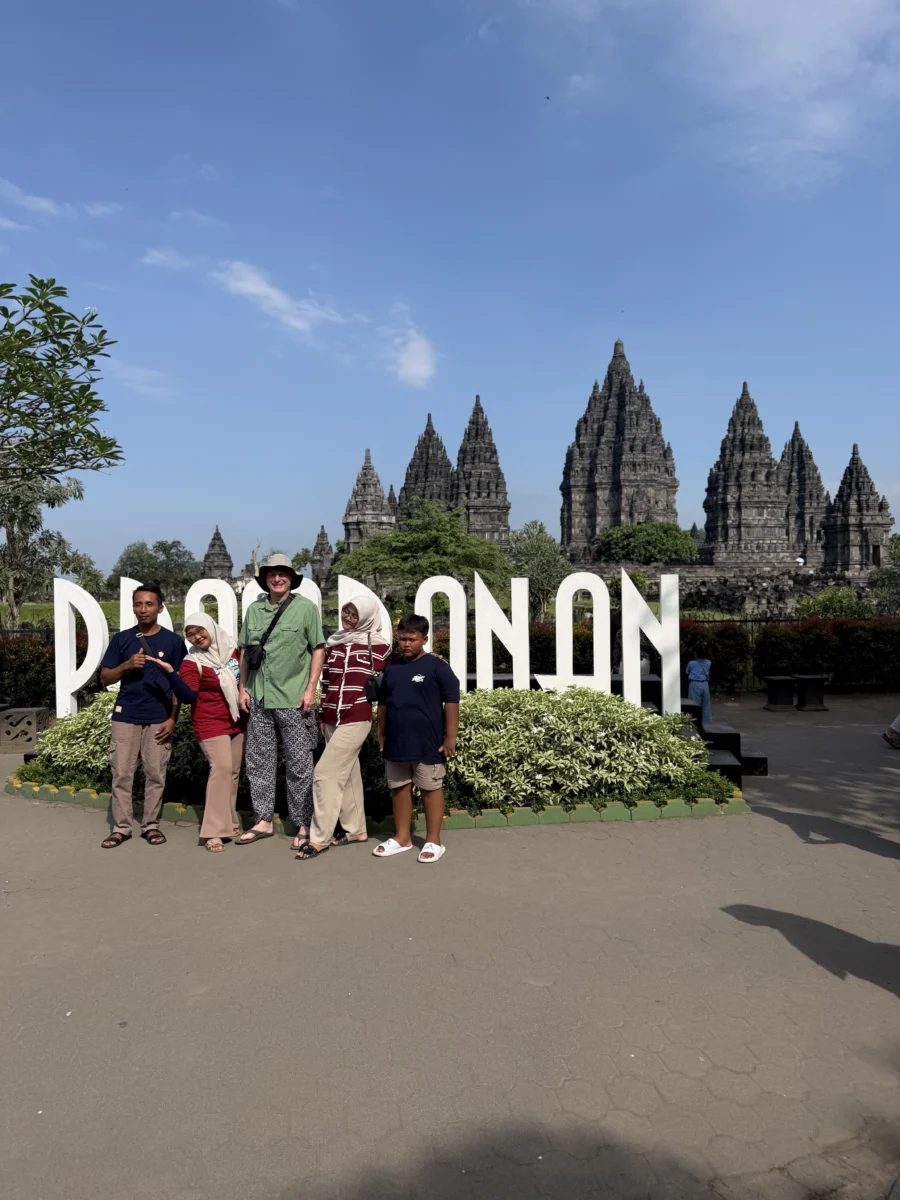
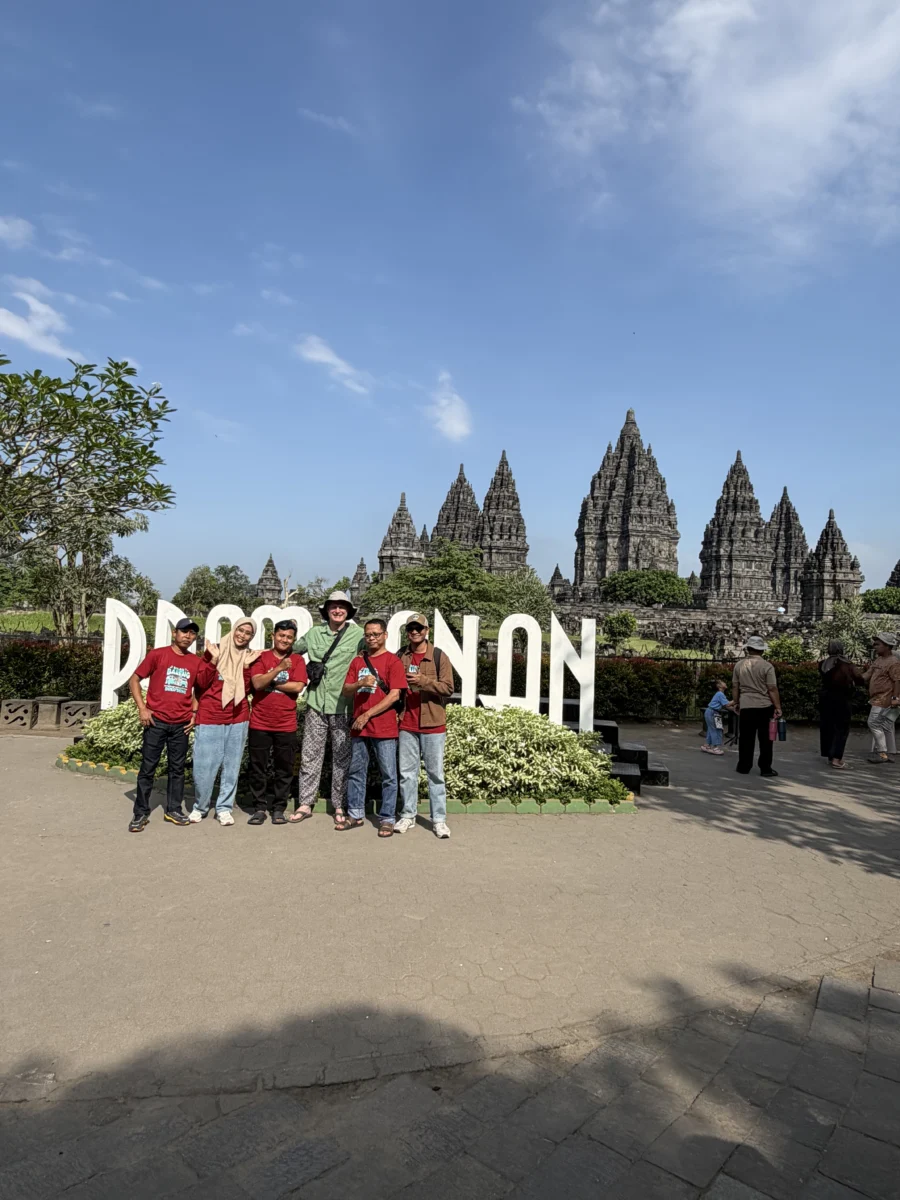
This continued into the main temple site, where we talked to a very nice (and very well-spoken!) group of English school students.
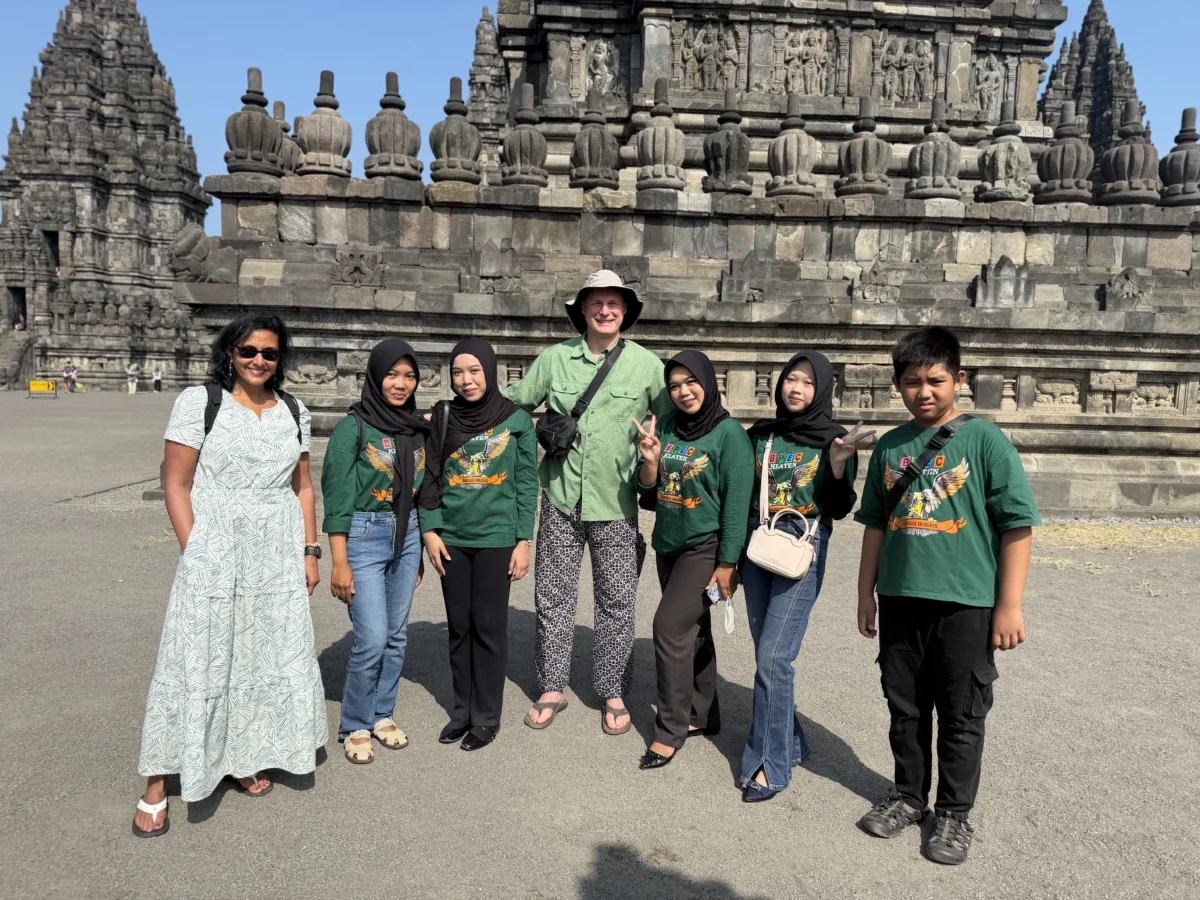
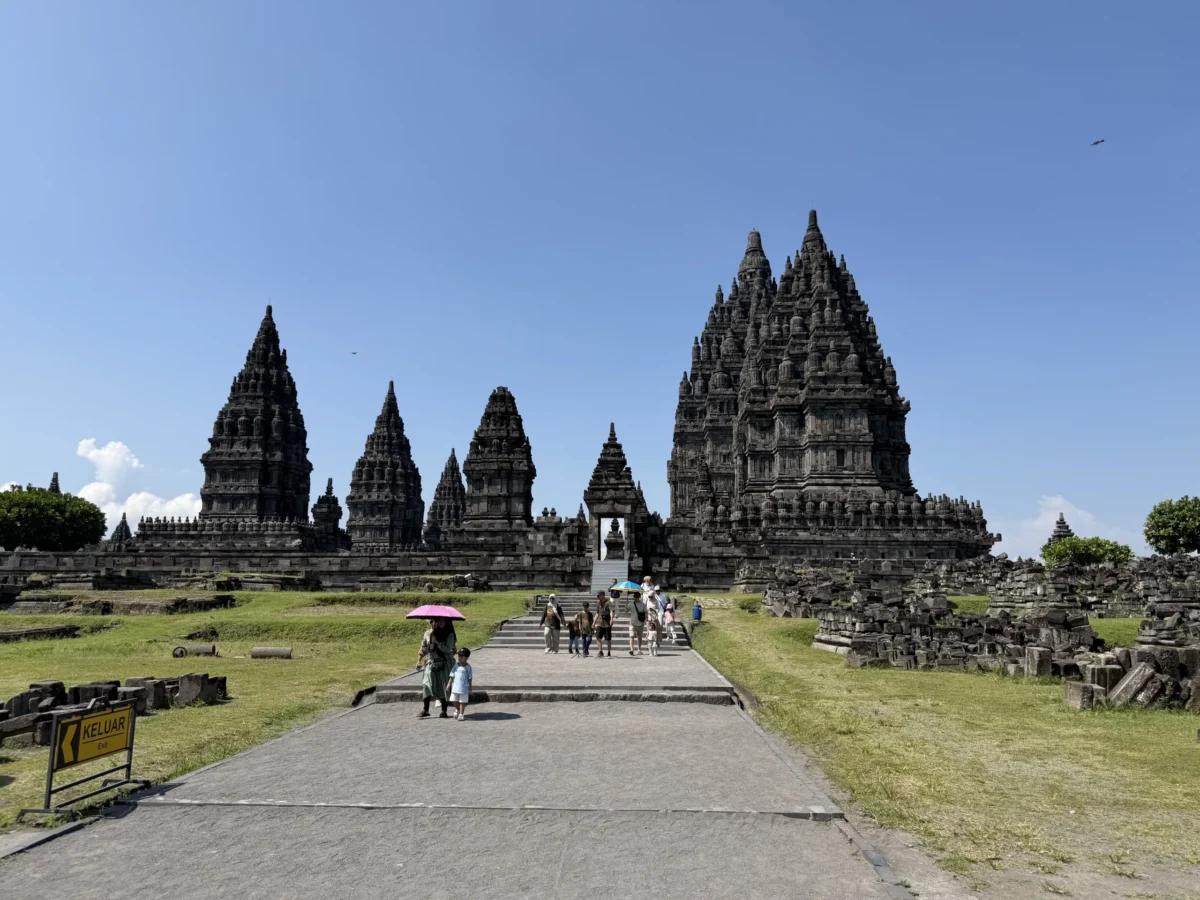
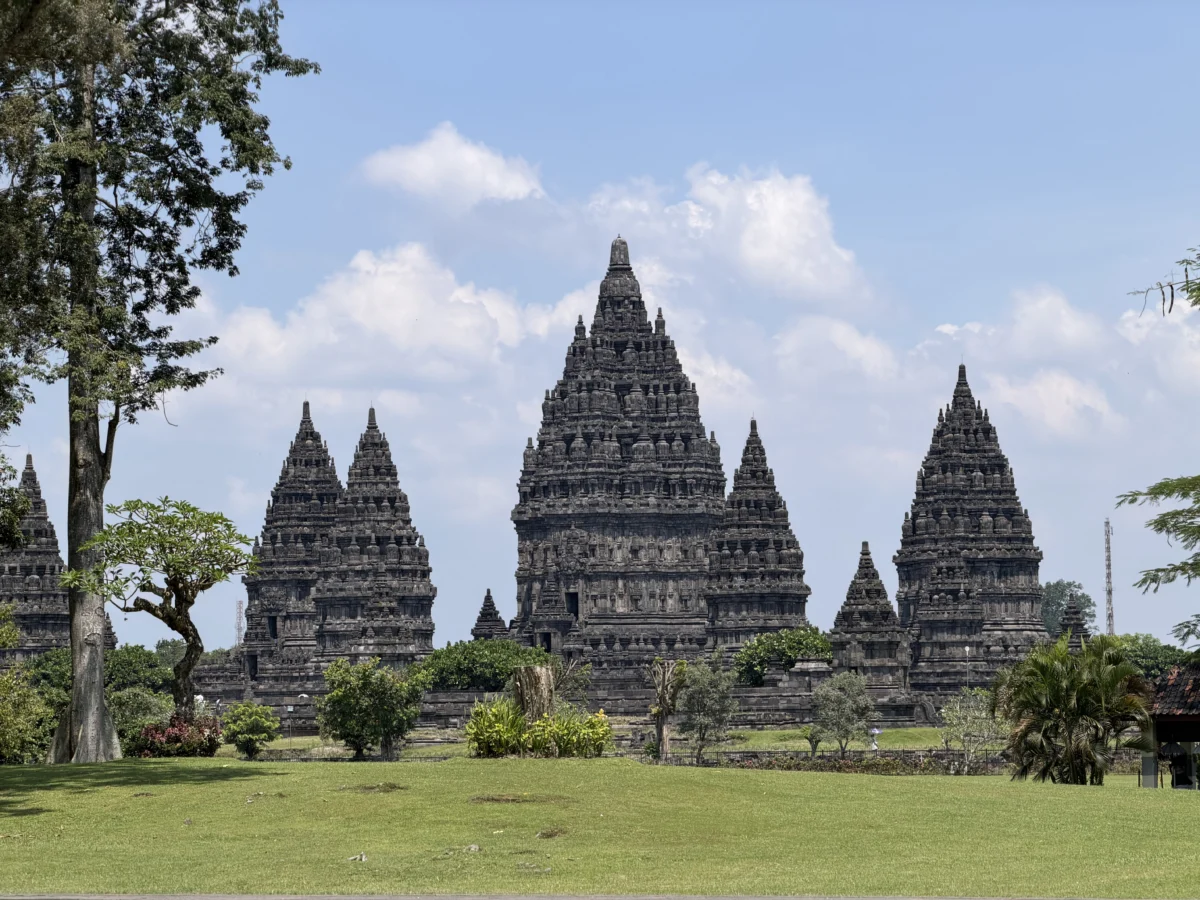
The main Prambanan temple site is a huge flat, open area with several massive temples clustered on it.
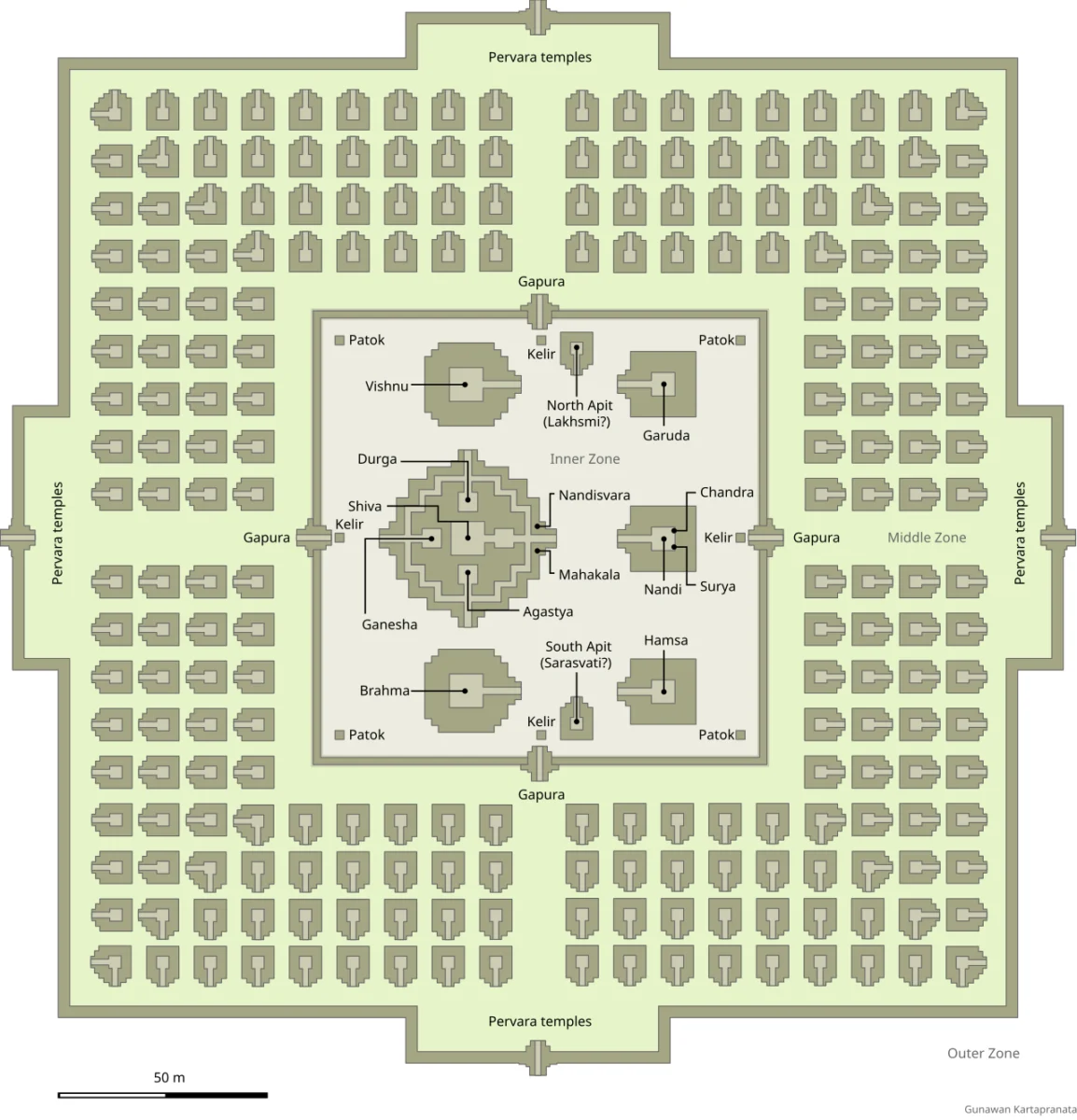
Source: Wikimedia Commons. License: Creative Commons Attribution-Share Alike 4.0 International
As an active site you see many people worshiping in their own ways, intermingled with school groups and random tourists.
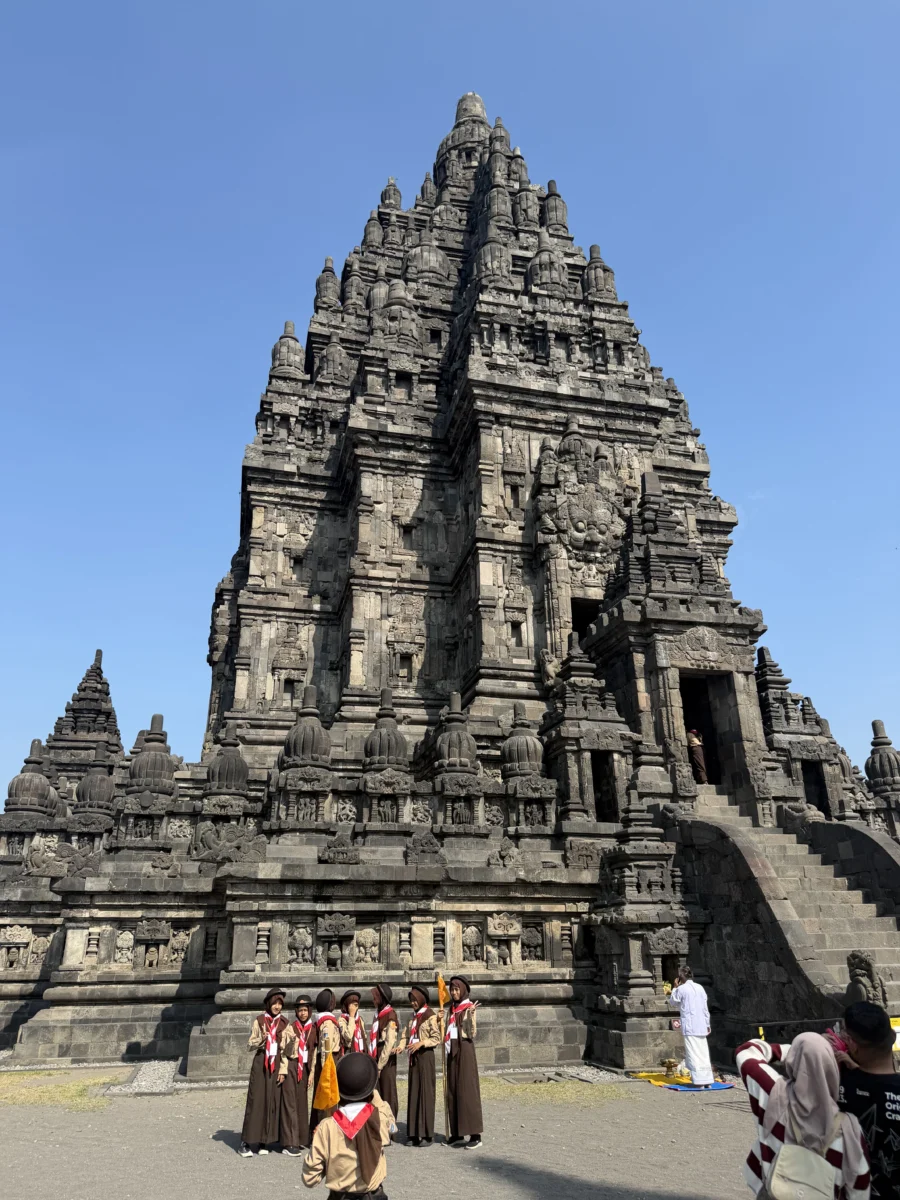
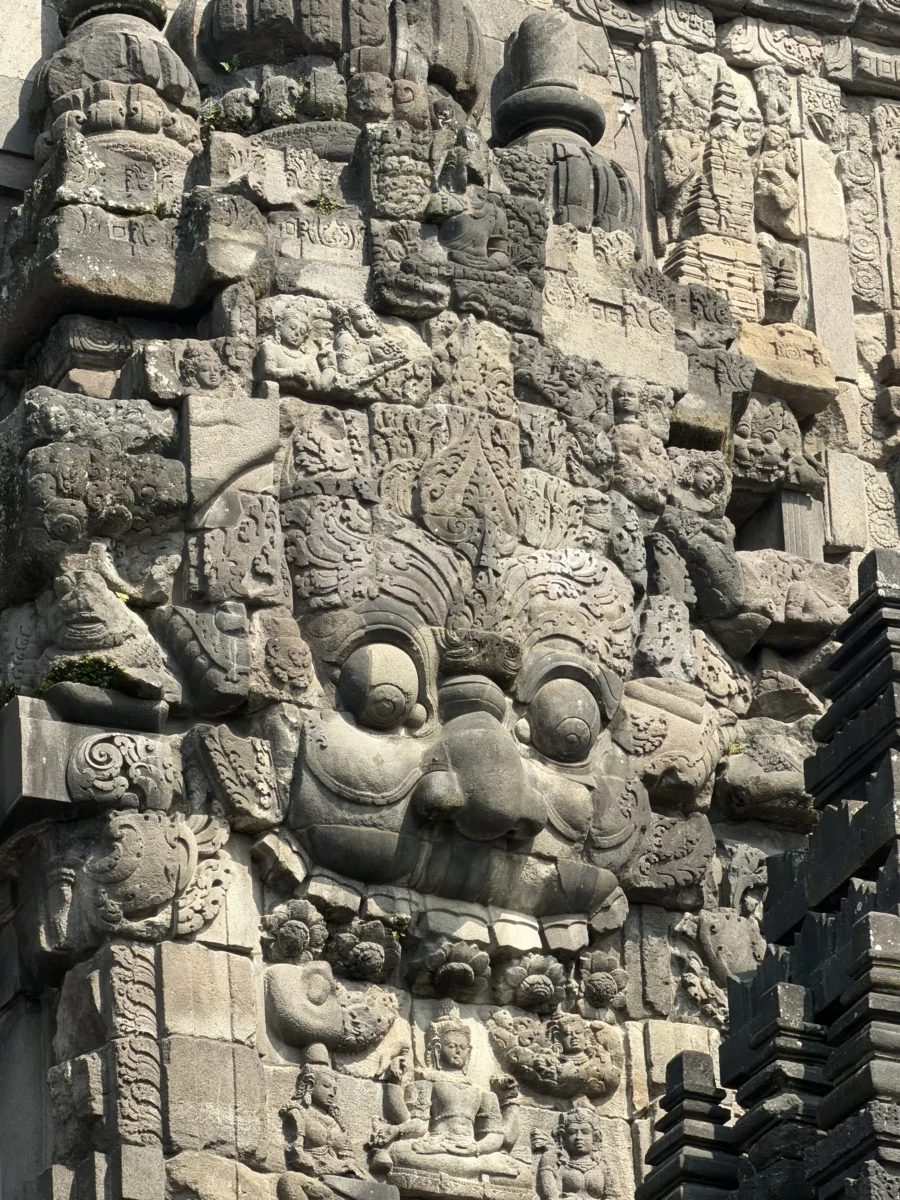
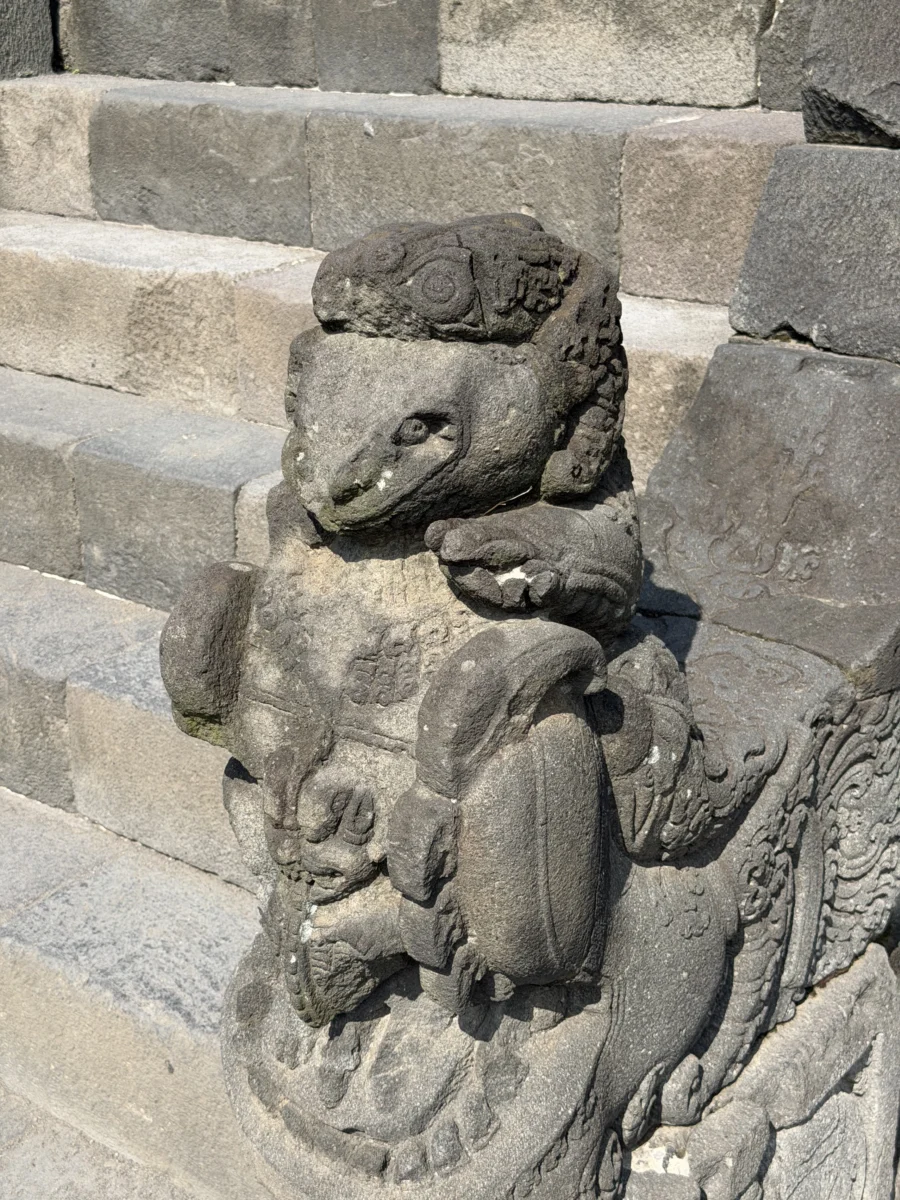
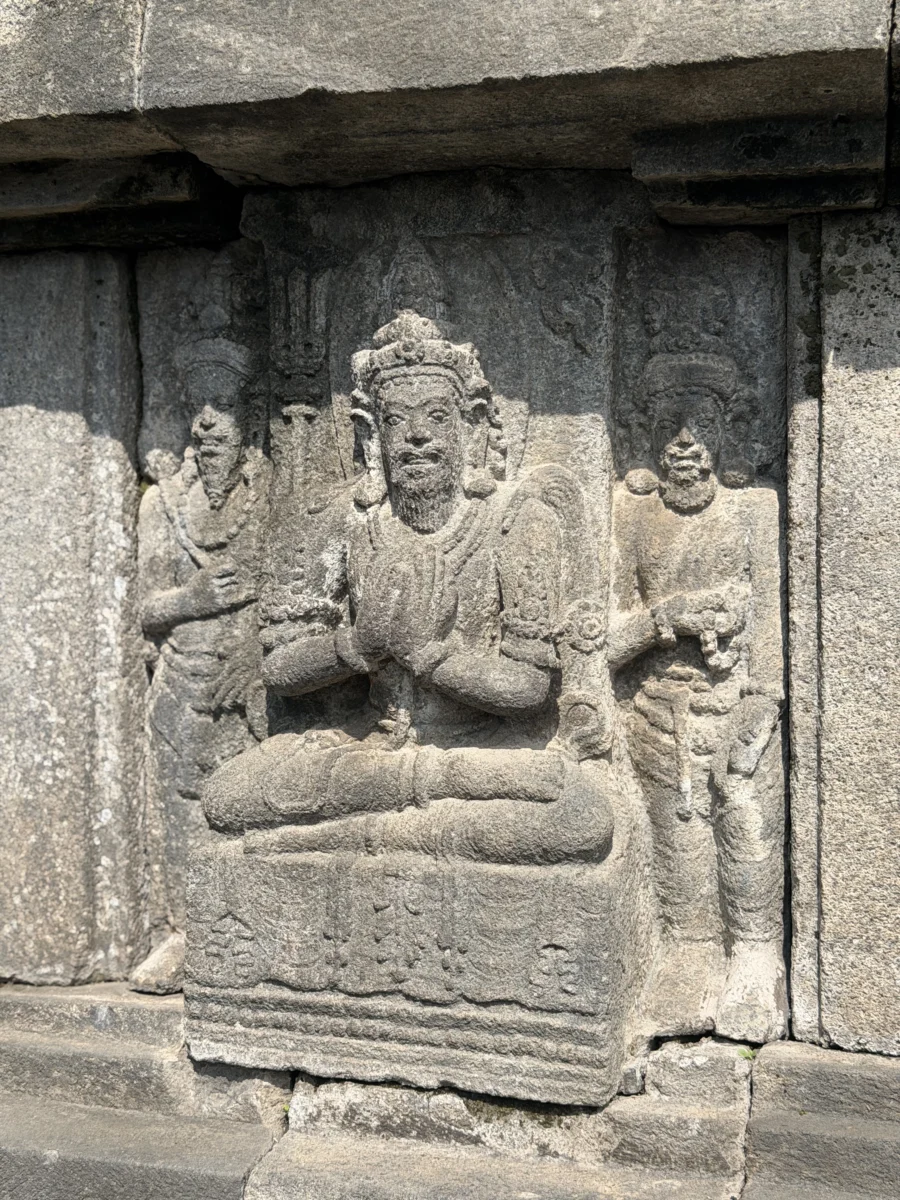
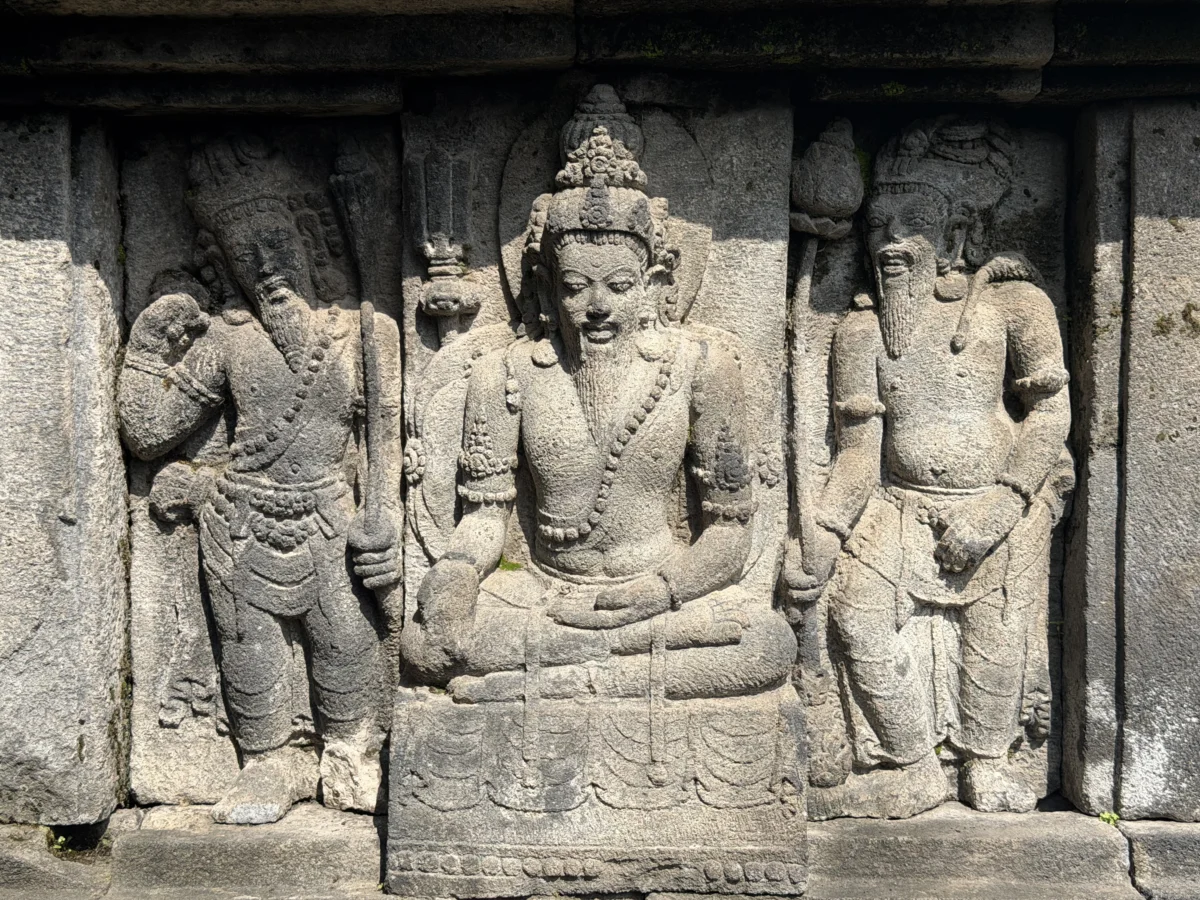
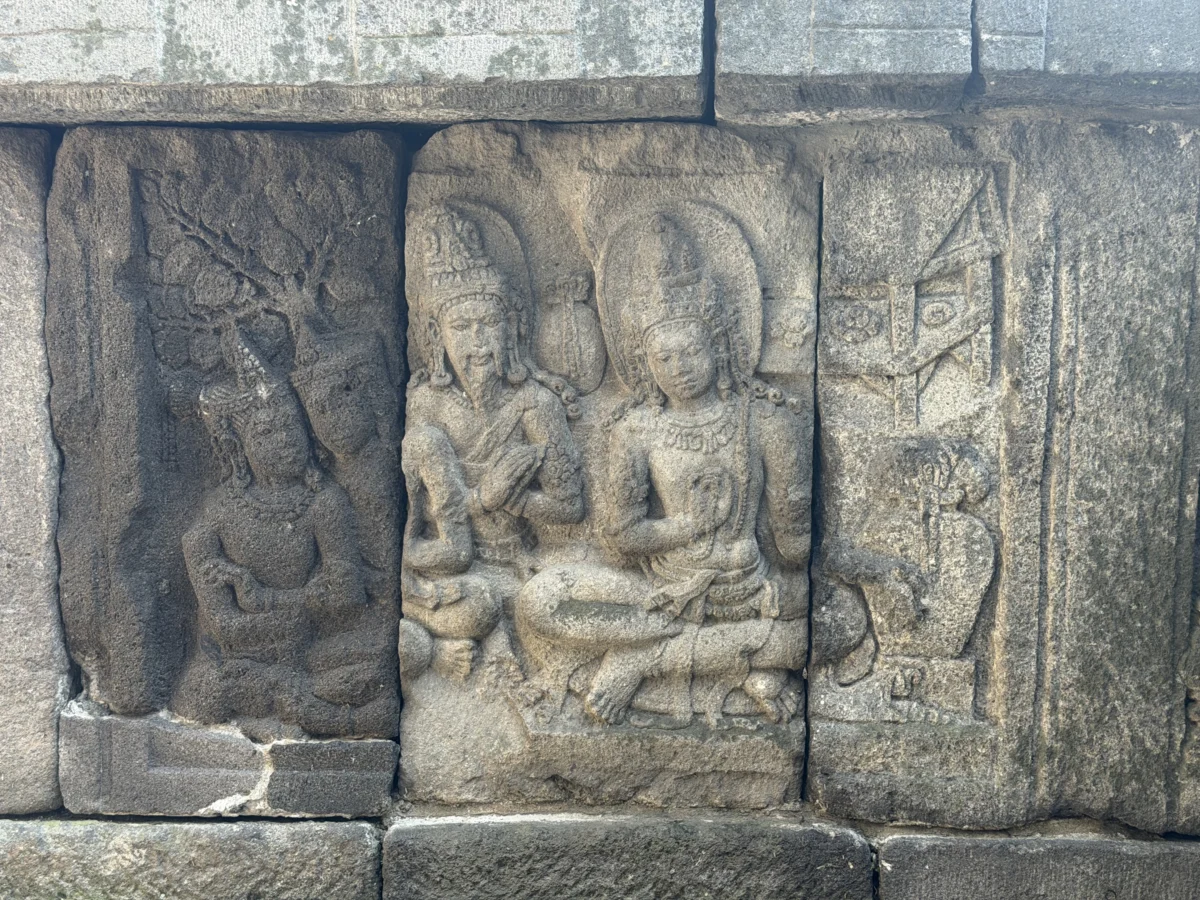
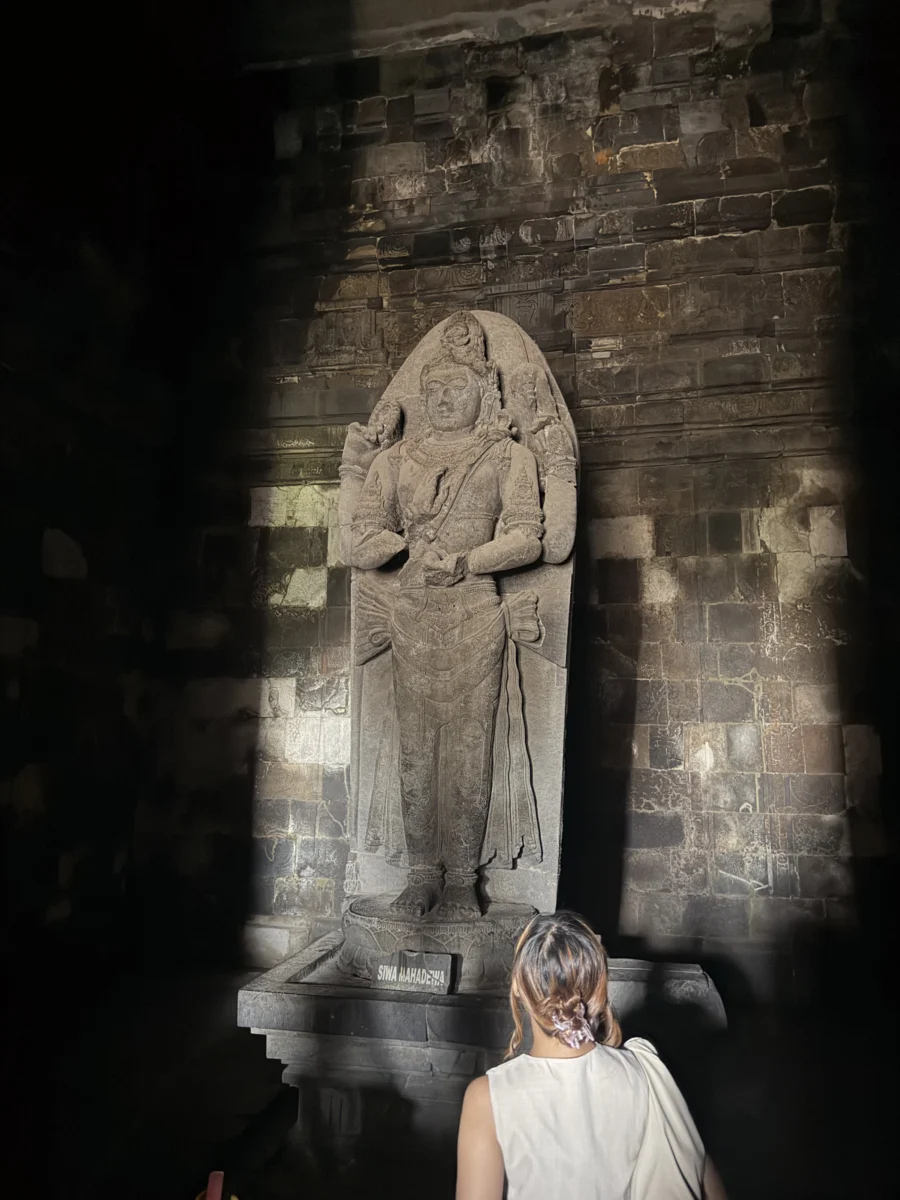
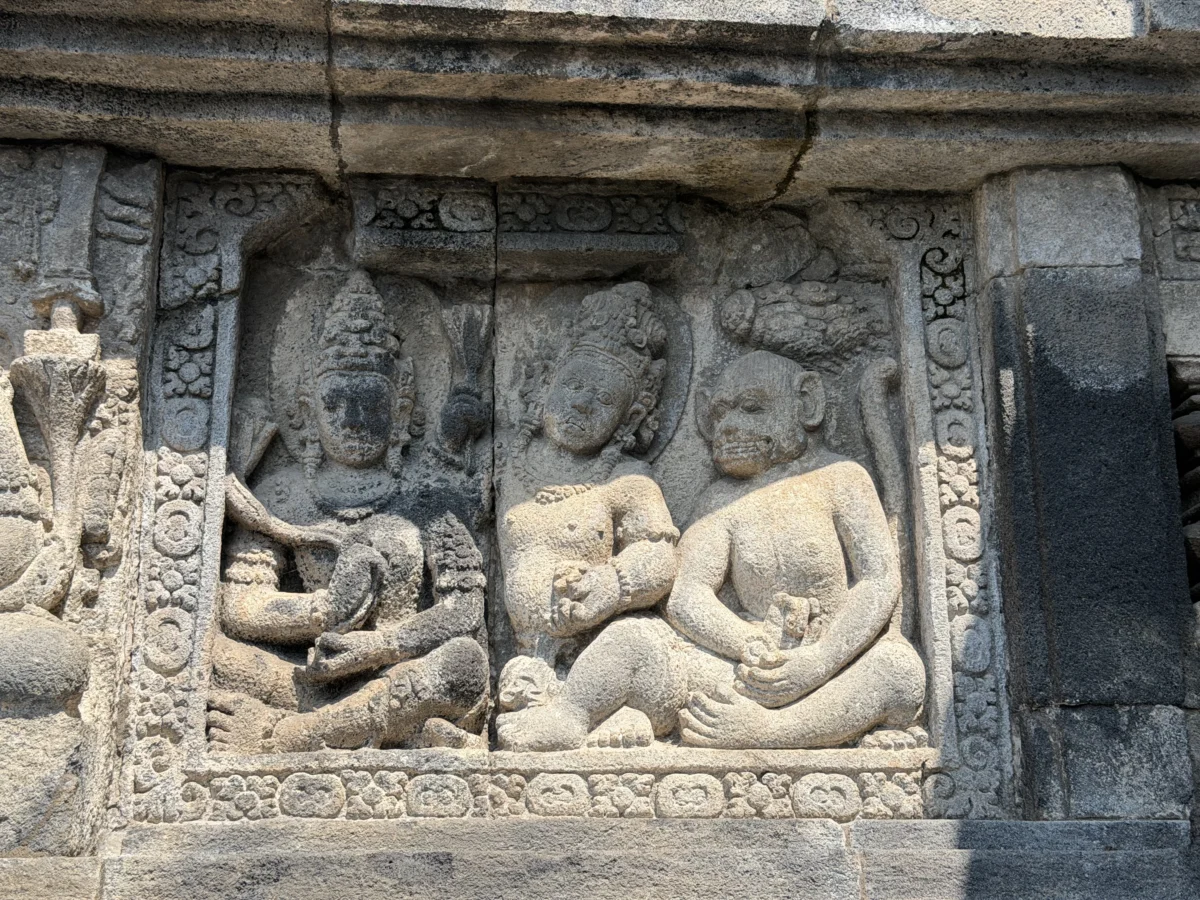
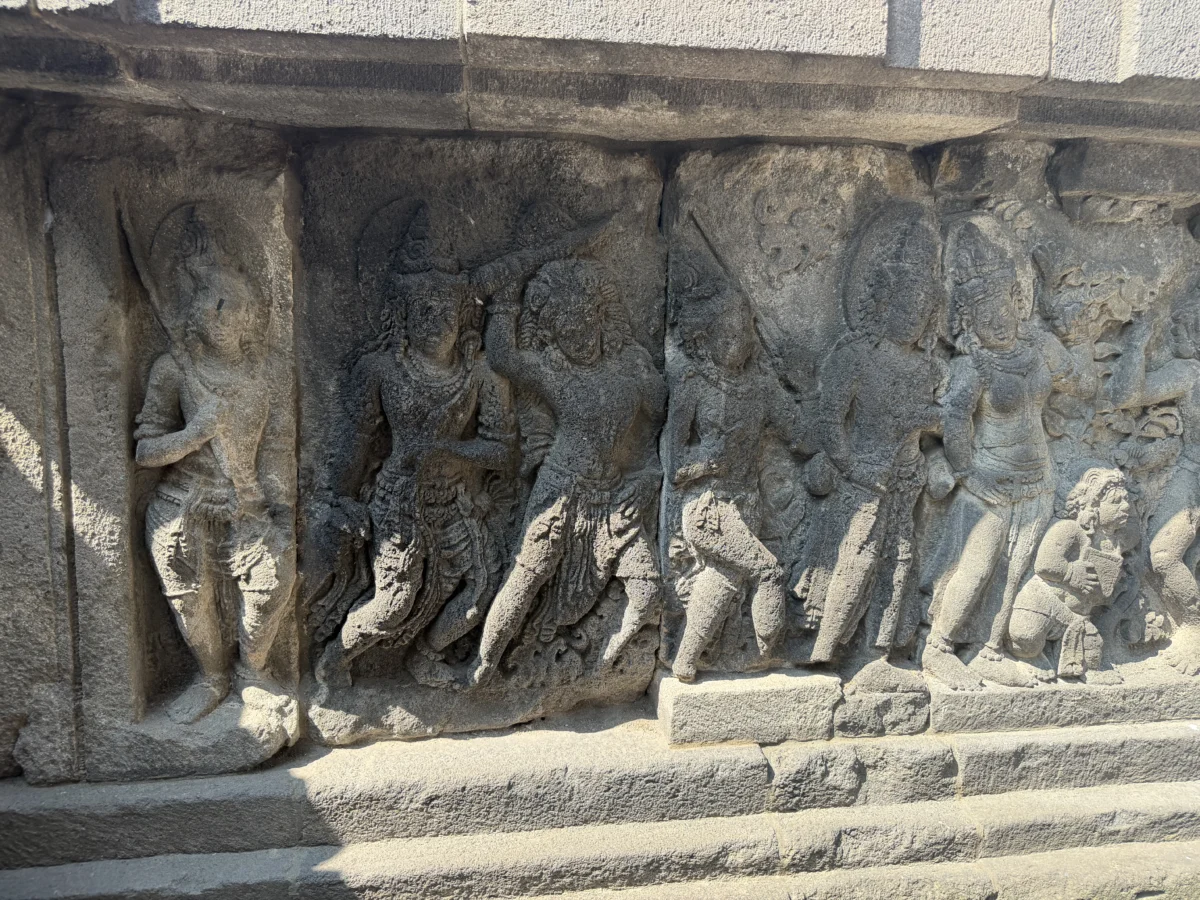
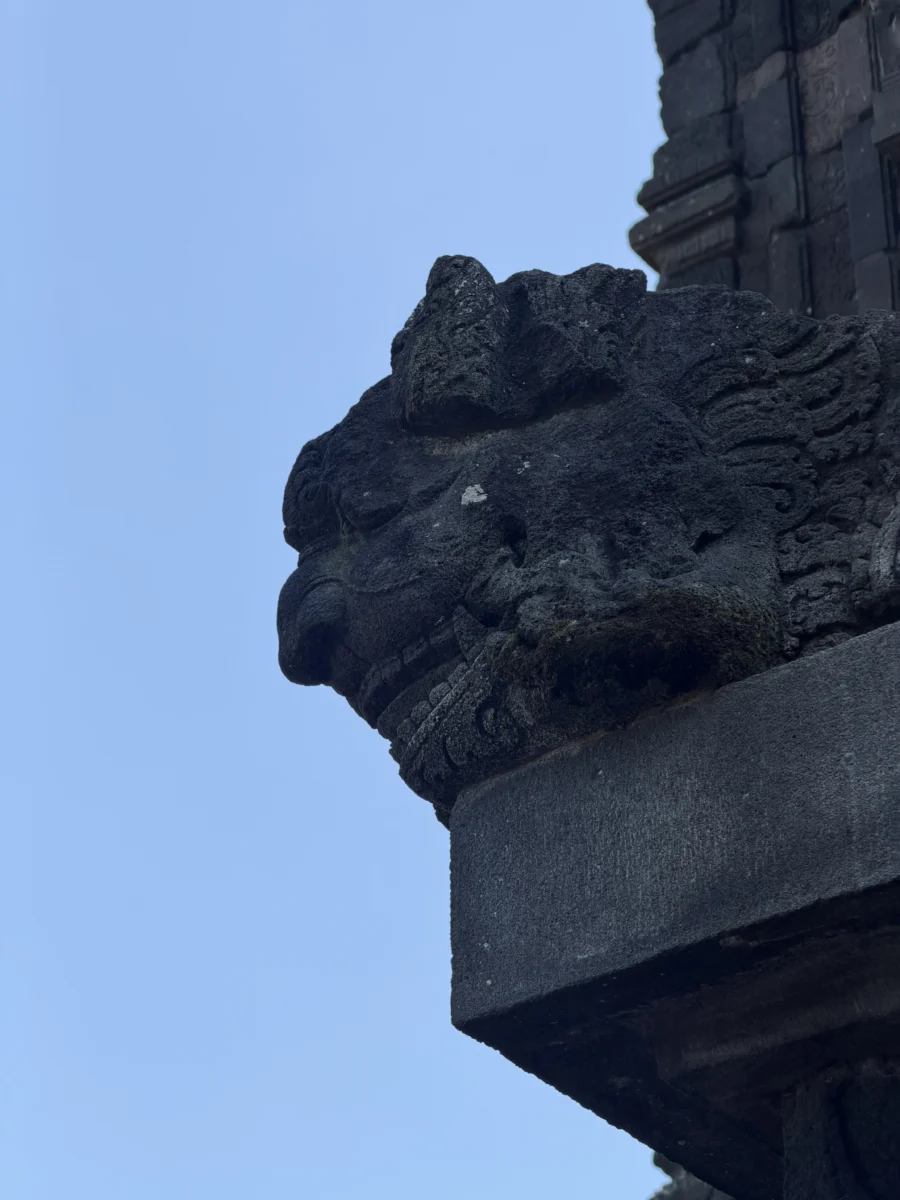
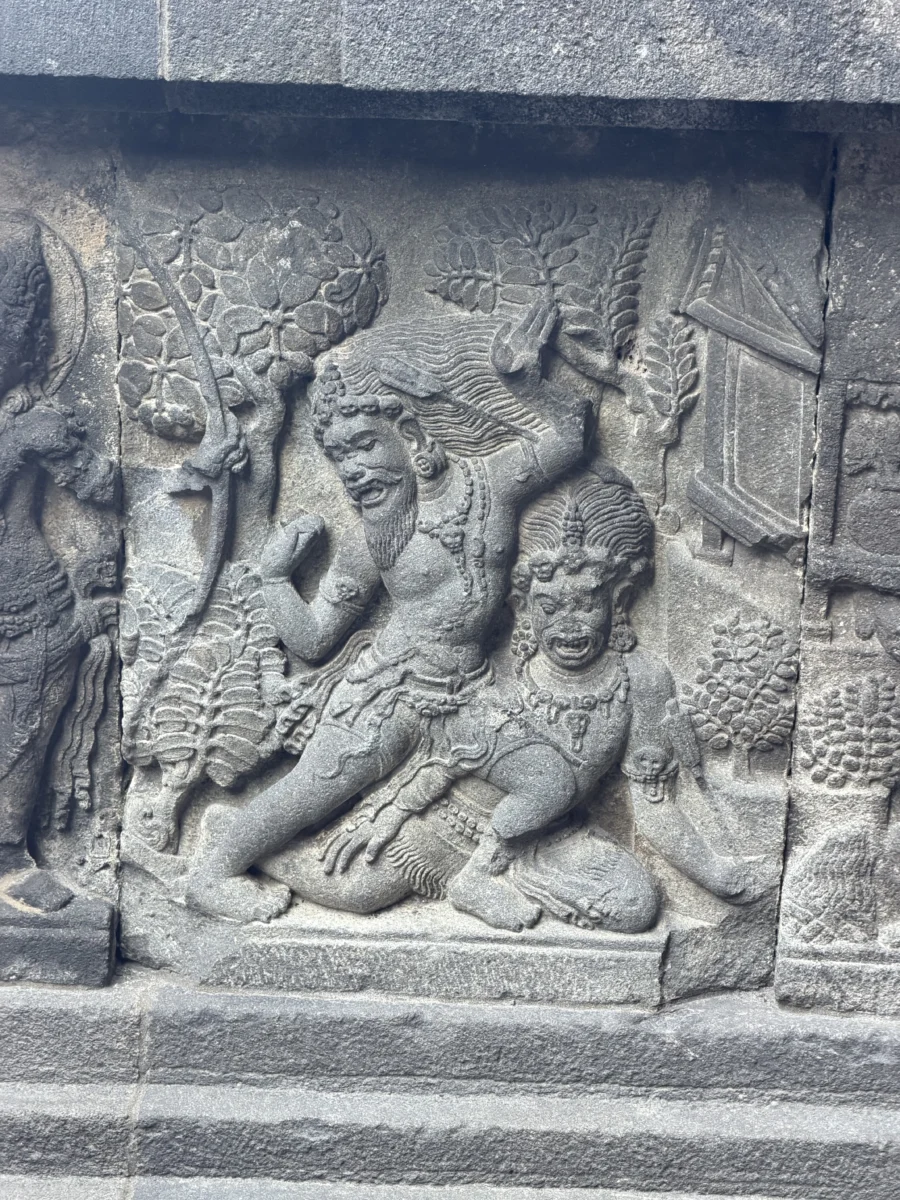
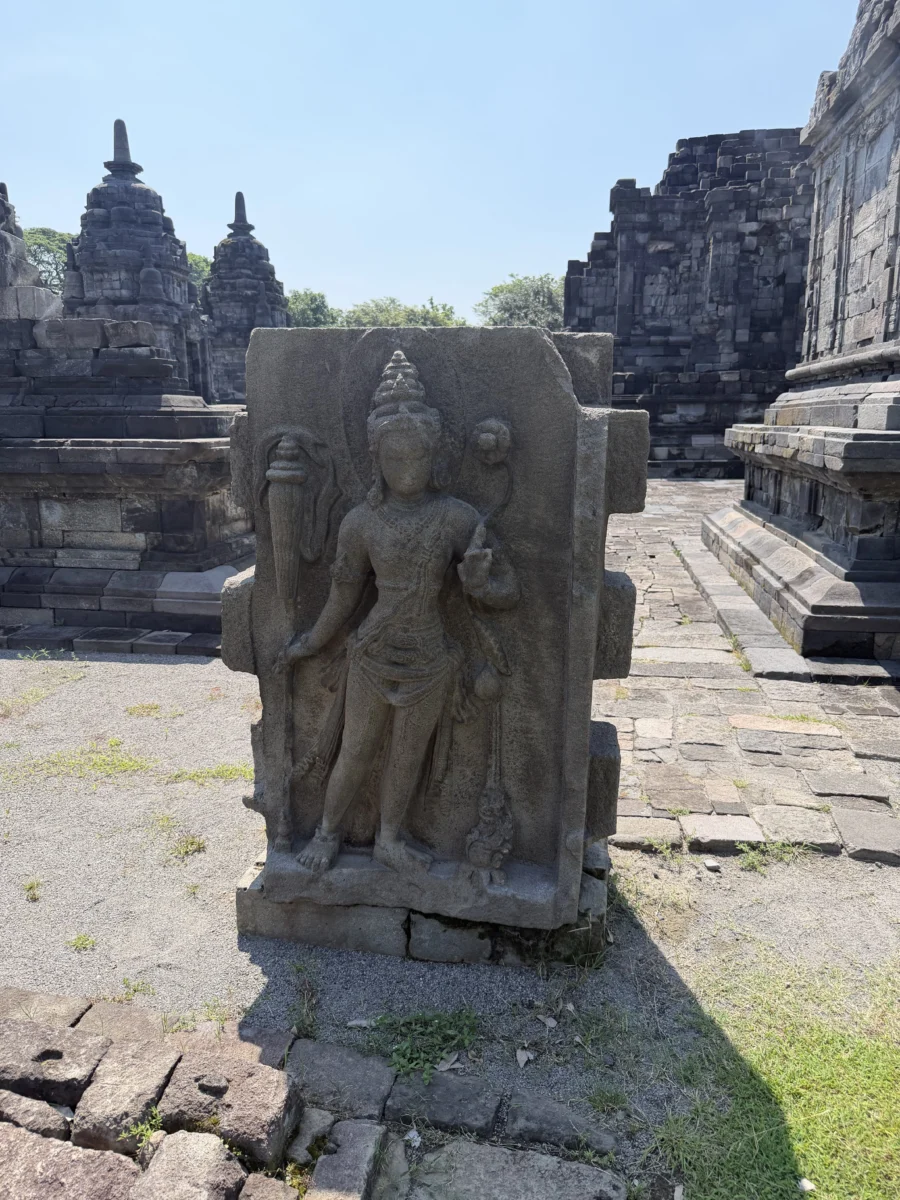
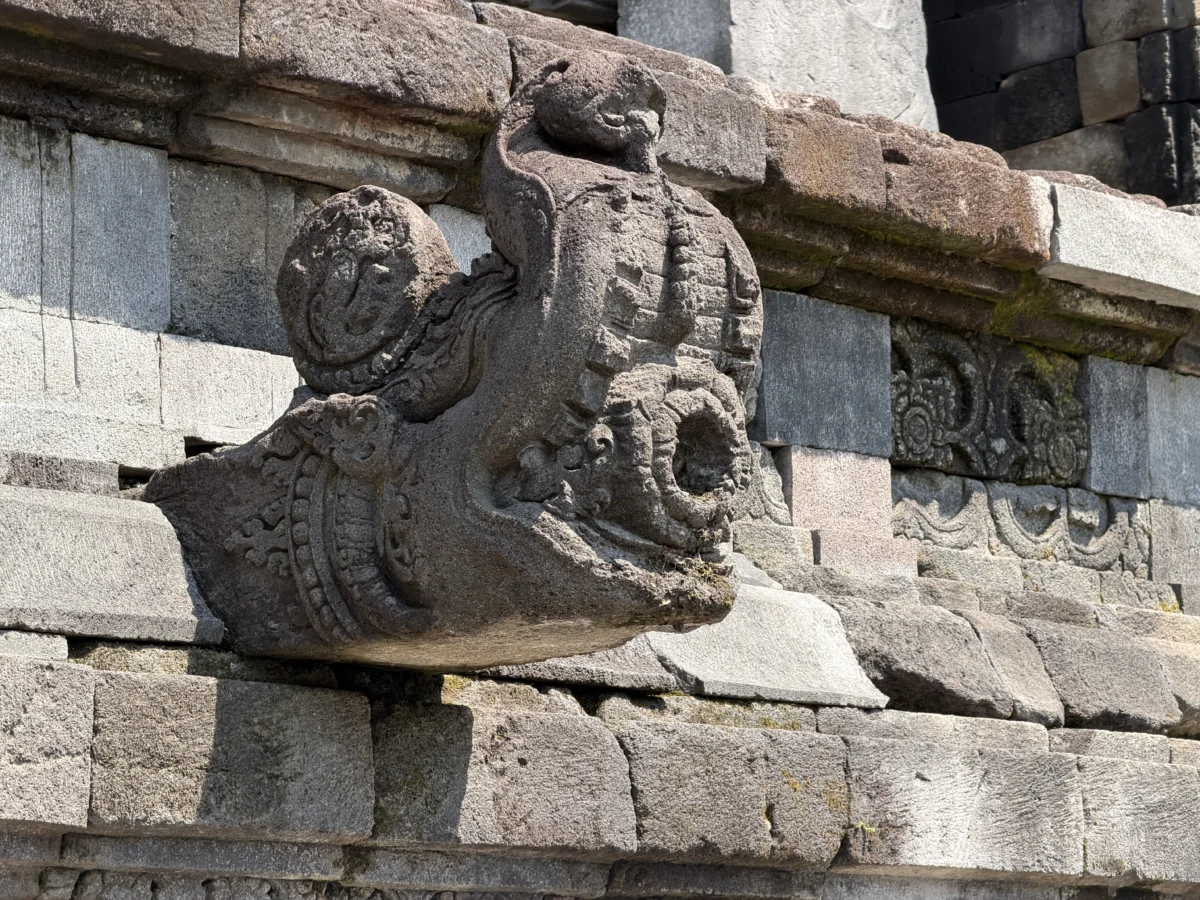
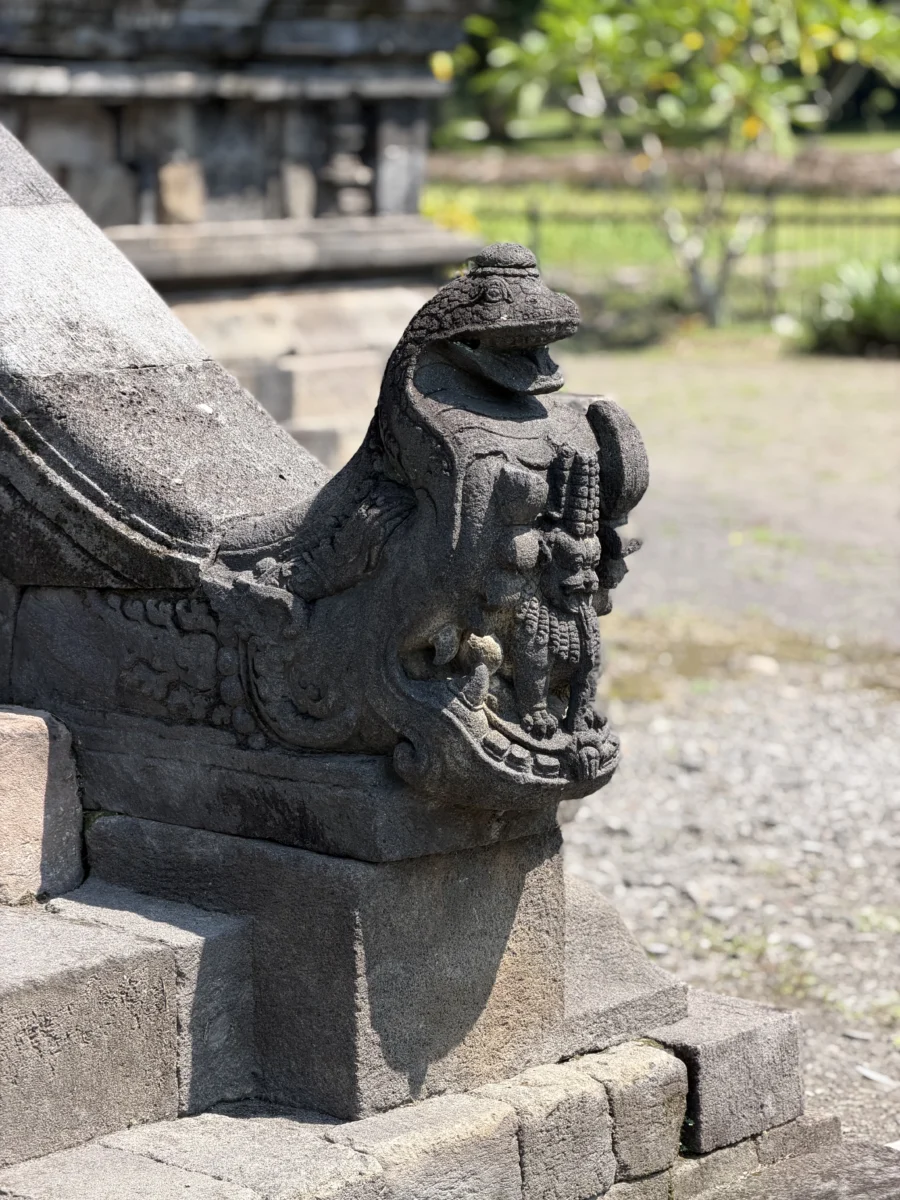
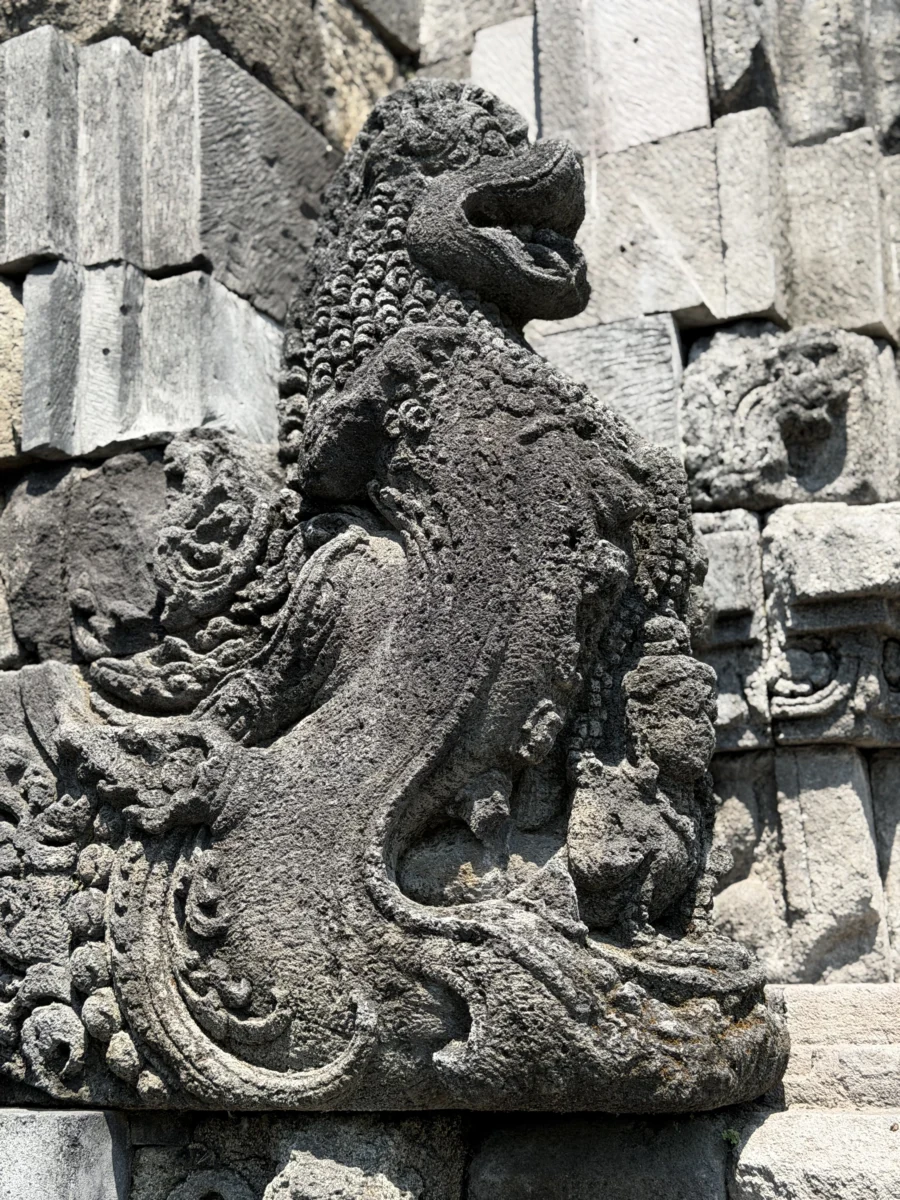
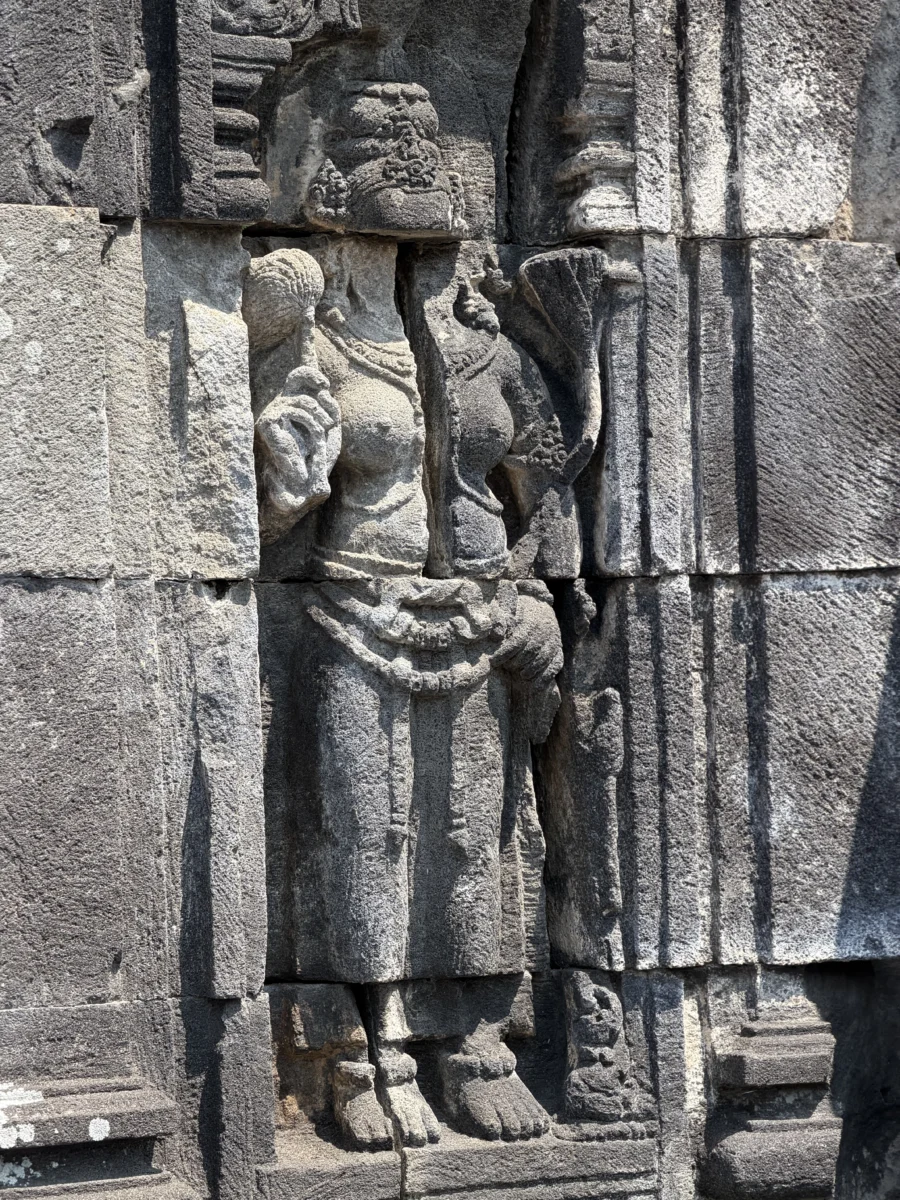
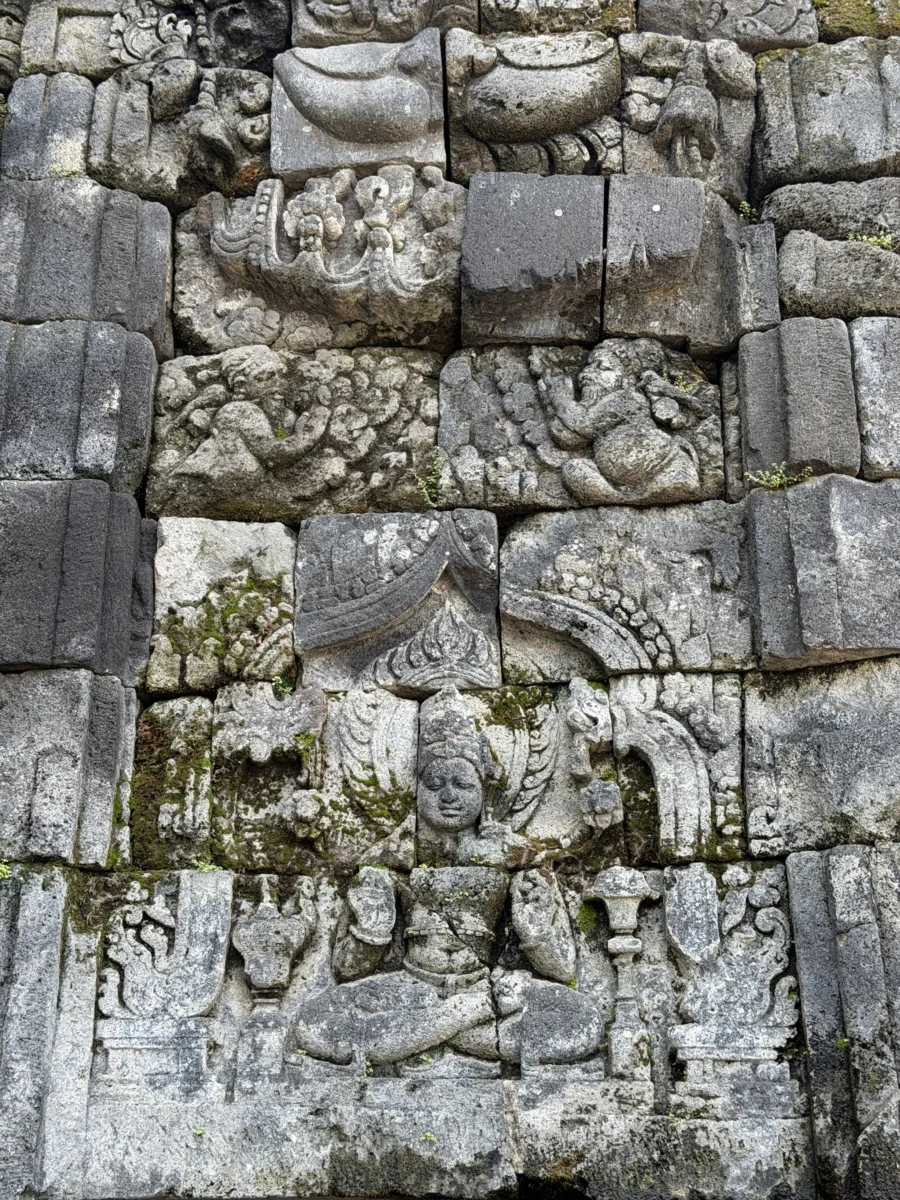
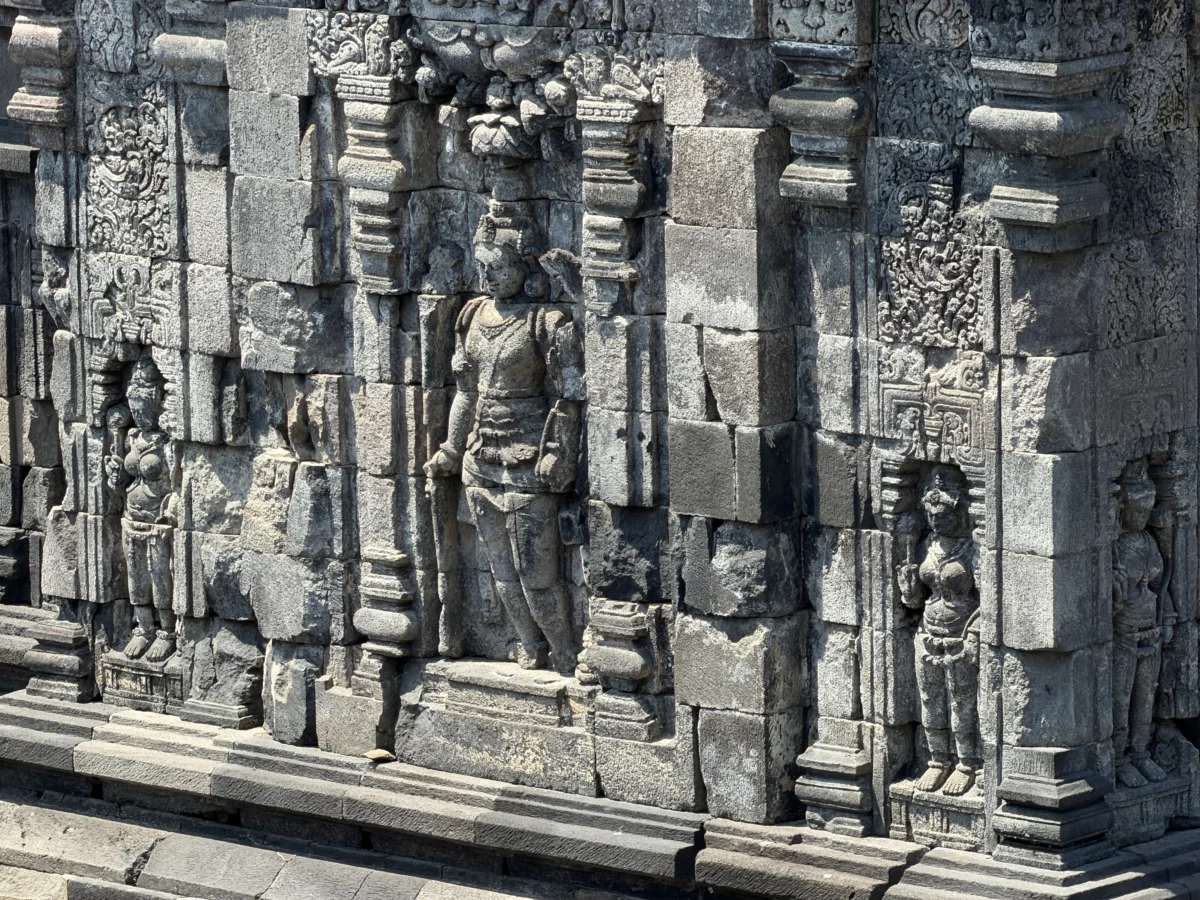
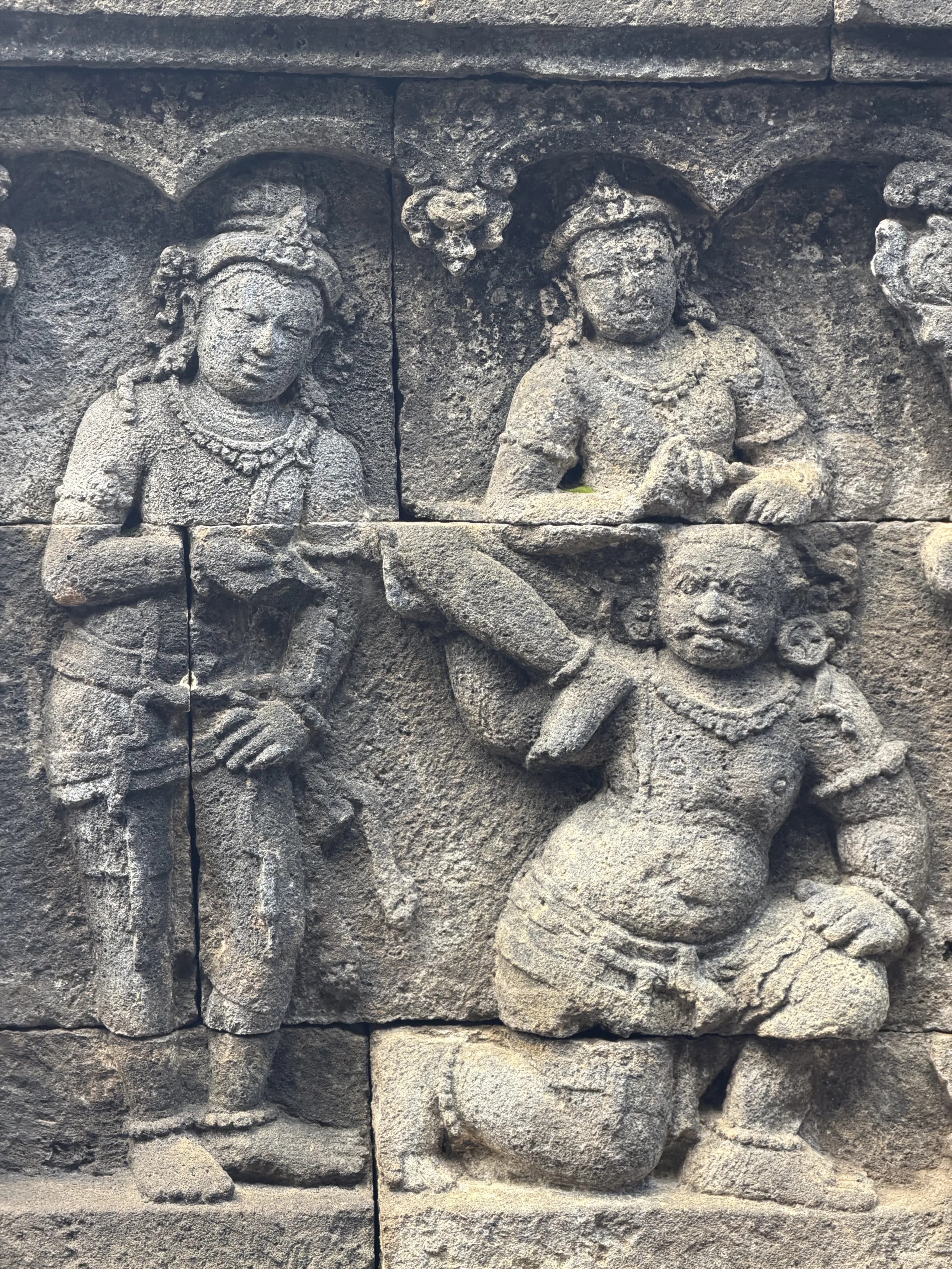
Some figures’ features are worn away, but considering the age and repeated burials and restorations they are stunningly well-preserved!
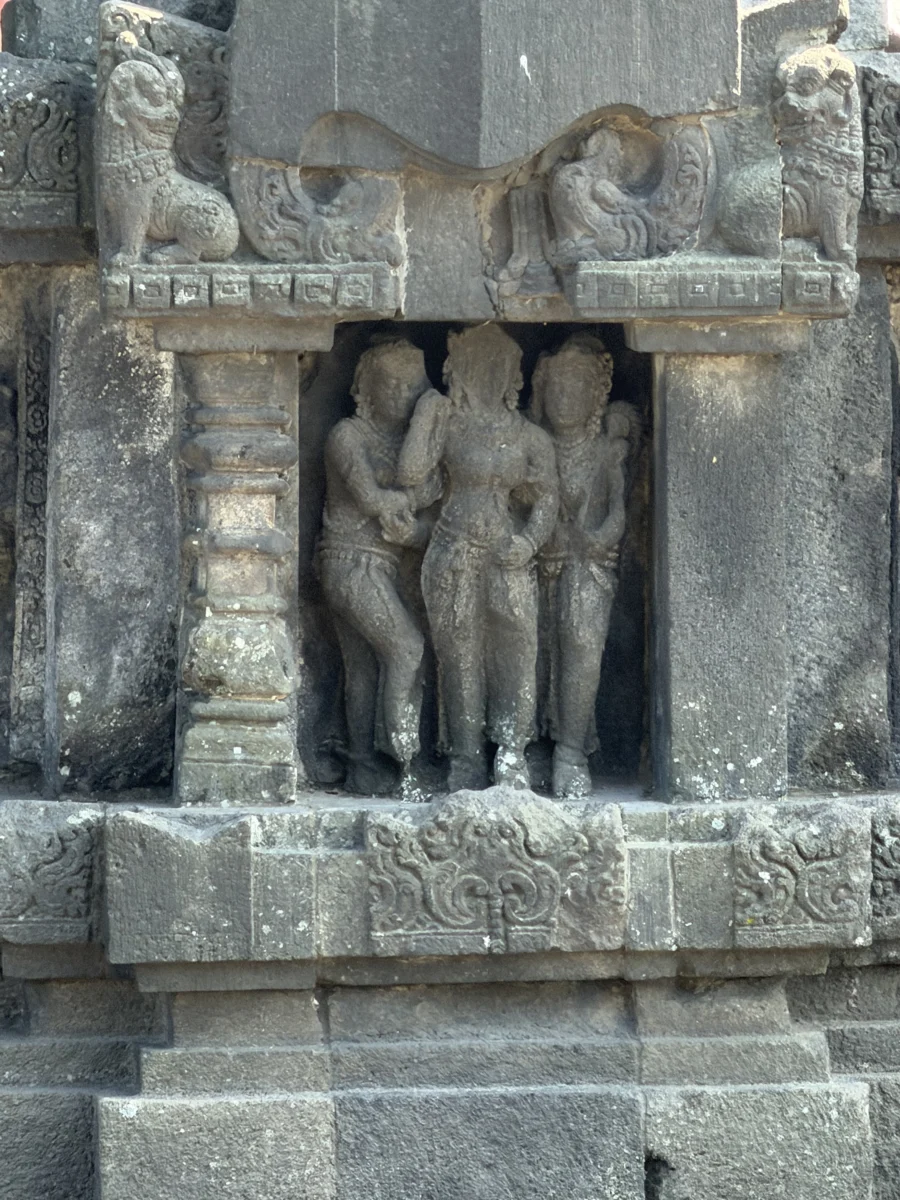
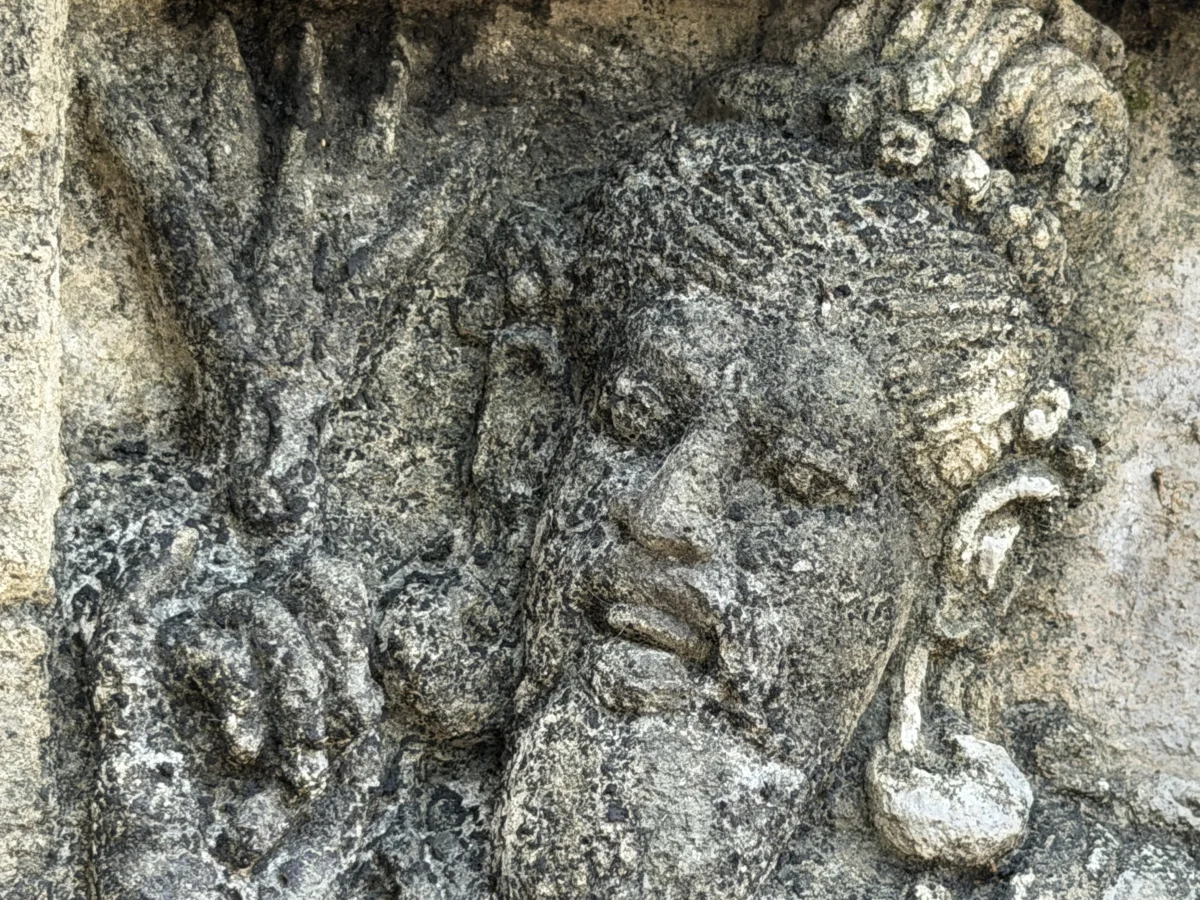
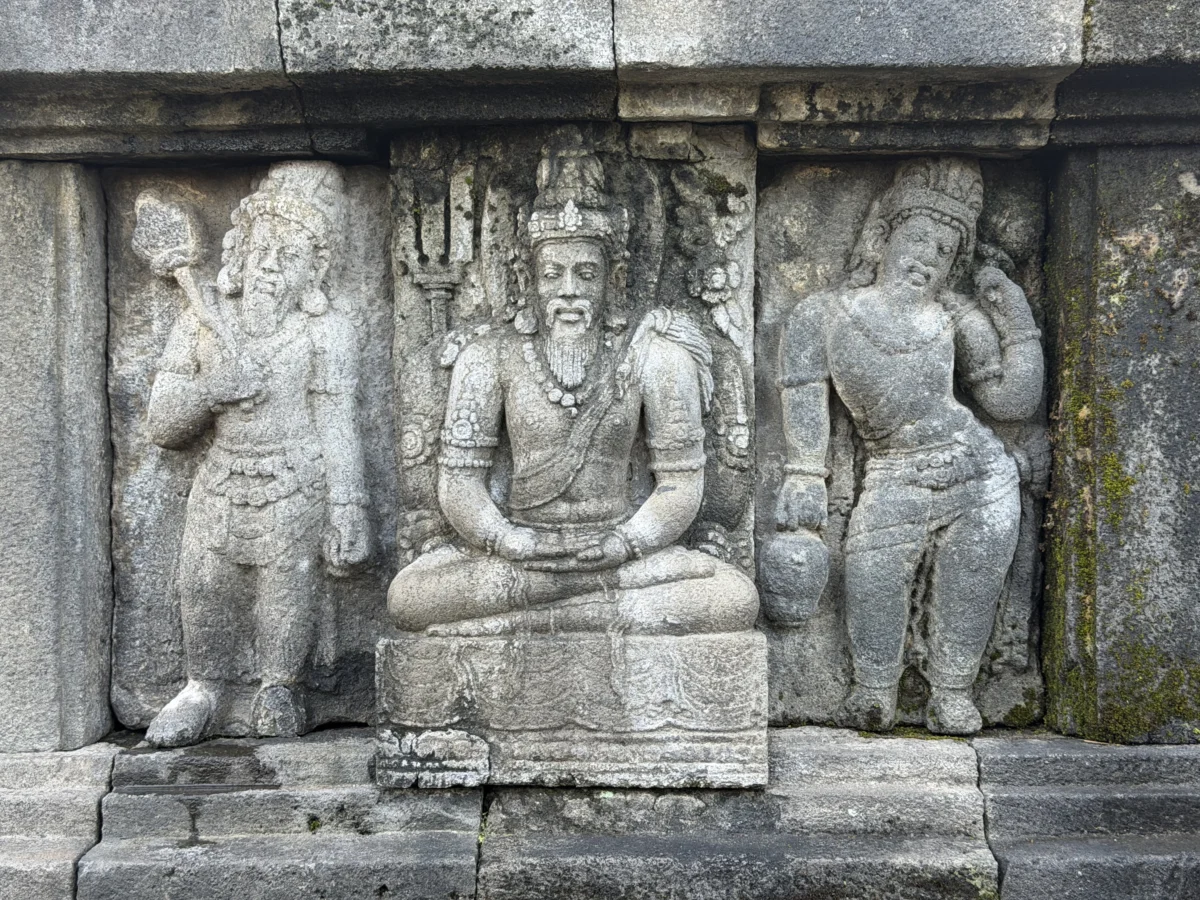
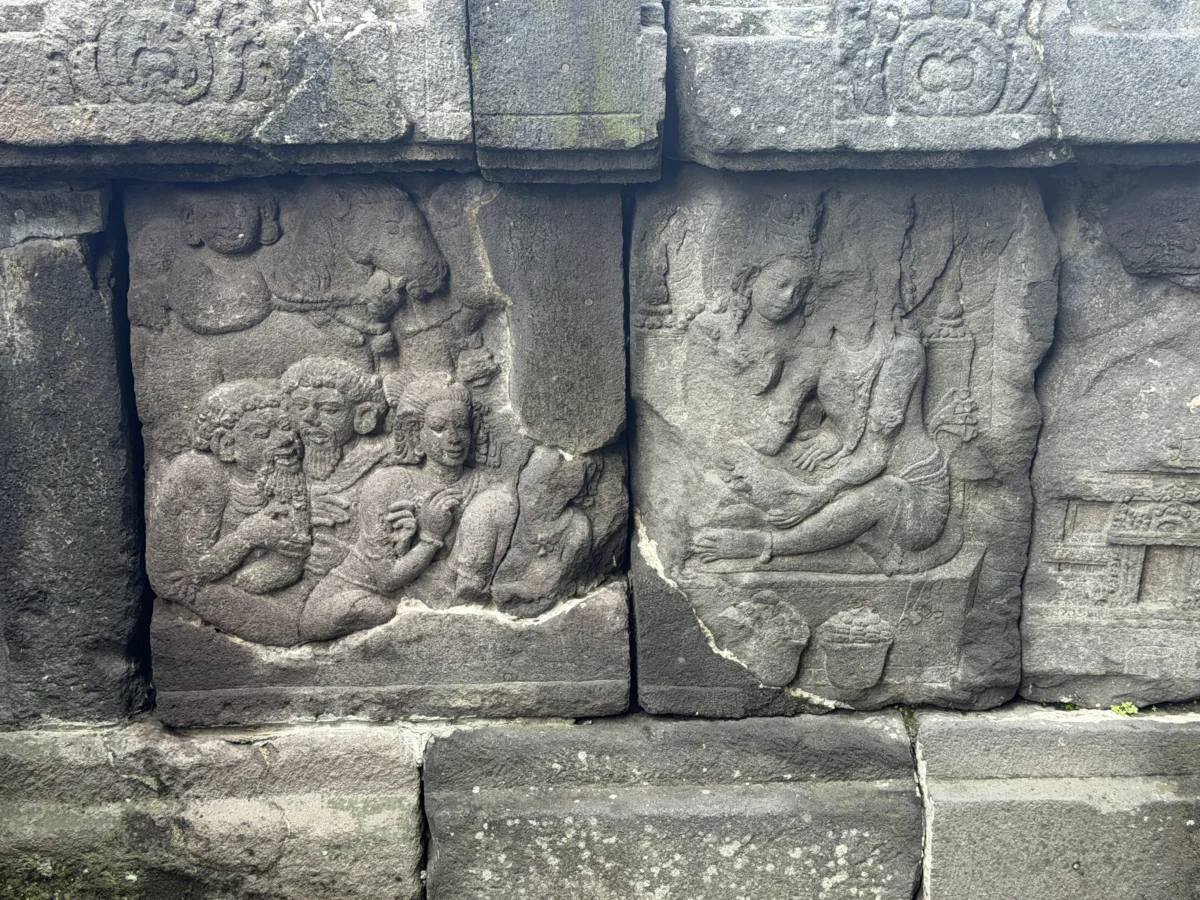
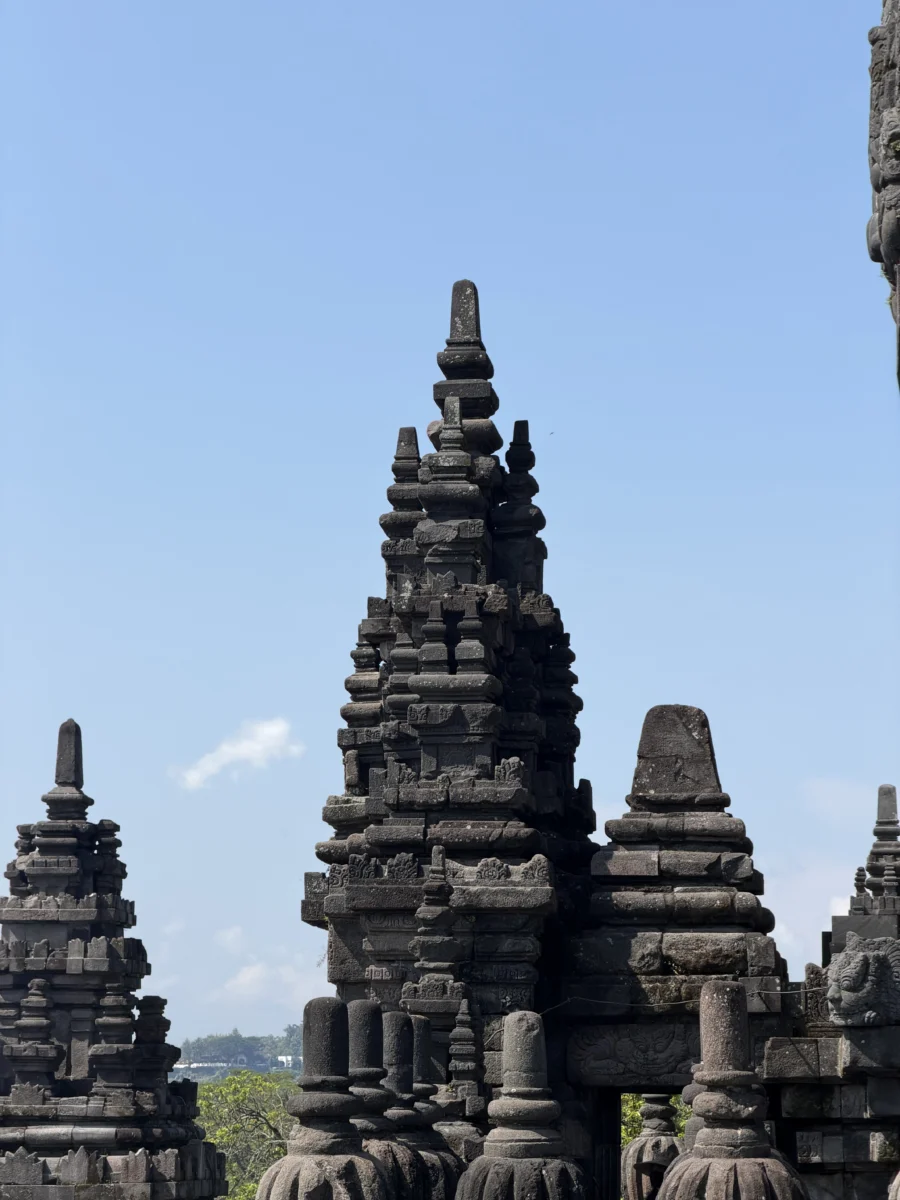
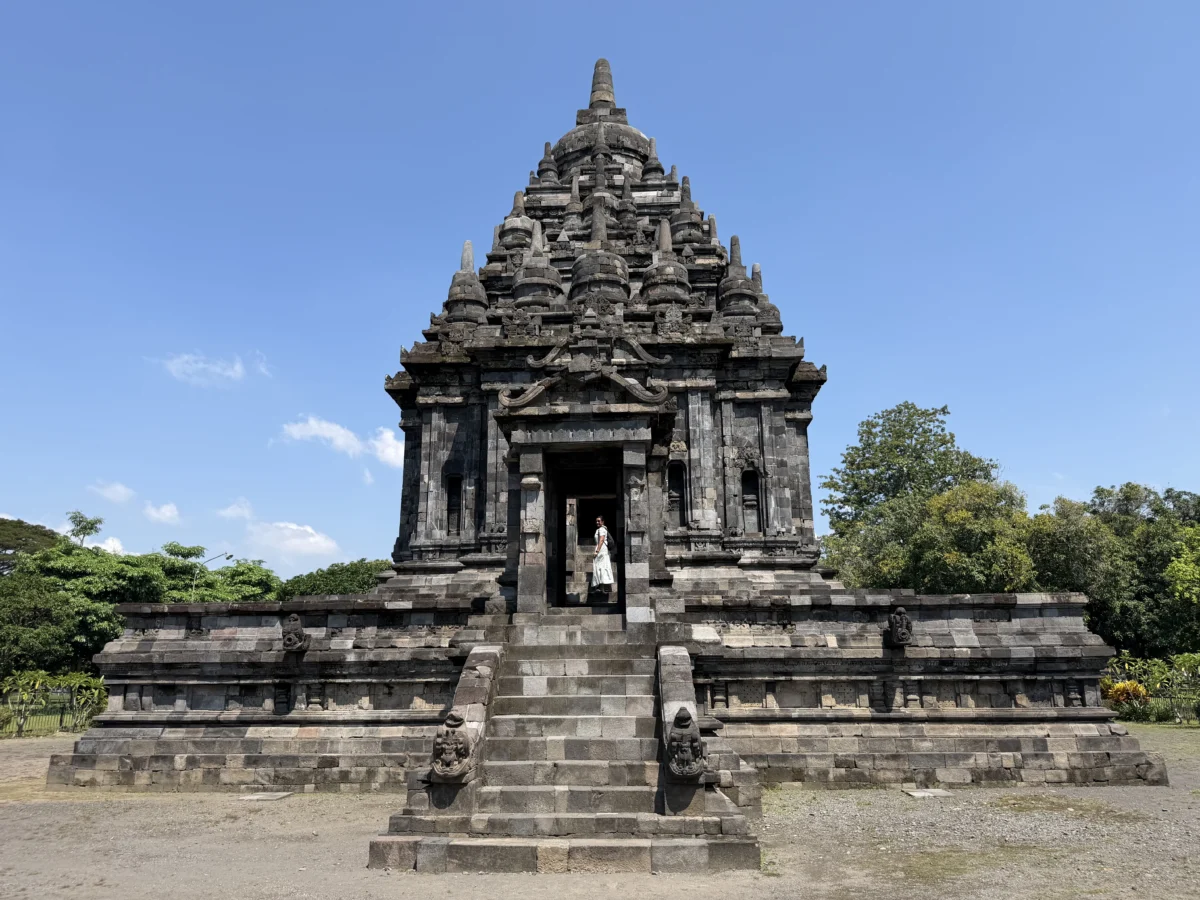
Another big difference between the Borobudur experience and Prambanan is that you can walk almost everywhere in/on the Borobudur temple, while the Prambanan temples are mostly towering high above you.
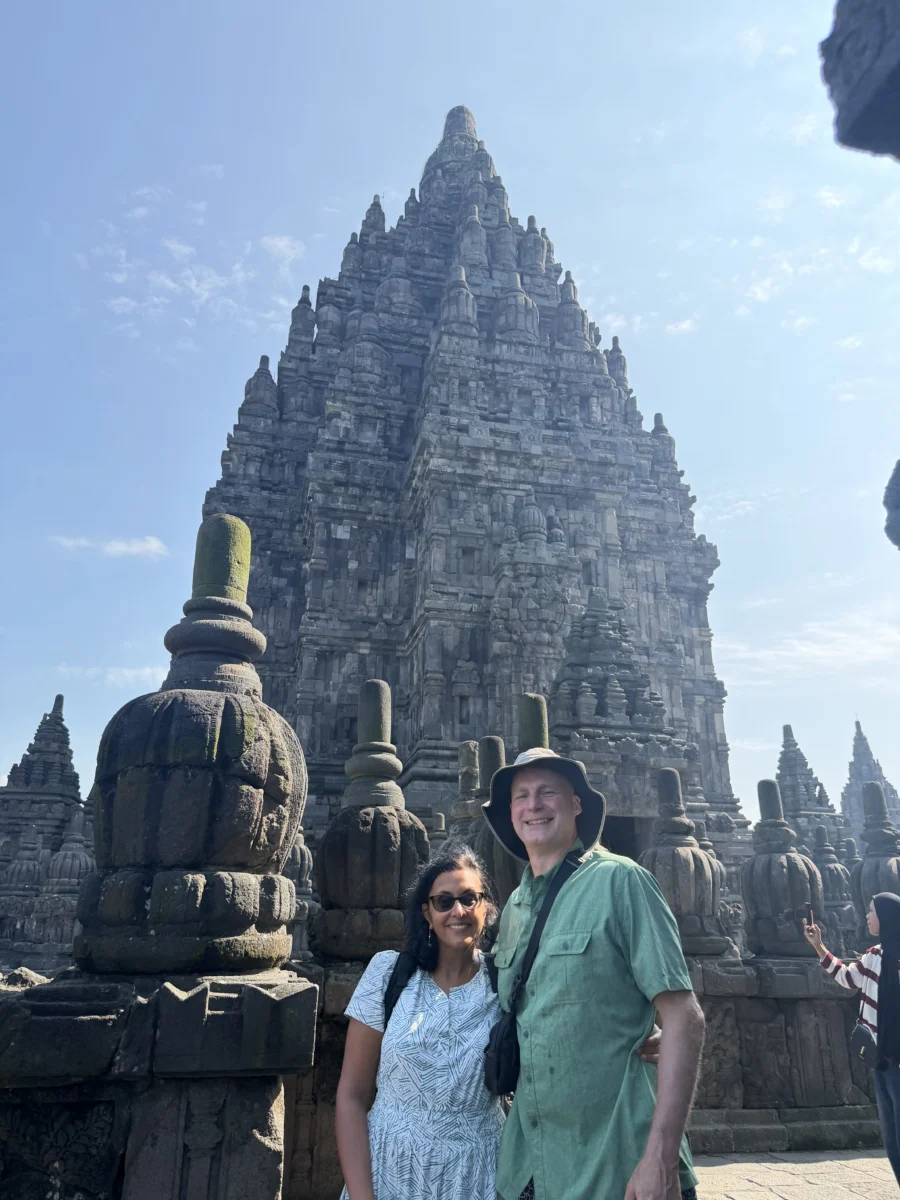
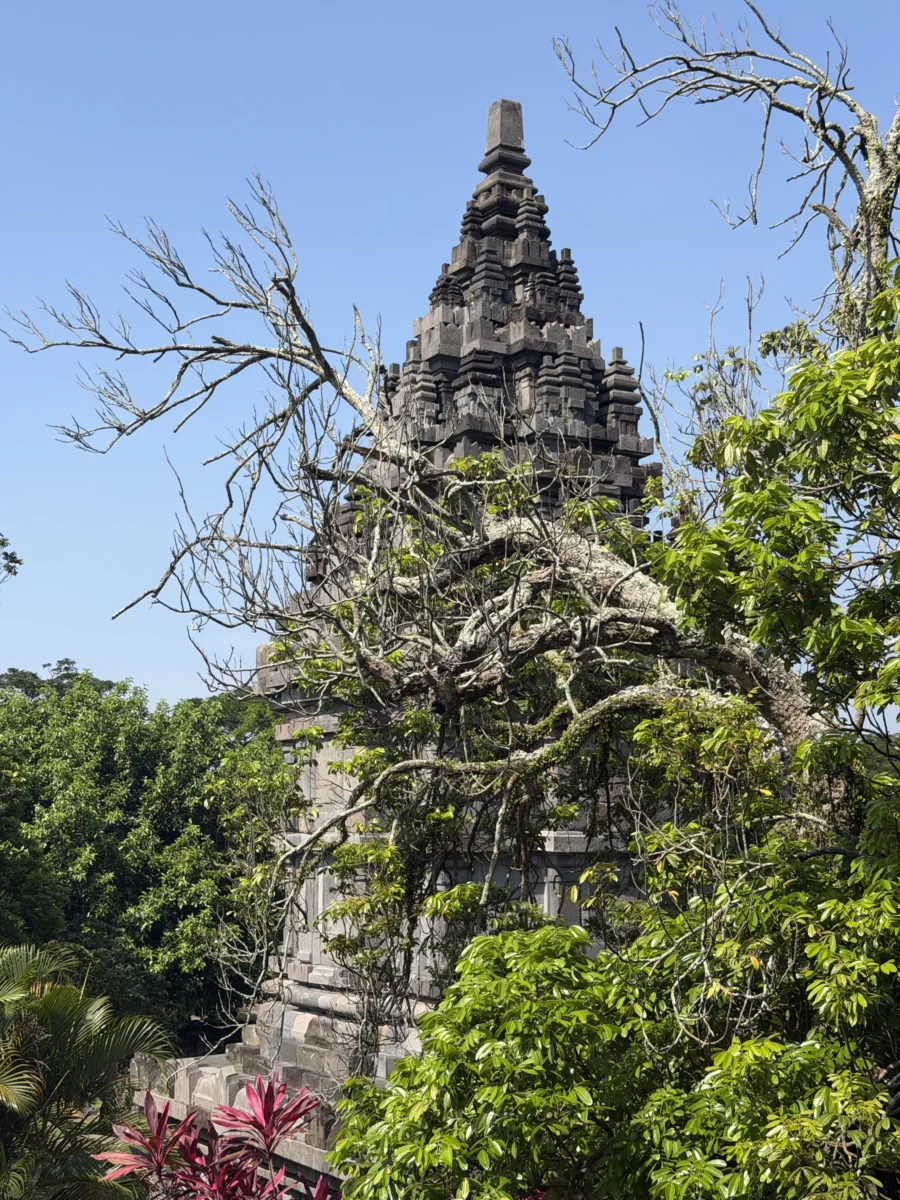
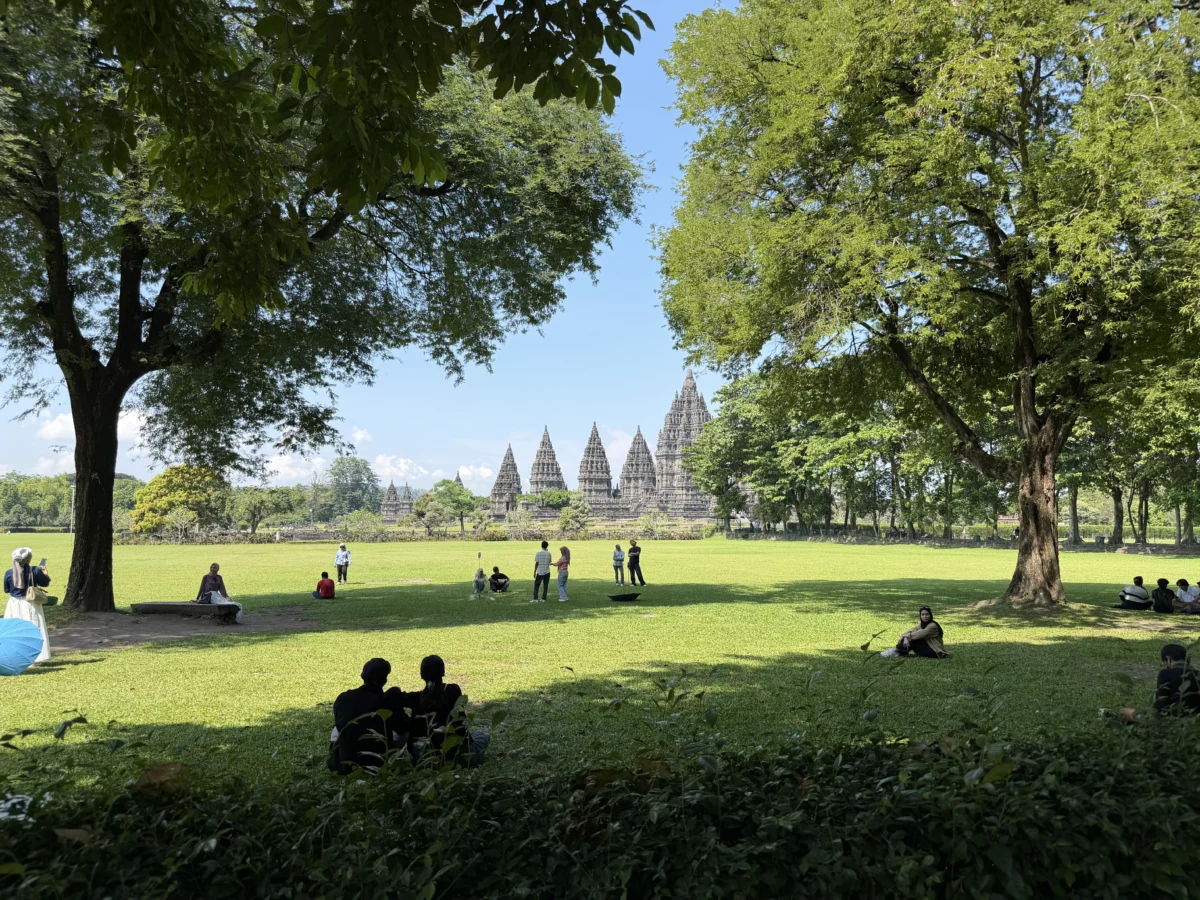
The outer parts of the main temple site have a little more vegetation, which I think really makes it cooler.. both in temperature and vibe.
The temple statues themselves are deep within each temple (see schematic map above).
This guy was both thrilled to get a picture taken with a weird foreign guy and (I expect) horrified at how wet my back was! I love random positive encounters.
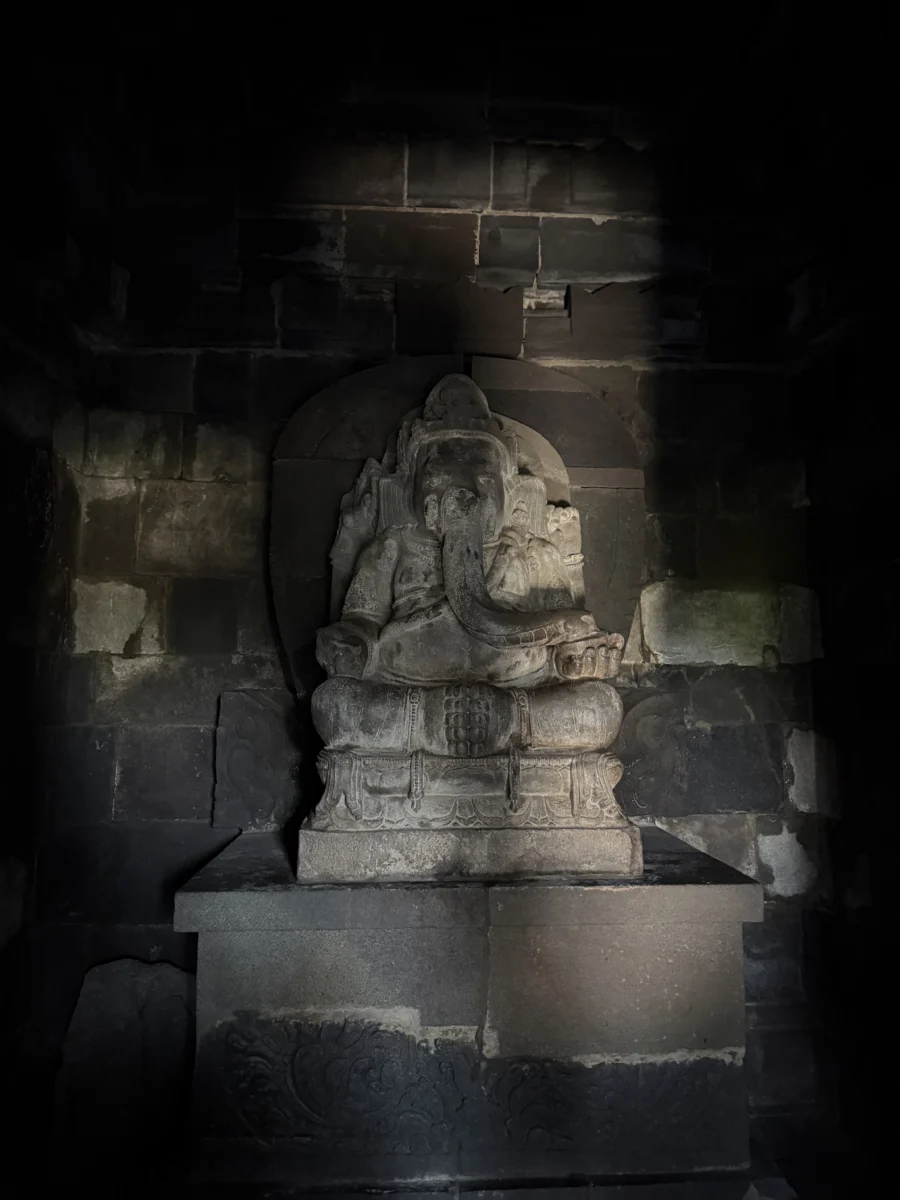
Access steps are very steep, so you’re carefully watching your step while <usually.. but not enough in my case> watching your head.
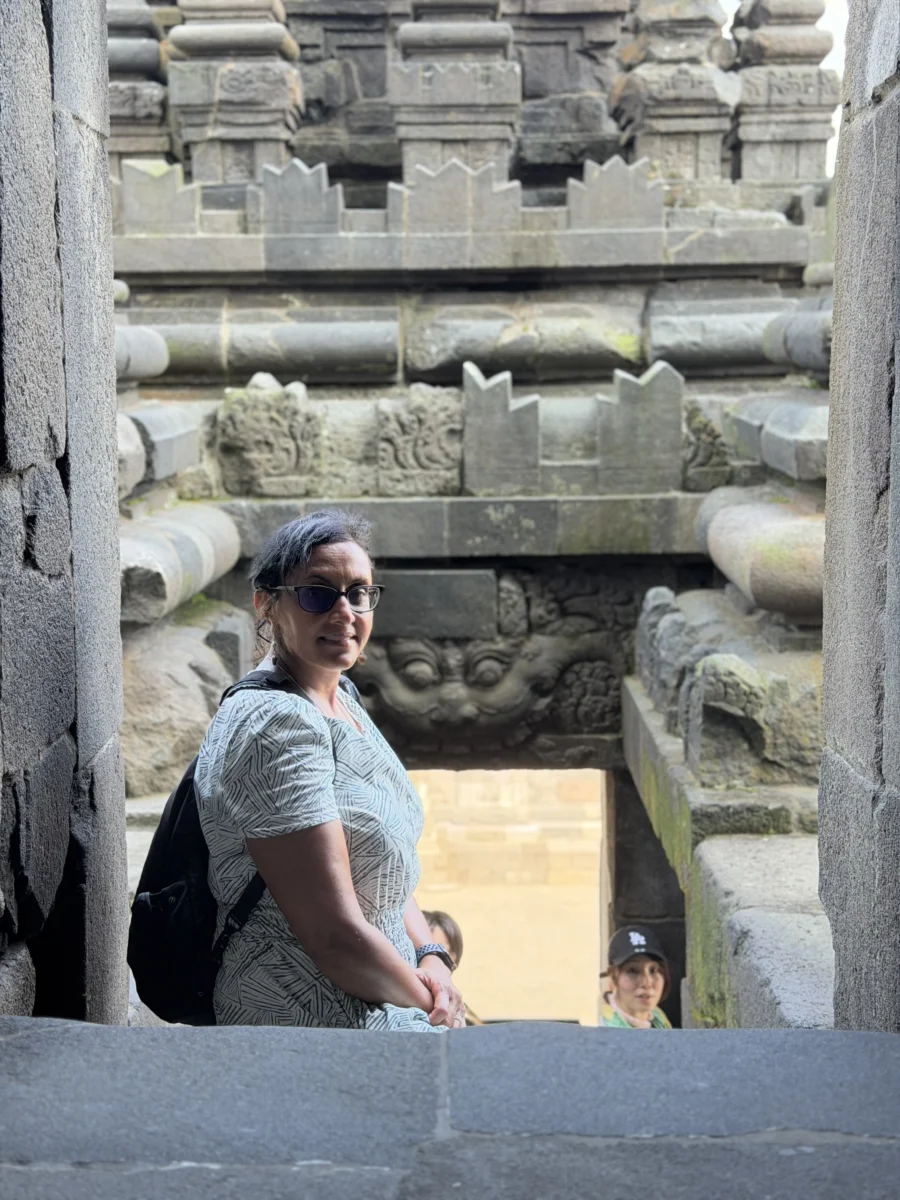
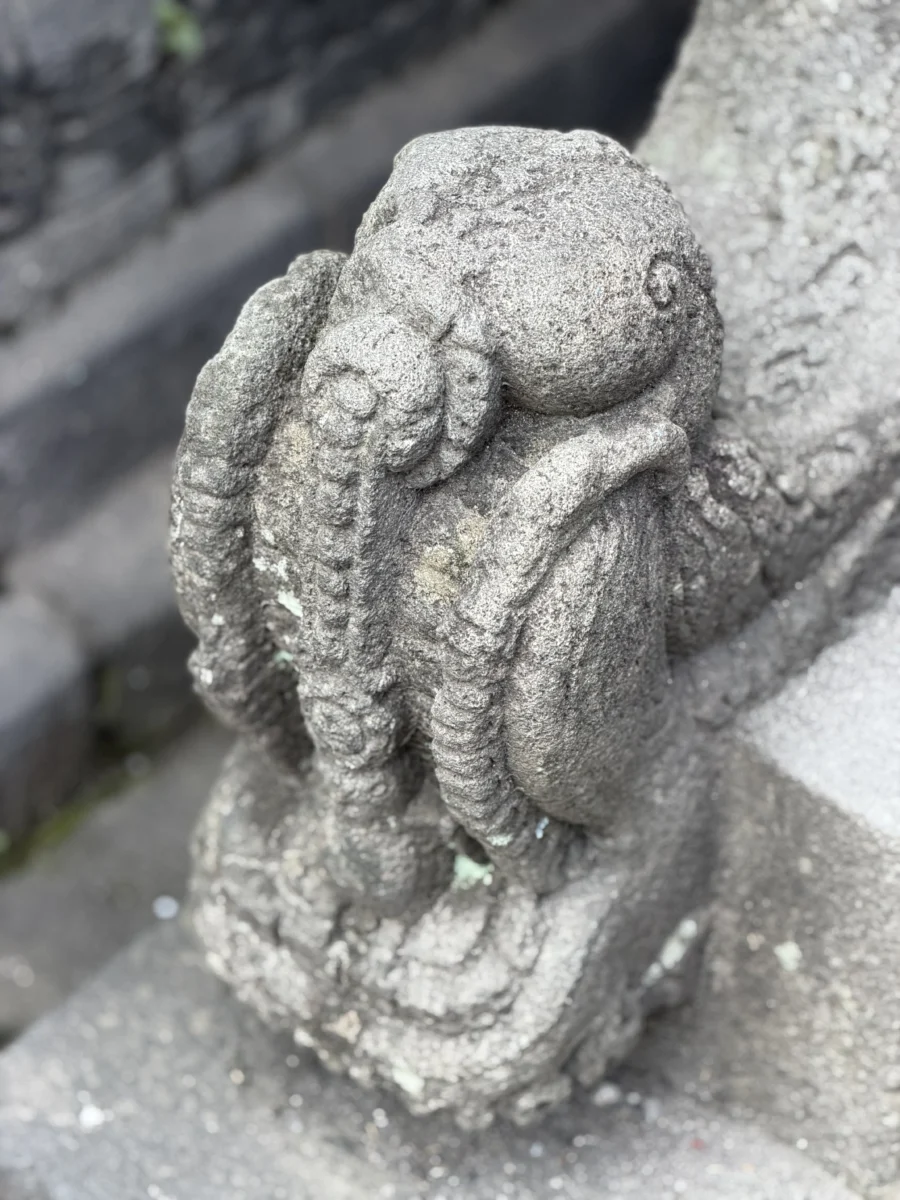
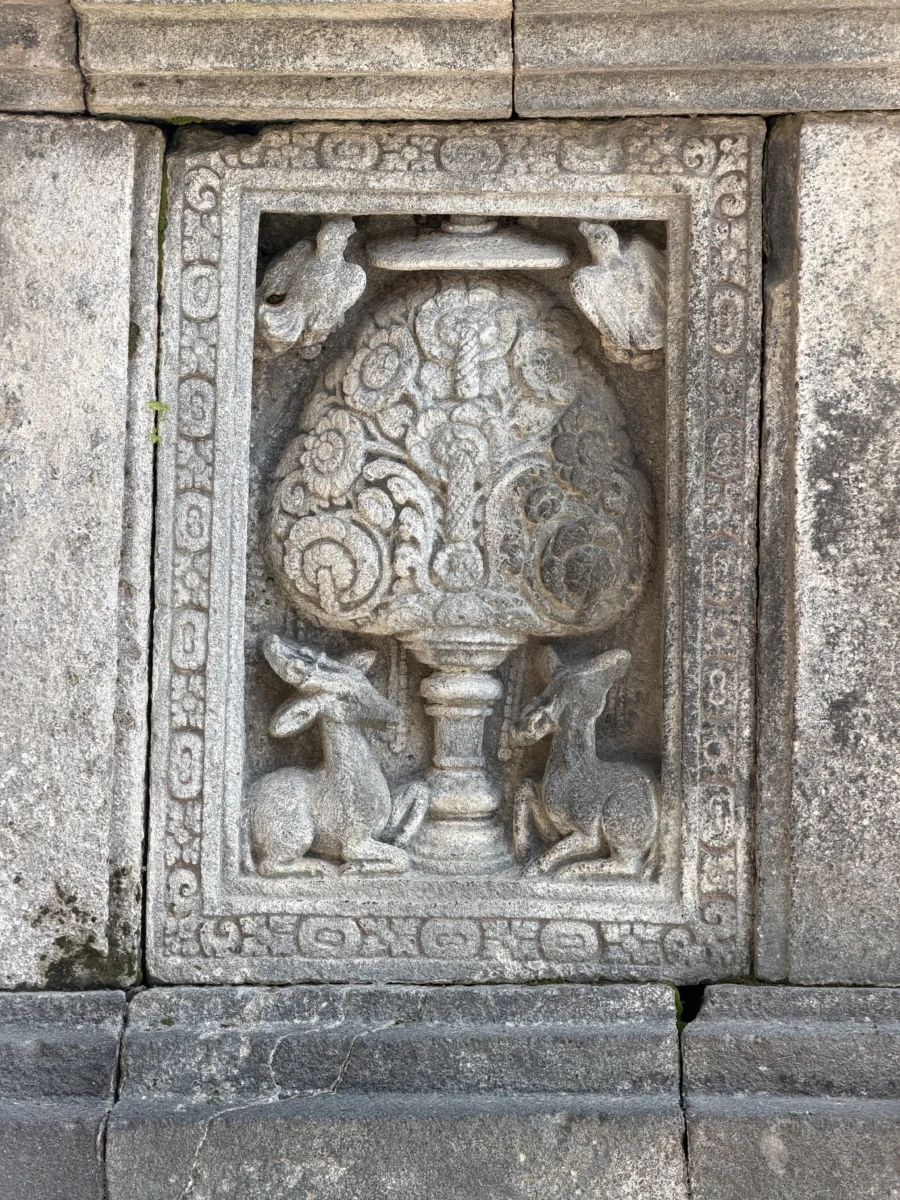
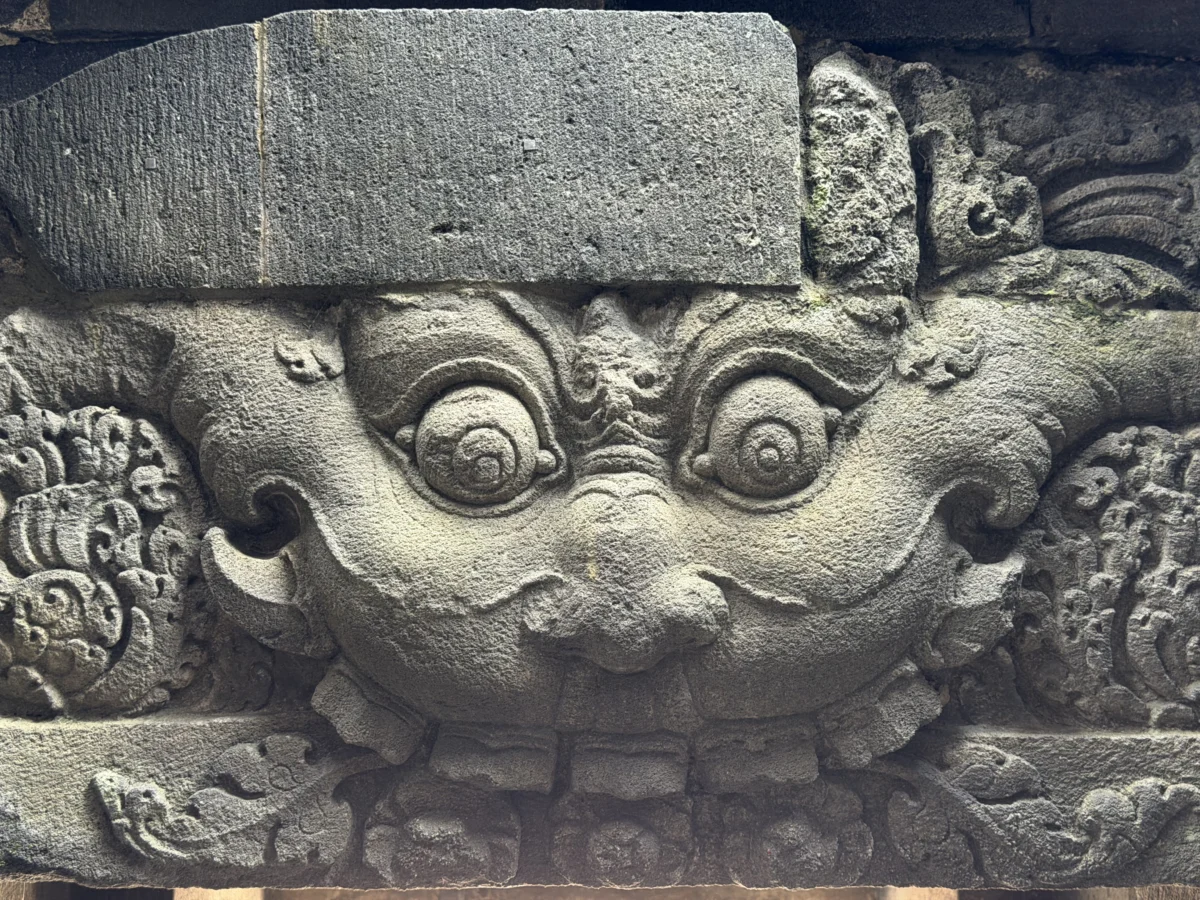
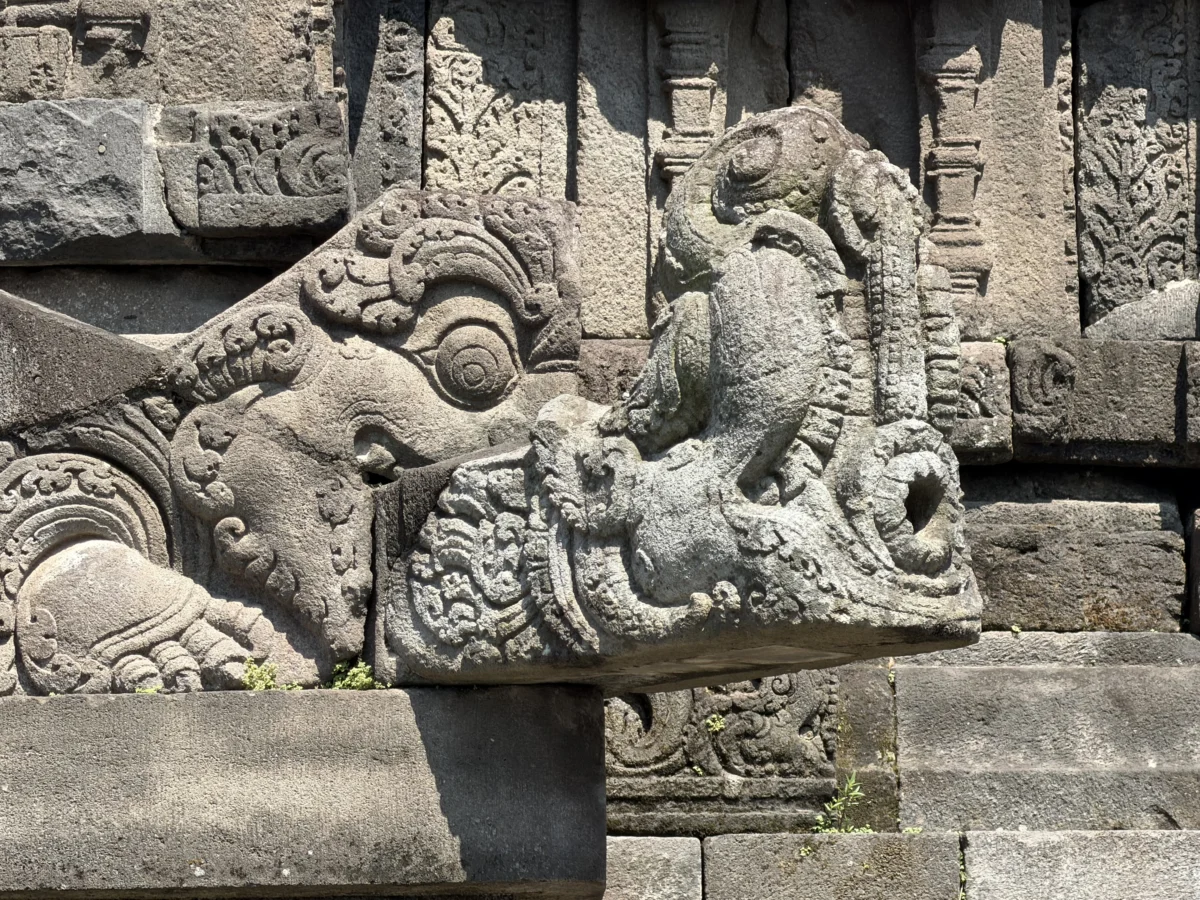
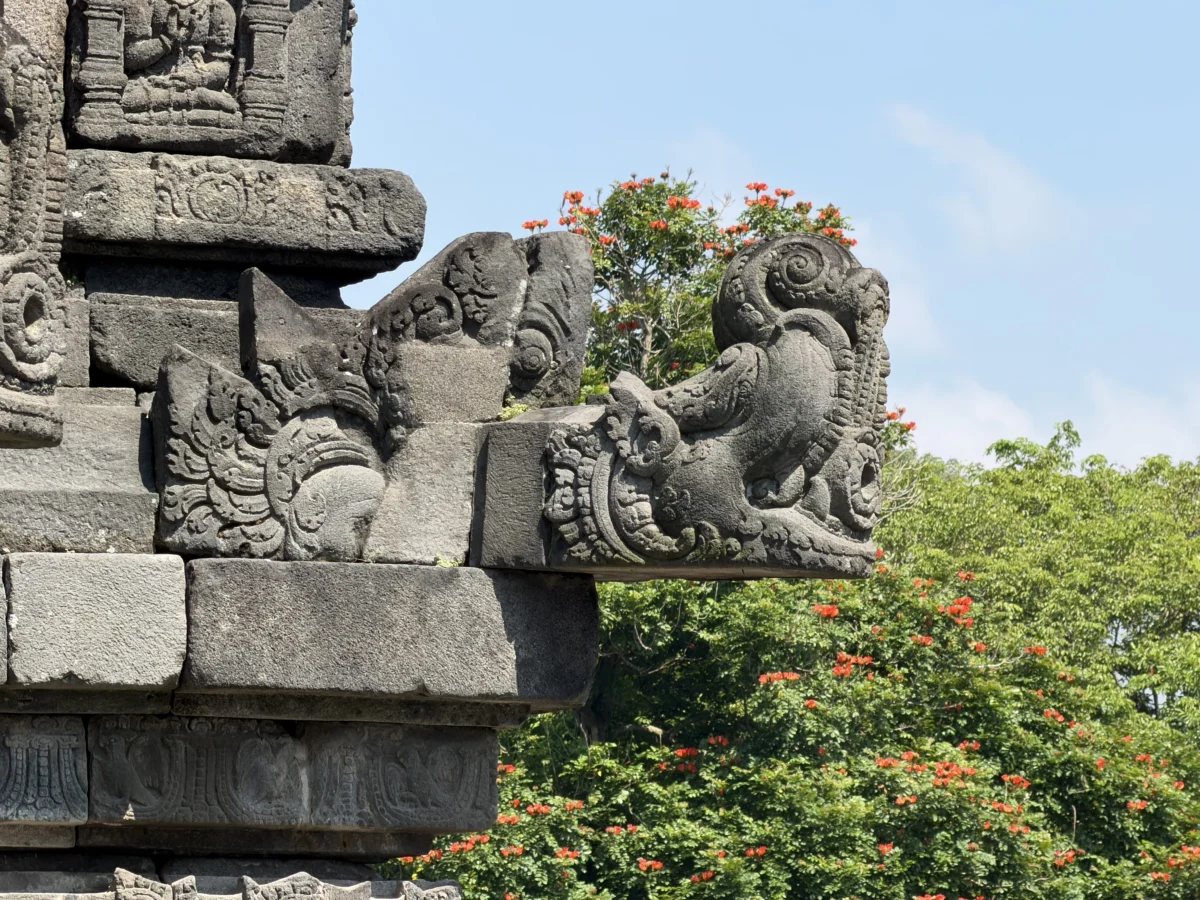
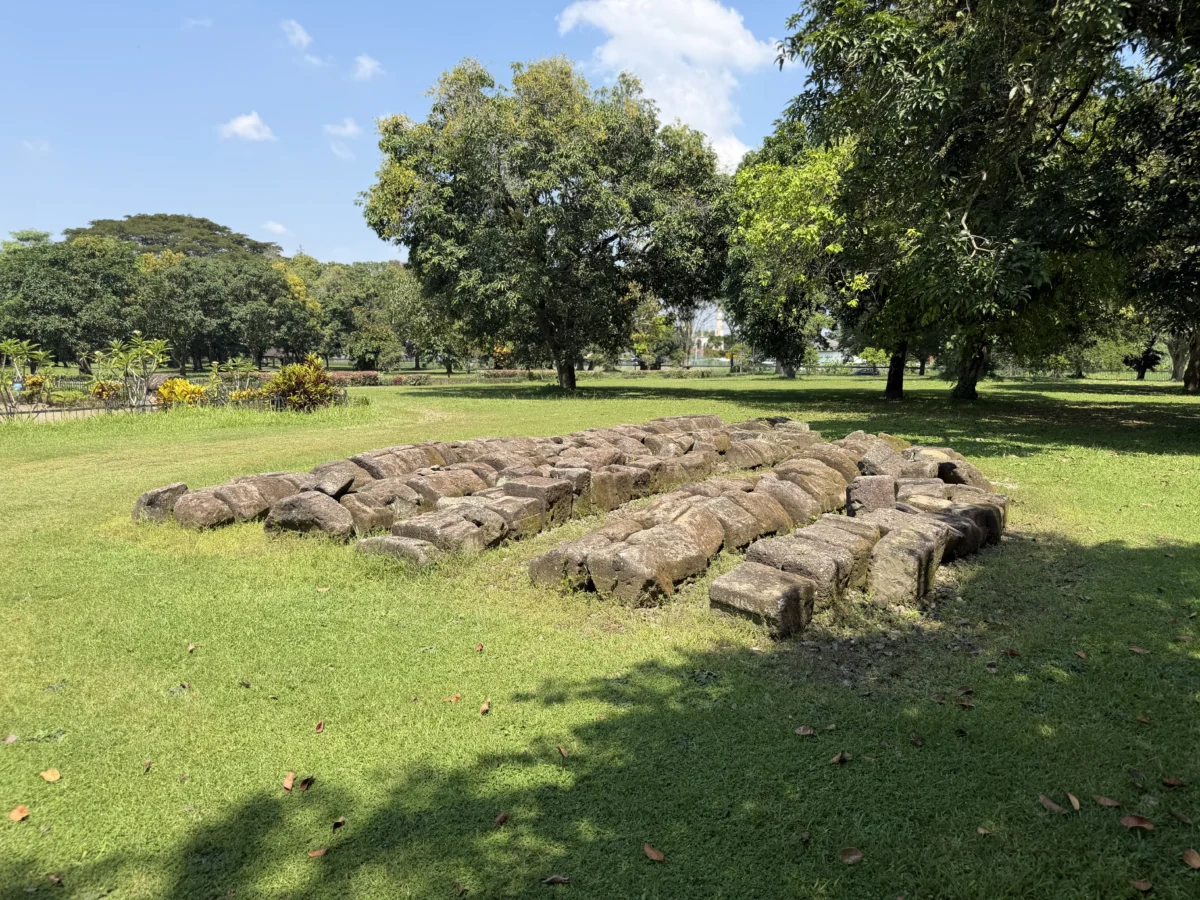
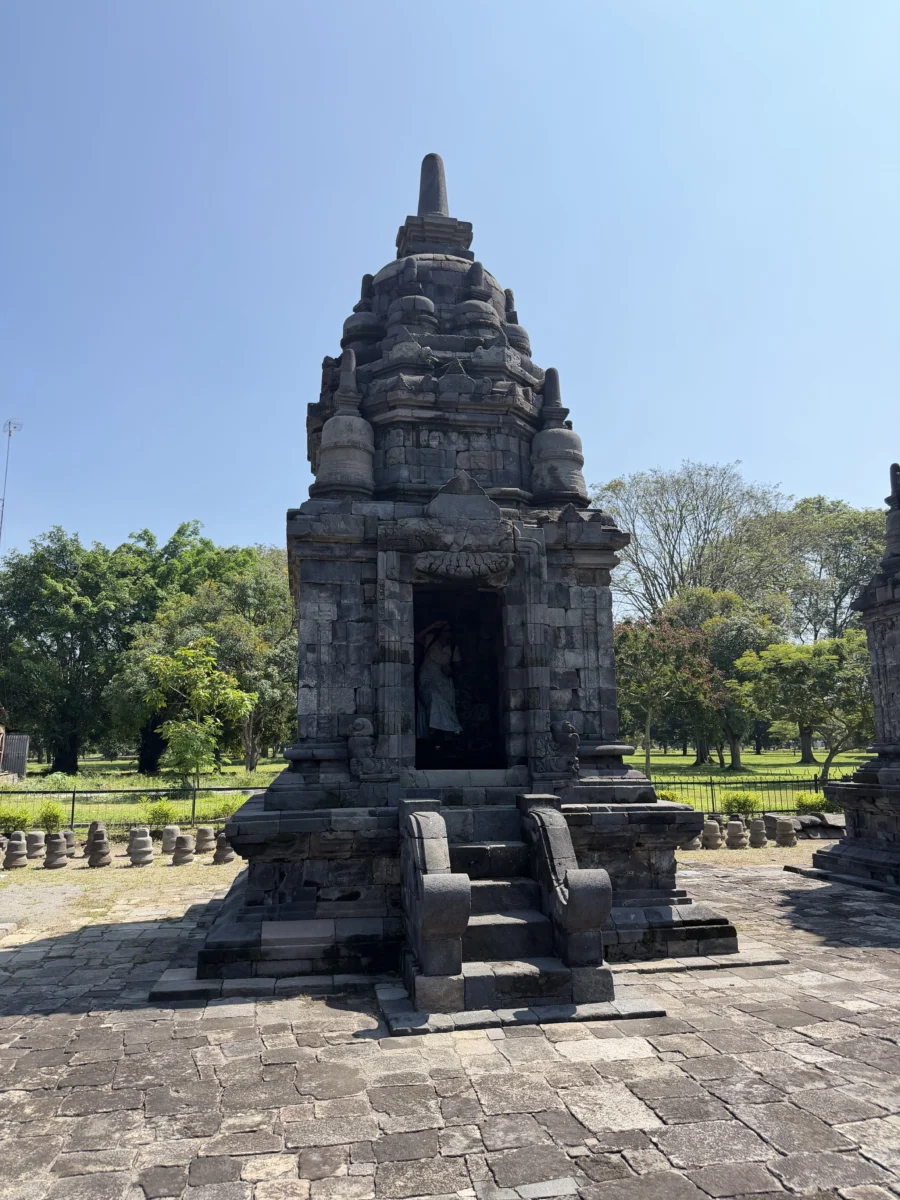
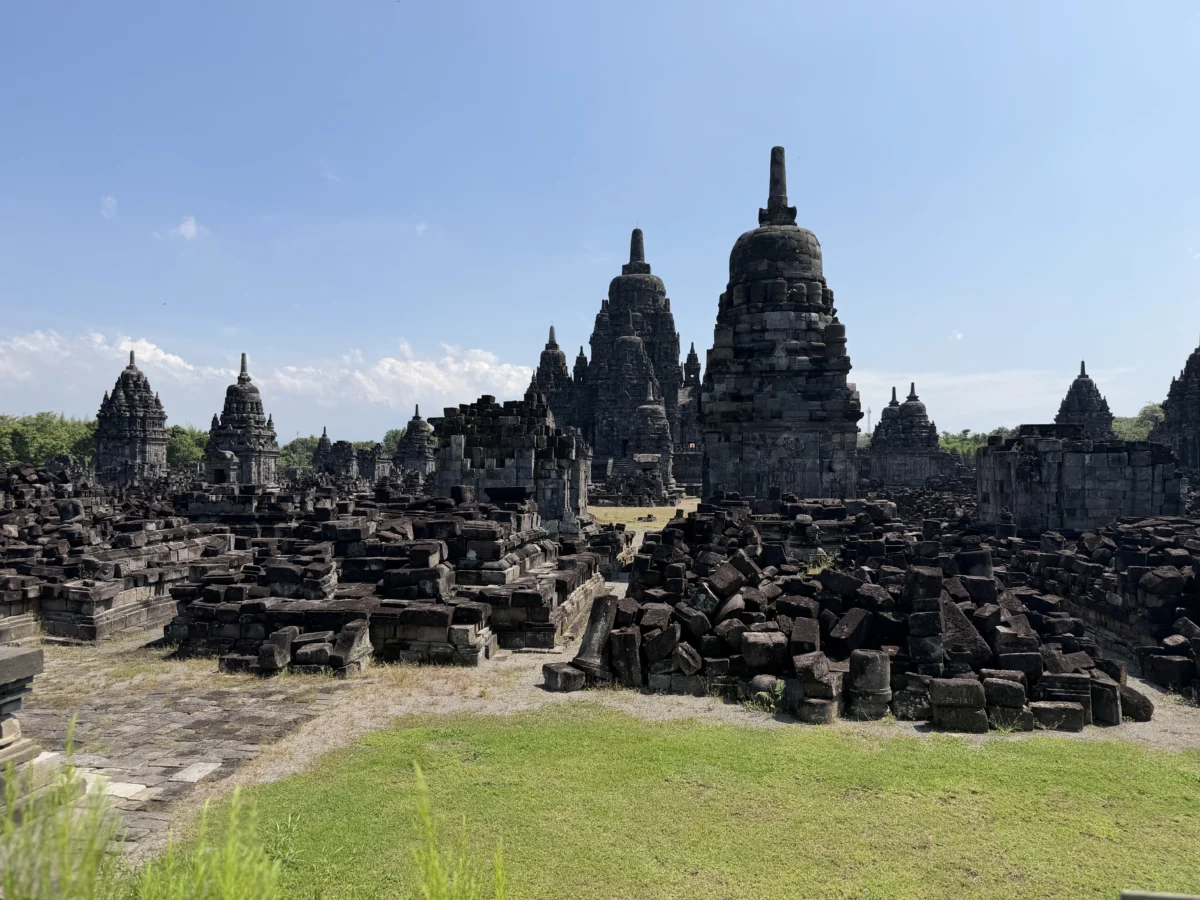
Reconstruction and restoration are far from done. There are hundreds of piles of carved blocks sitting in the surrounding fields awaiting reassembly like a godly Lego playset. In addition to the large temple sites to the north, which are still only partially rebuilt, the main temple site alone has only had a handful of the original 224 pervara temples (small temples surrounding the massive ones) reconstructed.
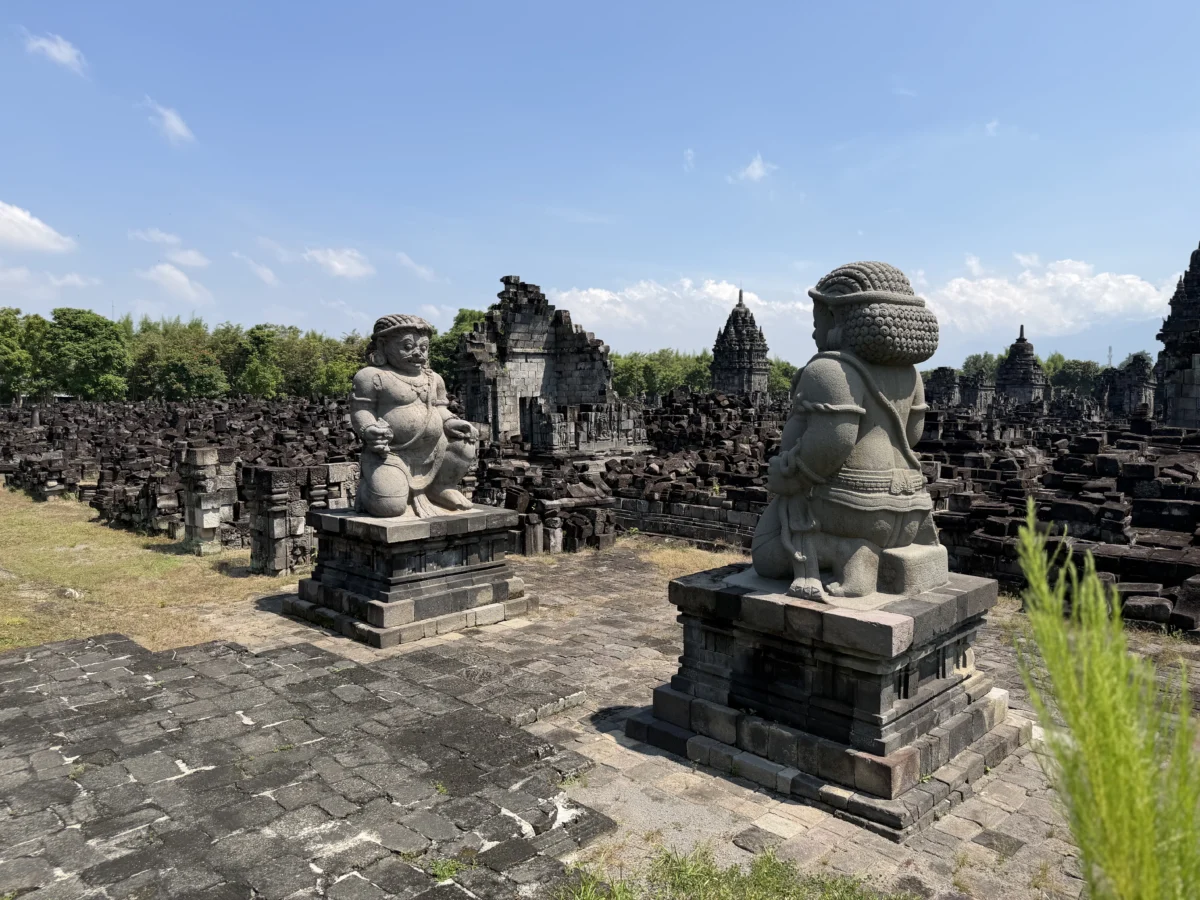
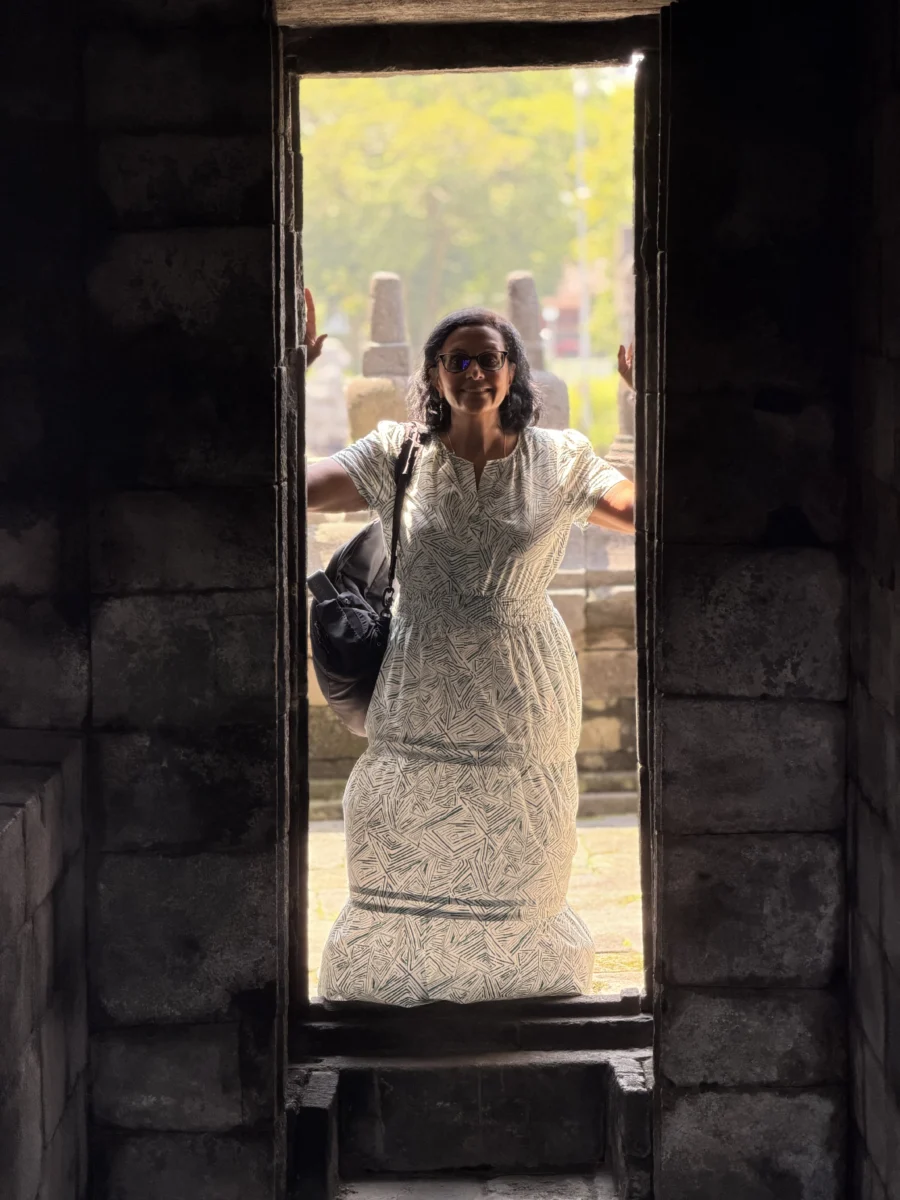
The layout of the overall compound means that the main temple site is about one km (.6 mi) from the northernmost reconstructed site. For most tourists this means they will only ever see the main site. It’s the most prominent and right next to the entrance. However this also means that the more distance sites are nearly empty, and we found this incredibly appealing. We got there early, checked out the biggest temples, then beelined for the northern temples. We were alone most of the time at all of them, and when others arrived it was still quiet and easy to frame them out of pictures .
As of April 2026, in addition to the main temple site there are two small temple sites and one larger one to the north.
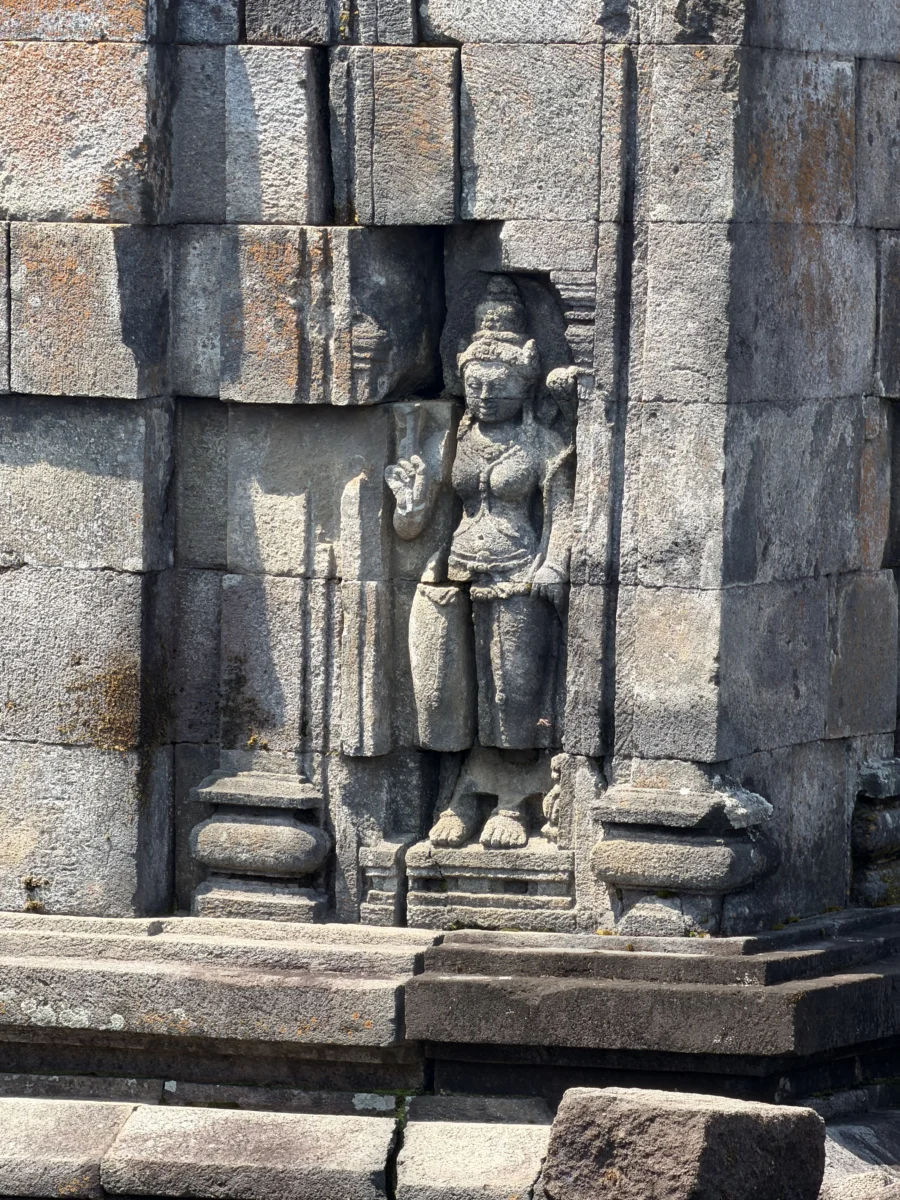
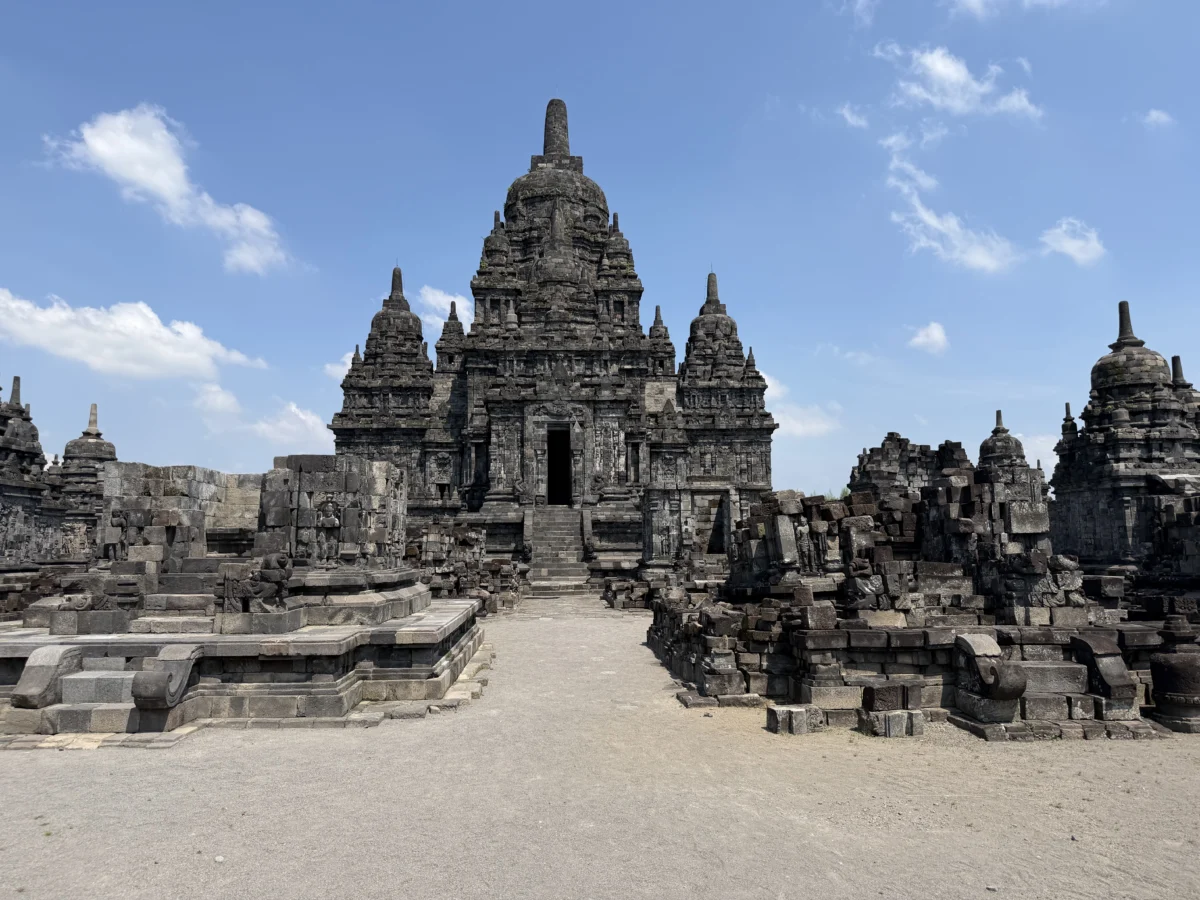
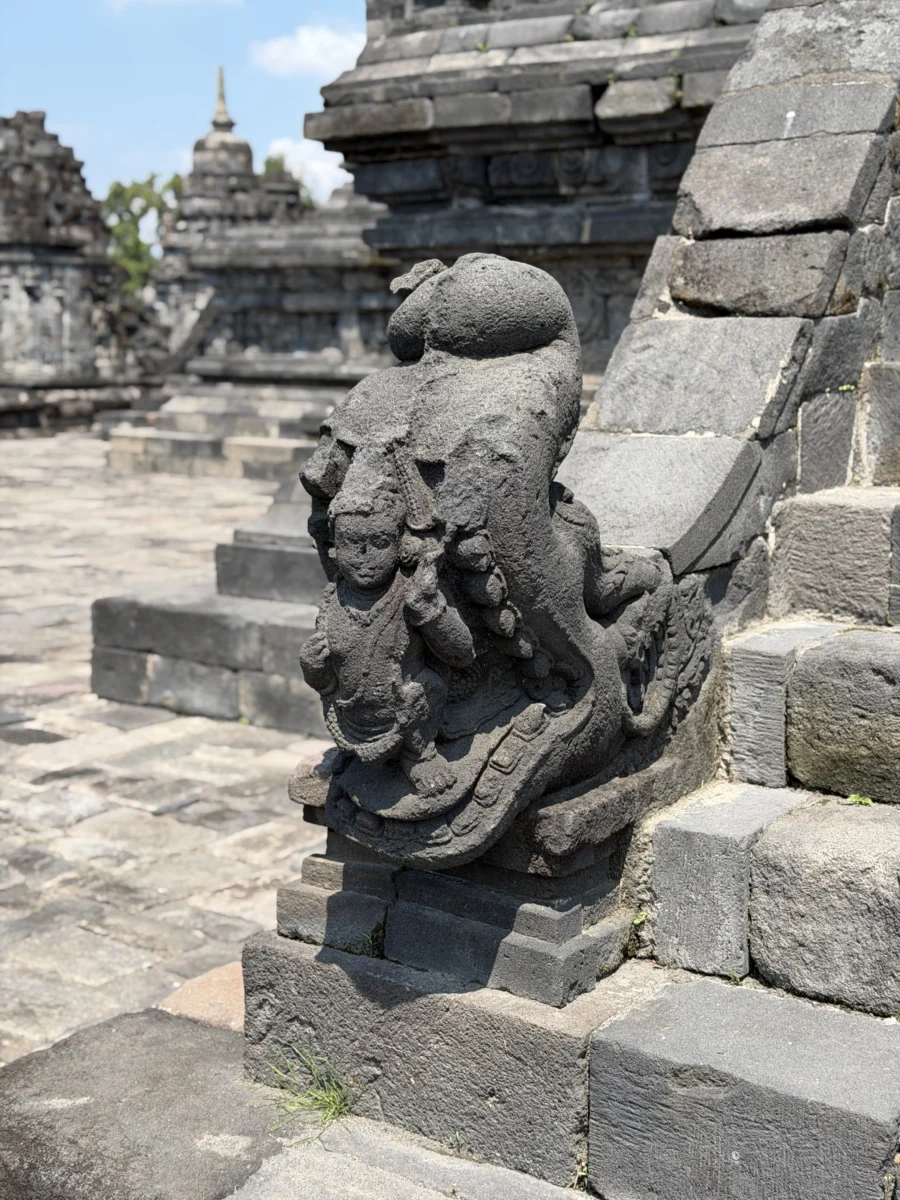
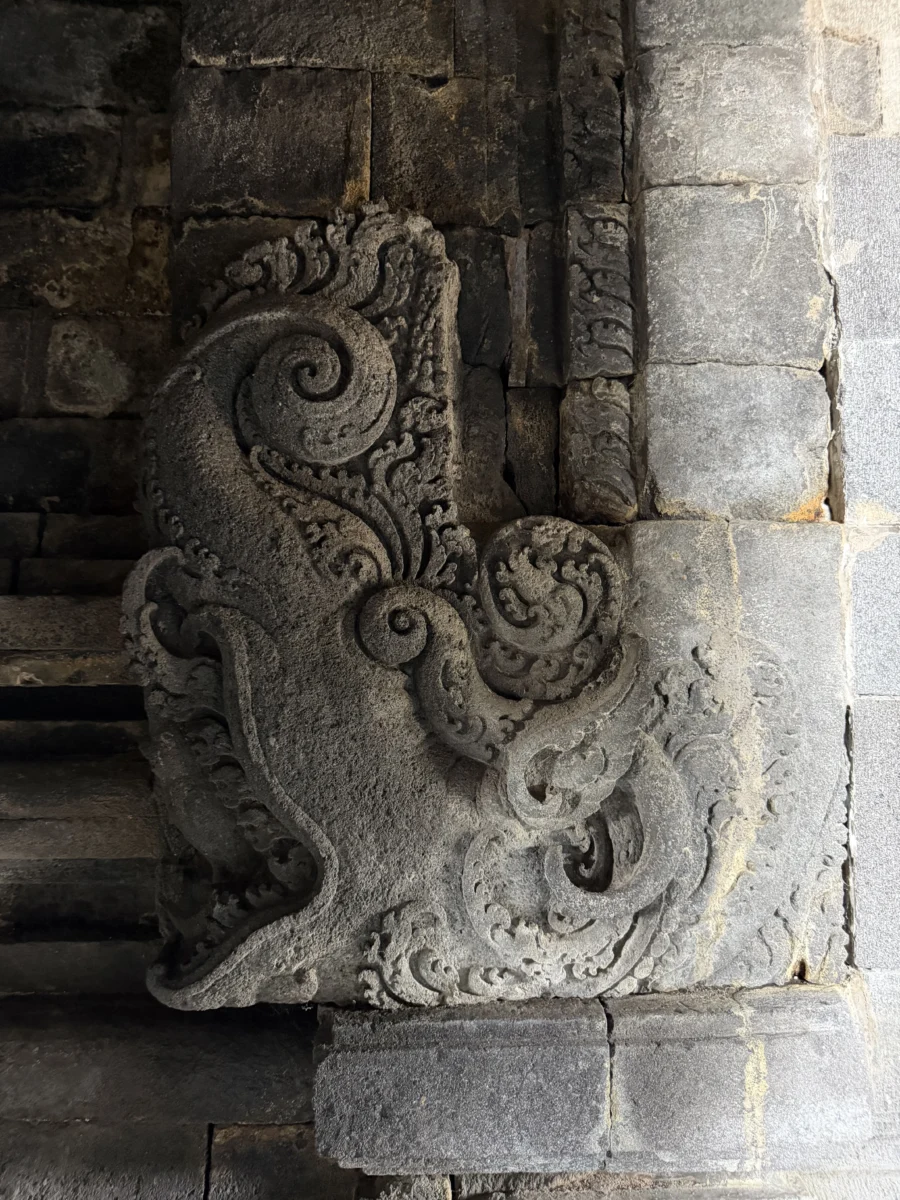
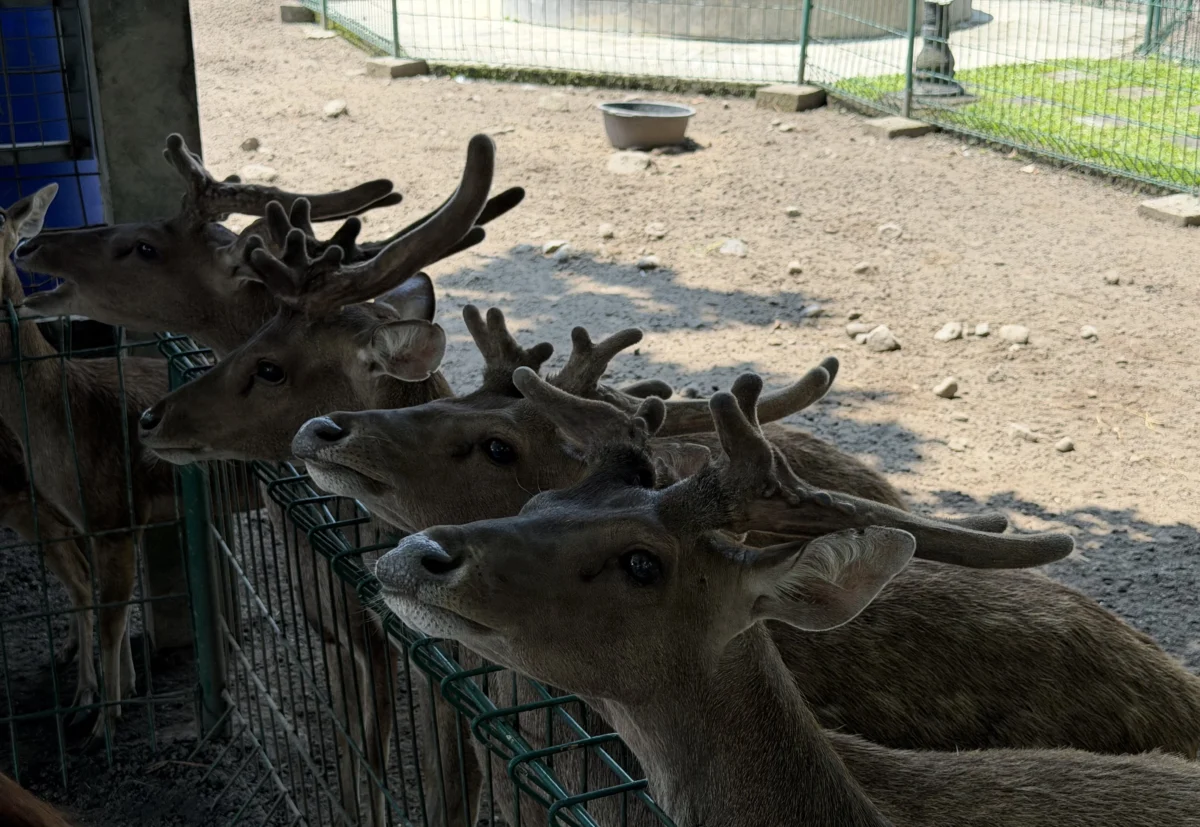
I’m not sure why, but there is a small zoo on the east side of the compound. It is always cool to see some animals and it’s quite likely that at least some of them lived wild in this area at some point, but as a zoo I think it was included to placate younger children and encourage family visits.
We spent 2.5 hours at Prabanan but I recommend giving yourself at least 3-4 hours. Go right when they open, ideally on a cooler day (assume that for most Indonesia activities!), and take your time. Visit it all but make sure to take a lazy walk around the perimeter path to the north. The emphasis is on these massive, wonderful stone temples and sculptures but the peaceful green setting, even in its modern incarnation, is striking as well. Sit down, absorb the scene.

Leave a Reply