Northwest of Yogya is the biggest Buddhist temple in the world, Borobudur. It is a massive pyramid-like complex of Buddha reliefs and statues believed to have originally been constructed in the 8th or 9th century. It was fully uncovered and restored from 1973-1983 in a massive collaboration between the Indonesian government and UNESCO. They disassembled, cataloged, cleaned, stabilized, and treated the entire structure from its foundation up.
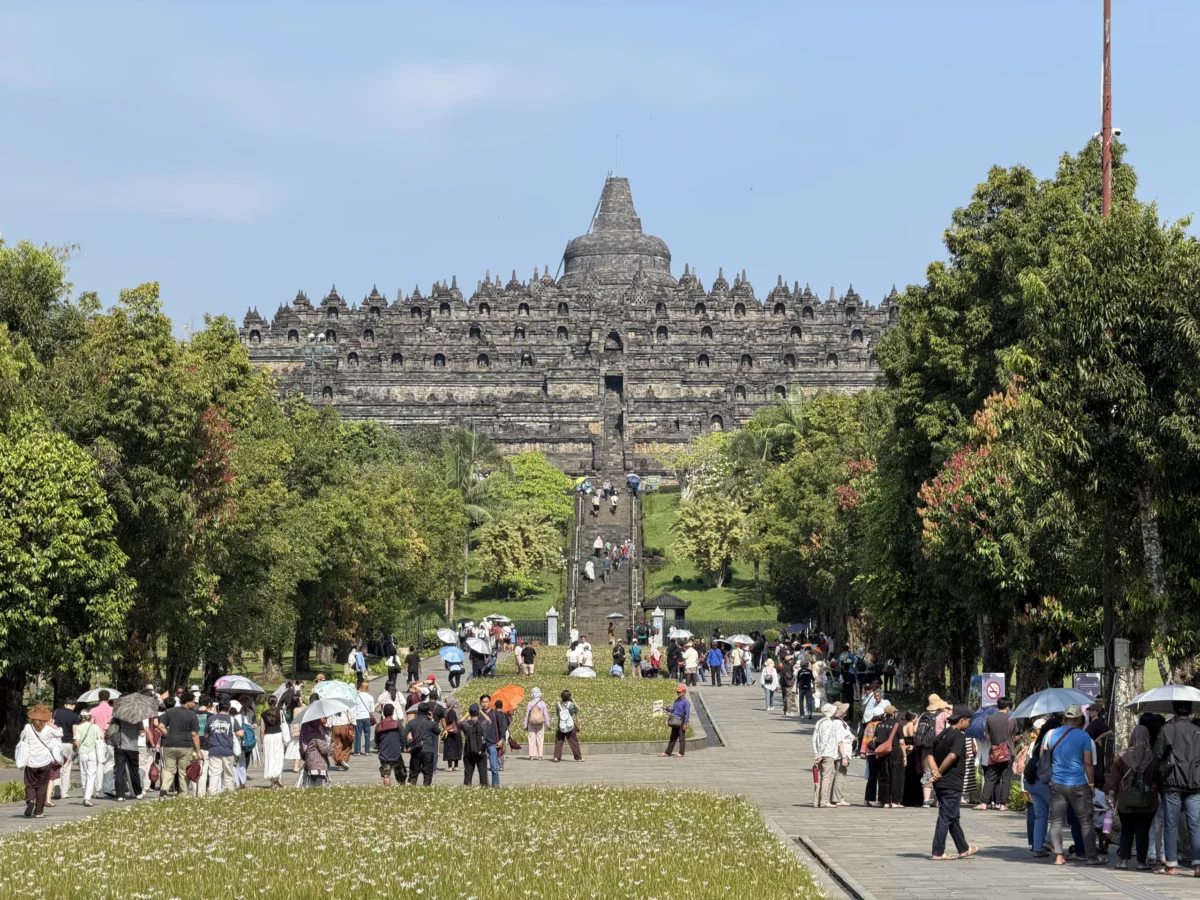
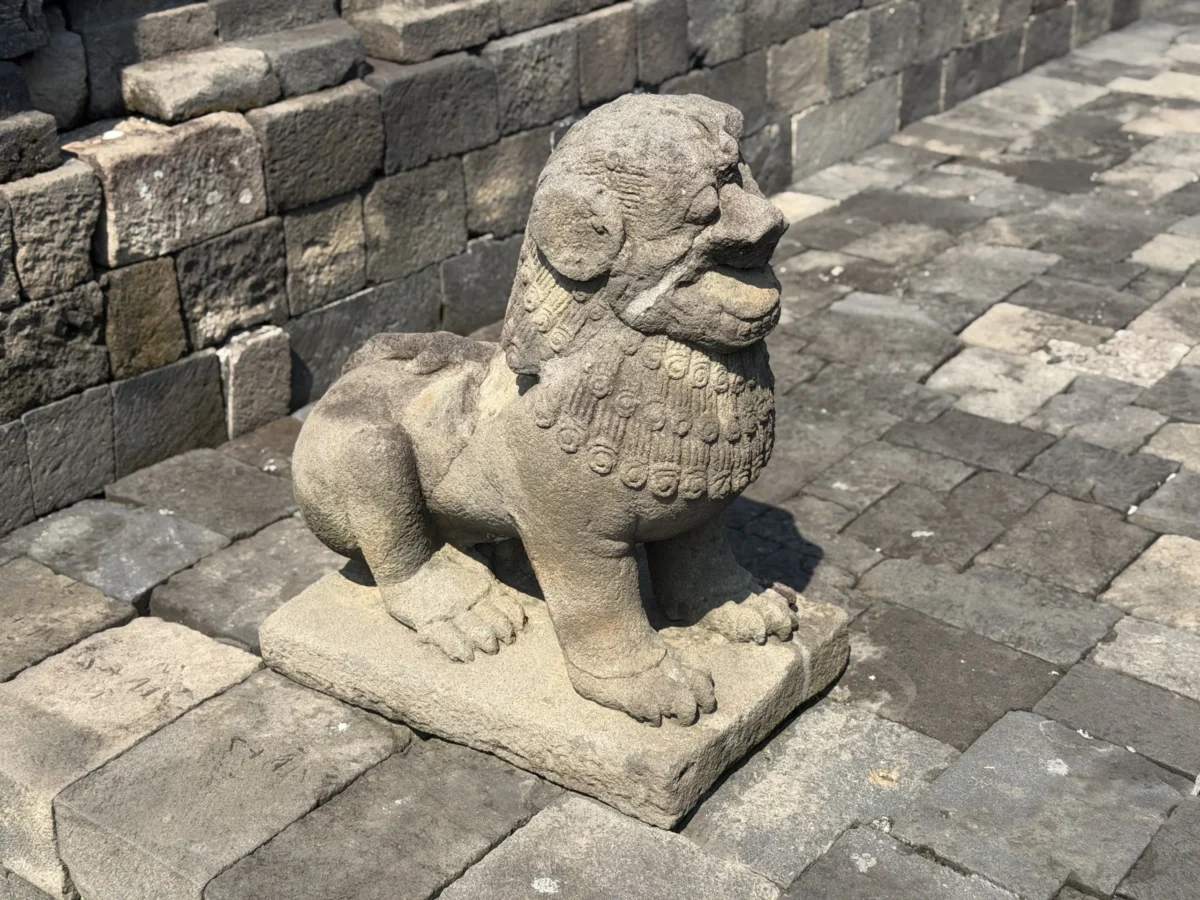
The temple and all adornments were carved from volcanic Andesite, just like Machu Picchu in Peru. It is incredibly strong and durable, as you can see by the tiny details that have been preserved for over a thousand years!
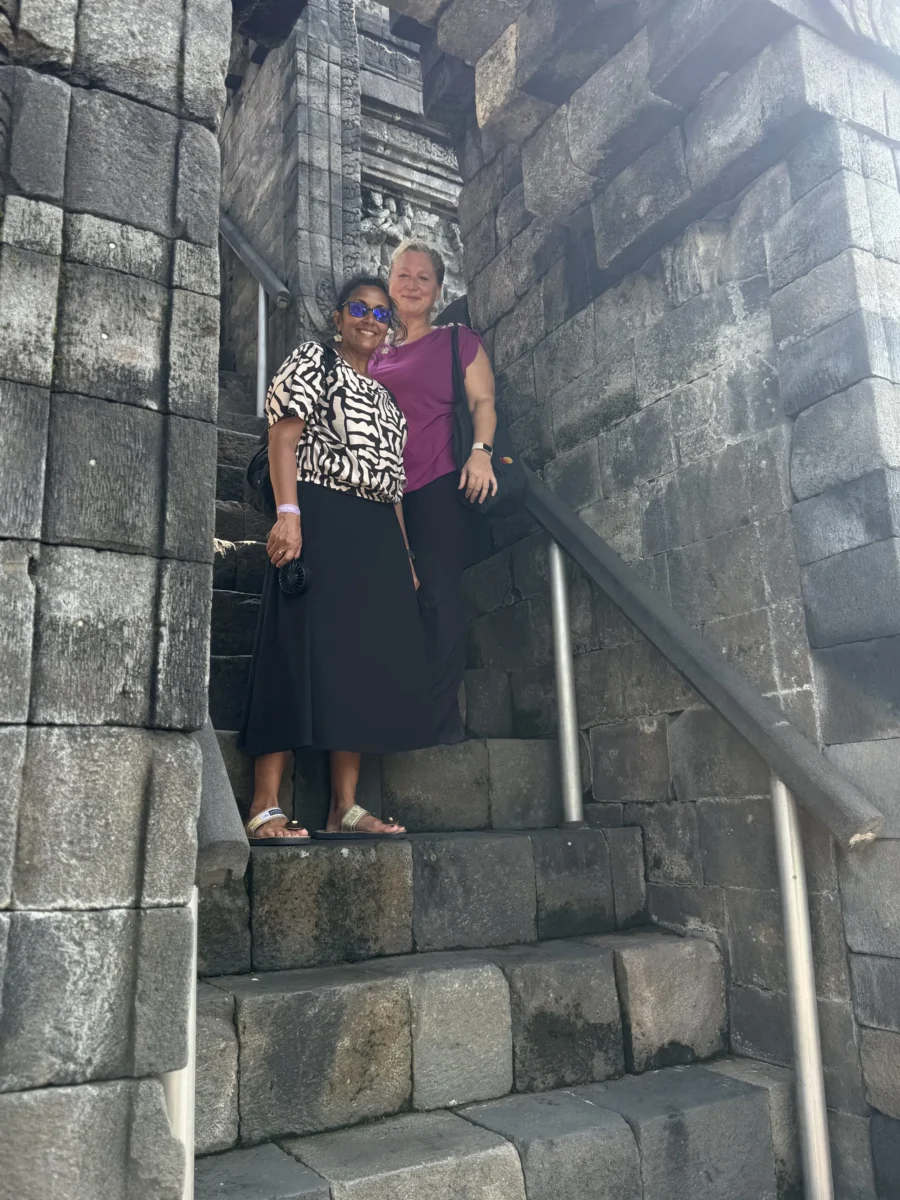
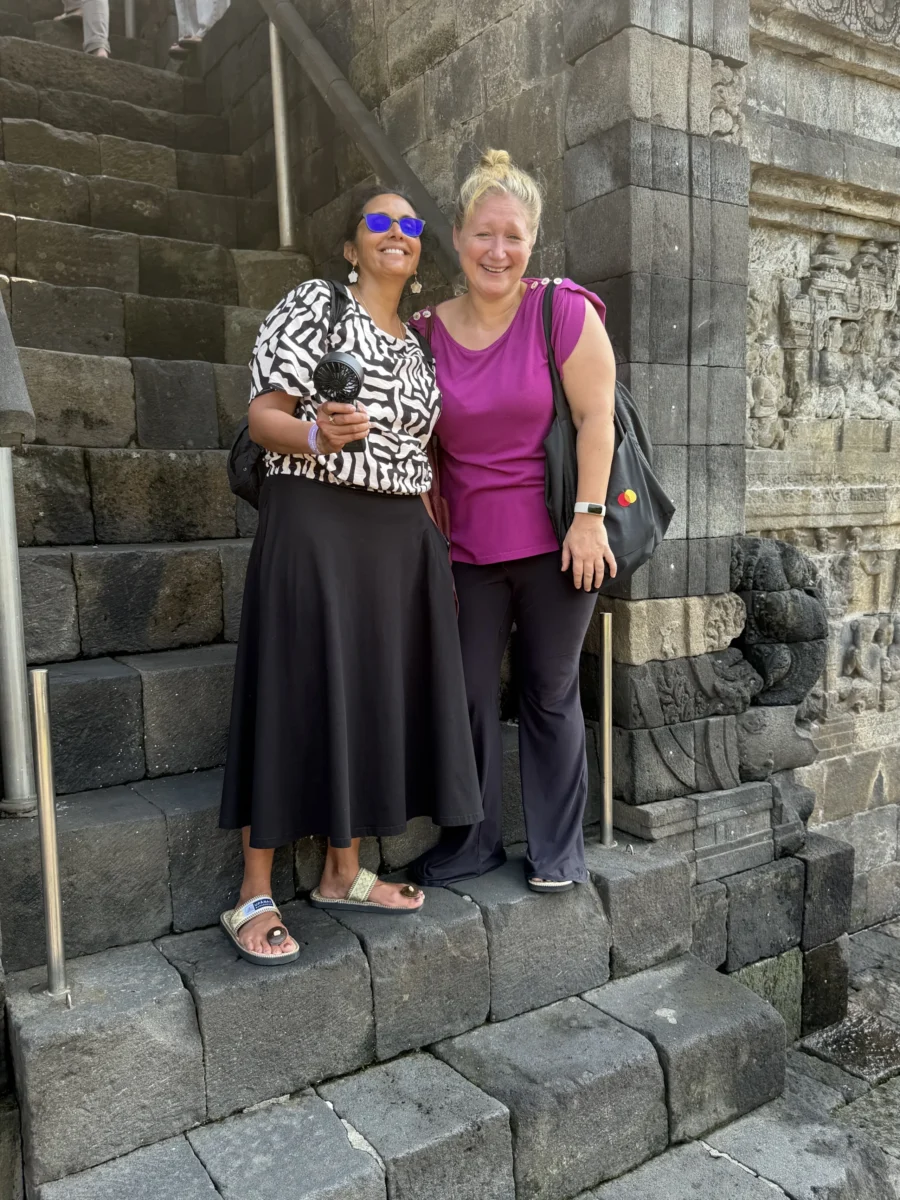
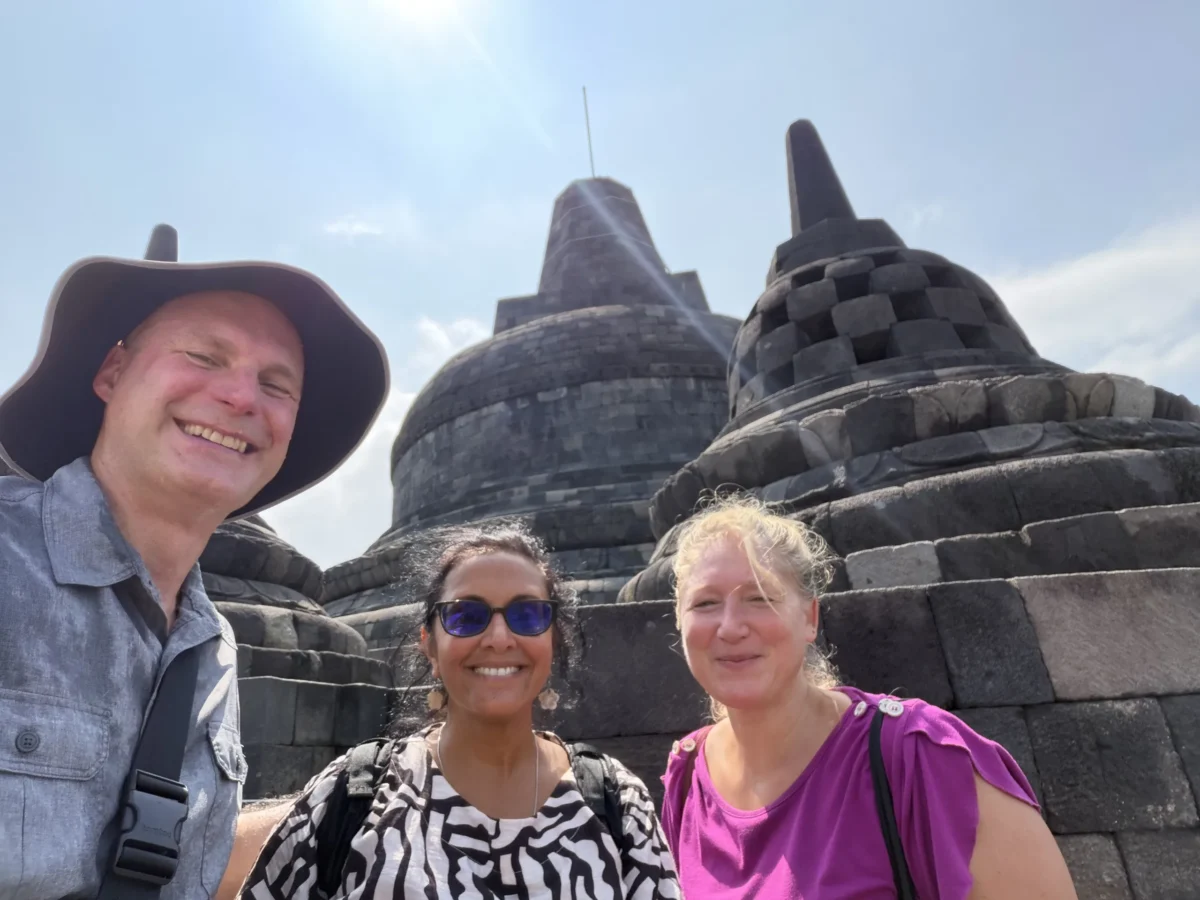
We donned our obligatory garments (to honor the temple) and sandals (to protect the rocks and reshape our feet!) and spent a day at the site. They shuttle you out to the site in groups to maximize the confusion and inefficiency. We were technically with a tour but mostly wandering through all permitted areas of the temple and its grounds. Amber and Tipo joined us, “enjoying” the brutal sun once again. Sweaty discomfort is definitely best shared with close friends & family!
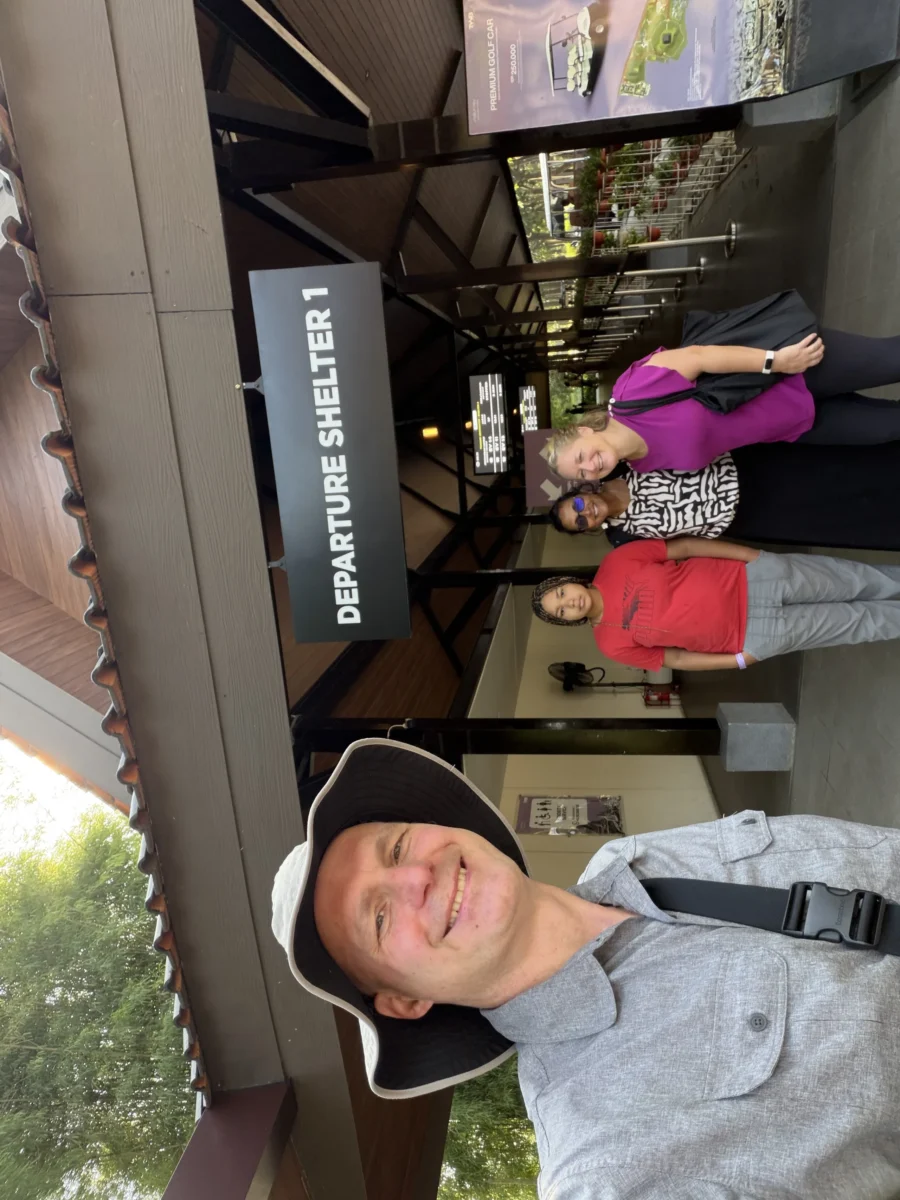
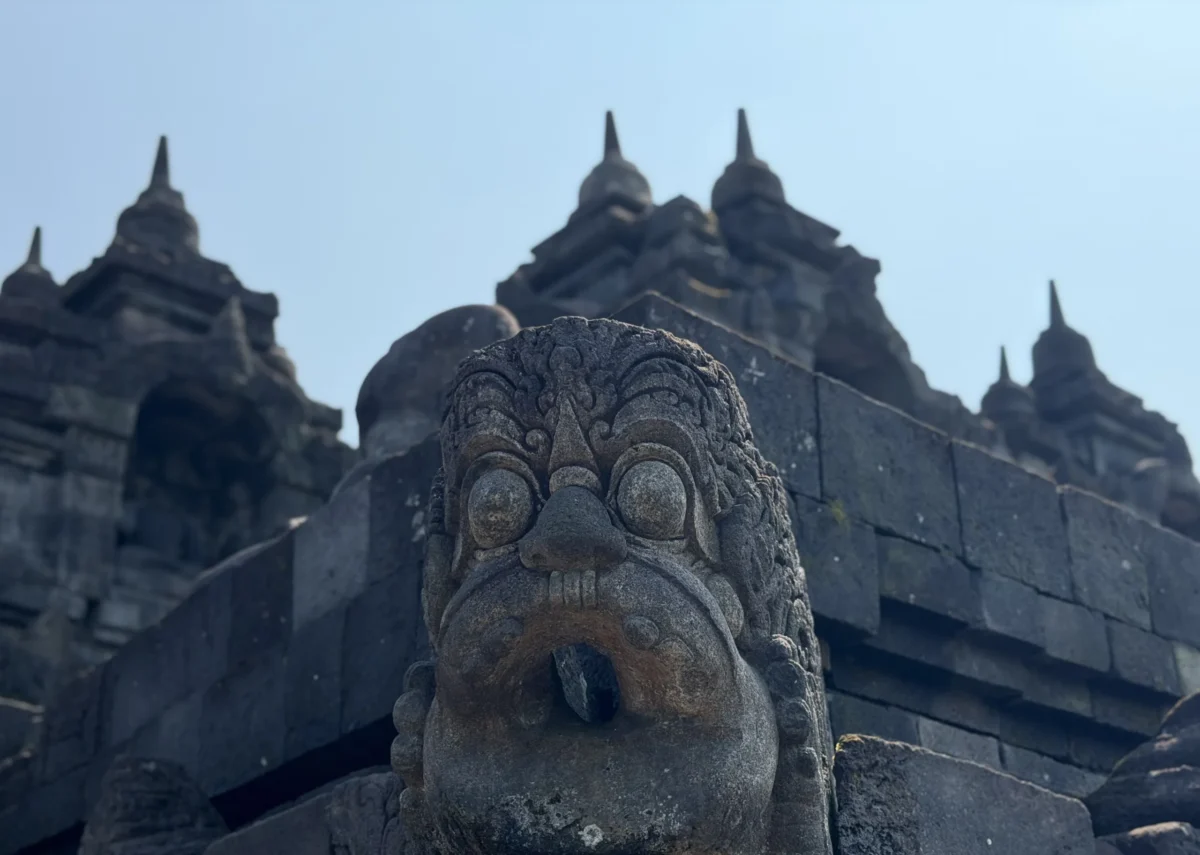
Enough words, the temple pictures..
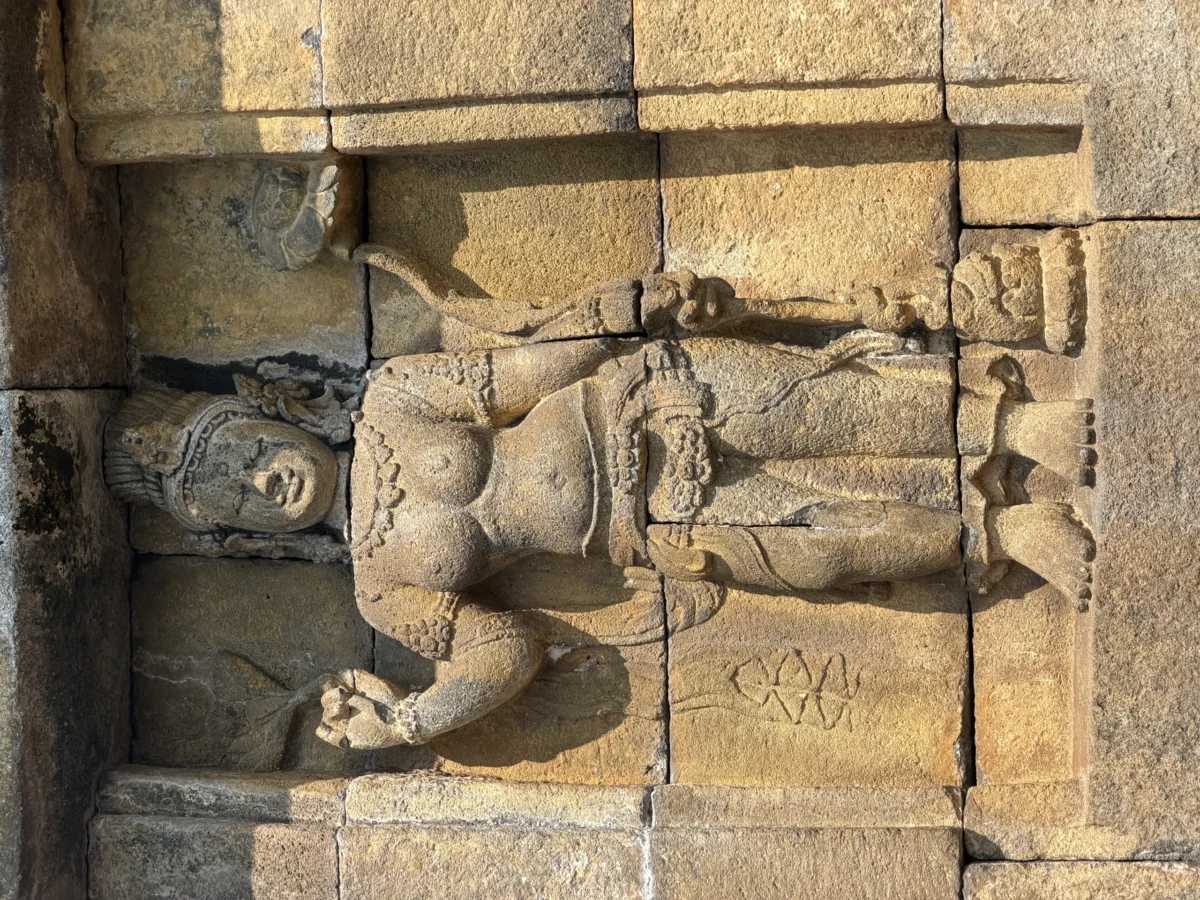
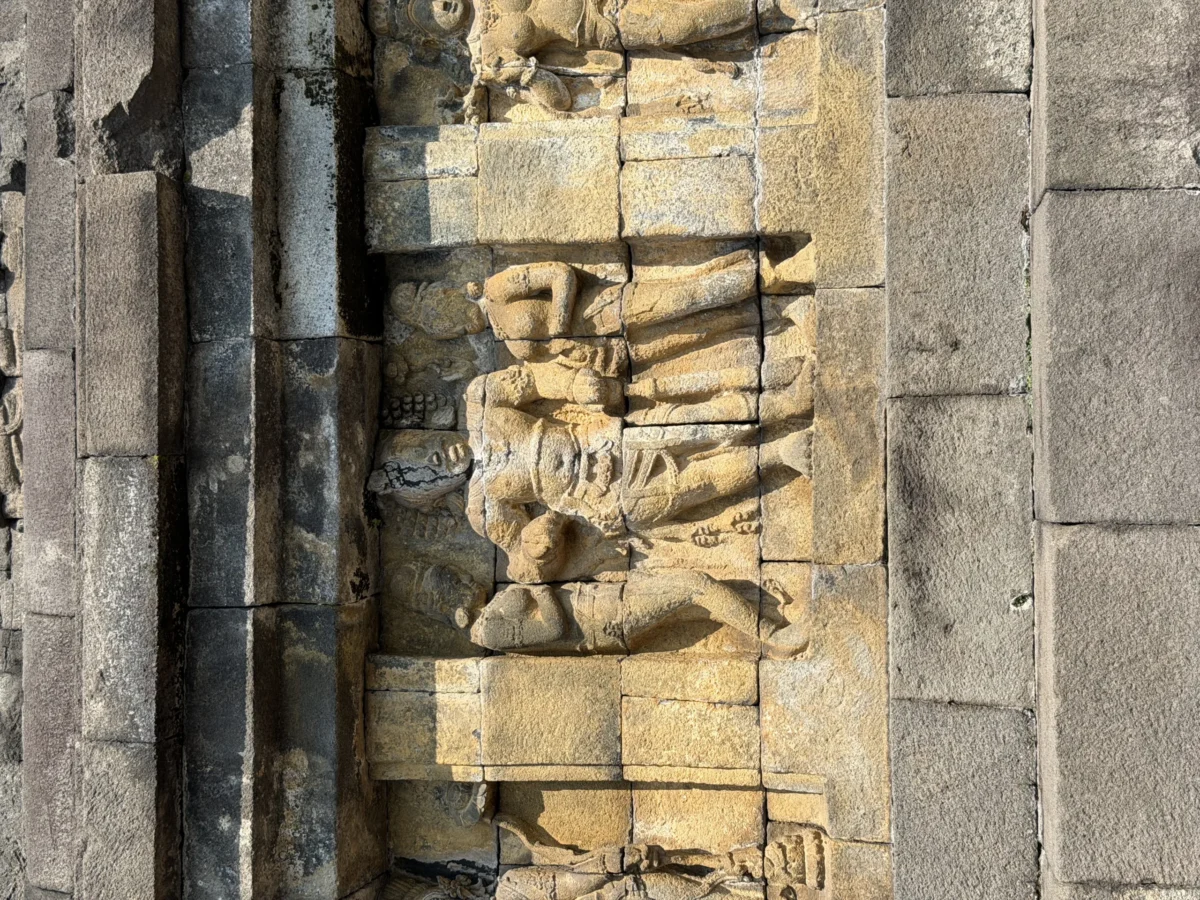
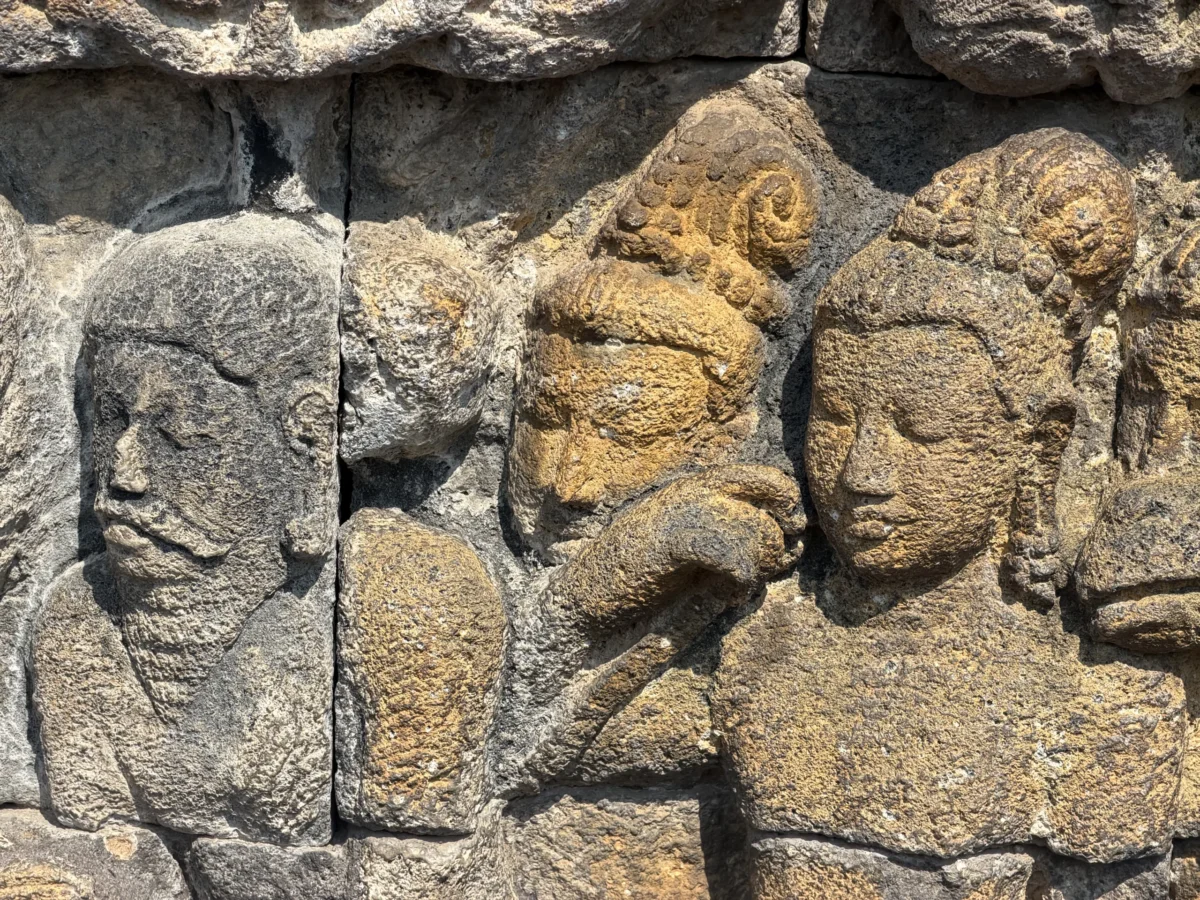
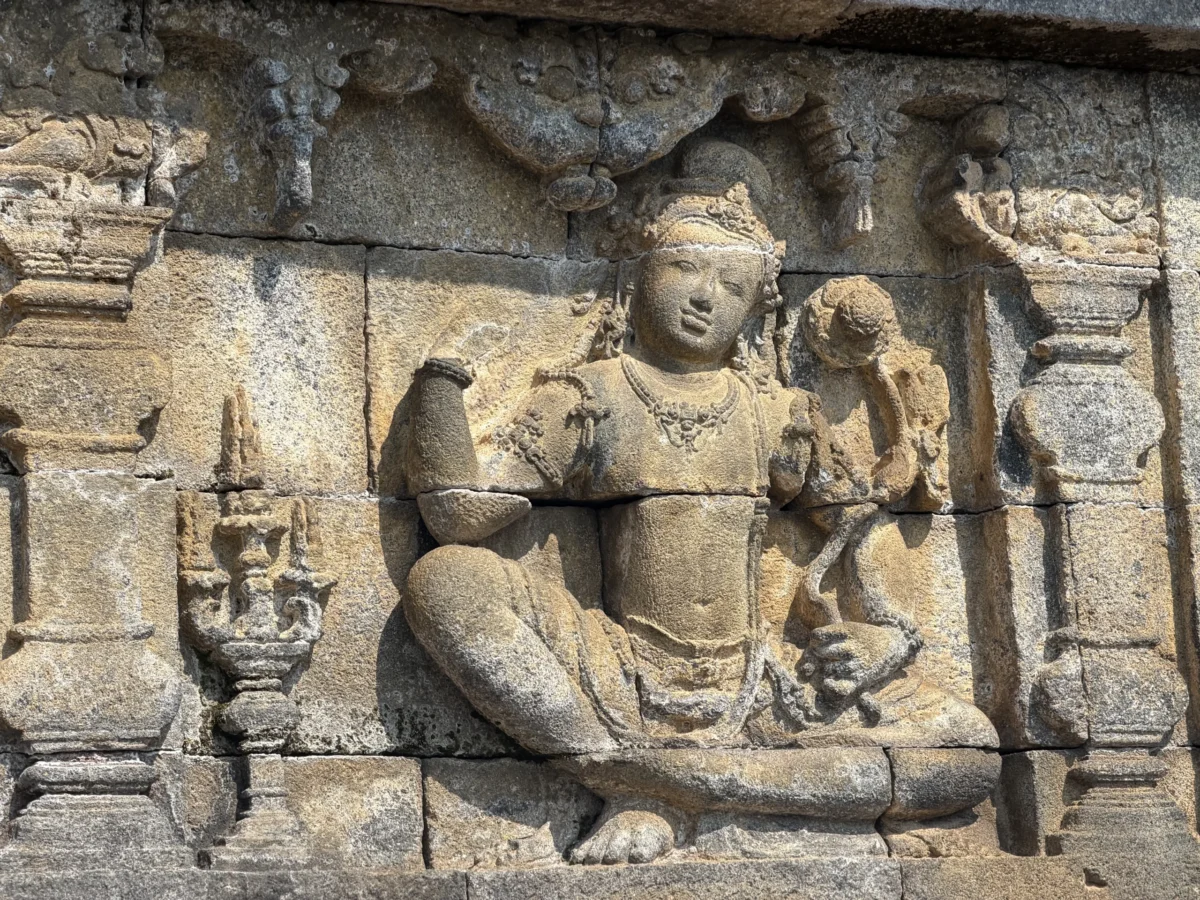
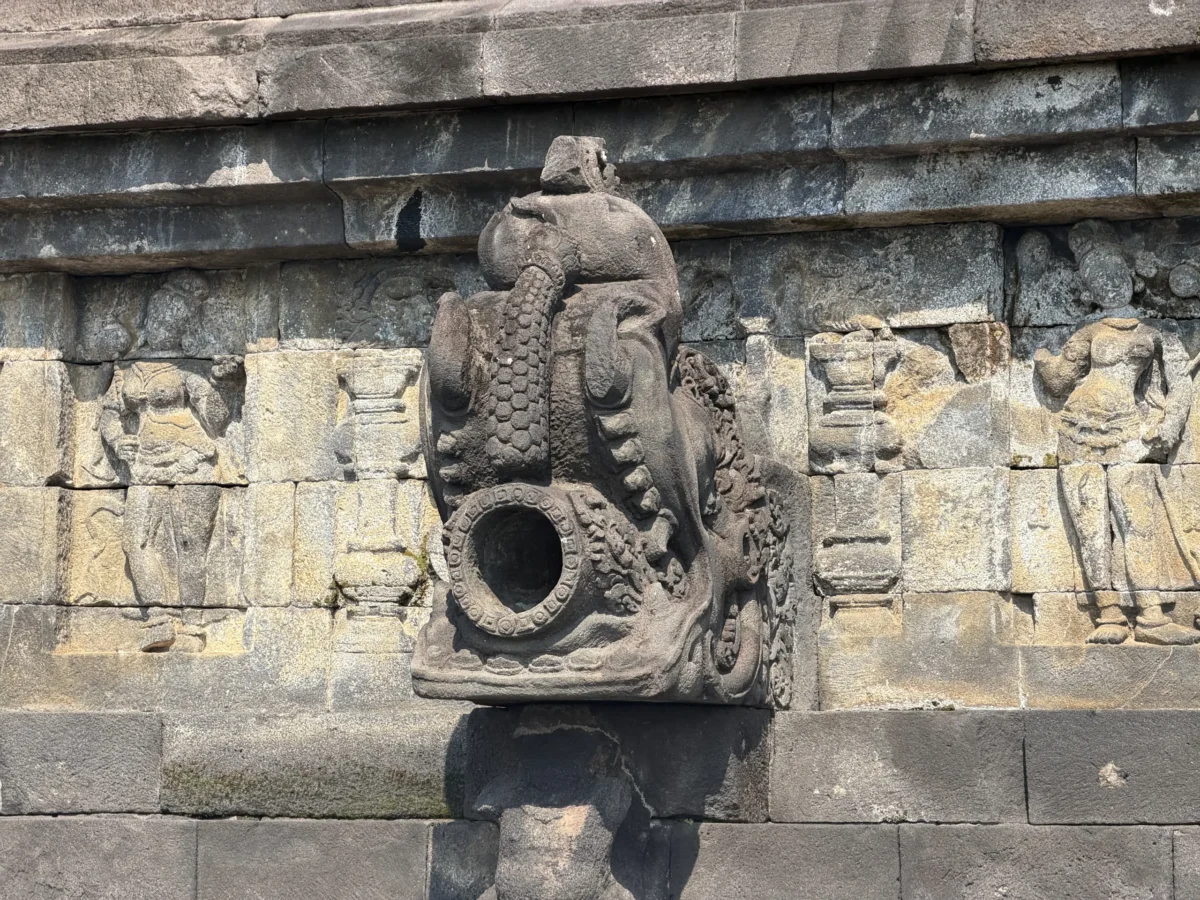
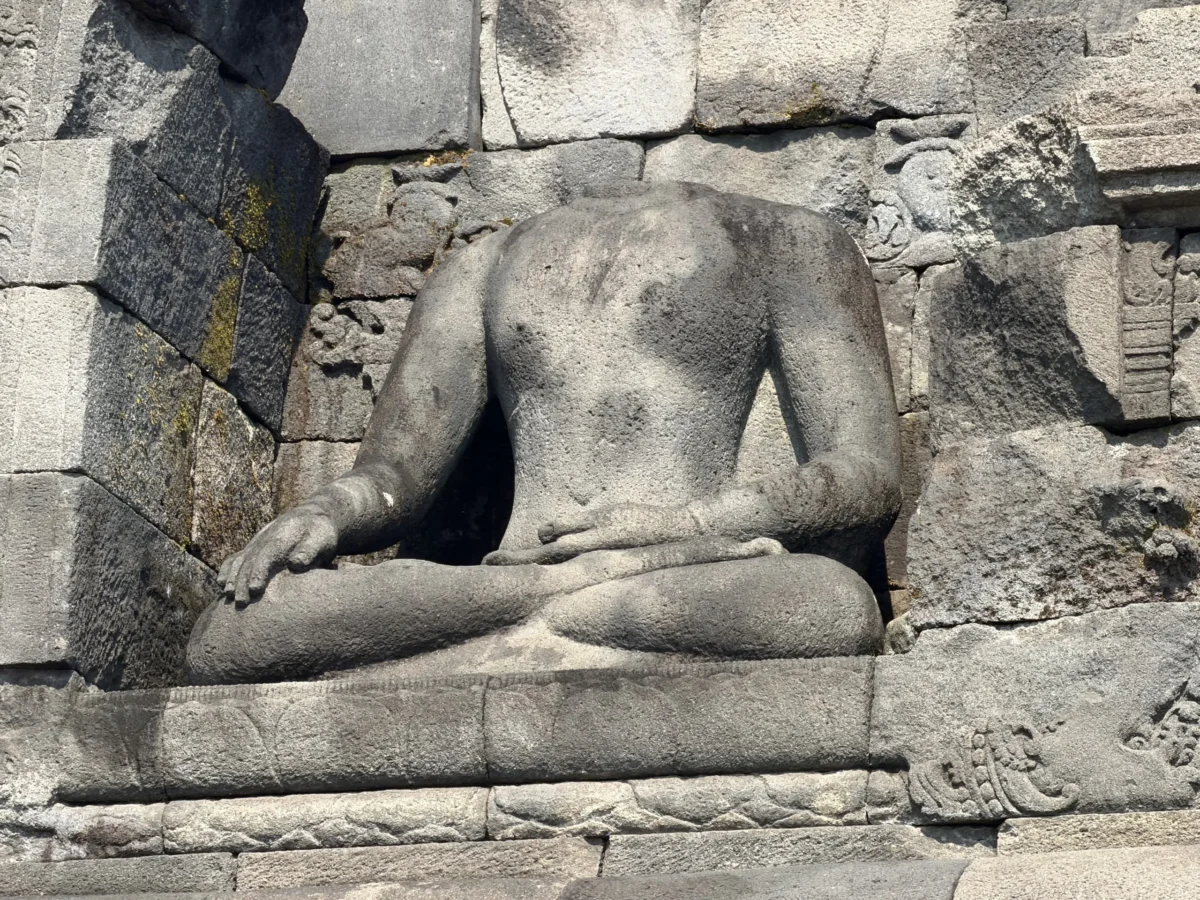
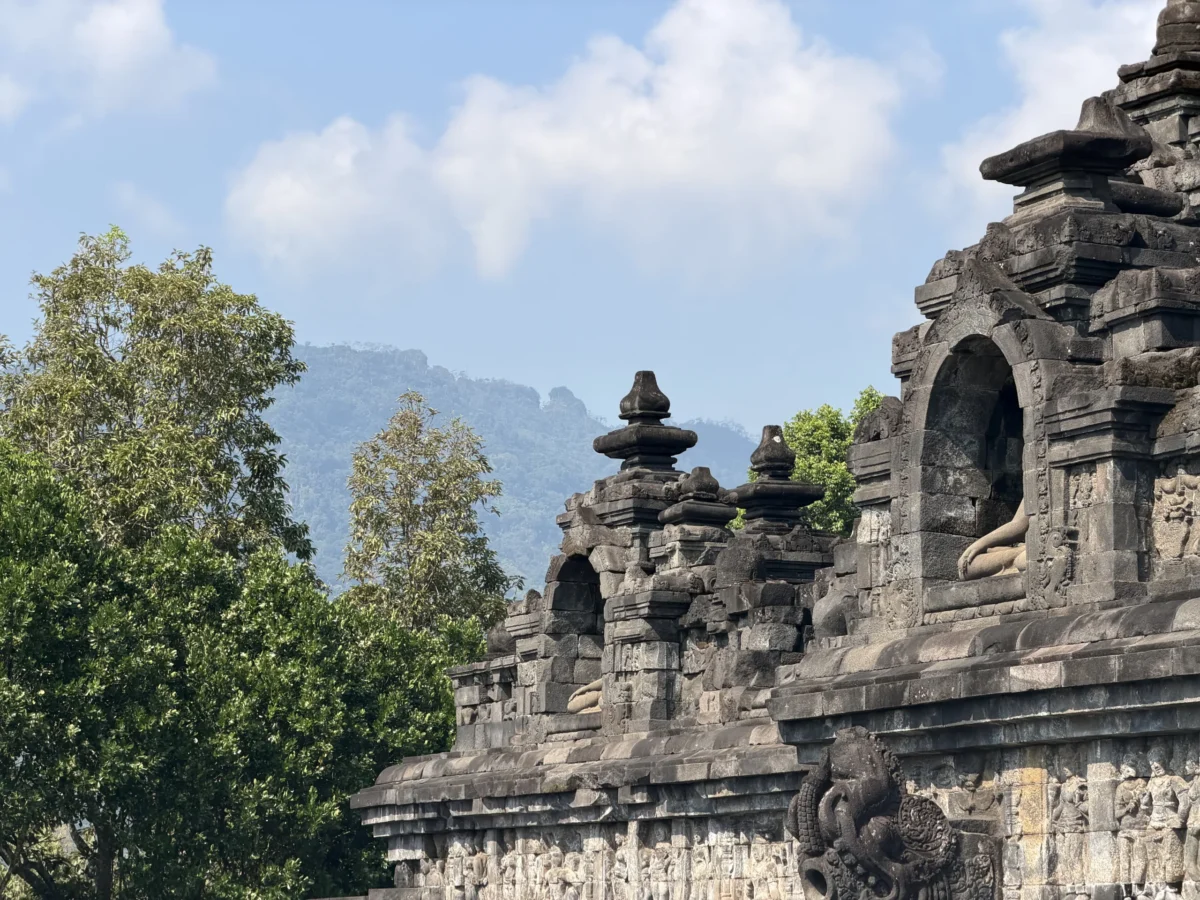
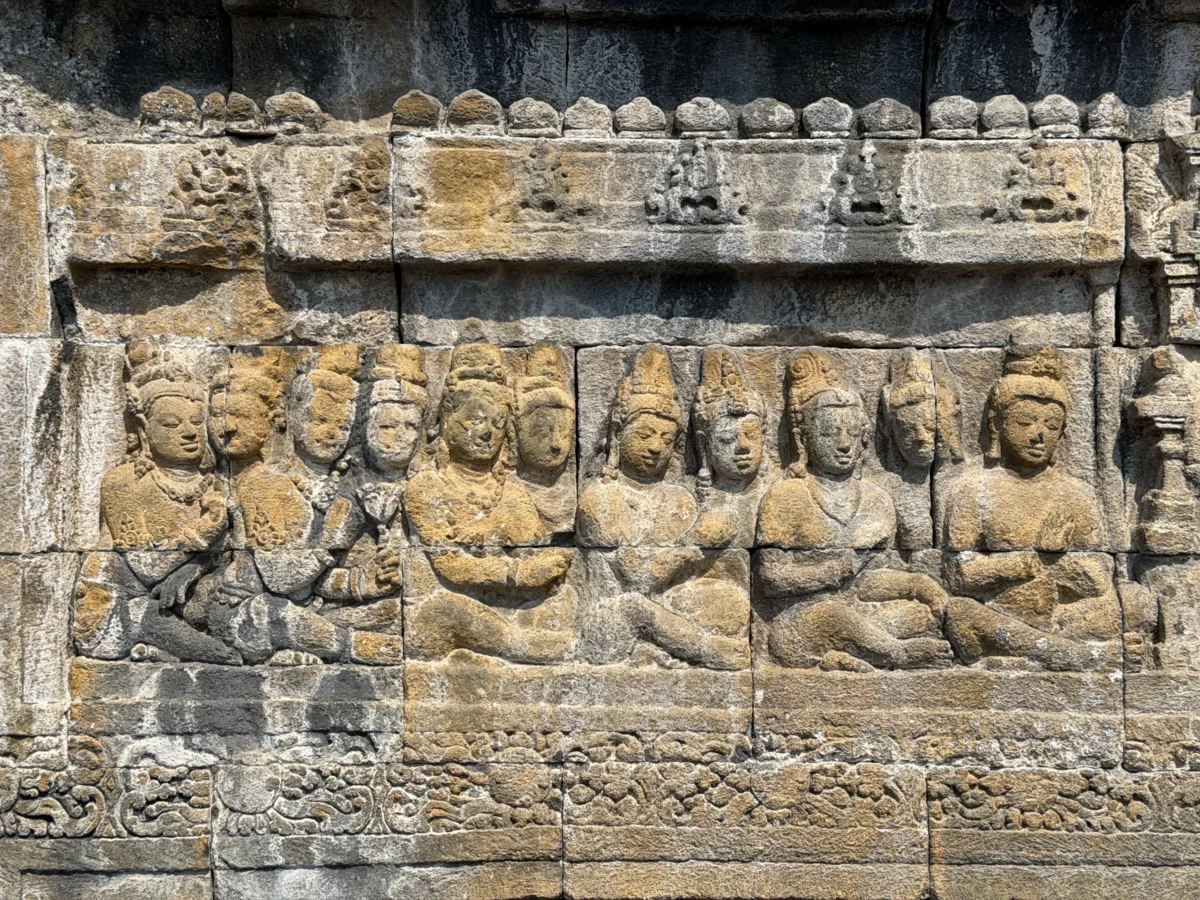
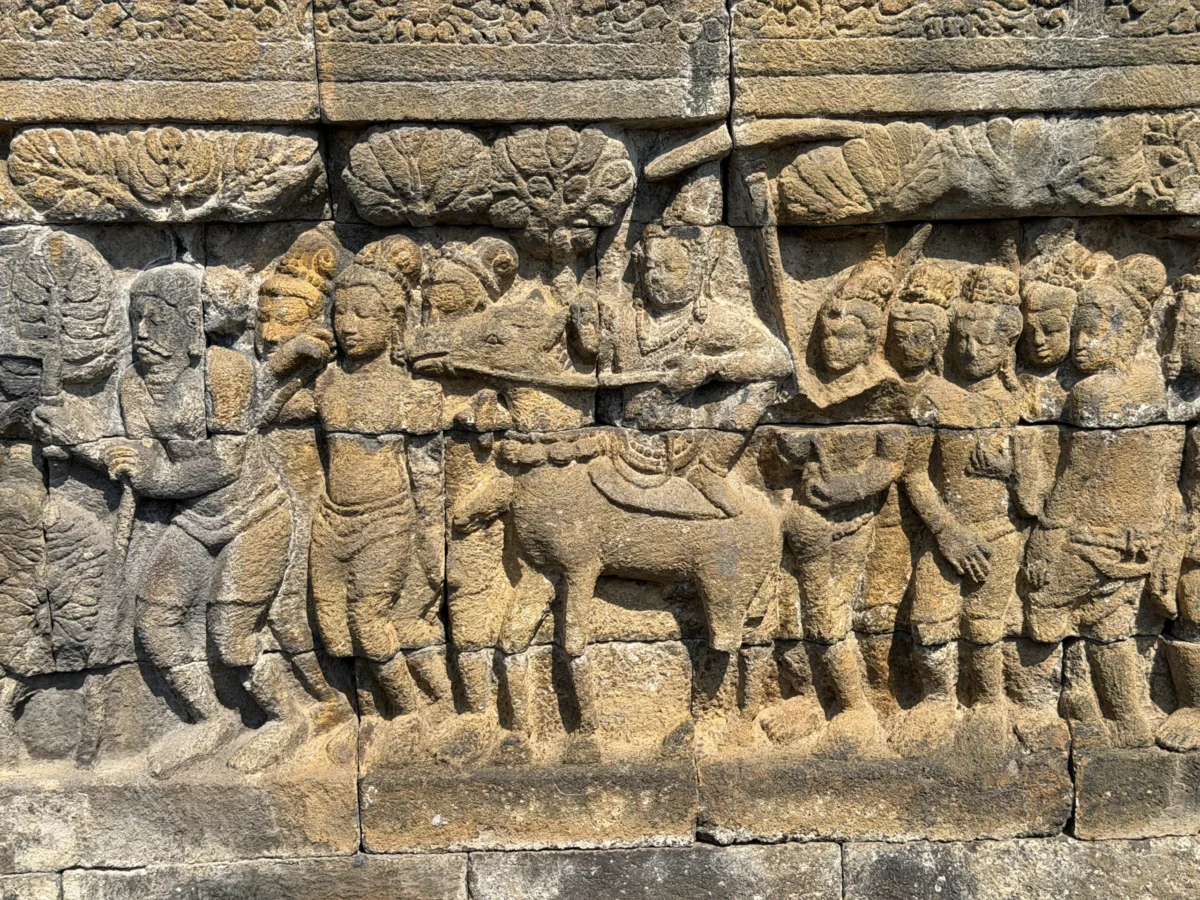
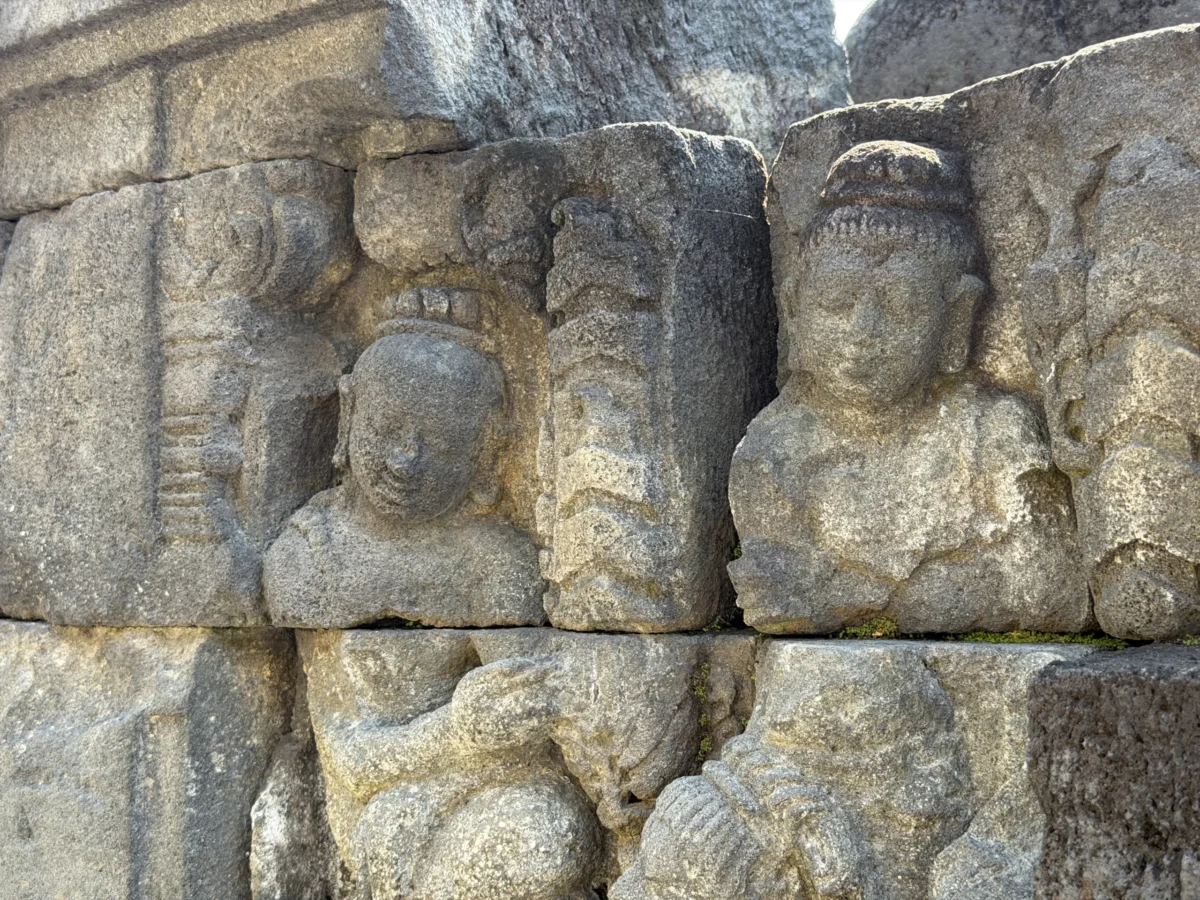
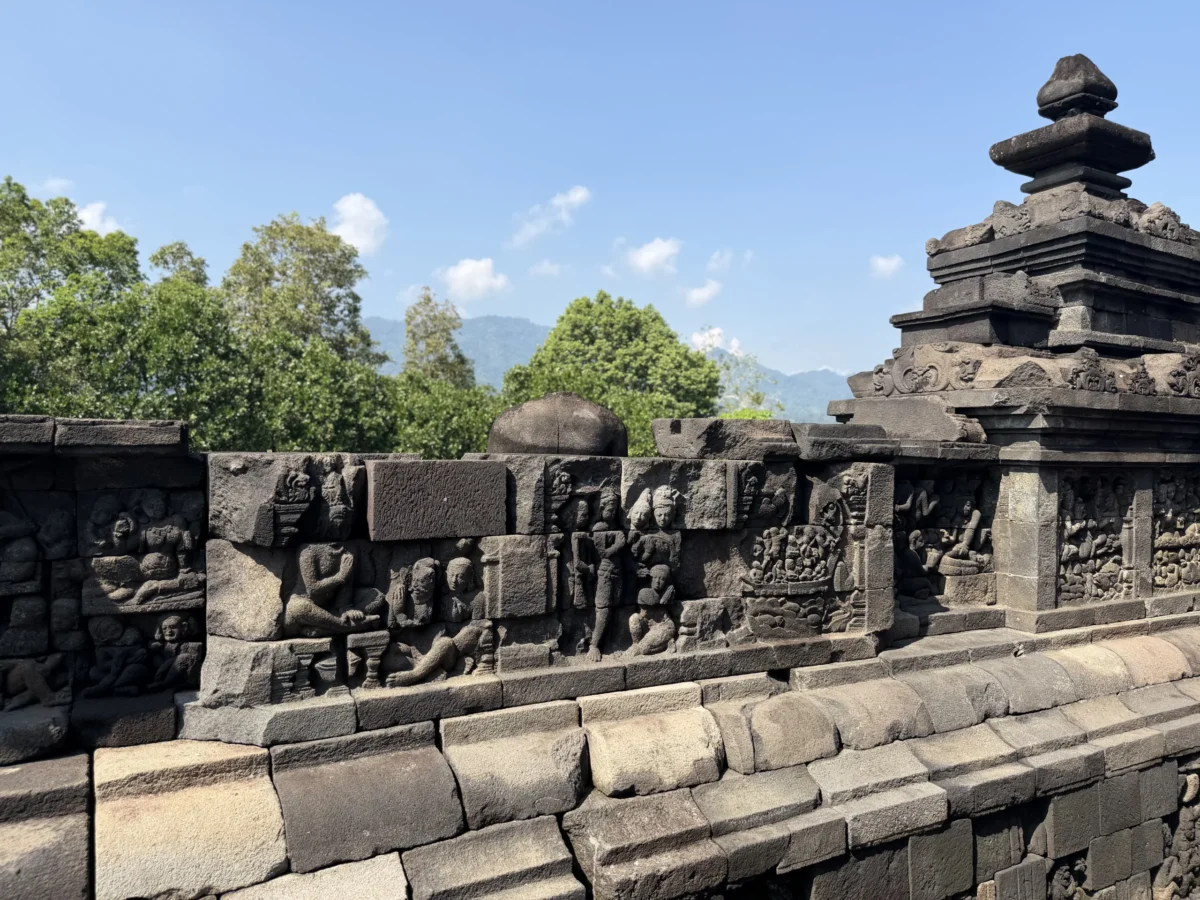
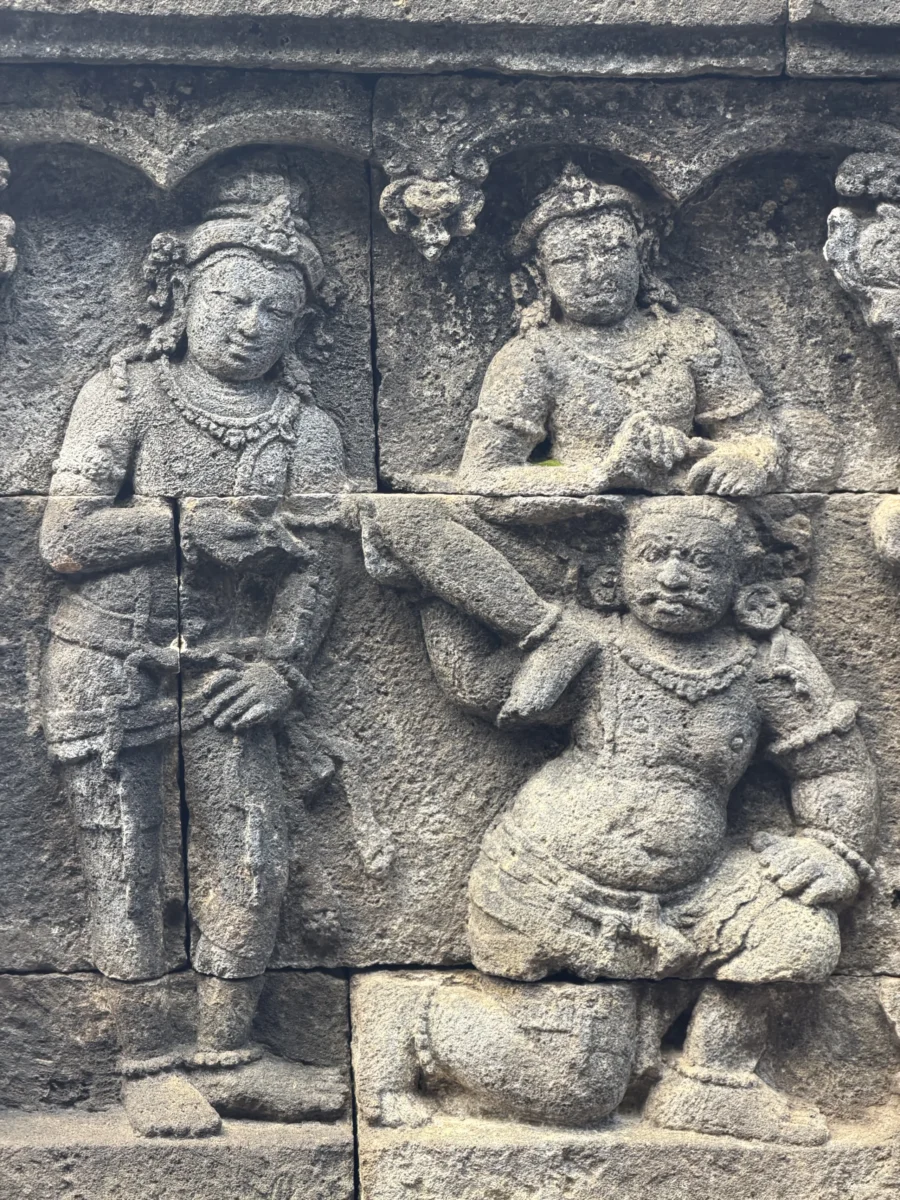
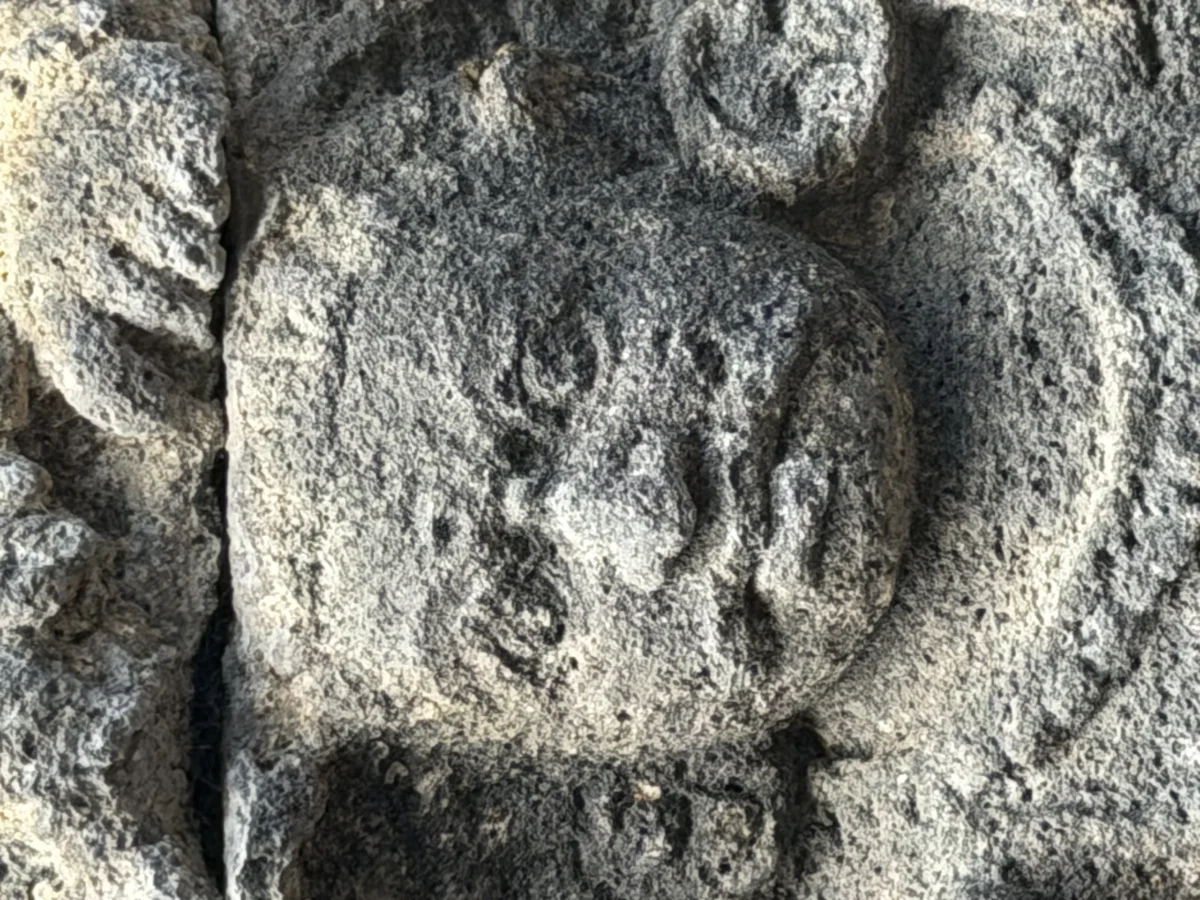
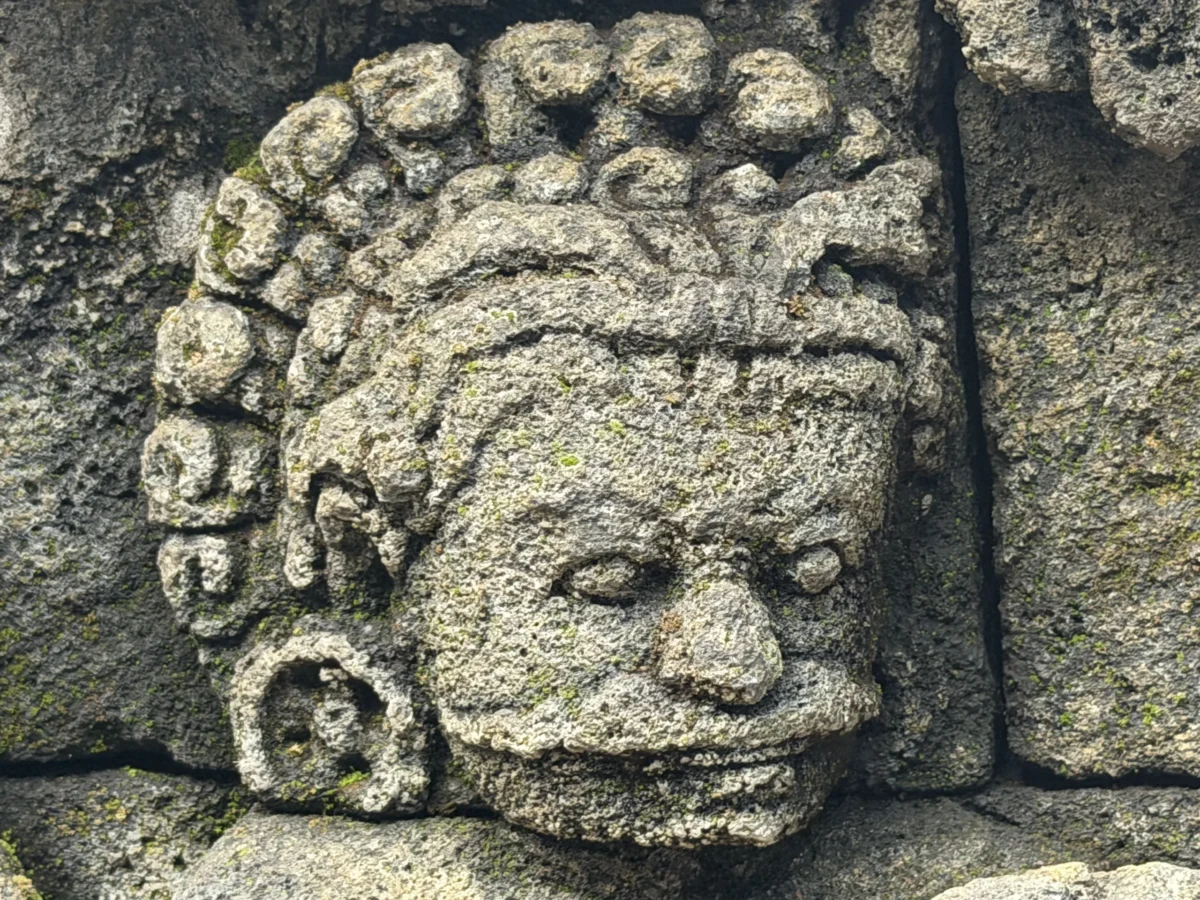
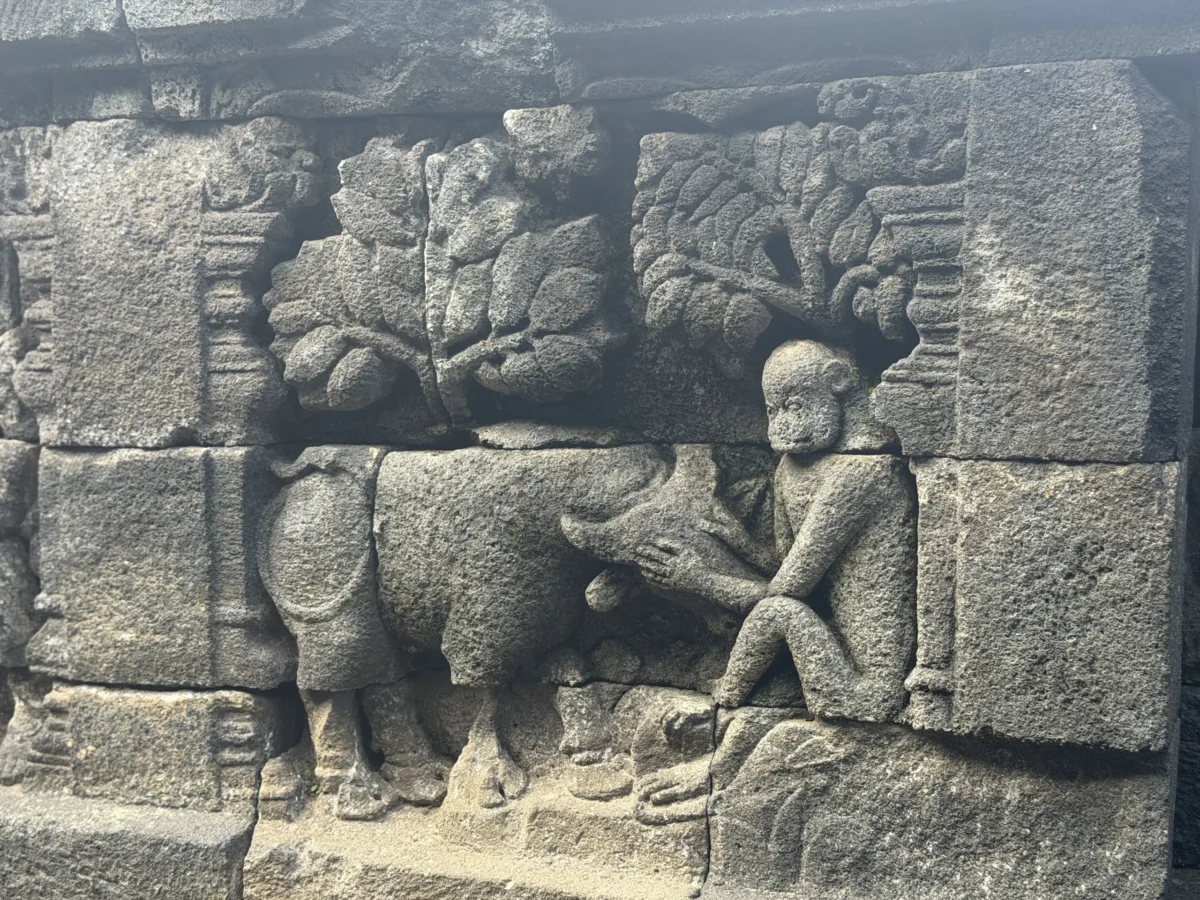
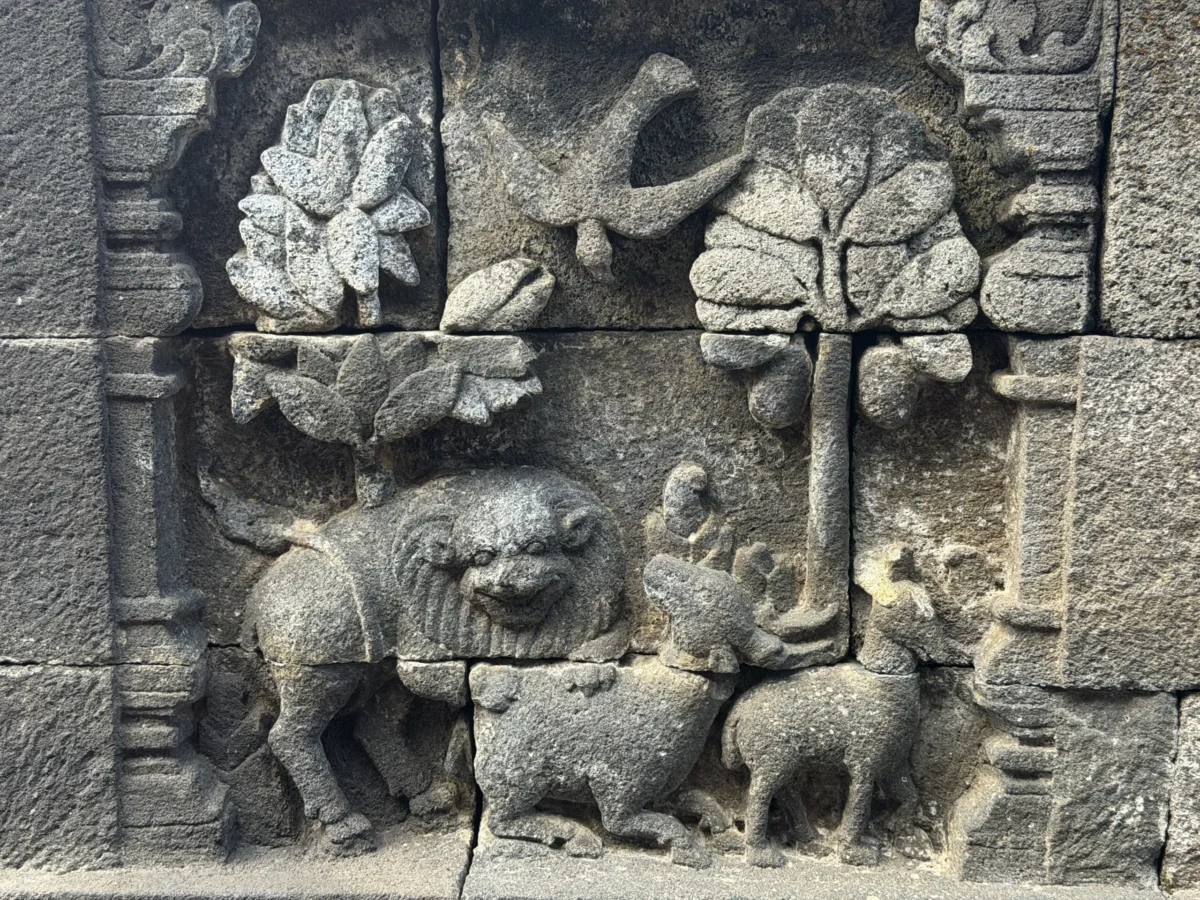
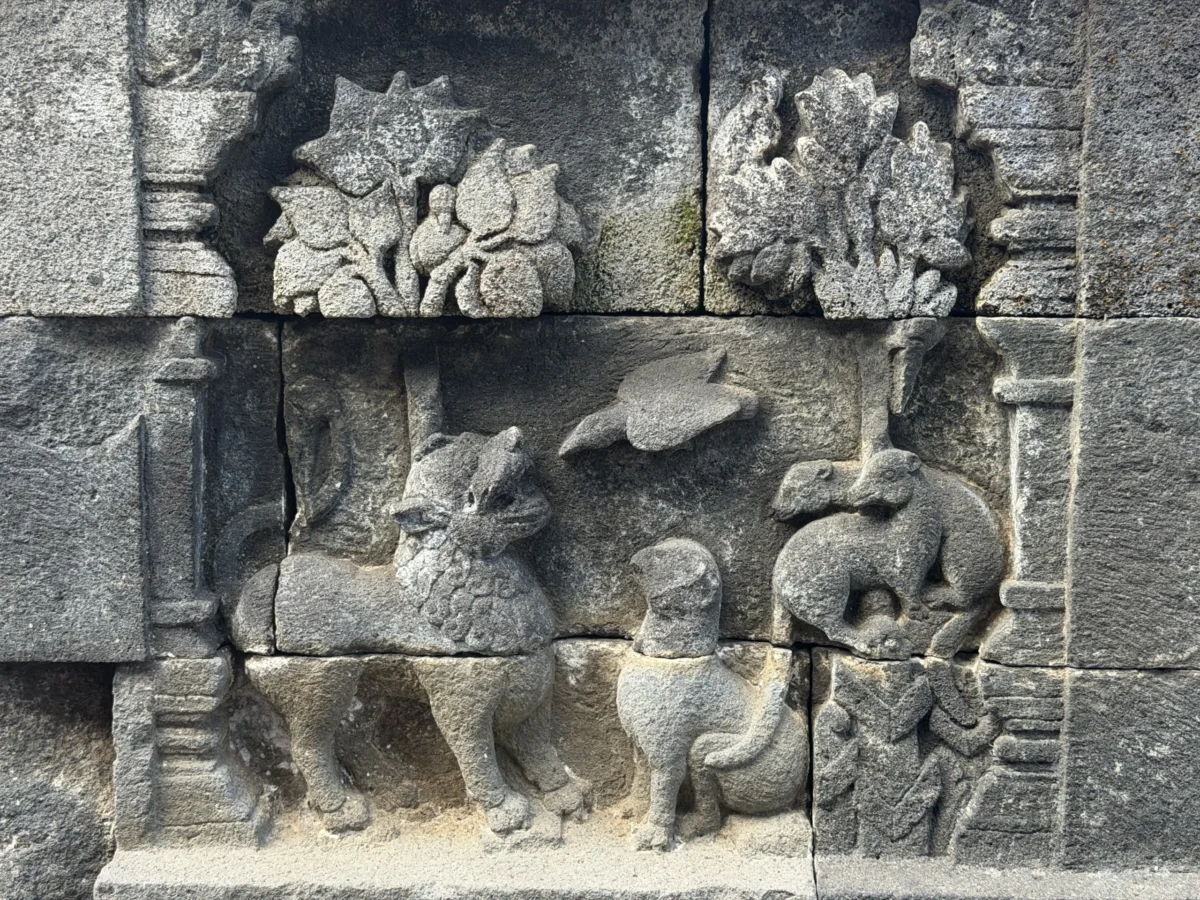
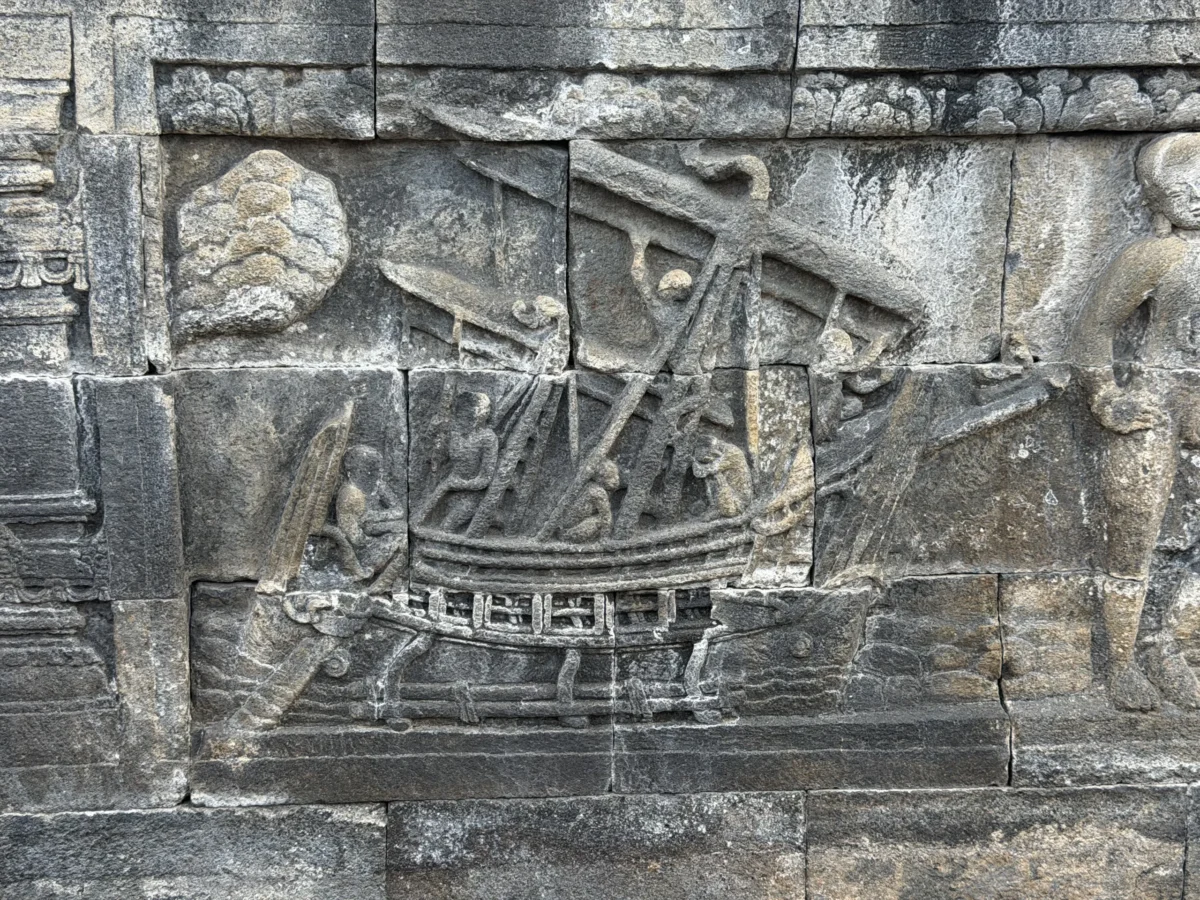
Disassembling everything during restoration must have been a nightmare.. and reassembling it must have been far worse! I’m curious how it looked when it was very first built, but even today the scenes are elaborate and engaging. Every face and posture is unique.
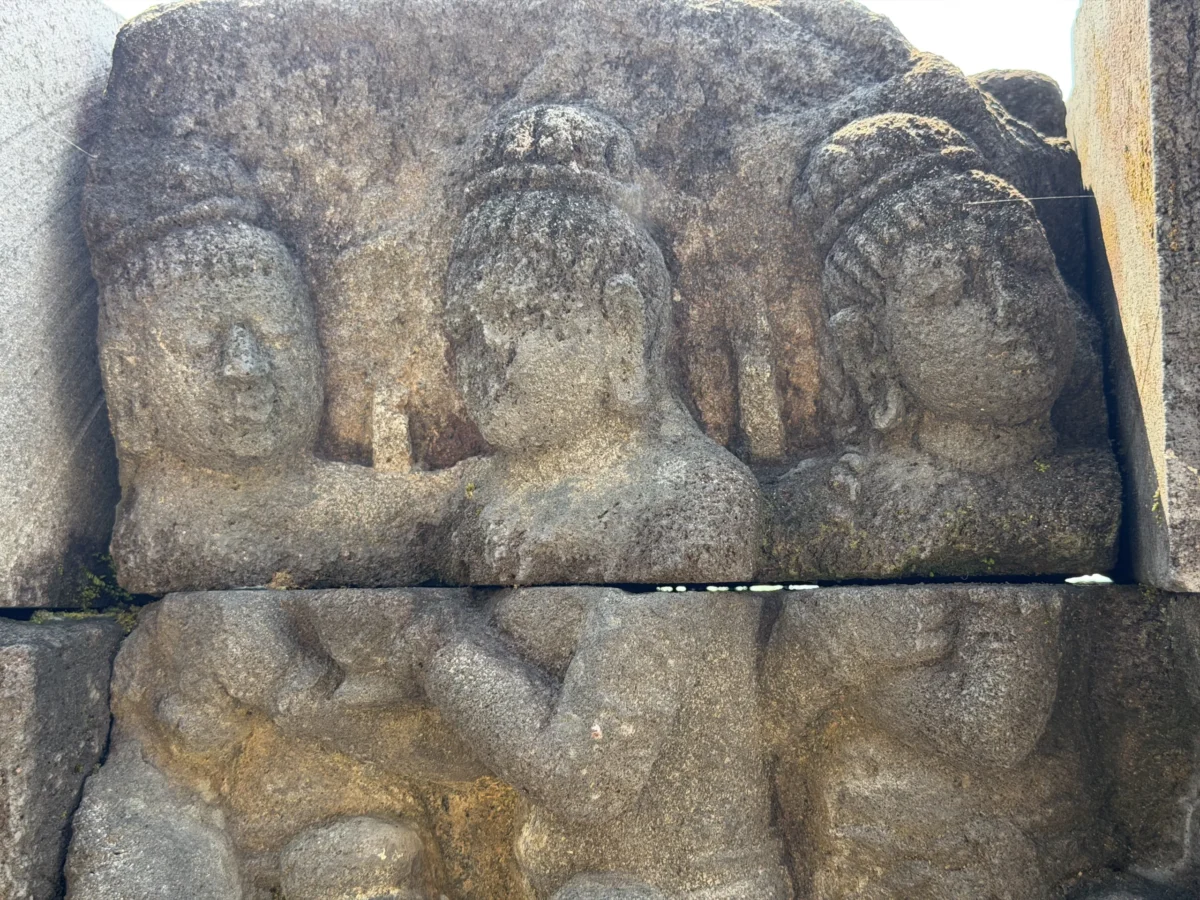
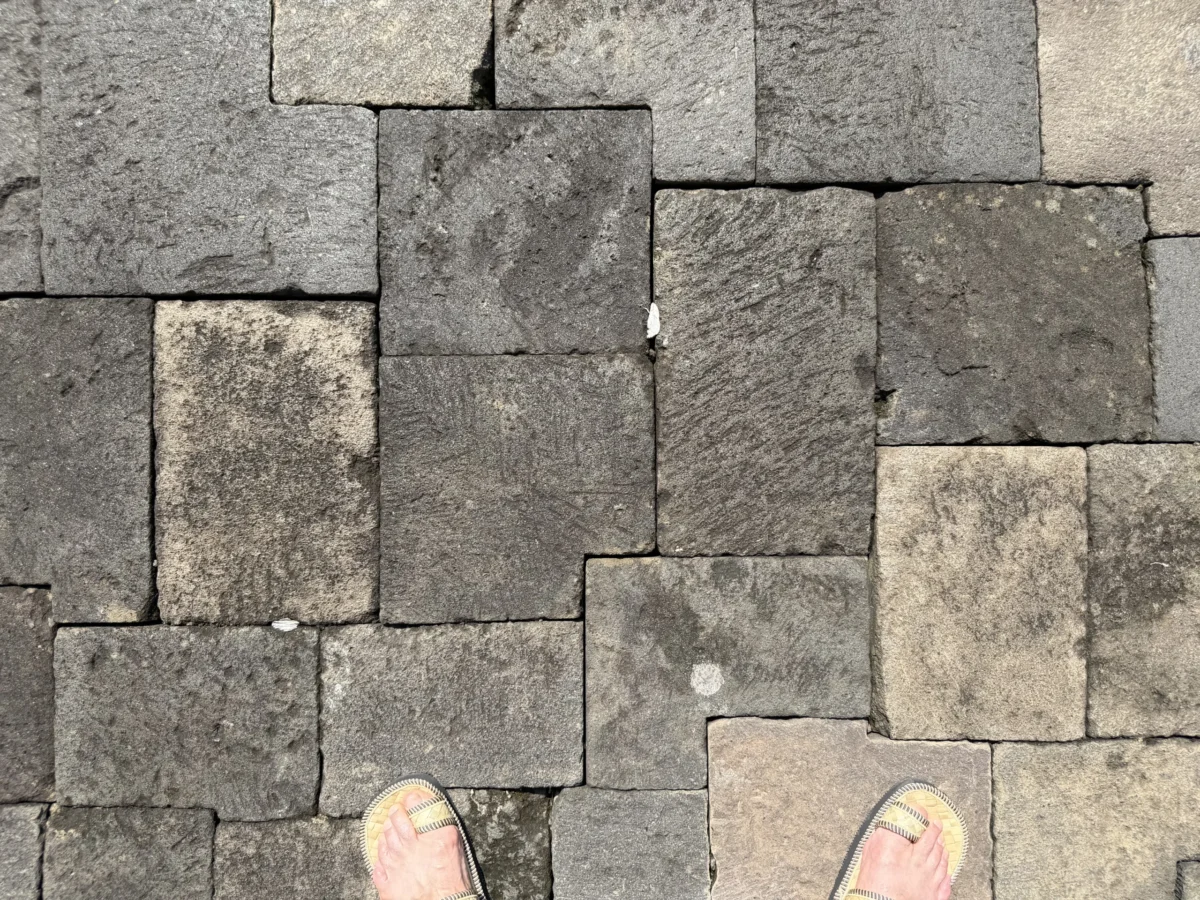
Even the floor is a puzzle, and no mortar.
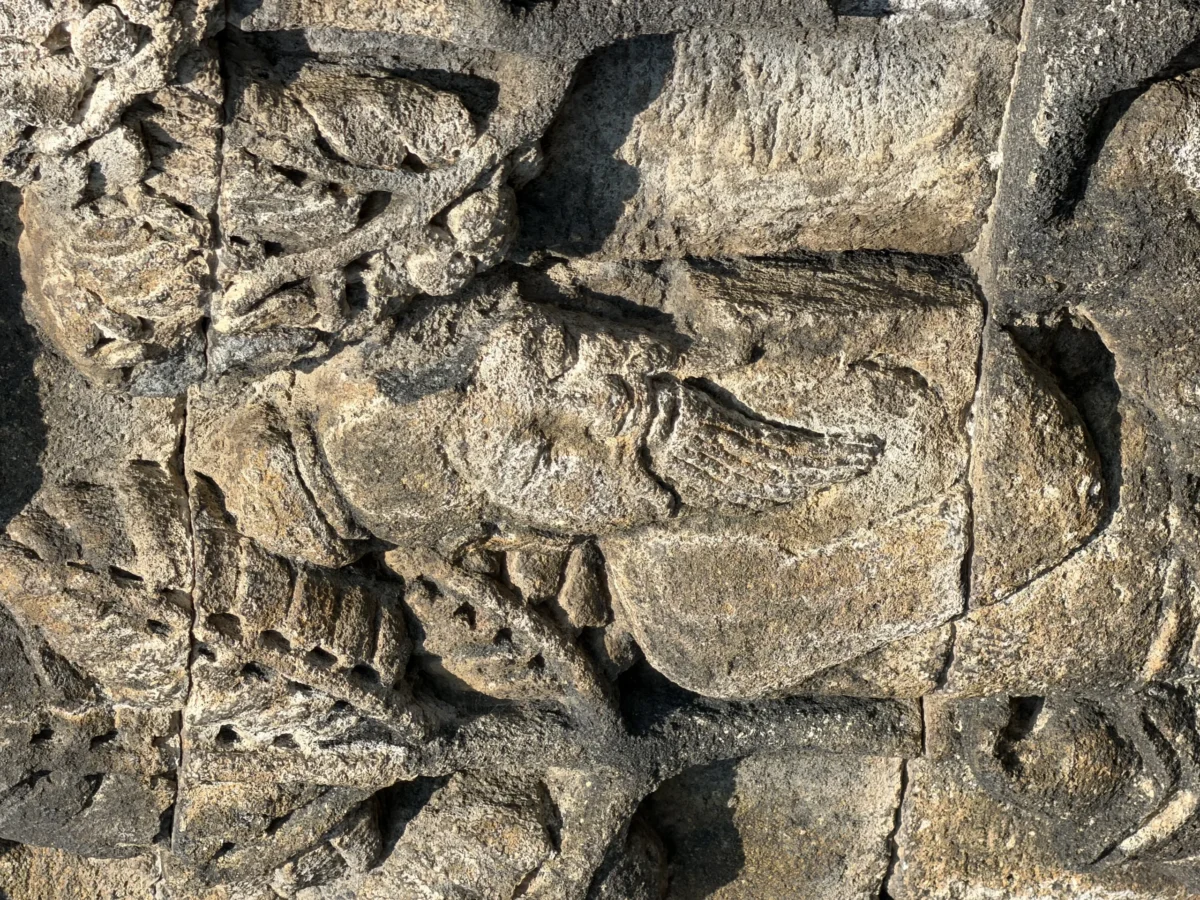
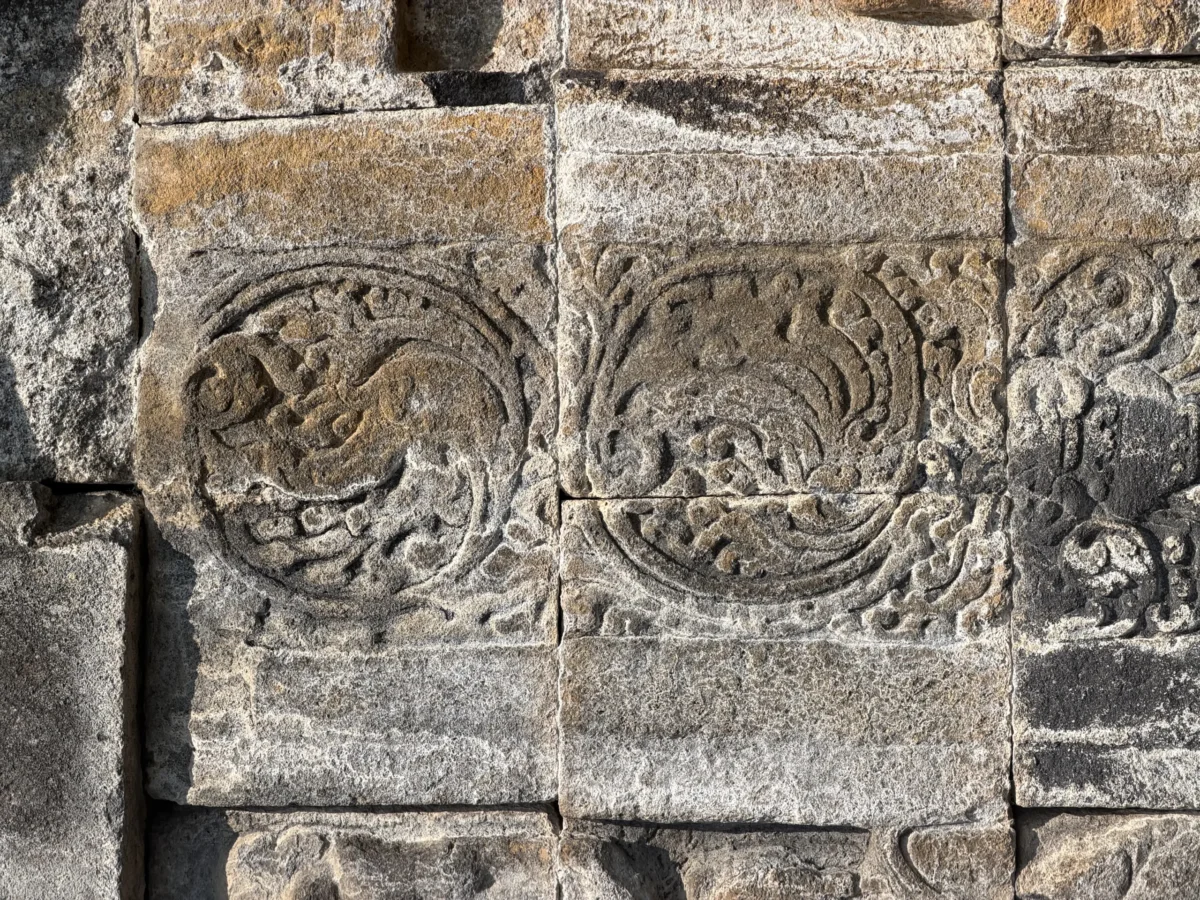
One thing that stands out is all the different types of animals that appear in the reliefs. Experts estimate that there are over 80 types of flora and fauna on display!
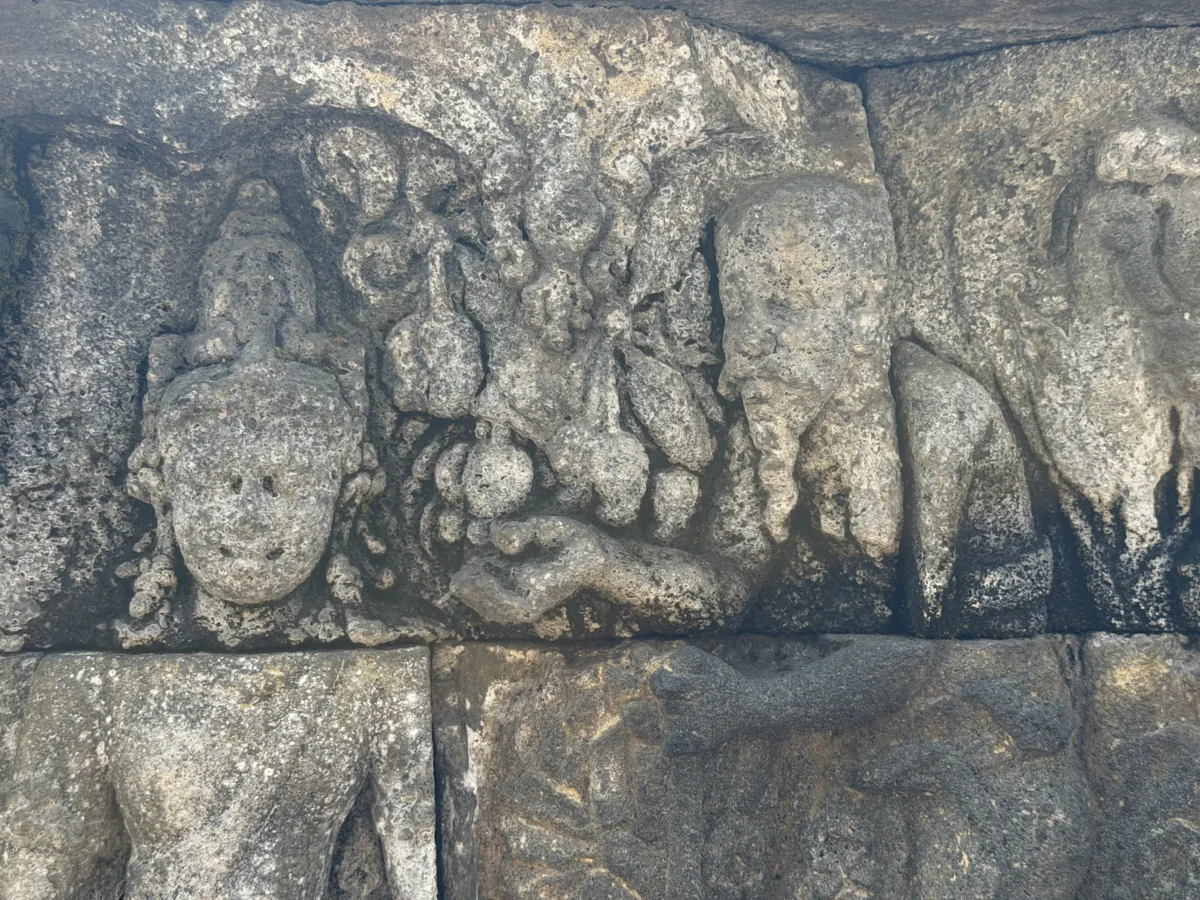
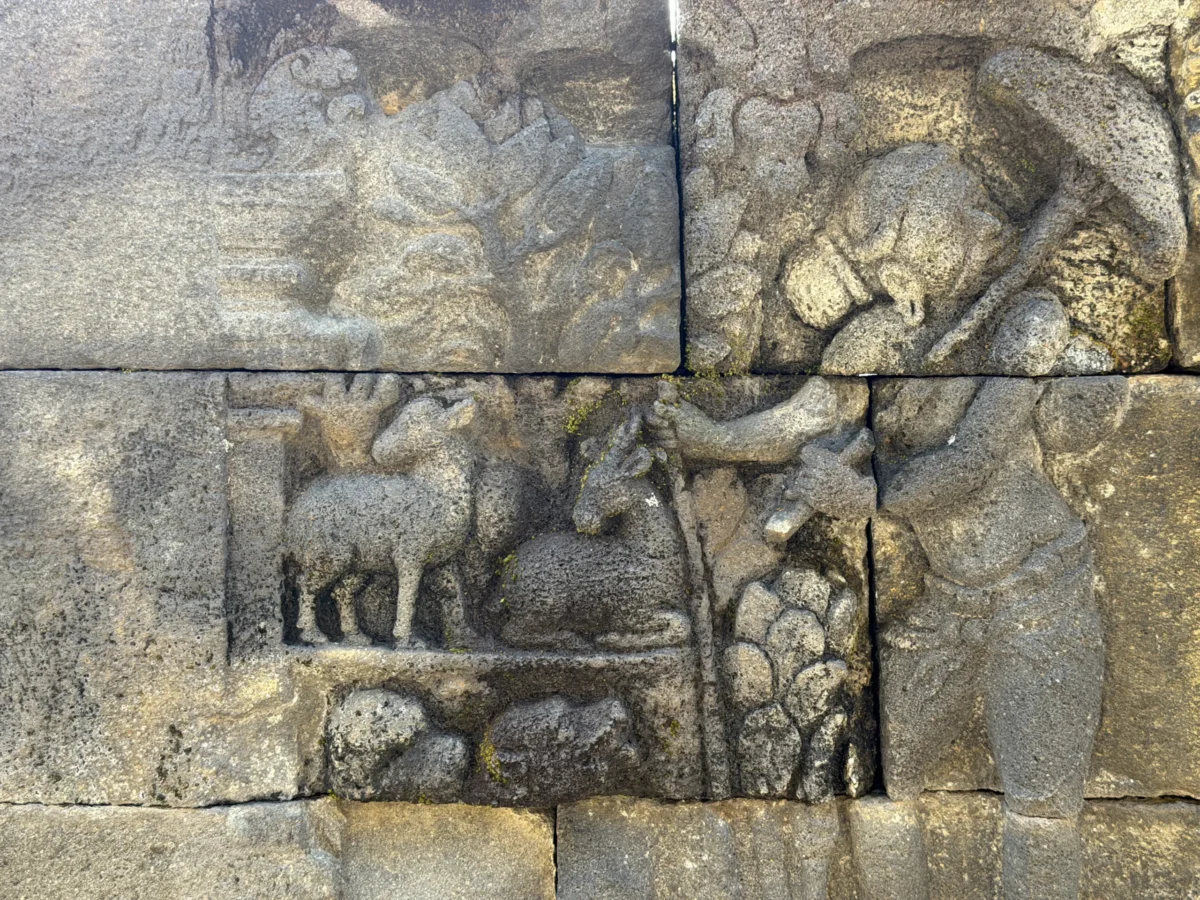
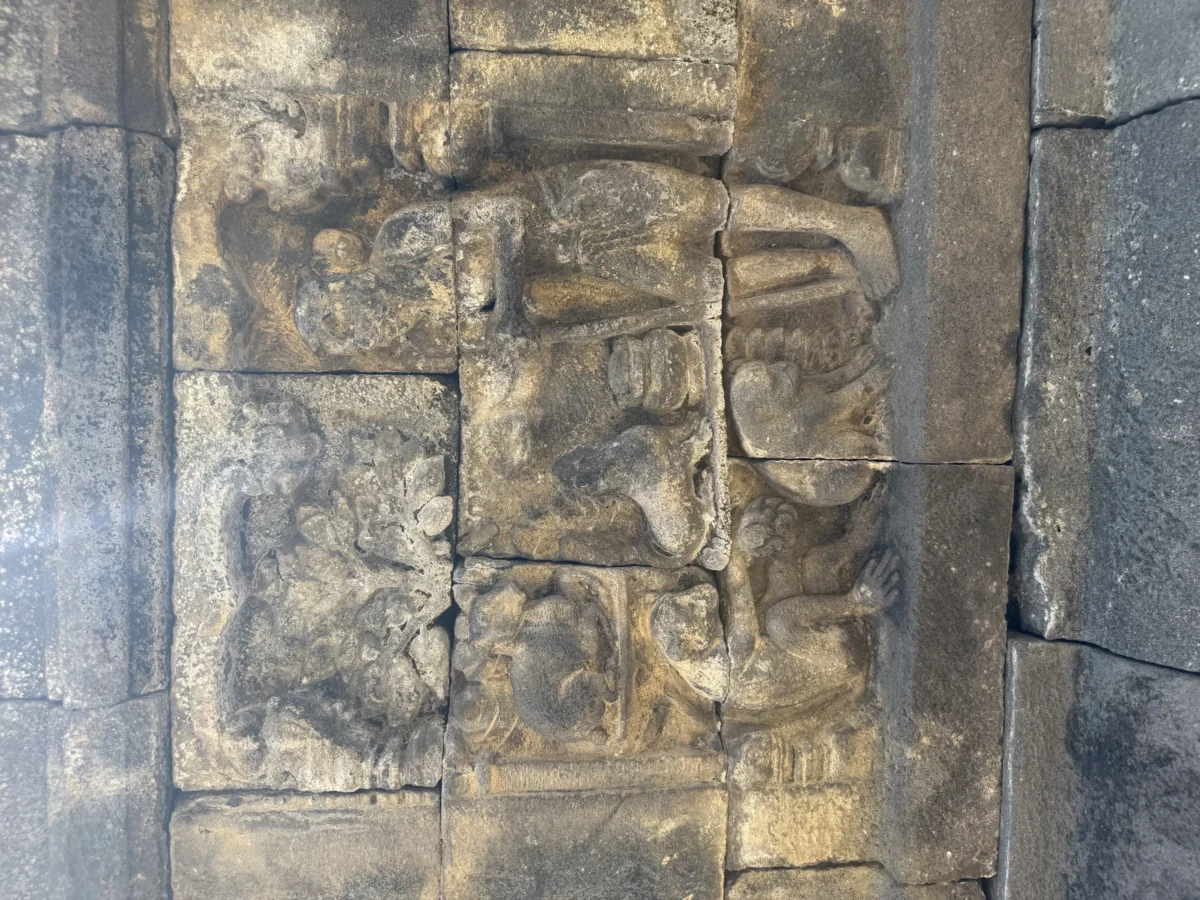
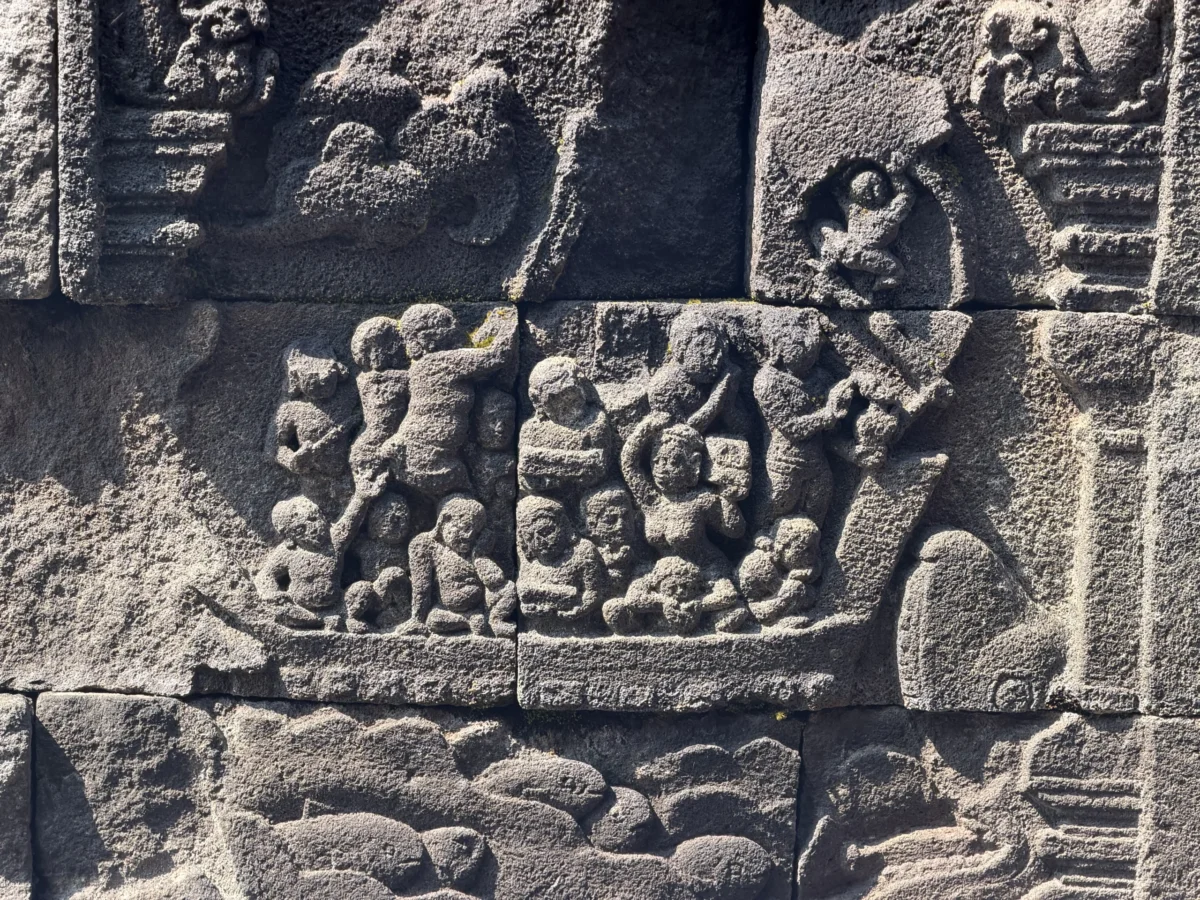
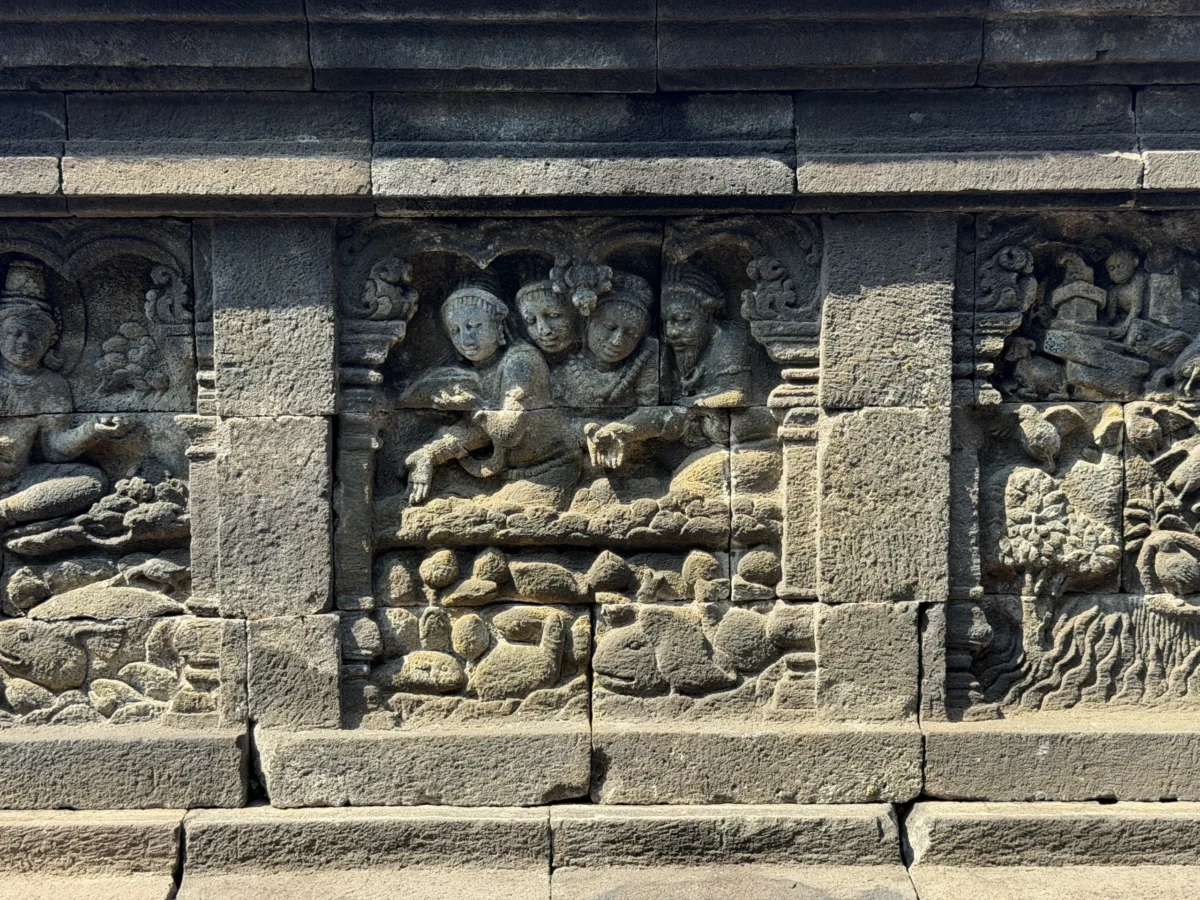
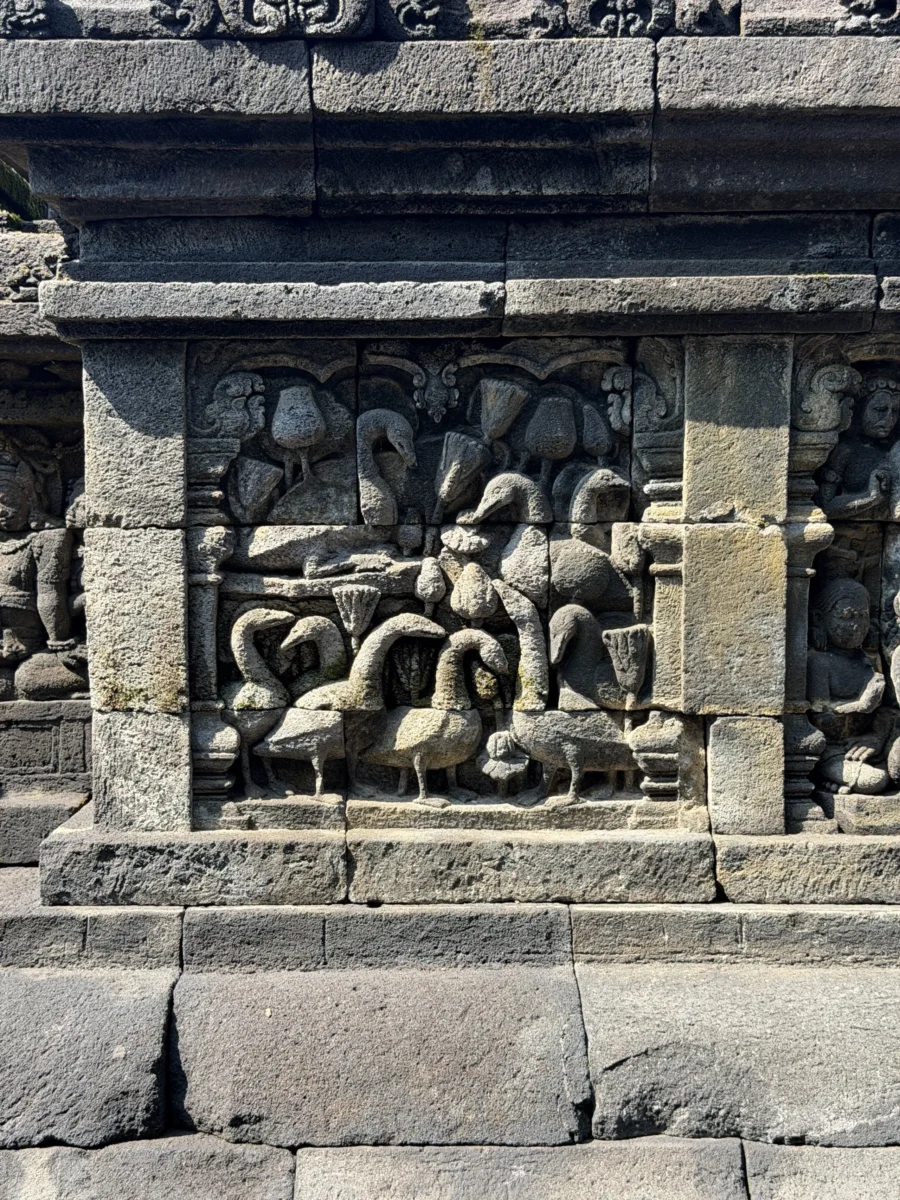
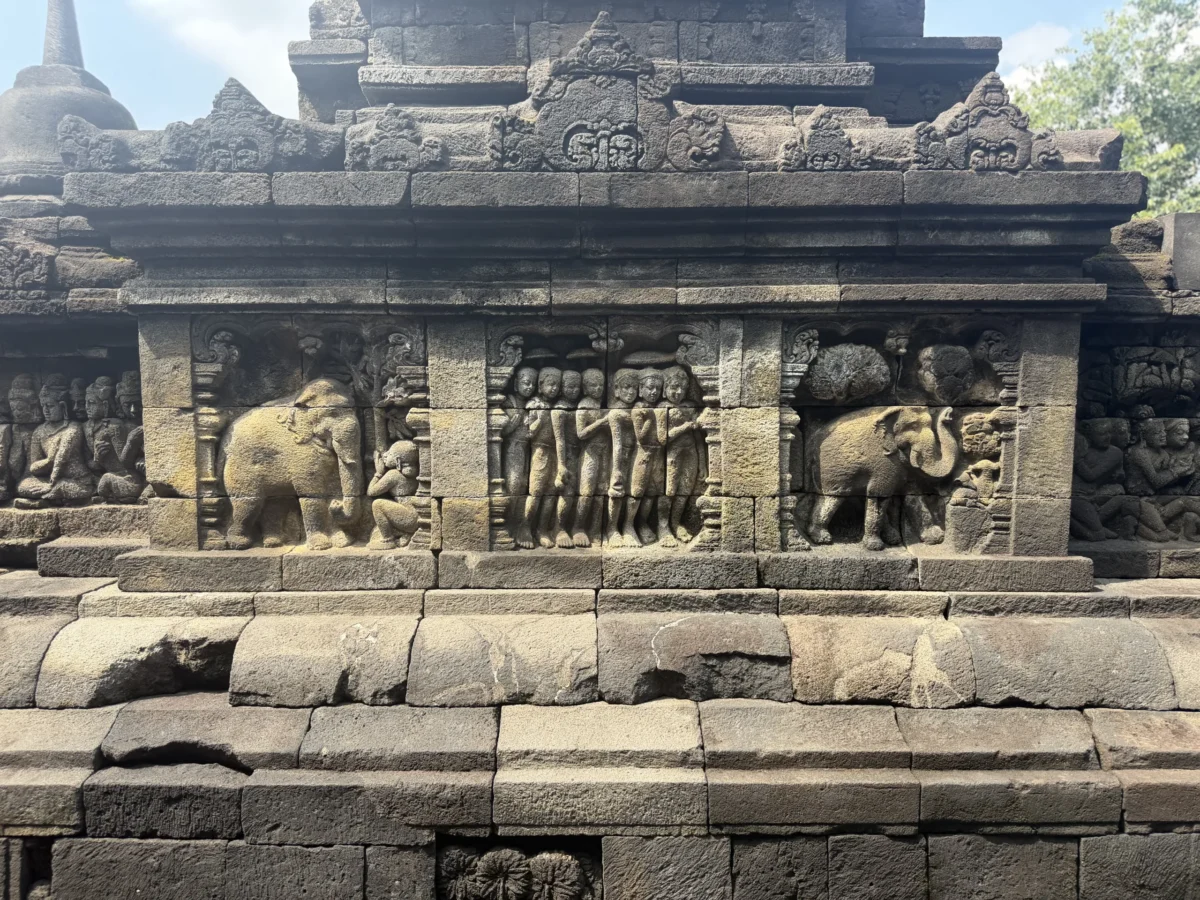
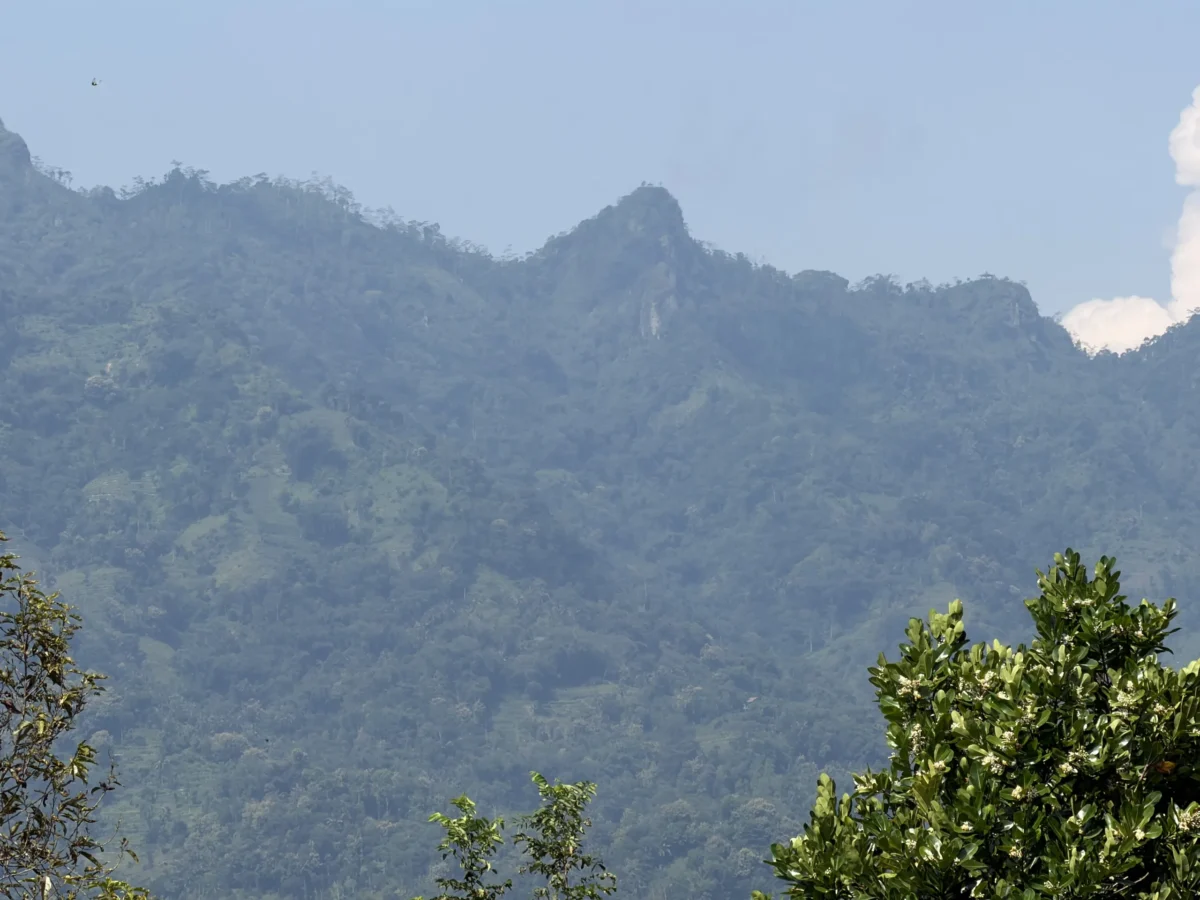
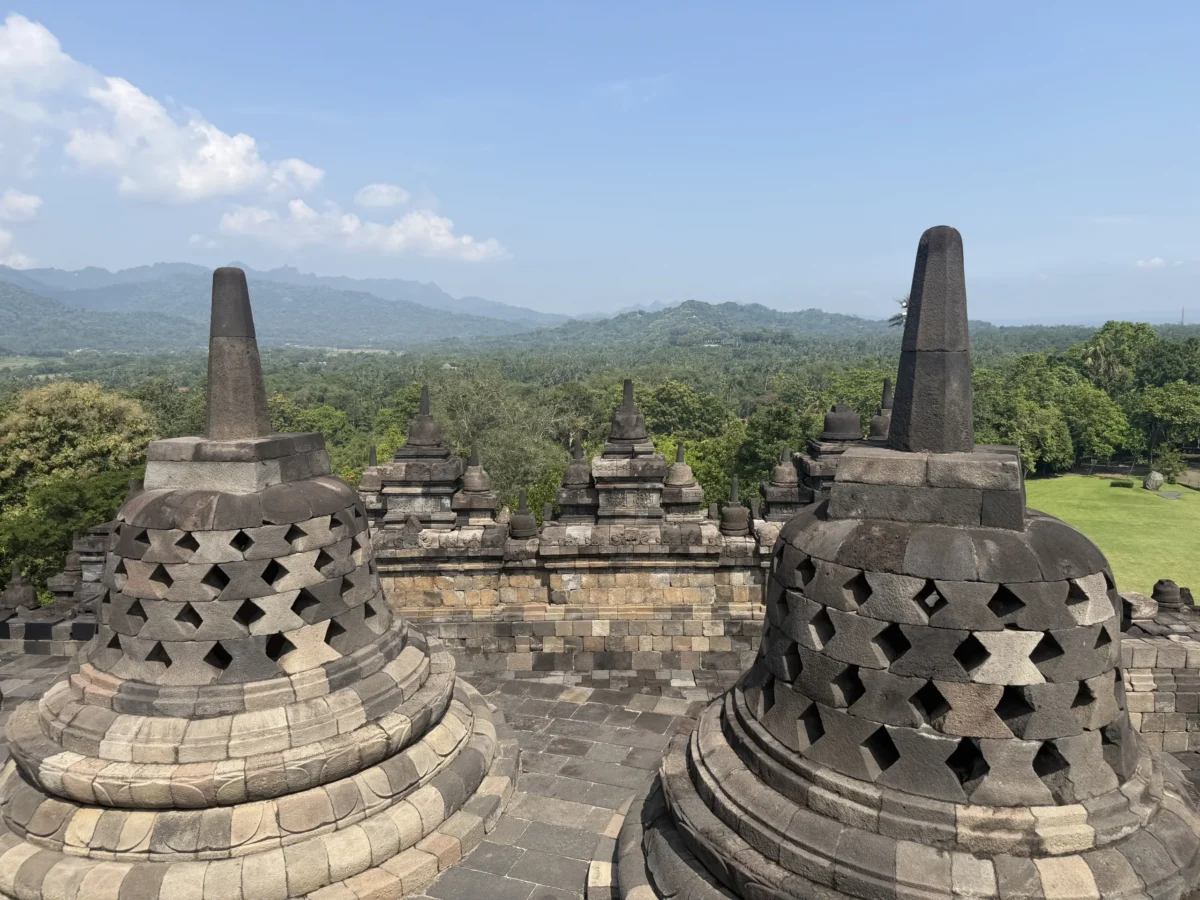
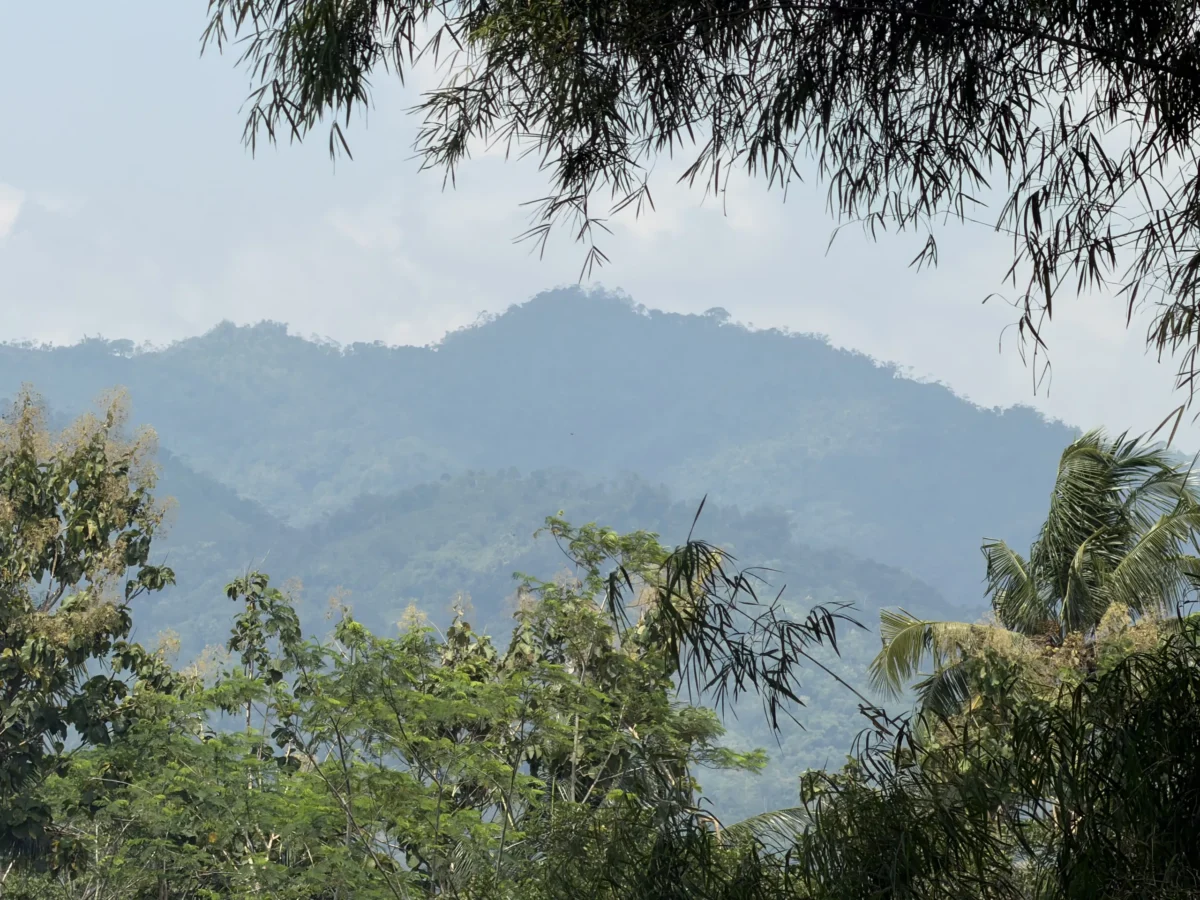
As you try to duck into the shadows to cool, you remember to look outward from the ancient world presented in stone and.. see the jagged volcanic mountains of central Java. Just as the builders must have long ago.
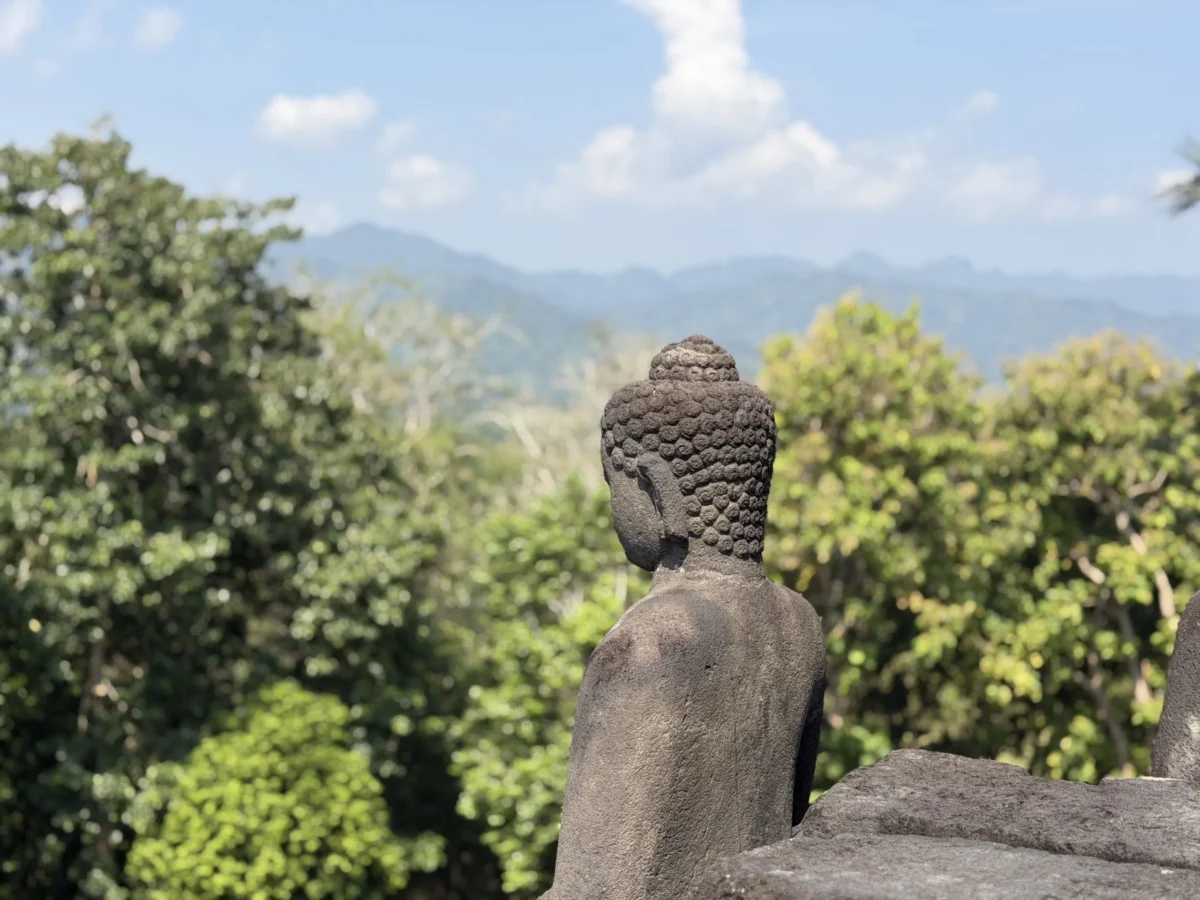
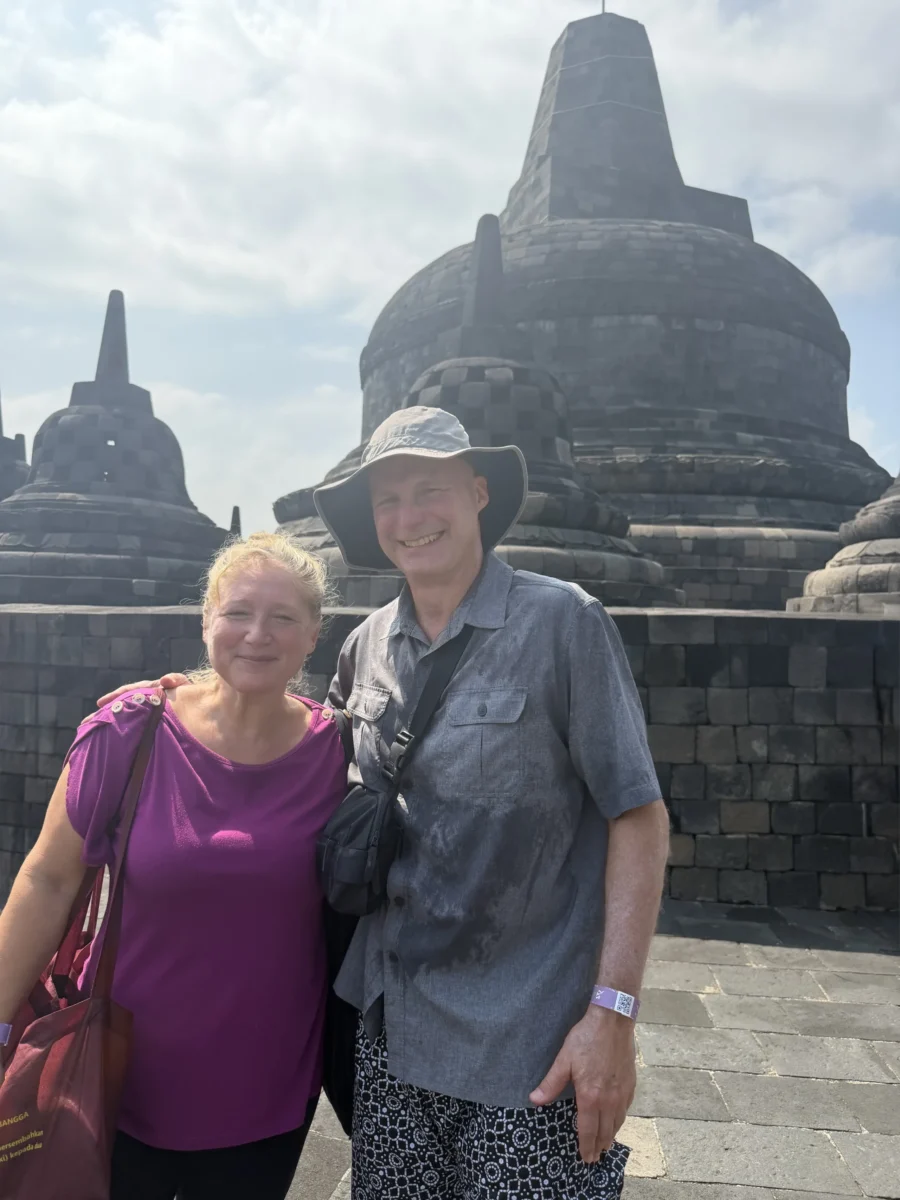
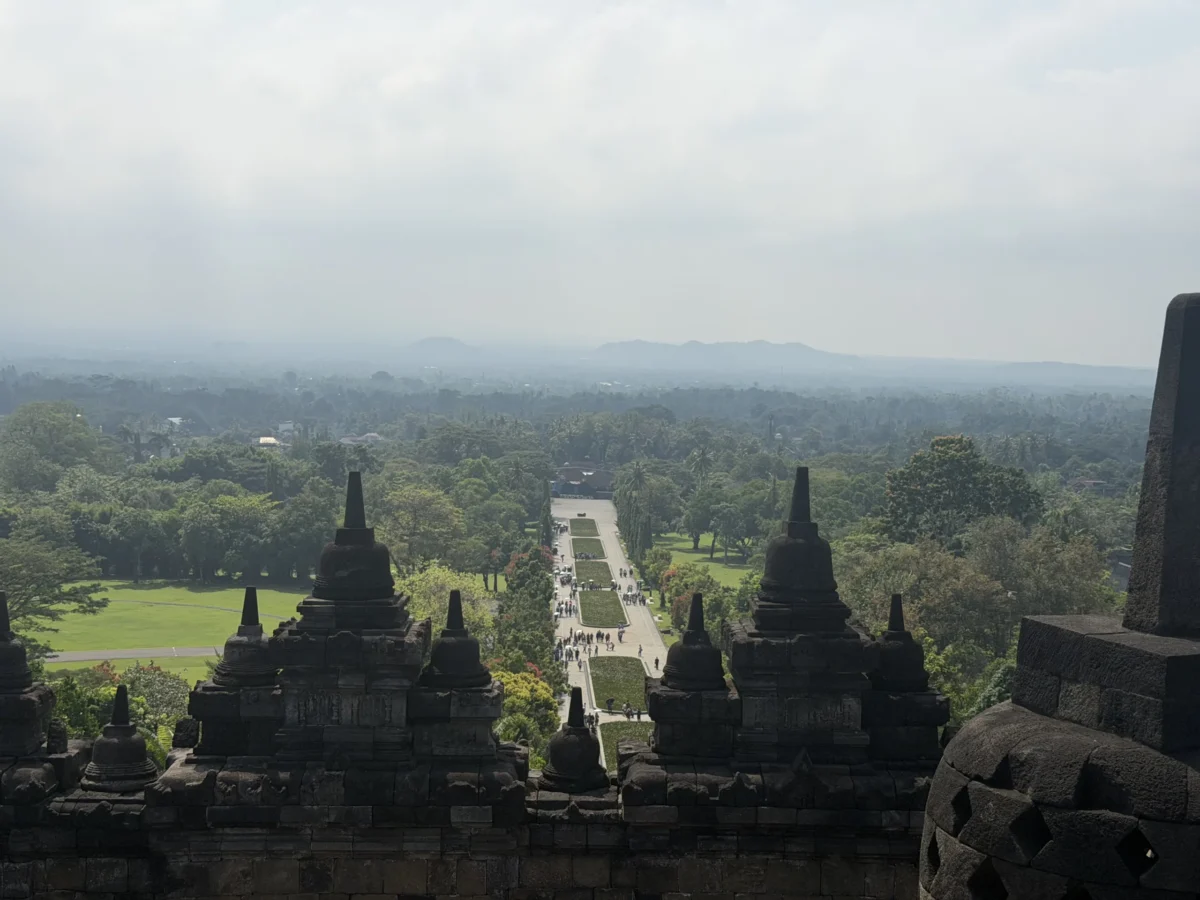
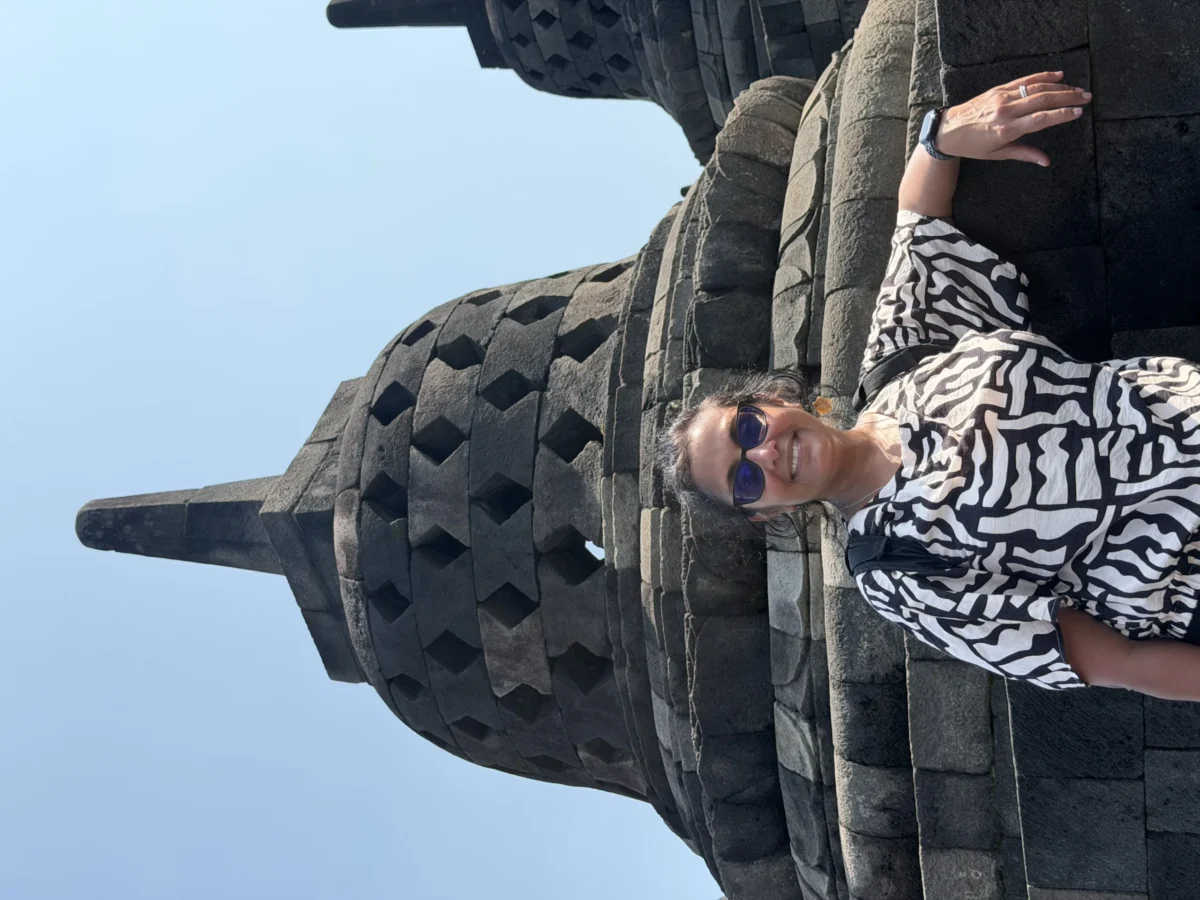
The top of the temple is covered in large seated Buddhas seated inside bell-shaped, perforated domes called stupas. My first instinct was that they were protective, but apparently they represent giving you glimpses at nirvana.
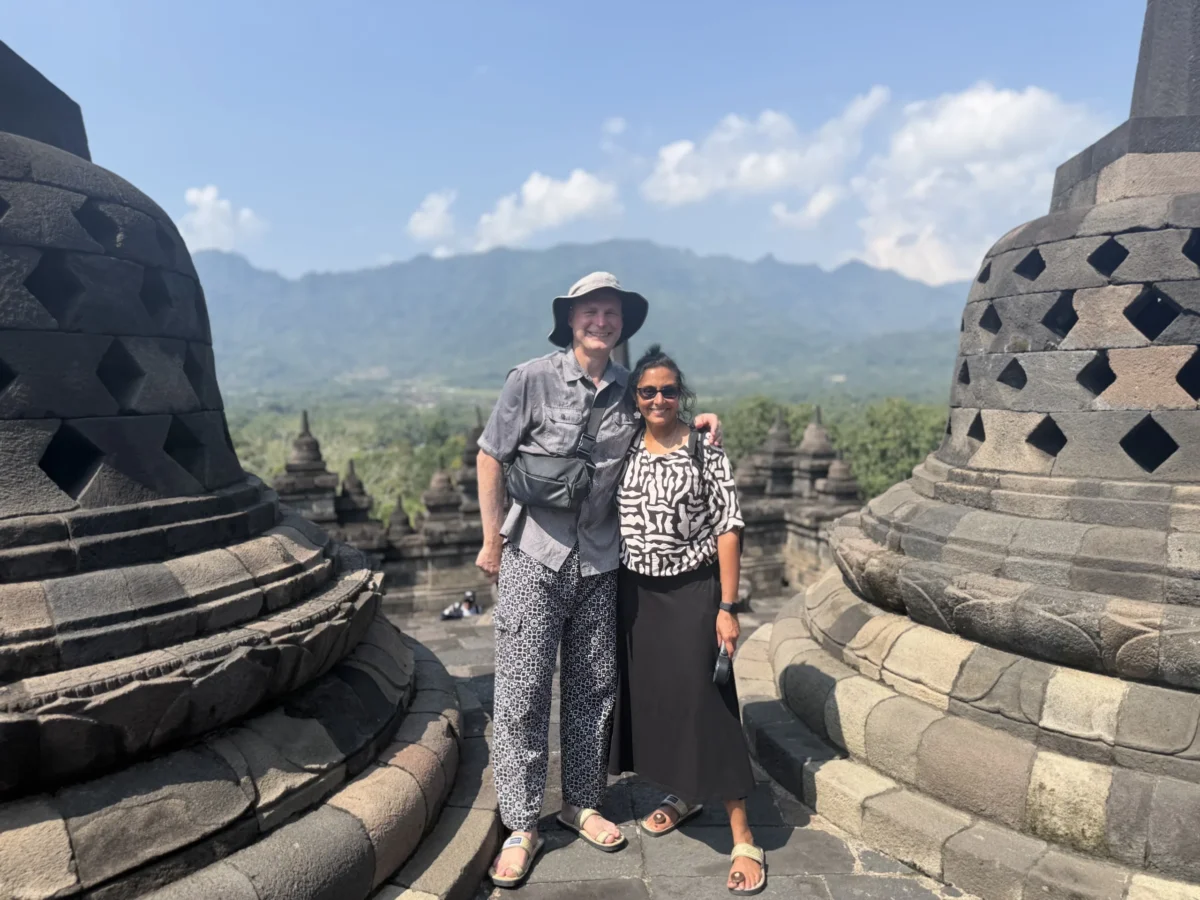
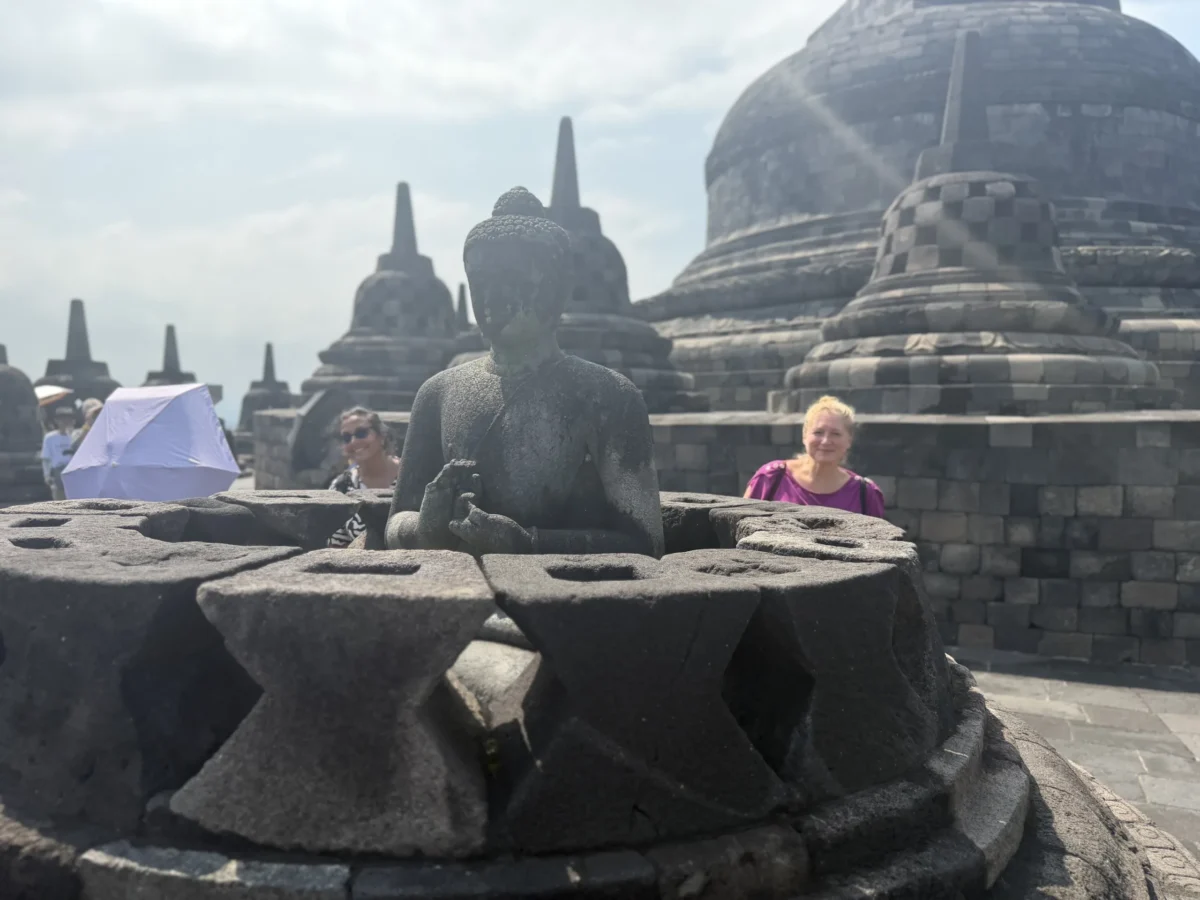
I would LOVE to spend a (COOL!) day at Borobudur alone and just to sit, absorb, and take pictures of all the figures.
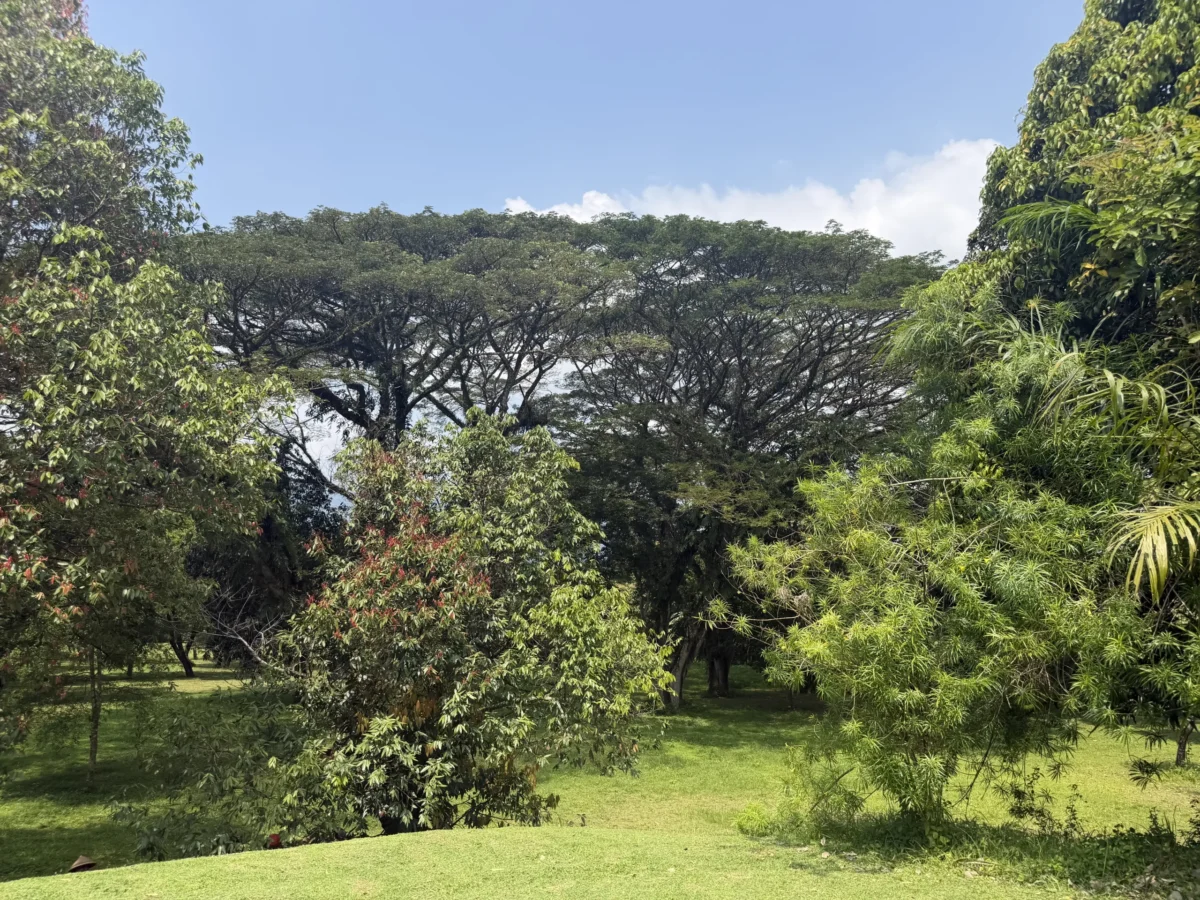
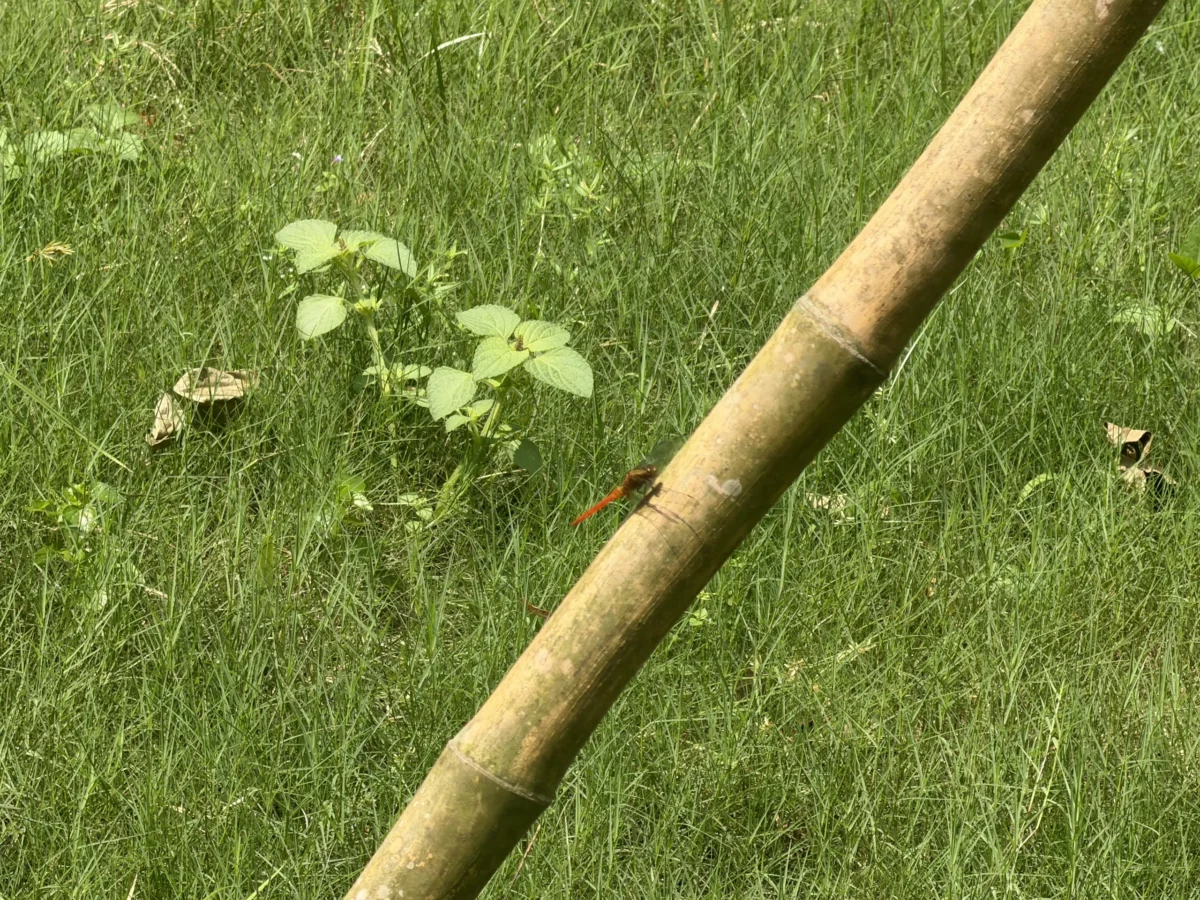
We walked back toward the exit on a peaceful, less-traveled path (thanks OpenStreetMap!). As soon as we were down off the dark rock it cooled a little and we were among the trees and dragonflies. Tipo hid in the shade most of the time at the temple but lit up once we escaped into the greenery.
Borobudur is a stunning site and a must-see despite being ridiculously crowded and hot. I would highly recommend planning a time that is cooler, off-season, and overcast if possible!


Leave a Reply