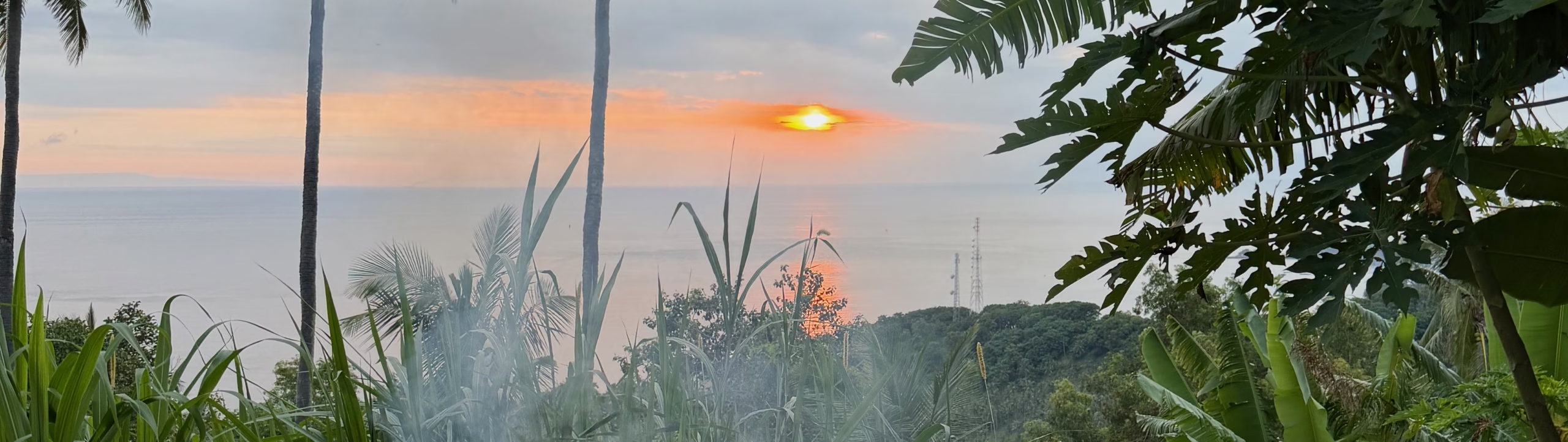
Senggigi, on the northwestern coast of Lombok, was the first major tourism area in Indonesia after Bali. In the 1980s and 1990s it grew as an alternative to Bali for several reasons:
- beautiful, safe beaches
- fewer tourists
- lush jungle
- diverse wildlife
- mountains (separate from Rinjani)
- waterfalls
- proximity to:
- Bali
- the Gili Islands
- Mataram, Lombok’s capital and largest city
However, this growth came to a halt in January 2000. So what happened? It’s a complicated and deep.. dark.. rabbit’s hole into Indonesia’s past.
Like many countries, Indonesia’s economy was hit by the 1997 Asian Financial Crisis. While this affected Lombok of course, it wasn’t specific to Lombok and didn’t scare away tourists. It did however contribute to the fall of Indonesia’s military dictator, Suharto. The economic downturn combined with the power vacuum destabilized Indonesia’s many islands with their diverse ethnic and religious compositions. The Maluku sectarian conflict (primarily between Muslims and Christians) broke out in January 1999 in the eastern Maluku islands. This violent conflict continued for almost four years, spreading across Indonesia. It erupted as a wave of sectarian riots on Lombok in January 2000 in Mataram. Ethnic Chinese and Christians were targeted by Muslim rioters. The violence shifted north toward the Senggigi tourist area, forcing thousands of people to flee to Bali and elsewhere. 18 of the 24 churches and hundreds of other buildings on the island were destroyed. Senggigi was considered unsafe, lost all momentum, and staggered to remain desirable to outsiders.
Over the next ten years a series of tragic events occurred in Indonesia that made things worse, both for Indonesia at large and for tourism (which at the time meant Senggigi for Lombok) specifically.
- December 24 (Christmas Eve), 2000 Bombings: 18 people were killed and hundreds injured in bombings of Christian churches across nine cities on the islands of Java, Sumatra, and Lombok.
- October 12, 2002 Bali Bombings: 202 people were killed and 209 injured in bombings of tourist-dense areas in southern Bali.
- August 5, 2003 Marriott Hotel Bombing: 12 people were killed and 150 injured in Jakarta.
- Sep 9, 2004 Australian Embassy Bombing: Nine people were killed and over 150 injured by a car bomb in Jakarta.
- December 26, 2004 Indian Ocean Earthquake & Tsunami: the northern Indian Ocean was hit by a massive earthquake and resulting tsunami, killing 227,898 people across 14 countries. More than half of the victims were in Indonesia. This was the deadliest tsunami in history.
- March 28, 2005 Nias-Simeulue Earthquake: Over 1,300 people were killed, including at least 915 in Indonesia, mostly on the island of Nias.
- October 1, 2005 Bali Bombings: 20 people were killed and more than one hundred injured in dense tourist areas in southern Bali.
- May 27, 2006 Yogyakarta Earthquake: Over 5,700 people were killed and tens of thousands injured across the Yogyakarta region of Java.
- July 17, 2009 Jakarta Hotel Bombings: Seven people were killed and more than 50 injured at the Marriott and Ritz-Carlton hotels in Jakarta.
Since 2009 there have continued to be terrorist threats and unrest in various parts of Indonesia, but no longer targeting tourist sites. The terrorist group responsible for most attacks, Jemaah Islamiyah, was disbanded in 2024. Earthquake preparedness has improved as well. However, 25 years after its peak, tourism on Lombok has largely moved to new locations and new audiences.
- The Gili Islands have increased in popularity as the “cool beach destination”.
- In 2018 a series of earthquakes damaged infrastructure in the region.
- In 2020 COVID-19 struck, closing businesses and shutting down all tourism.
- Kuta, a town on the beach-rich southern Lombok coast (which shares its name with a prominent city in southern Bali), is growing in popularity as a tourist hub. It has become a surfing destination and attracts the younger crowd.
- The government is investing in the Mandalika International Street Circuit racing facilities outside of Kuta.
Soo.. where does this leave Senggigi? Senggigi has an active and very welcoming main strip and is still one of the best areas to stay on the island. It is convenient to other destinations, but also has numerous nice resorts and restaurants and a good vibe. Much of the younger crowd shifting to the Gilis and southern coast means a more relaxed, cleaner, higher quality experience in Senggigi. It hasn’t regained its hot growth role, but it seems to have organically become something more long-lasting.